Artwork
Willem III van Naaldwijk
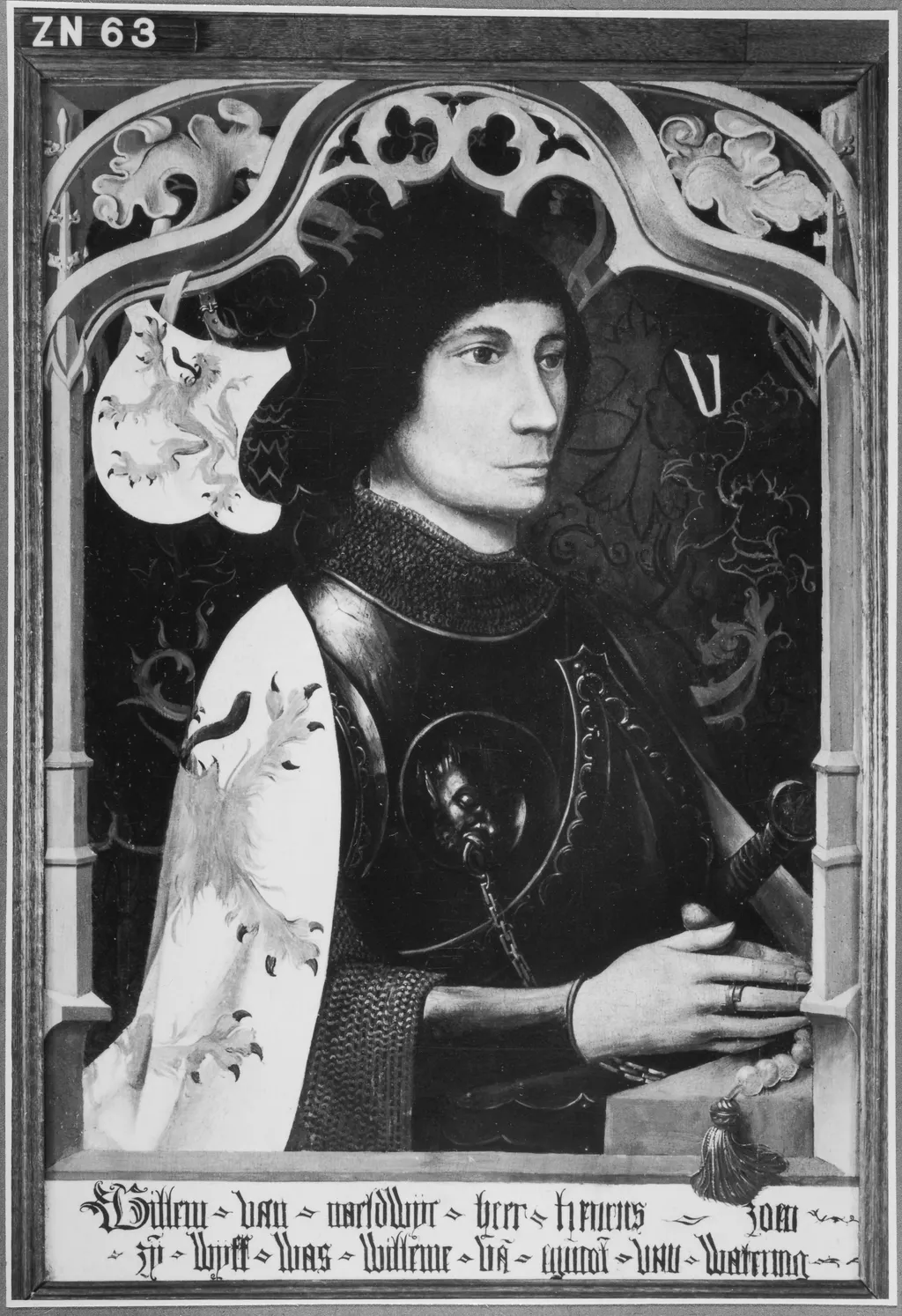
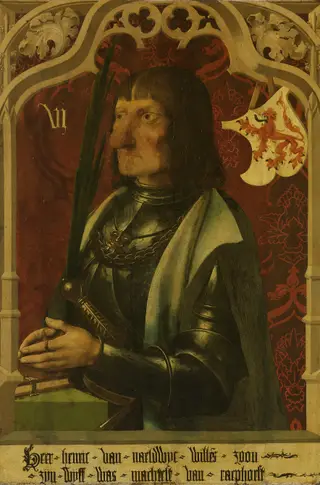
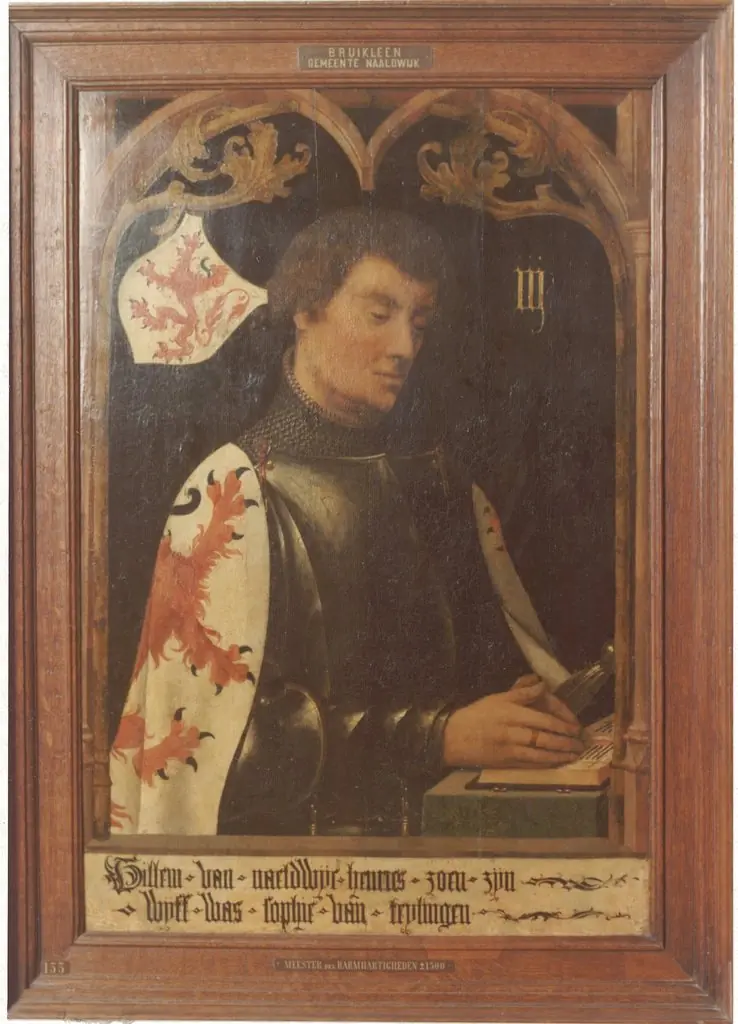
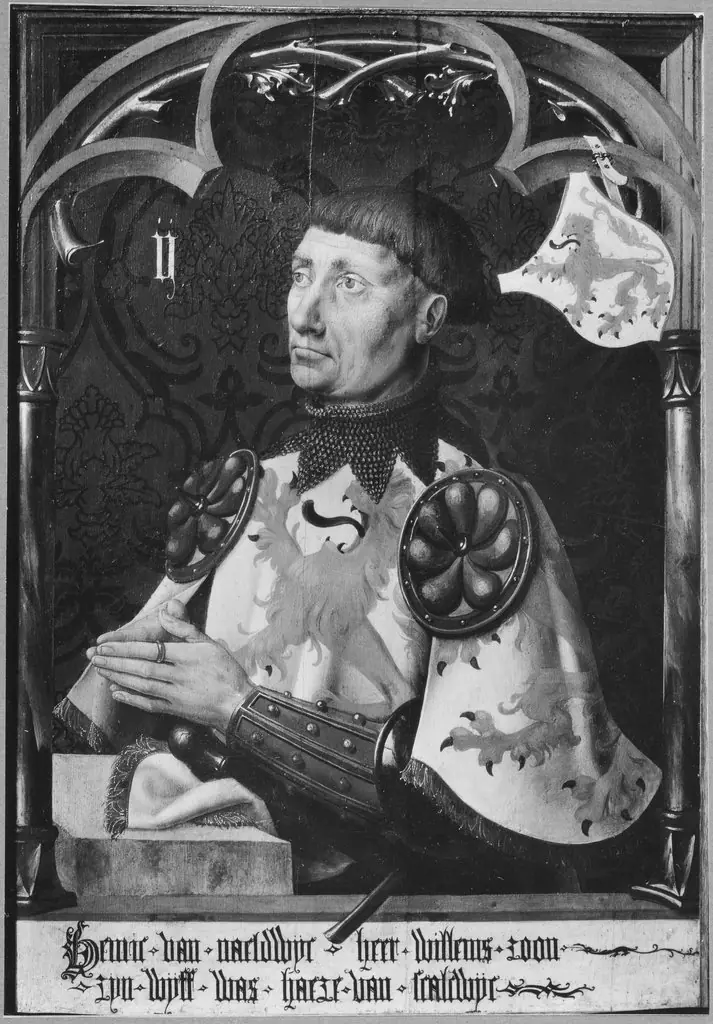
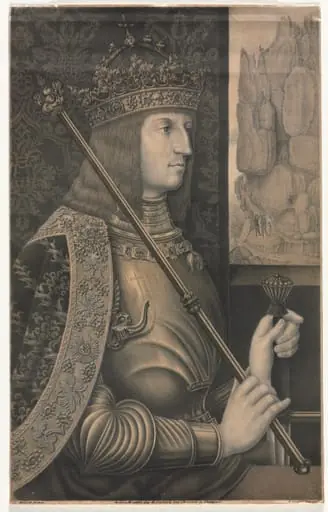
Willem III van Naaldwijk is an oil painting. It dates from 1500 and is held in the collection of the Rijksmuseum. The work depicts a solitary figure dressed in armor, his right hand grasping a small object while his left arm rests on a ledge.
About this work
Subject & Meaning
The sources do not describe specific iconographic attributes, symbolic objects, or deeper metaphorical meanings associated with the depiction.
The work is a portrait depicting Willem III van Naaldwijk as its sole main subject. Created around 1500 by an anonymous artist within the circle of the Master of Alkmaar, the painting functions as a straightforward representation of the sitter rather than an allegorical composition. The sources do not describe specific iconographic attributes, symbolic objects, or deeper metaphorical meanings associated with the depiction.
Its significance lies primarily in its identity as a historical record of Willem III, formerly held in the collection at Naaldwijk and later owned by figures such as Frederick Henry of Orange-Nassau before entering the Rijksmuseum's dispersed collections.
Technique & Style
The work is an oil painting executed on a wooden panel, measuring 82 cm in height by 56.5 cm in width. It portrays Willem III van Naaldwijk, a figure associated with the Dutch aristocracy of the early 16th century. The composition reflects the portrait genre typical of the period, emphasizing formal representation and dignified presence.
The painting’s provenance includes ownership by Charles de Ligne and Frederick Henry of Orange‑Nassau before entering the collection of the Rijksmuseum.
The technique employs oil paint applied to a panel support, a medium that was standard for portraiture in the Netherlands during the early 1500s. This method contributes to the work’s smooth surface and rich coloration, characteristic of the Master of Alkmaar’s circle.
History & Provenance
The portrait of Willem III van Naaldwijk was created around 1500 as an oil painting on panel, attributed to the anonymous circle of the Master of Alkmaar. Its early ownership passed from Charles de Ligne to Frederick Henry of Orange-Nassau before entering the collection of the Rijksmuseum in Westland as part of the Dienst Verspreide Rijkscollecties. The work measures 82 by 56.5 centimeters and remains part of the Rijksmuseum's holdings today.
The painting is held by the Rijksmuseum's Dienst Verspreide Rijkscollectiezorg, on loan to the municipality of Westland in Naaldwijk. Its documented ownership traces back to Charles de Ligne and subsequently Frederick Henry of Orange-Nassau before passing to Naaldwijk. No specific inventory or accession number is recorded in the available sources, and no exhibition history is documented. identifies the current holding arrangement and earlier ownership, while confirms the work as an oil painting dated 1500 but provides no collection or exhibition details.
Context
Willem III van Naaldwijk is a portrait painted circa 1500 by an anonymous circle associated with the Master of Alkmaar. Executed in oil on panel, the work measures 82 cm by 56.5 cm and portrays the figure identified as Willem III van Naaldwijk. Its provenance traces through notable owners including Charles de Ligne and Frederick Henry of Orange-Nassau before entering the collection of the Rijksmuseum in Westland, where it remains on display.
Scholarship on the piece situates it within the broader context of early Northern Renaissance portraiture, emphasizing its role in representing aristocratic identity during the period.
Legacy
The portrait of Willem III van Naaldwijk, attributed to the anonymous circle of the Master of Alkmaar, entered a private collection that included Charles de Ligne and Frederick Henry of Orange-Nassau before being acquired by the Rijksmuseum in Westland. Its presence in the museum’s Deposited Collections has kept the sitter’s image in public view, reinforcing his status as a representative figure of early Dutch portraiture. Scholars reference the work when discussing the stylistic traits of anonymous portraitists active in the early 16th century, noting its influence on later depictions of Dutch nobility.
Overview
The work depicts a solitary figure dressed in armor, his right hand grasping a small object while his left arm rests on a ledge. A chain with a circular pendant encircles his neck, and a decorative crown hovers above his head. The composition is set against a richly patterned background that includes ornamental motifs and a feathered sleeve on the figure’s left arm.
Artist & collection

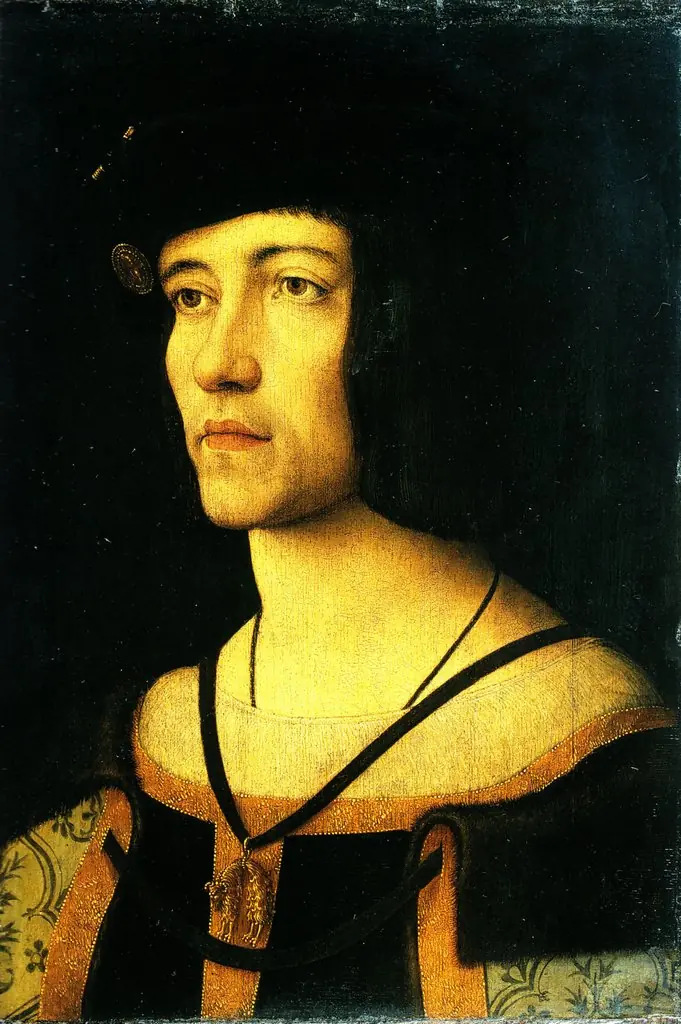 Portrait of a man, possibly Jan van Luxemburg, lord of Ville
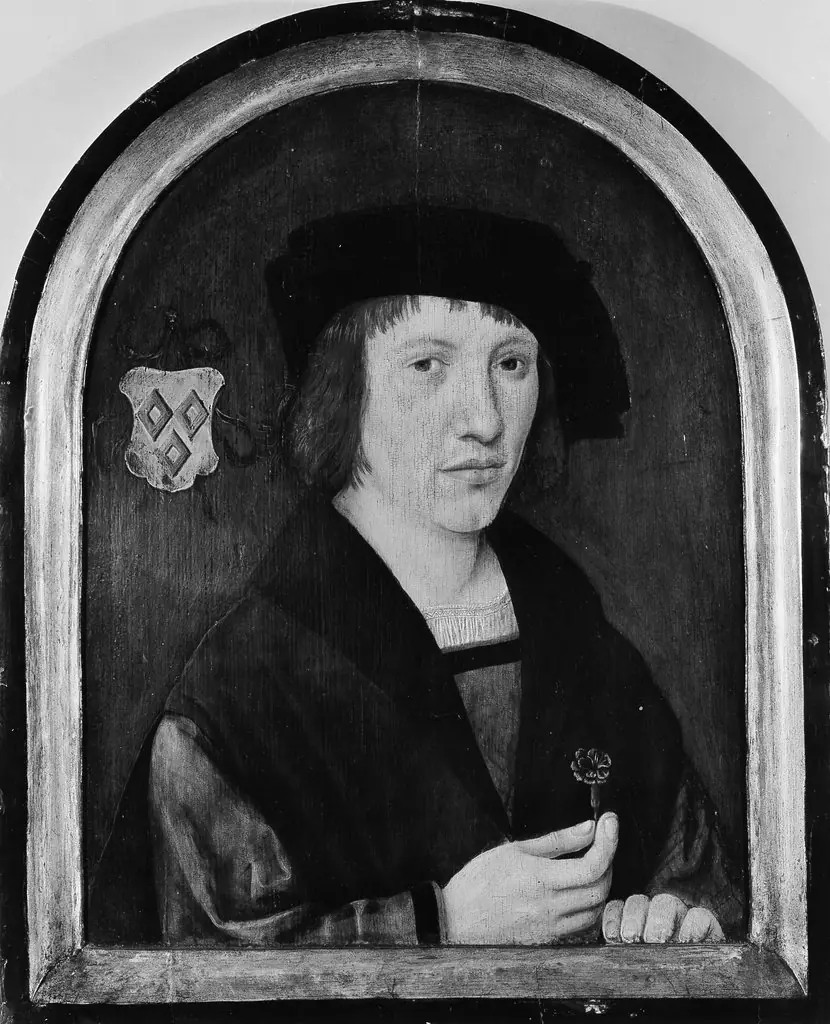 Portrait of a Young Man of the Van Steynoert Family
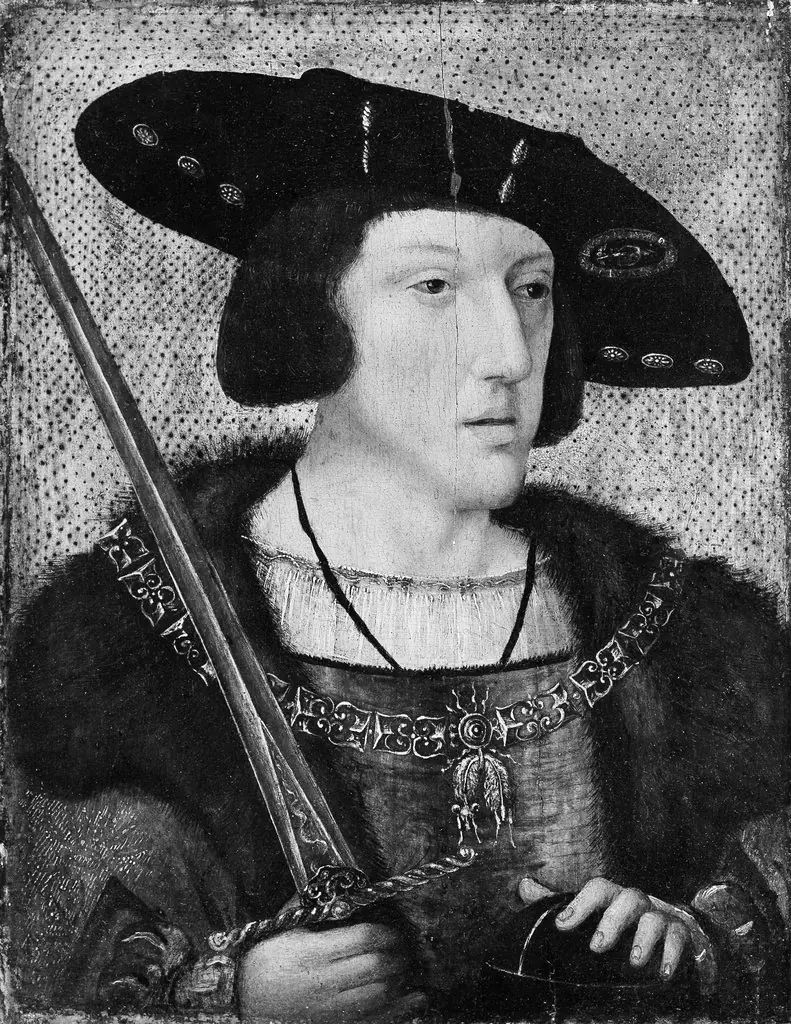 Charles V (1500–1558), Holy Roman Emperor
 Pfalzgraf Friedrich II. der Weise
 Portrait of the knight Abel van Coulster (1477-1548), representative to the Hof van Holland in 1512
 Portrait of a Gentleman, Possibly Baudoin of Burgundy
 Herzog Karl der Kühne (1433-1477) von Burgund
 Portrait of Kaiser Maximilian I with Crown and Scepter