Artwork
Woman Playing Music (recto), from a Kalighat album
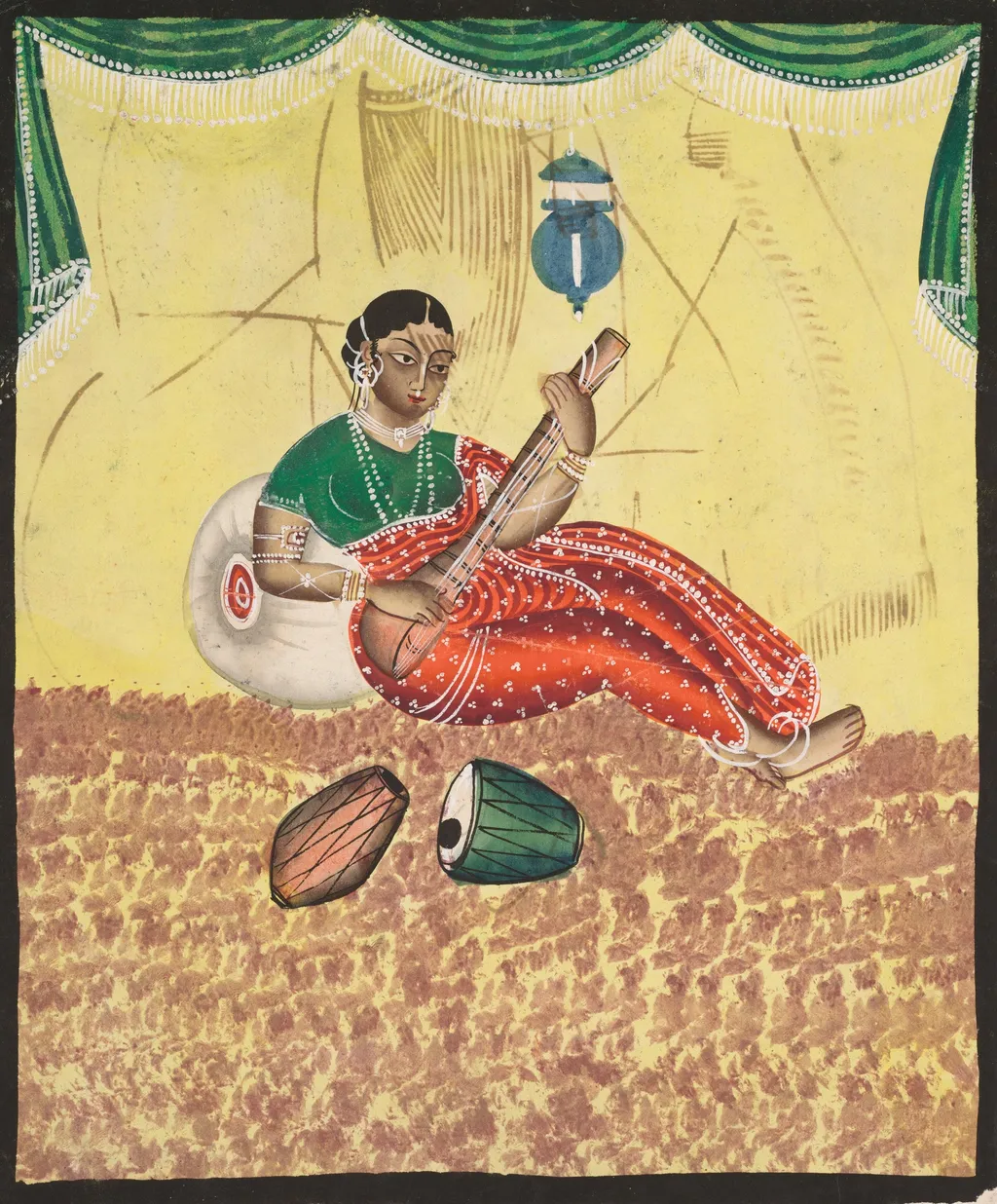
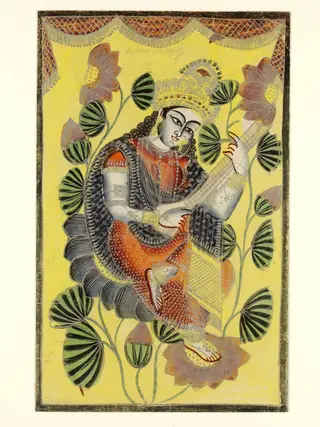
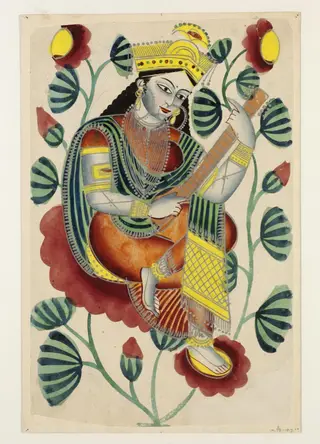
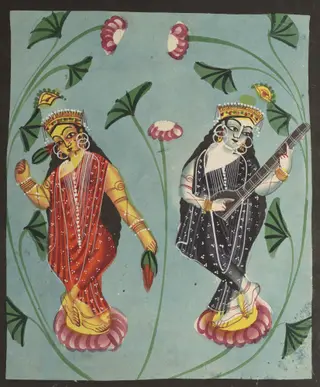
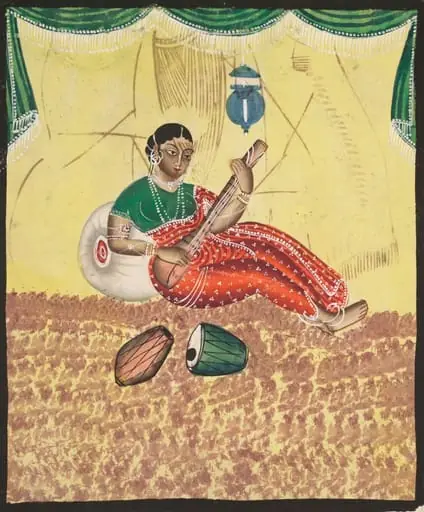
Woman Playing Music (recto), from a Kalighat album is an unspecified painting. It dates from 1896 and is held in the collection of the Cleveland Museum of Art. The work depicts a seated woman, cross‑legged on a patterned yellow textile, absorbed in playing a stringed instrument.
About this work
History & Provenance
Created in Kolkata in 1890, this painting on the recto side of a Kalighat album leaf is attributed to an unknown artist.
Created in Kolkata in 1890, this painting on the recto side of a Kalighat album leaf is attributed to an unknown artist. The work entered the collection of the Cleveland Museum of Art, where it is cataloged under the accession number 2003.133.a. While the specific circumstances of its commission and the identity of its original owner remain unrecorded in available documentation, its production date and place of origin are established as late nineteenth-century Calcutta.
The artwork Woman Playing Music (recto), created in 1890, is held in the collection of the Cleveland Museum of Art. The institution assigns it the accession number 2003.133.a. While the piece was produced in Kolkata, its current location is confirmed as the museum in Cleveland. No specific exhibition history for this work is provided in the available records.
Overview
The work depicts a seated woman, cross‑legged on a patterned yellow textile, absorbed in playing a stringed instrument. She is dressed in a green‑white upper garment and red‑embroidered trousers, her hair pulled back. Beside her lie two small drums, while a blue lantern hangs in the background, casting a gentle glow over the simple interior.
Subject & Meaning
The composition presents a moment of private musical practice, emphasizing concentration and the intimate relationship between performer and instrument. The inclusion of auxiliary drums suggests a broader musical ensemble, while the lantern’s light may symbolize enlightenment or the domestic sphere where art and daily life intersect.
Technique & Style
Executed in the characteristic Kalighat aesthetic, the painting employs bold, black outlines and vivid, flat colors that animate the scene despite its modest setting. The use of a patterned cloth and decorative clothing reflects the folk‑art tradition’s attention to detail, while the flat perspective and stylized forms convey a narrative quality typical of early 19th‑century Indian popular prints.
Context
Kalighat albums emerged as a response to the growing demand for affordable, portable art among the burgeoning middle class and European visitors in Bengal. Artists combined traditional motifs with contemporary subjects, often portraying domestic scenes, religious narratives, and street life. This work exemplifies the genre’s blend of folk sensibility and emerging commercial print techniques.
Artist & collection