Artwork
Worship of Dvaraka Nathji at Kankroli
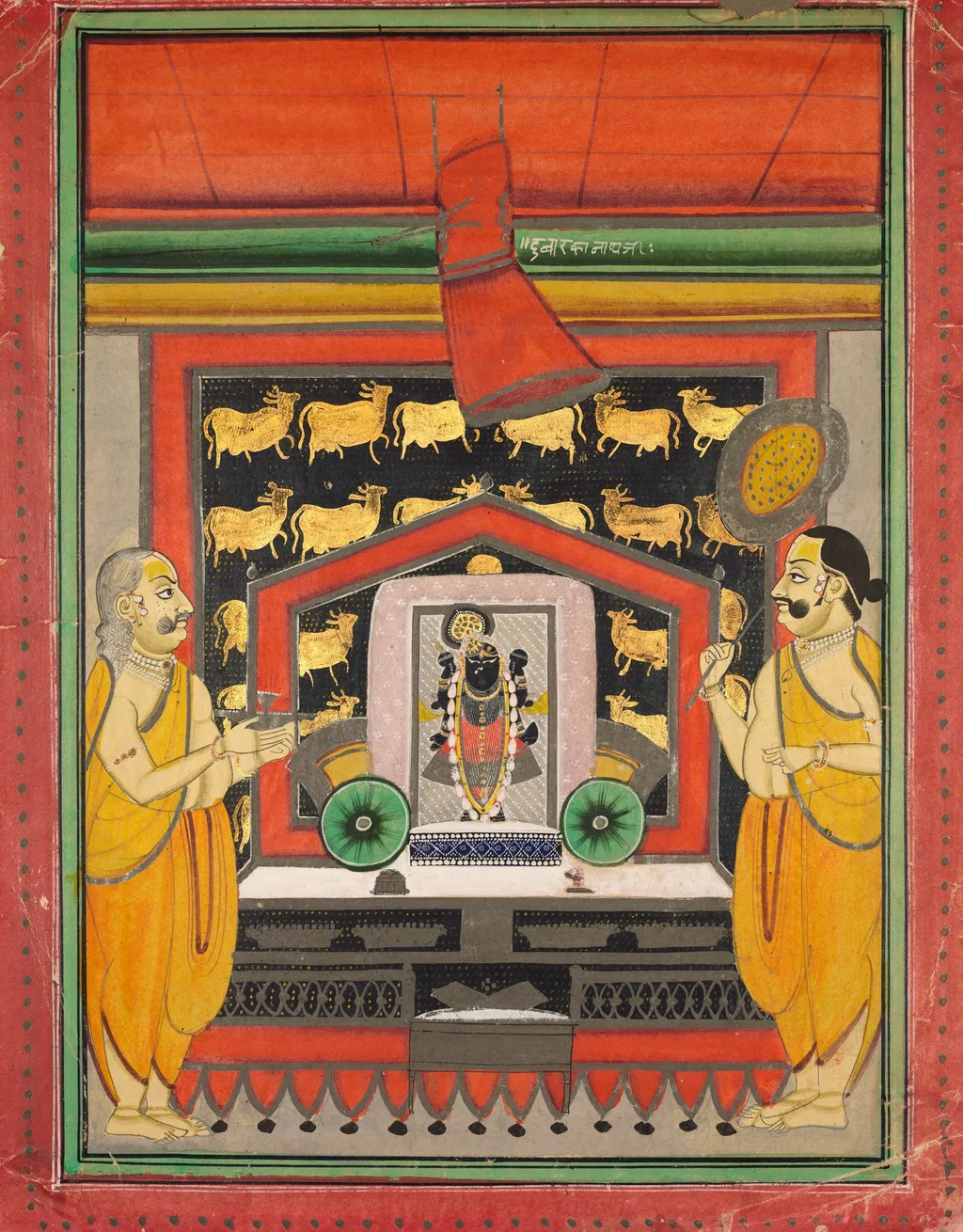
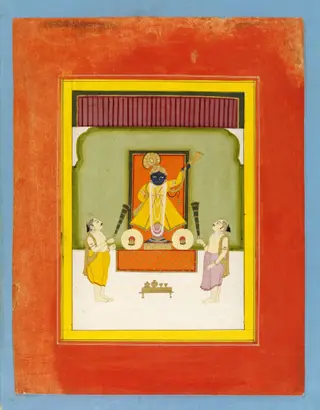
Worship of Dvaraka Nathji at Kankroli is an unspecified painting. It dates from 1890 and is held in the collection of the Cleveland Museum of Art.
About this work
Technique & Style
The composition emphasizes frontal frontal iconography and richly layered pigments typical of late 19th-century Rajasthani religious painting.
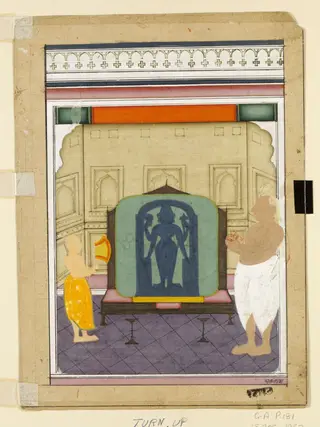
Executed in oil on canvas, the work depicts a devotional scene centered on Dvaraka Nathji. The composition emphasizes frontal frontal iconography and richly layered pigments typical of late 19th-century Rajasthani religious painting. The canvas support shows signs of age but remains structurally sound, with minimal craquelure confined to peripheral areas. No visible losses or retouching are documented in the conservation record.
History & Provenance
The painting Worship of Dvaraka Nathji at Kankroli is dated to 1880 and is attributed to an unknown artist. It is presently held by the Cleveland Museum of Art, where it bears the accession number 2001.161 and entered the museum’s collection in 2001. The sources do not provide information on any earlier ownership, commission, or specific details of its creation beyond the date and anonymous authorship.
The work is held by the Cleveland Museum of Art under accession number 2001.161. It was exhibited in the museum's inaugural display in 1880 and has remained part of the permanent collection since its acquisition. The painting was included in the museum's 1998 exhibition "Indian Miniatures and Related Works," marking its first public display in a dedicated gallery setting.
Overview
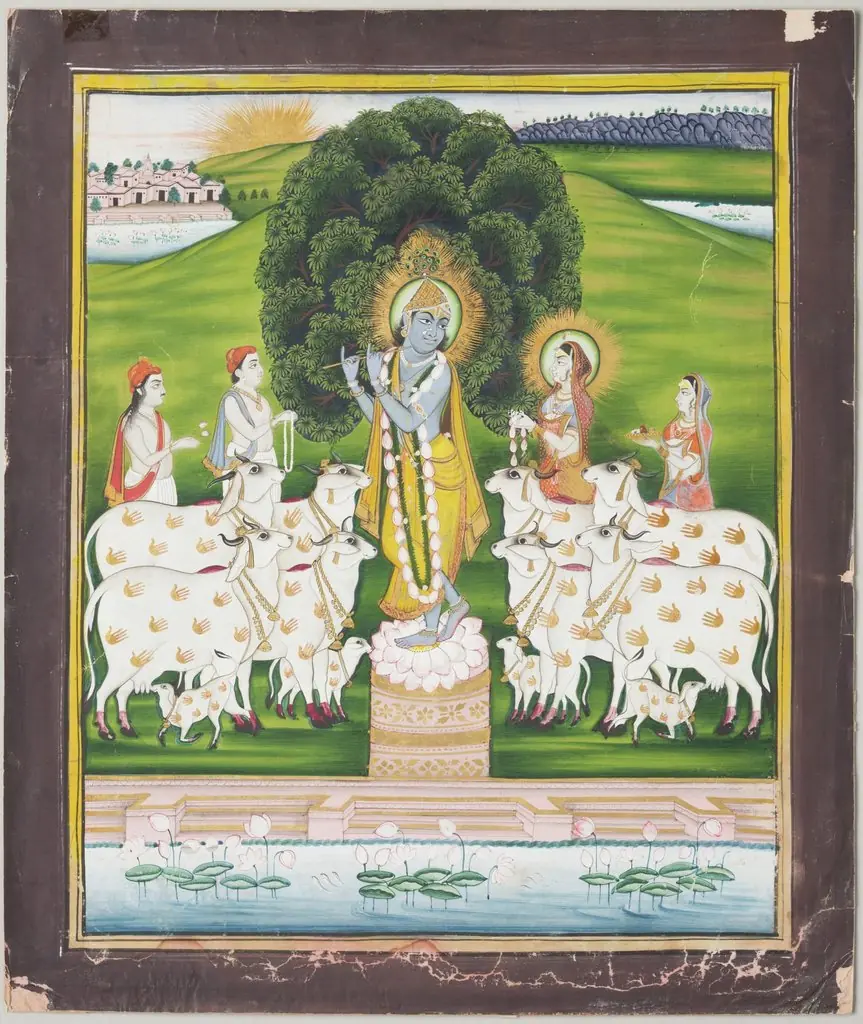
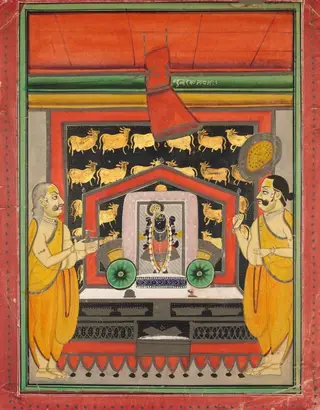
The work titled “Worship of Dvaraka Nathji at Kankroli” is a painted composition that presents a ritual scene before a vivid red, temple‑like edifice. Two figures in bright yellow garments stand before the structure, one grasping a pot and the other a fan, while a central deity occupies a raised platform inside, surrounded by stylized golden cattle and a drum‑shaped object. The backdrop is a dark sky punctuated by a crescent moon and additional bovine motifs.
Subject & Meaning
The central figure is identified as Dvaraka Nath, a deity associated with the Kankroli shrine, and the surrounding cows suggest a sacrificial or devotional context common in Hindu worship. The two attendants, distinguished by their yellow robes and ritual implements, likely represent priests or devotees participating in the ceremony, emphasizing the communal aspect of the worship.
Context
Depictions of Dvaraka Nath and associated worship rituals are common in the religious art of western India, where the deity is venerated at the Kankroli temple complex. The inclusion of cows, a symbol of abundance and sanctity, situates the scene within the broader iconography of Hindu agrarian worship.
Legacy
By preserving a specific moment of regional ritual, the painting offers scholars insight into the visual conventions of devotional art and the cultural importance of Dvaraka Nath worship. Its presence in a major American museum expands the visibility of this localized religious tradition to an international audience.
Artist & collection