Artwork
Hotohoto Festival at Izumo Grand Shrine, from the series Views of Famous Places in the Sixty-odd Provinces
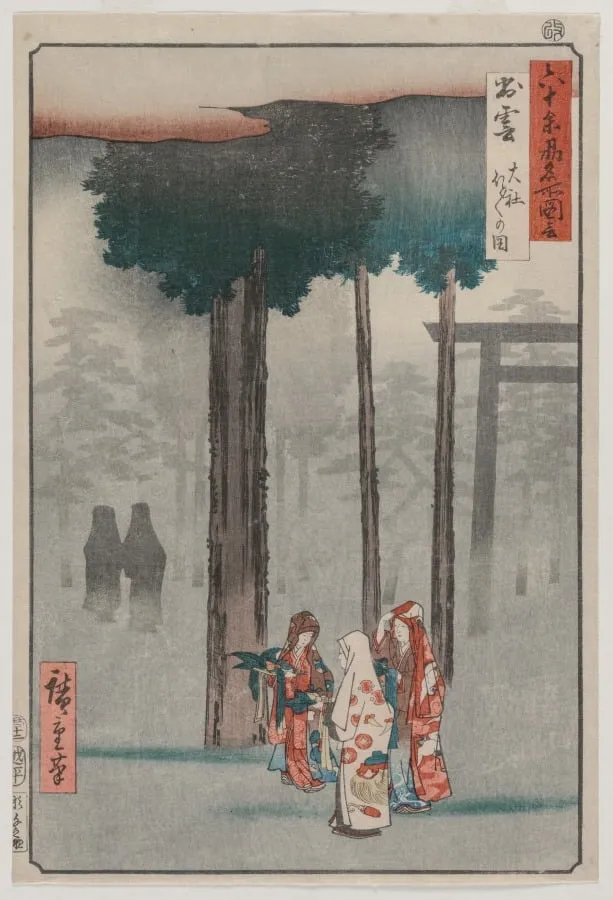
Hotohoto Festival at Izumo Grand Shrine, from the series Views of Famous Places in the Sixty-odd Provinces is a print by the Impressionist artist Utagawa Hiroshige. It dates from 1853 and is held in the collection of the Cleveland Museum of Art. This woodblock print is part of Hiroshige’s series depicting renowned locations across Japan’s provinces.
- Accession no.
- 1985.311
- Credit line
- The Kelvin Smith Collection, given by Mrs. Kelvin Smith
About this work
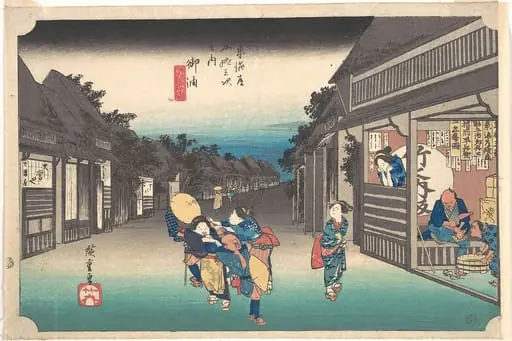
You see a night scene at Izumo Grand Shrine: tiny figures with torches light up a dark path, while paper lanterns glow like fireflies against black trees.
You see a night scene at Izumo Grand Shrine: tiny figures with torches light up a dark path, while paper lanterns glow like fireflies against black trees.
This festival marks the one month each year when Shinto spirits are said to gather here. Hiroshige shows the crowd moving in quiet order, their torches reflecting on wet ground, no faces, just the flicker of belief.
Look up more prints in the subject: japan, edo period (1615–1868).
Overview
This woodblock print is part of Hiroshige’s series depicting renowned locations across Japan’s provinces. It captures the Hotohoto Festival at Izumo Grand Shrine, a sacred Shinto site on Honshu. The scene unfolds at night, emphasizing ritual movement and atmospheric quiet rather than spectacle.
The print reflects a belief that deities gather at Izumo during the lunar month of October, when shrines across the land temporarily empty.
Subject & Meaning
The print illustrates the annual migration of Shinto kami to Izumo Shrine, a belief central to regional religious practice. Torchbearers move in procession along a dark path, their lights guiding the divine. Paper lanterns hover among trees like distant stars, suggesting spiritual presence without depicting deities directly.
The absence of individual faces underscores collective reverence over personal identity, focusing attention on the ritual’s symbolic weight.
Technique & Style
Hiroshige employs subtle gradations of ink and muted tones to evoke nightfall, with minimal color reserved for the warm glow of torches and lanterns. The wet ground reflects light in delicate streaks, enhancing the sense of stillness and damp air. Figures are reduced to silhouettes, their forms suggested by posture and movement rather than detail. This restrained approach aligns with ukiyo-e traditions that prioritize mood over narrative clarity.
History & Provenance
Created around 1853–1856, the print belongs to Hiroshige’s late series documenting Japan’s famed landscapes. It was produced during the Edo period, when woodblock prints became widely accessible to urban populations. The series was commissioned by publisher Hoeidō, known for high-quality landscape prints. Original impressions were distributed through Edo’s print markets, circulating among merchants and travelers interested in regional culture.
Context
The Hotohoto Festival, held in the tenth lunar month, reflects a longstanding Shinto tradition in which deities are believed to convene at Izumo, the most sacred site for spiritual assembly. While other provinces observe rituals honoring local kami, Izumo’s role as a gathering place gave it unique religious significance. Hiroshige’s depiction aligns with Edo-period interest in pilgrimage routes and regional customs, blending topography with spiritual geography.
Legacy
The print remains a key example of Hiroshige’s ability to convey spiritual atmosphere through landscape. Its quiet composition influenced later Western artists, including Impressionists drawn to its use of light and negative space. Though not widely exhibited in its time, the series gained recognition in the 20th century as a document of pre-modern Japanese ritual life, preserving a visual record of customs now largely faded or transformed.
Artist & collection
Artist
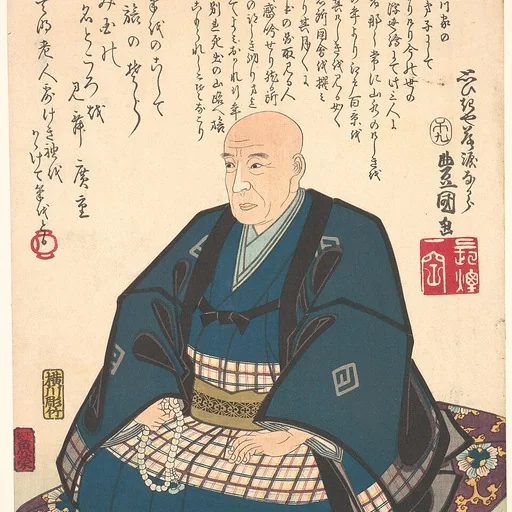
Utagawa Hiroshige (歌川 広重) or Andō Hiroshige (安藤 広重), born Andō Tokutarō (安藤 徳太郎; 1797 – 12 October 1858), was a Japanese ukiyo-e artist, considered the last great master of that tradition.

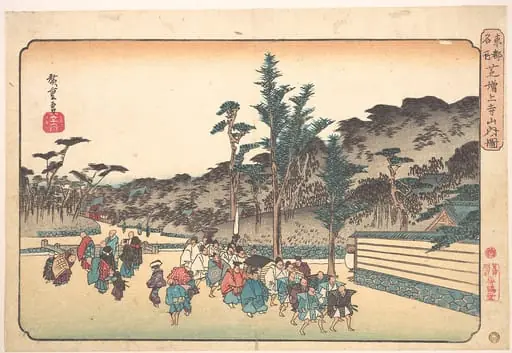 東都名所 芝増上寺山内の図|Shiba Zōjōji Sannai no Zu
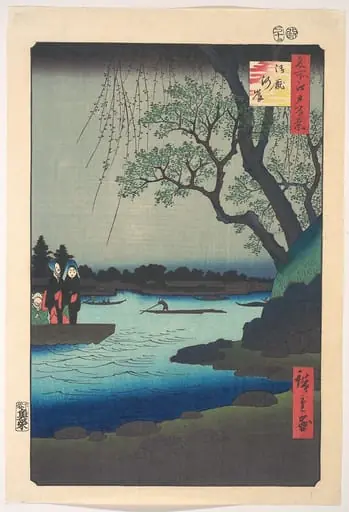 名所江戸百景 御厩河岸|Ommayagashi, Sumida River
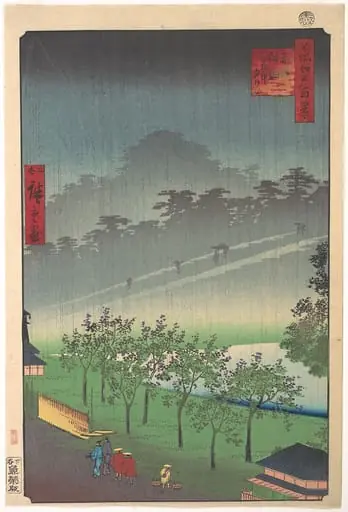 Untitled
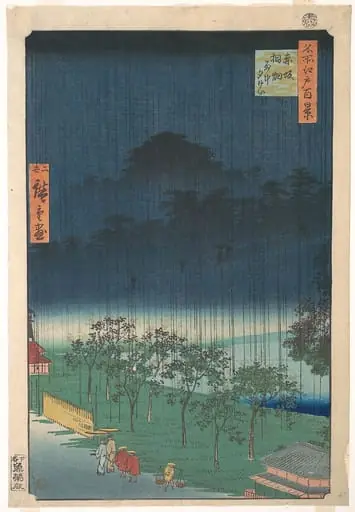 Untitled
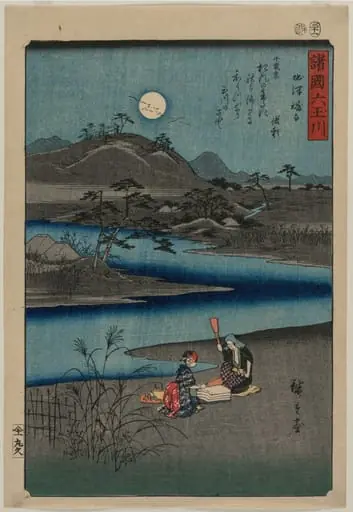 Cloth Fulling Jewel River in Settsu, from the series Six Jewel Rivers of the Various Provinces
 The Minister Toru Daijin Standing by a Lake Beneath a Crescent Moon, from the series A True Mirror of Chinese and Japanese Poetry
 The Snowy Garden
 名所江戸百景・廓中東雲|The Entrance to the Yoshiwara at Dawn
 Meguro Drum Bridge and Sunset Hill, from One Hundred Views of Famous Places in Edo
 東海道五十三次之内 御油 旅人留女|Goyu, Tabibito Ryujo