Artwork
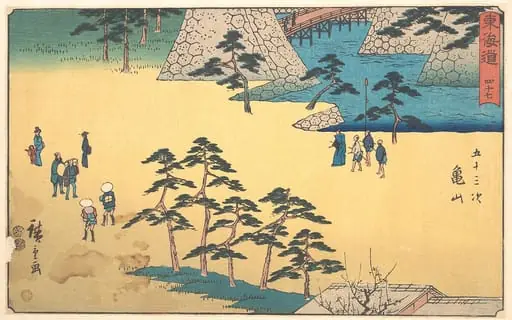
東海道五十三次之内 亀山|Kameyama
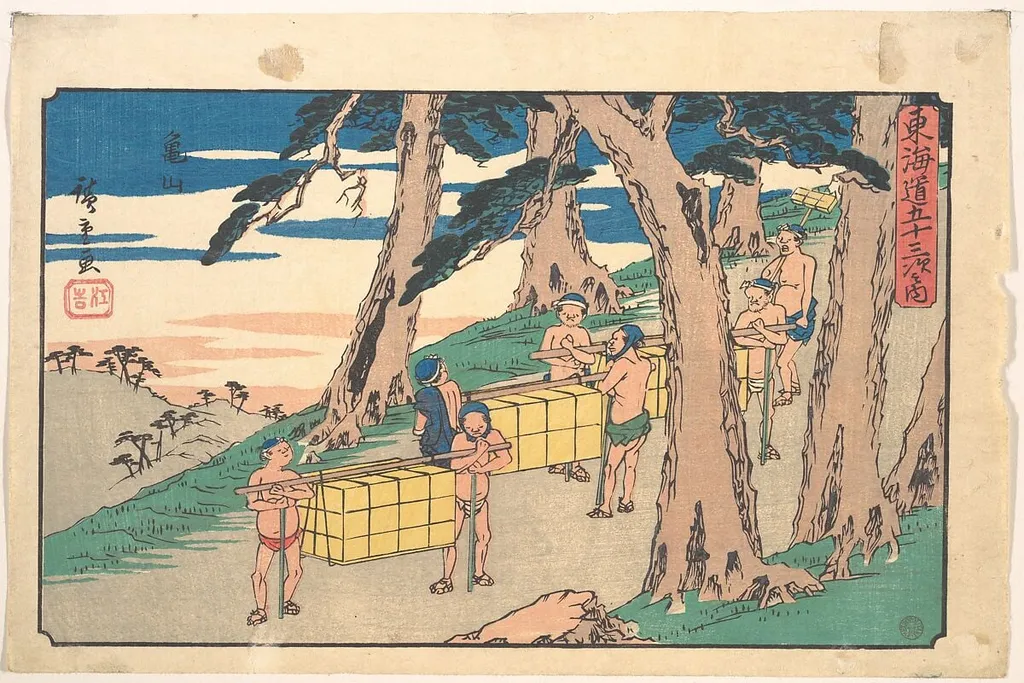
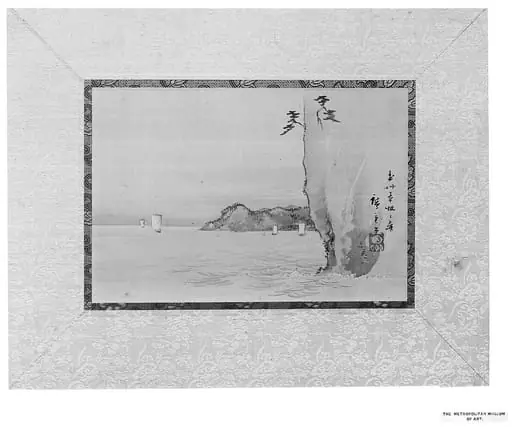
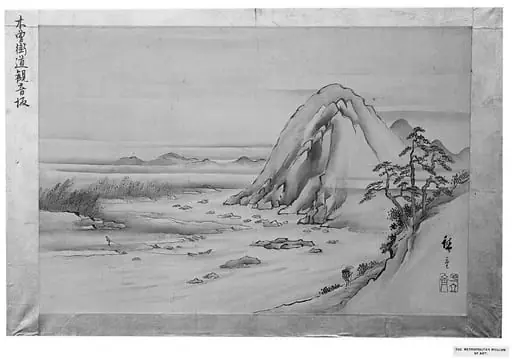
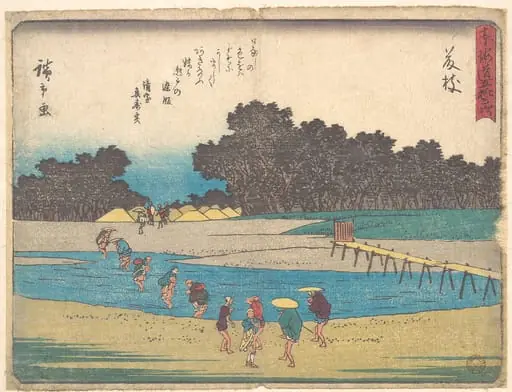
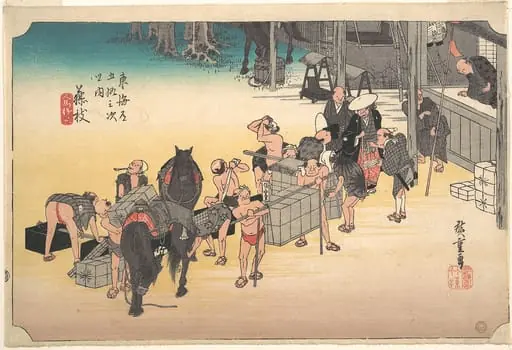
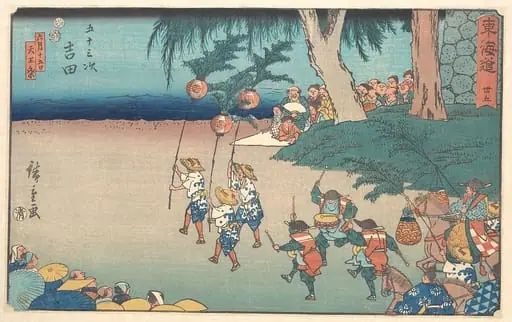
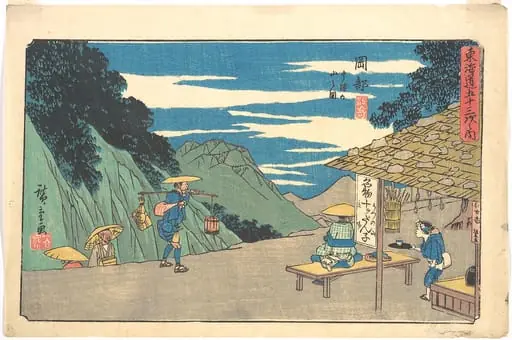
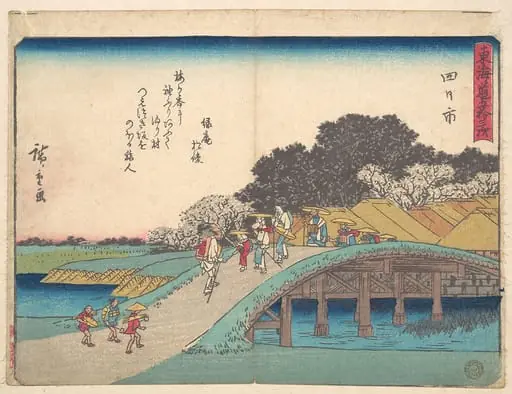
東海道五十三次之内 亀山|Kameyama is an ink print by the Romanticist artist Utagawa Hiroshige. It dates from 1842 and is held in the collection of the Metropolitan Museum of Art.
- Accession no.
- JP571
- Credit line
- Purchase, Joseph Pulitzer Bequest, 1918
About this work
Overview
Kameyama is a woodblock print created by Utagawa Hiroshige around 1842 as part of his series The Fifty-three Stations of the Tōkaidō.
Subject & Meaning
The print depicts travelers carrying heavy loads along a road lined with trees and hills, suggesting a stop on a long journey near a village. The scene captures the everyday struggles of travelers during Japan's Edo period.
Technique & Style
Hiroshige used ink and color on paper to create a horizontal composition characterized by simple shapes, bold outlines, and flat, bright colors. This style reflects his distinctive approach to landscape depiction.
Context
As part of The Fifty-three Stations of the Tōkaidō series, Kameyama represents Hiroshige's focus on landscapes and travel routes, diverging from the typical ukiyo-e emphasis on urban subjects.
Artist & collection
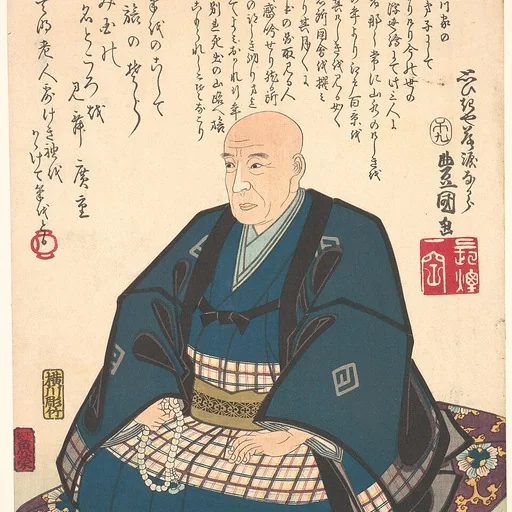
Artist
Utagawa Hiroshige (歌川 広重) or Andō Hiroshige (安藤 広重), born Andō Tokutarō (安藤 徳太郎; 1797 – 12 October 1858), was a Japanese ukiyo-e artist, considered the last great master of that tradition.