Artwork
Koe wevala
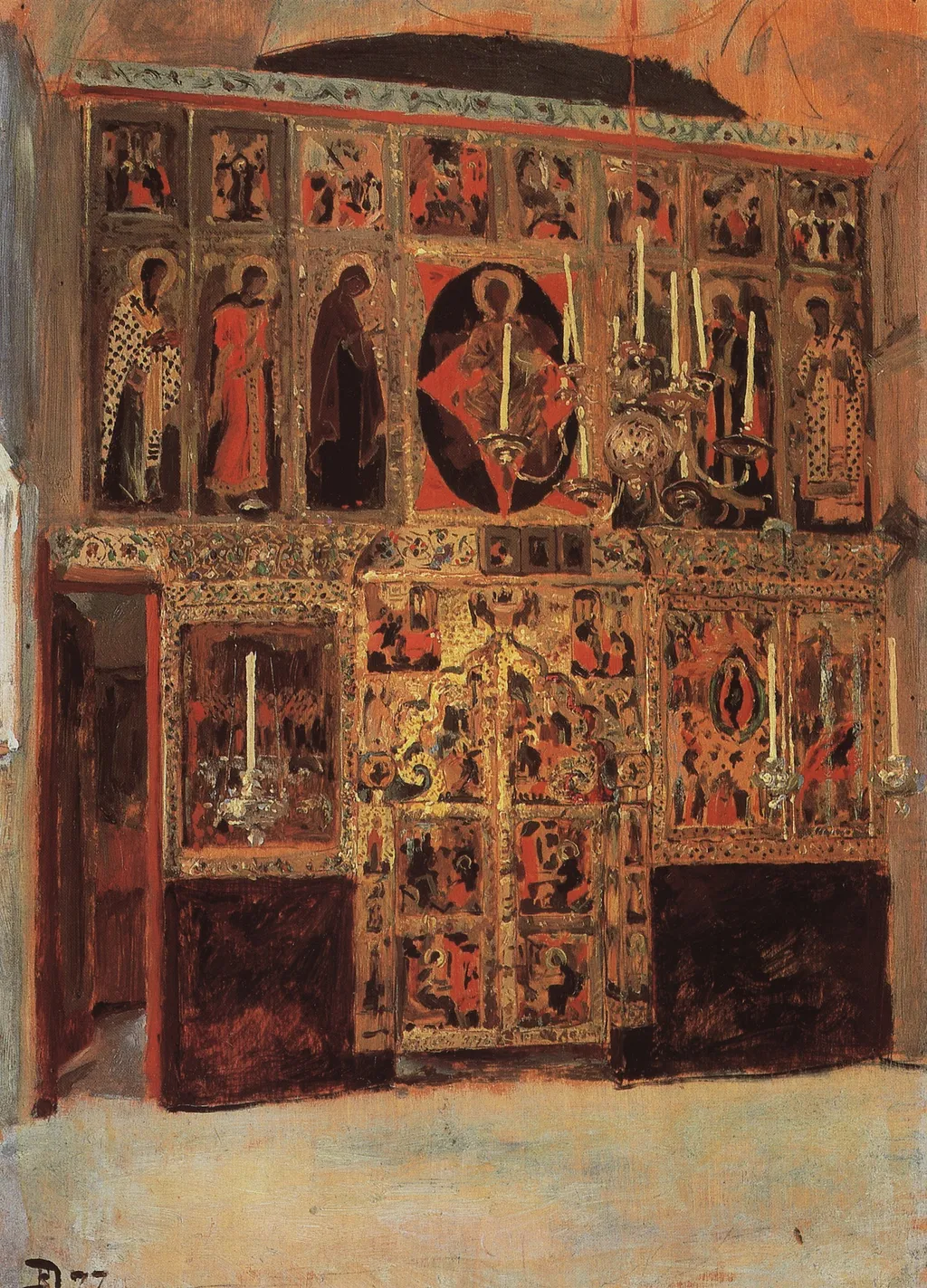
Koe wevala is an oil painting by the Impressionist artist Vasily Polenov. It dates from 1889 and is held in the collection of the Tretyakov Gallery.
About this work
Overview
Though associated with the Peredvizhniki, his approach here leans toward atmospheric realism with impressionistic light handling.
Vasily Polenov painted Koe wevala in 1889 using oil on canvas. Though associated with the Peredvizhniki, his approach here leans toward atmospheric realism with impressionistic light handling. The work is part of the Tretyakov Gallery’s permanent collection, reflecting its significance in late 19th-century Russian art. Polenov’s focus on interior spaces and decorative detail distinguishes this piece from his more common outdoor scenes.
Subject & Meaning
The painting centers on a richly adorned interior wall covered in numerous small framed images, many depicting religious subjects. The arrangement suggests a private devotional space or a collector’s display, evoking quiet reverence rather than public spectacle. The absence of figures or clear spatial depth directs attention to the wall as both object and symbol, perhaps representing cultural memory or spiritual accumulation.
Technique & Style
Polenov employed layered glazing to achieve the warm, luminous tones of the wall, reds, golds, and browns, creating depth through translucent paint applications. Brushwork varies between precise detail in the framed images and looser handling in the surrounding surfaces, balancing realism with atmospheric suggestion. The composition avoids perspective depth, emphasizing surface texture and pattern over spatial illusion.
History & Provenance
Completed in 1889, the painting entered the Tretyakov Gallery’s collection shortly after its creation, likely through direct acquisition from the artist. Polenov’s reputation as a bridge between Russian realism and European aesthetics ensured early institutional recognition. No significant changes in ownership are documented, and the work has remained in public display since its acquisition.
Context
In the late 1880s, Russian artists increasingly turned to intimate interiors as subjects, moving beyond overt social commentary. Polenov’s interest in decorative arts and European travel informed this work, aligning it with broader trends in fin-de-siècle visual culture. While not overtly political, the painting reflects a quiet celebration of cultural heritage and aesthetic refinement.
Legacy
Koe wevala remains a key example of Polenov’s exploration of interiority and material culture. It influenced later Russian painters interested in the symbolic potential of domestic spaces and decorative surfaces. Though less widely known than his landscapes, the painting continues to be studied for its nuanced treatment of light, texture, and the quiet dignity of everyday sacred objects.
Own this work as a print
Artist & collection
Artist
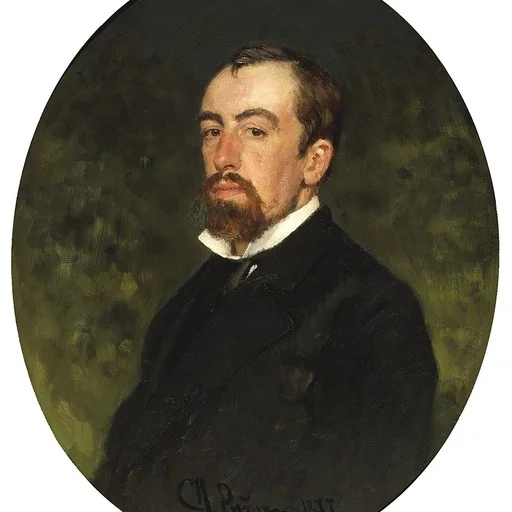
Vasily Dmitrievich Polenov (Russian: Василий Дмитриевич Поленов; 1 June 1844 – 18 July 1927) was a Russian landscape painter associated with the Peredvizhniki movement of realist artists.

 Neitsyt Marian ilmestyminen pyhittäjä Aleksanteri Syväriläiselle kirkon perustuksella
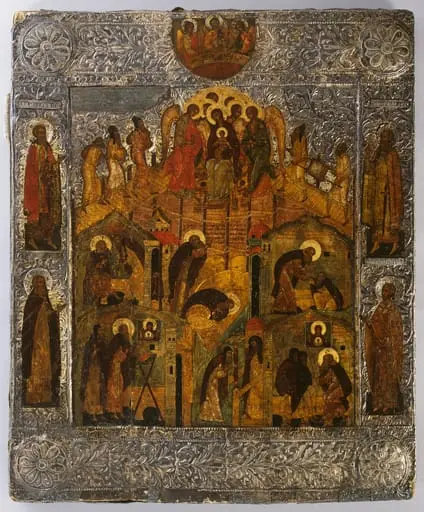
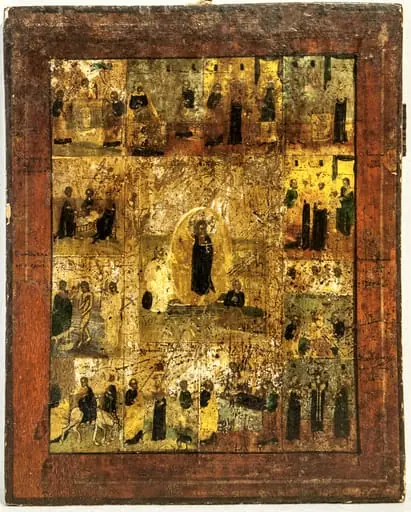 Compoziție complexă, (13 scene), centrată pe scena Învierii. Scena ridicării din mormânt a Mântuitorului, într-o mandorlă, lângă piatra mormântului, îngerul în veșminte albe, în fața pietri de mormânt probabil un soldat. În celelalte casete sunt reprezentate scene din viața lui Iisus Hristos și a Maicii Domnului, cu un număr redus de personaje (3 – 4, maxim 5): „Sfânta Treime”(ospitalitatea lui Avraam), Nașterea Fecioarei Maria”, „Intrarea Maicii Domnului în biserică(Ovidenia), „Buna Vestire”, „Nașterea lui Iisus Hristos”, Întâmpinarea Domnului(Stretenia), „Botezul lui Hristos” „Schimbarea la față” „Intrarea Domnului în Ierusalim”, „Înălțarea Domnului, Adormirea Maicii Domnului, „Înălțarea Sfintei Cruci”. Toate personajele au nimburi trasate cu alb.Desen schematic, trasat cu finețe, ușor dezordonat, ca și inscripțiile. Cromatica specifică, tonuri calde, brun, galben, roșu în contrast cu verde, albastru, negru, valorate de foița de aur. Chenarul lat, roșu(tipul de icoană krasnushka) Stratul pictural prezintă deteriorări, zgârieturi și lacune, deteriorări cromatice. Pictura se remarcă prin finețea execuției miniaturale.
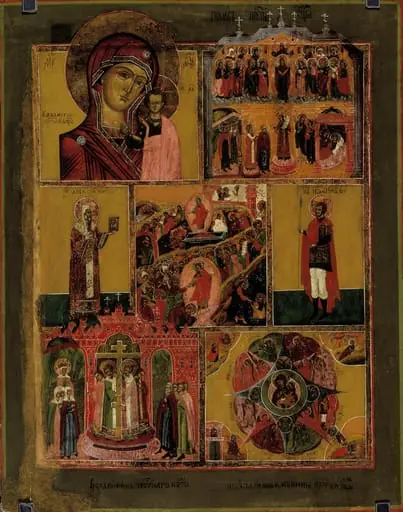 Pääsiäinen ja kirkkovuoden juhlia, venäläinen ikoni
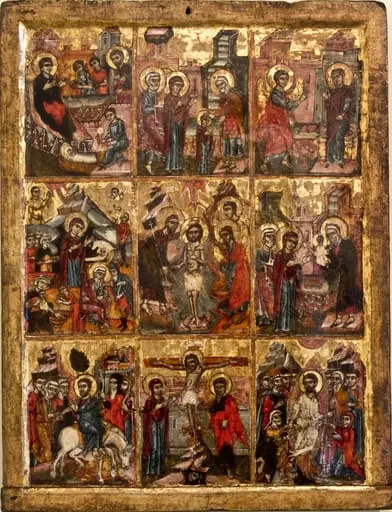 Scene din viața lui Iisus și a Maicii Domnului
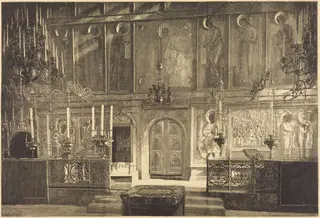 L'Inconestase de la Cathedrale de l'Assomption
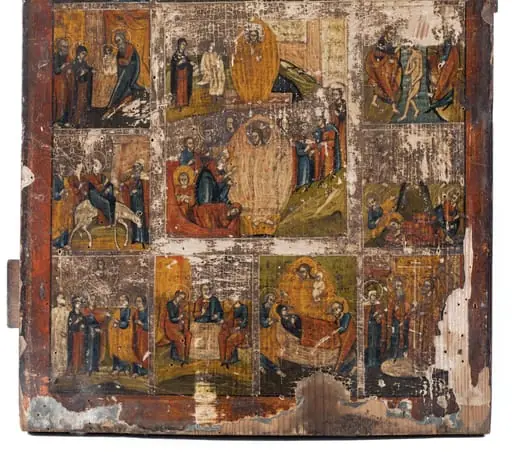 Scene biblice
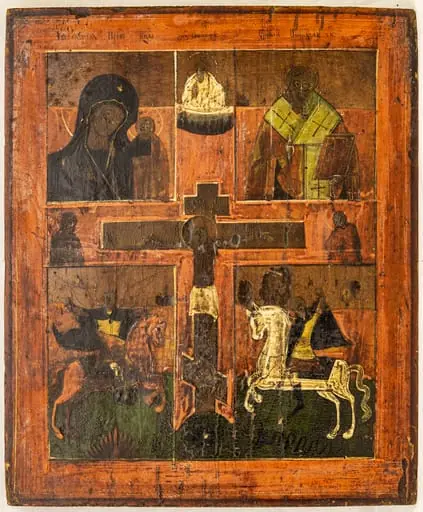 Icoană în patru registre, în centru Iisus Crucificat
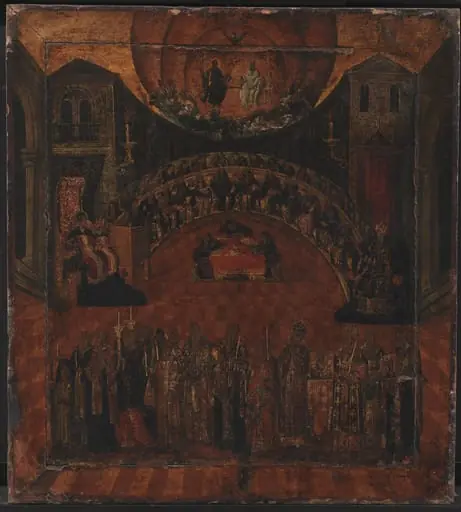 The Council of Nicaea A.D. 787
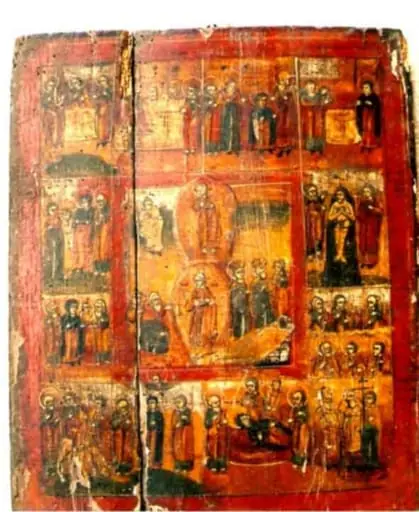 Coborârea în iad
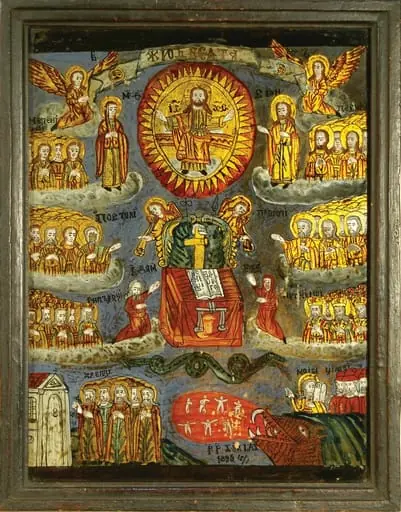 Judecata de Apoi
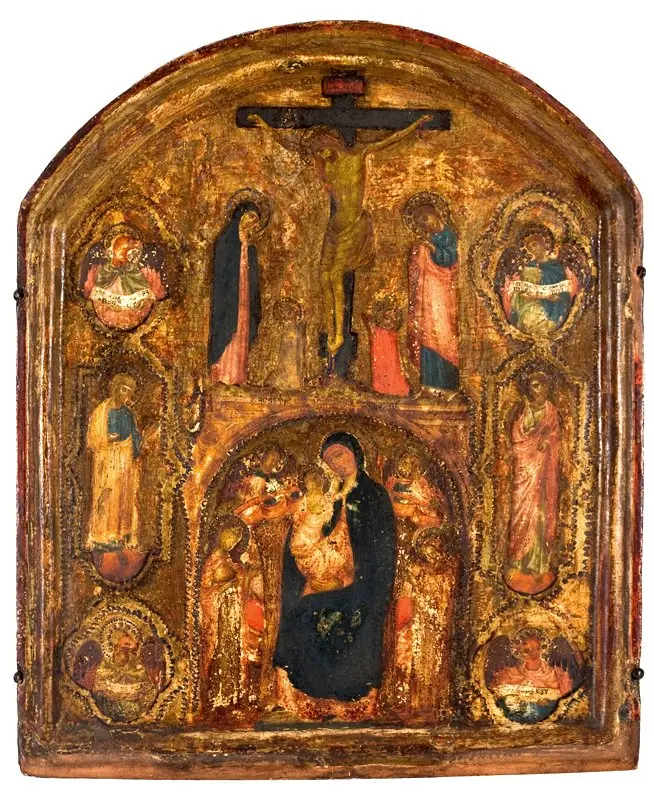 The Crucifixion with the Virgin and Child among Saints, Angels and the Symbols of the Evangelists
- Wevala, geef tuvel