Artwork
Moonlight
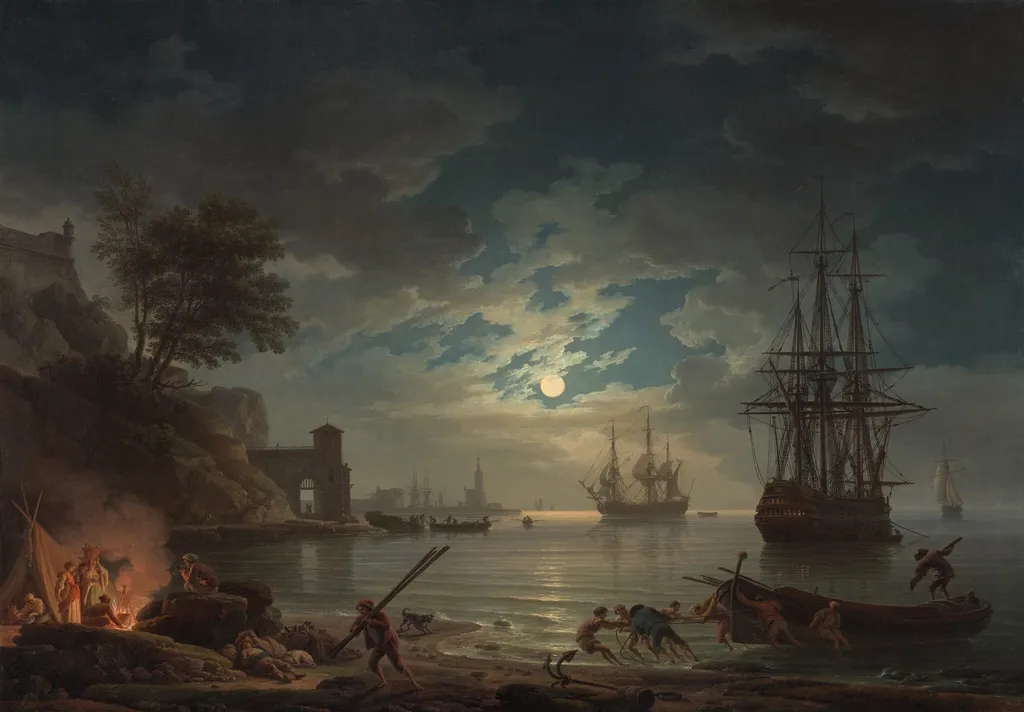
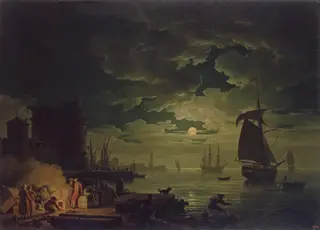
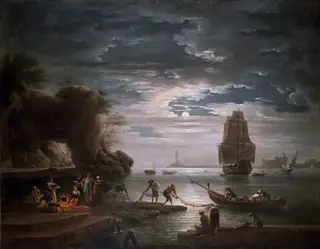
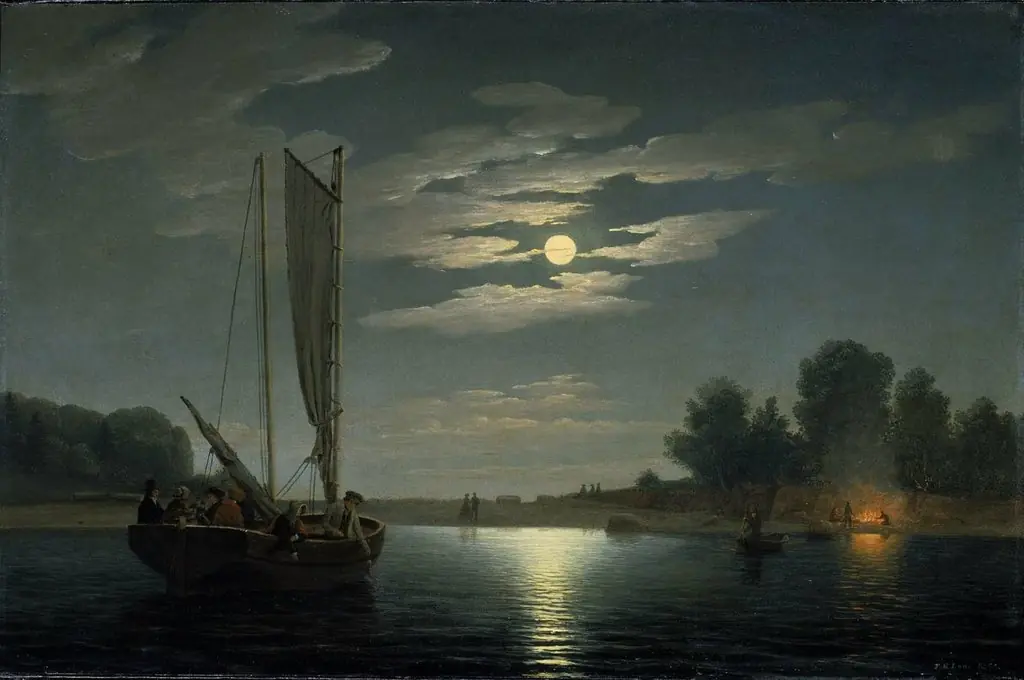
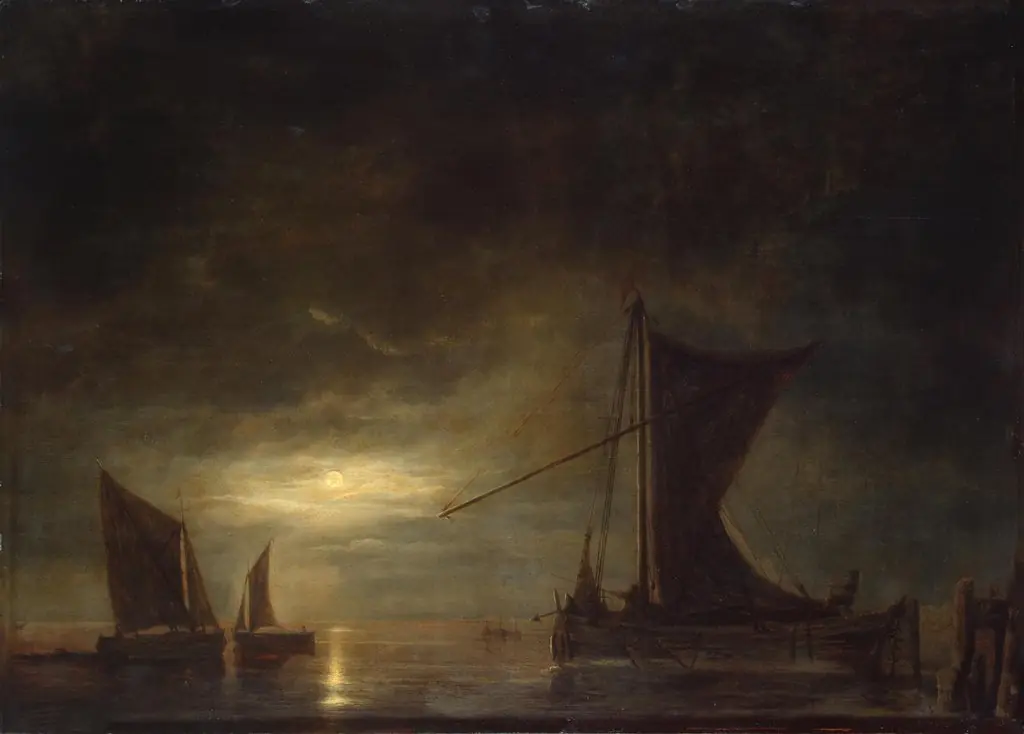
Moonlight is an oil painting by the Rococo painting artist Joseph Vernet. It dates from 1772 and is held in the collection of the National Gallery of Art.
About this work
Subject & Meaning
Its meaning draws on classical iconography of nocturnal scenes to explore themes of nature's sublime power and the human condition within it.
The painting depicts a nocturnal river scene illuminated by moonlight, showing a solitary figure in a small boat navigating shadowy waters. The composition emphasizes the quiet drama of night, using the luminous sky to heighten the sense of mystery and contemplation. Symbolically, the moon functions as a guiding light in the darkness, suggesting themes of revelation and the passage of time, while the small boat may evoke human vulnerability against nature's vastness. Together these elements convey a meditative reflection on solitude and the interplay between light and obscurity.
The work's subject is a moonlit river landscape rendered in oil on canvas, created in 1772 by Claude-Joseph Vernet. Its meaning draws on classical iconography of nocturnal scenes to explore themes of nature's sublime power and the human condition within it.
Technique & Style
The painting is executed in oil on canvas, a medium typical of Vernet’s marine works of the 1770s. Its composition emphasizes the quiet interplay of moonlight and water, rendered through layered glazes that modulate tonal transitions from deep indigo to luminous silver. Handling is smooth and controlled, with fine, blended brushwork in the sky and more distinct touches in the ship’s rigging and foam.
The work remains in good condition; no significant losses or abrasions are recorded in the National Gallery’s holdings.
Dimensions are 114.6 cm in height and 163.8 cm in width.
History & Provenance
Moonlight is an oil on canvas painting by Claude-Joseph Vernet, created in 1772 as confirmed by its inception date. The work entered the collection of the National Gallery of Art, Washington, D.C., following its purchase from Richard Green, London, in April 2018.
Moonlight is an oil on canvas painting by Claude-Joseph Vernet, created in 1772 and accessioned as NGA 2018.13.1 at the National Gallery of Art in Washington, D.C. It was previously held by Richard Green in London before its purchase in April 2018. The work is part of the National Gallery of Art's collection and has been exhibited as part of the gallery's holdings, as documented in its provenance and collection records.
Context
Moonlight, an oil on canvas painting by Claude-Joseph Vernet completed in 1772, entered the National Gallery of Art's collection in April 2018 following its acquisition from Richard Green in London. The work, cataloged in the National Gallery of Art's records as accession 2018.13.1, exemplifies the artist's contribution to 18th-century French landscape painting and is recognized within the broader corpus of Vernet's oeuvre.
Overview
Created in 1772, this oil on canvas presents a nocturnal harbor scene bathed in moonlight. The composition balances a quiet shoreline with distant vessels, emphasizing the interplay of natural and artificial illumination. The work belongs to the late Rococo period and reflects the artist’s focus on maritime subjects.
Own this work as a print
Artist & collection

Artist
Claude-Joseph Vernet (French pronunciation: ; 14 August 1714 – 3 December 1789) was a French painter. His son Carle Vernet and daughter Marguerite Émilie Chalgrin were also painters.