Artwork
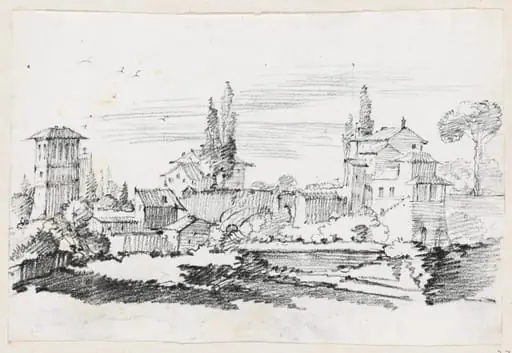
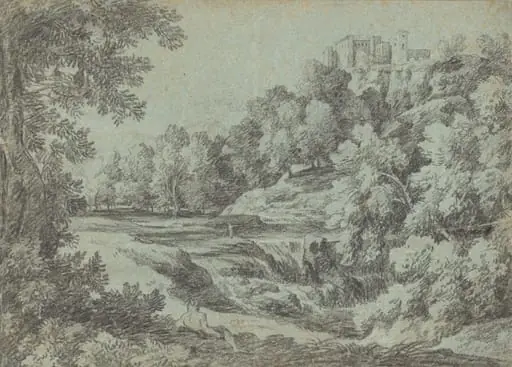
An Italian Town with a Stone Bridge and a Waterfall
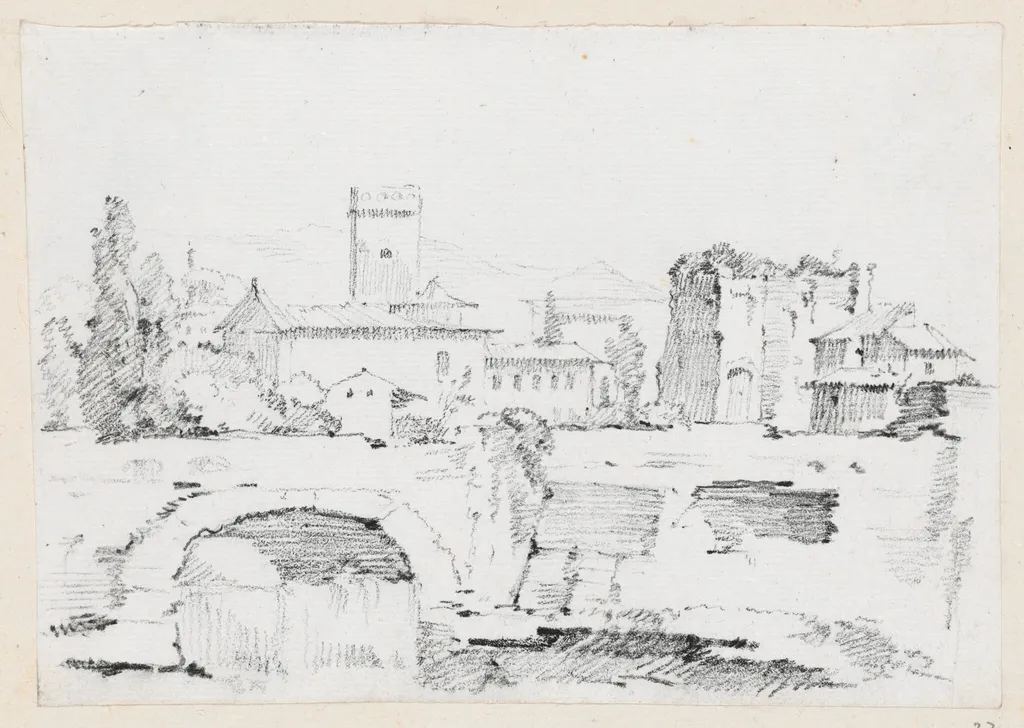
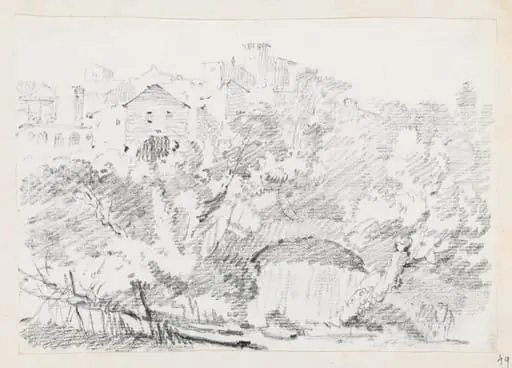
An Italian Town with a Stone Bridge and a Waterfall is a graphite drawing by the Baroque artist Joseph-Marie Vien. It dates from 1747 and is held in the collection of the National Gallery of Art.
About this work
Overview
Joseph-Marie Vien’s 1747 graphite drawing on laid paper presents a tranquil Italian settlement centered around a stone bridge spanning a river, with a waterfall cascading behind the built‑up. The composition balances architectural forms and natural elements, offering a concise yet evocative view of a hillside town framed by trees and modest rooftops.
Subject & Meaning
The work captures a picturesque scene that merges human habitation with the surrounding landscape, emphasizing the harmonious coexistence of architecture and water. By foregrounding the bridge and waterfall, Vien highlights the flow of travel and nature, reflecting an 18th‑century fascination with idyllic rural vistas and the charm of Italian locales.
Technique & Style
Executed in graphite, the drawing relies on varied hatching and shading to model depth, particularly in the rippling water and the shadows beneath the bridge. The loose, rapid lines convey atmospheric texture, while the contrast of light and dark recalls Baroque sensibilities that favored dramatic chiaroscuro even in preparatory sketches.
History & Provenance
Created during Vien’s formative years, the piece follows his apprenticeship with Charles‑Joseph Natoire and precedes his later prominence in the Neoclassical movement. The drawing illustrates the early stage of his artistic development, documenting his engagement with landscape subjects before he turned to the classical themes that would define his mature career.
Own this work as a print
Artist & collection
Artist
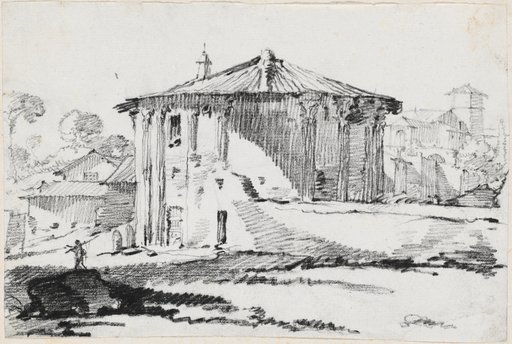
Joseph-Marie Vien (18 June 1716 – 27 March 1809) was a French painter. He was the last holder of the post of Premier peintre du Roi, serving from 1789 to 1791, before it was abolished during the French Revolution.