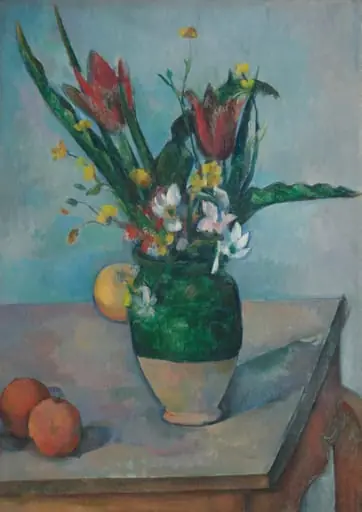
Fritillaries in a Copper Vase
1894
oil
canvas
From the collection of Musée d'Orsay
1894
oil
canvas
From the collection of Musée d'Orsay
Dominant colour
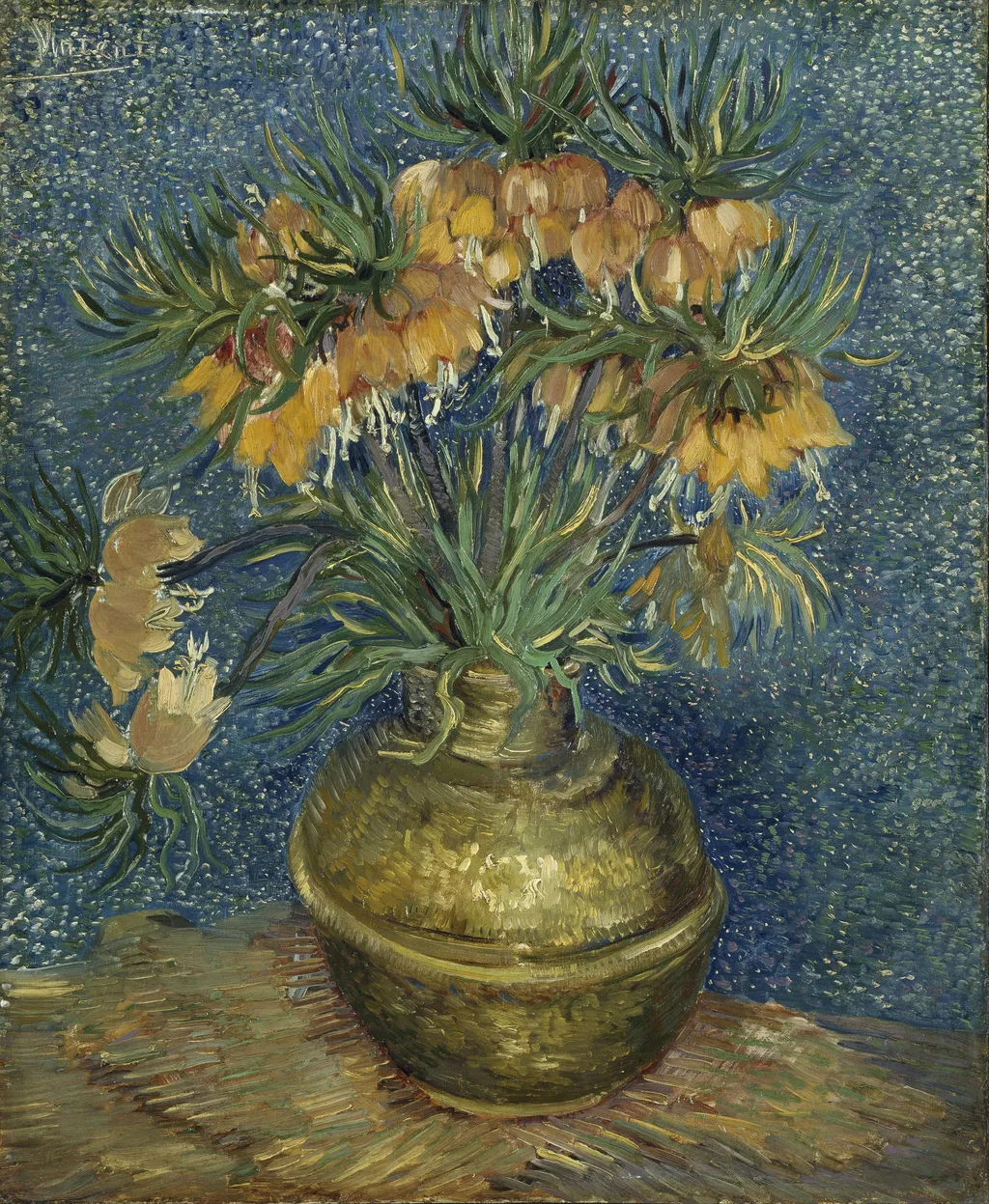
Fritillaries in a Copper Vase is a 1894 oil by Vincent van Gogh, a Post-Impressionism work, depicting Bouquet, held at Musée d'Orsay.
The painting features a bouquet of fritillaries in a copper vase, set against a wall. The flowers are predominantly yellow with green stems and leaves, while the vase is a warm, earthy tone. The wall behind the vase is a soft, muted color. The brushstrokes are visible, with thick layers of paint creating a textured effect. The overall atmosphere is one of simplicity and elegance, with the focus on the beauty of the flowers and the vase. This painting is reminiscent of the work of artist Vincent van Gogh.
Imperial Fritillaries in a Copper Vase is an oil painting on canvas created by the Post-Impressionist painter Vincent van Gogh in Paris, 1887. The painting is now part of the collection of the Musée d'Orsay in Paris, France. This work was made at a time of the life of Van Gogh when he first encountered influences from Impressionists and became aware of light and color, implementing it in his paintings. This painting presages some of his most famous subsequent works, and stands out from other still lifes because of the implementation of mixed techniques and complementary colors.
Source: wikipedia, available under CC BY-SA 4.0.
Imperial Fritillaries in a Copper Vase is an oil painting on canvas measuring 73.5 by 60.5 cm which was painted in Paris in 1887. It depicts a bouquet of golden imperial fritillaries in a copper vase, the shiny patina of which (surrounded by lavender highlights) "reflects the color of the flowers as the motted wall stands out with a combination of blue, green and yellow shades" with flecks of white like "sparkling lights." The "moody blues" and "vibrant golds" in the painting can also be appreciated in other of Van Gogh's works such as The Starry Night and Bedroom at Arles. This painting…
Source: wikipedia, available under CC BY-SA 4.0.
Out of 900 works, Van Gogh signed only about 130, Imperial Fritillaries in a Copper Vase among them (upper left corner). This means that he considered it a potential work that could be sold. The signature in the picture reads "Vincent", as he signed since he arrived to Paris and from then on. It is said that this was because French people could not pronounce his last name. Another theory states that he wanted to get away from the Van Gogh name as his ancestors were more conservative than him. He wanted to be recognized as an individual to be "unique".
Read the full account in the museum source.
Source: wikipedia, available under CC BY-SA 4.0.
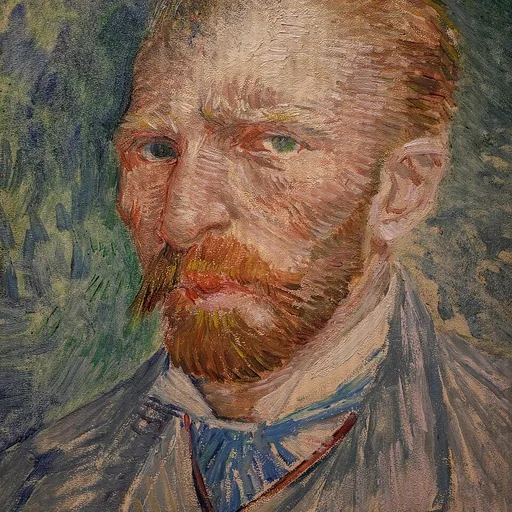
Vincent Willem van Gogh was a Dutch Post-Impressionist painter who is among the most famous and influential figures in the history of Western art.
See the richer artist page