Artwork
Women Picking Olives
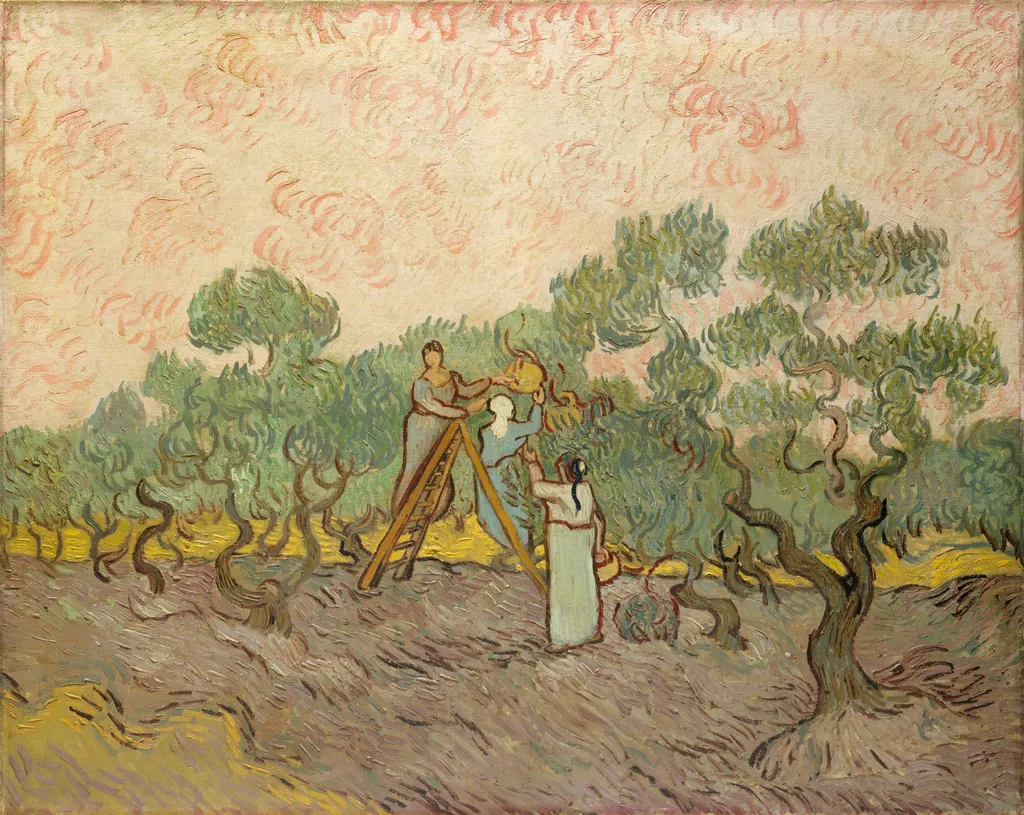
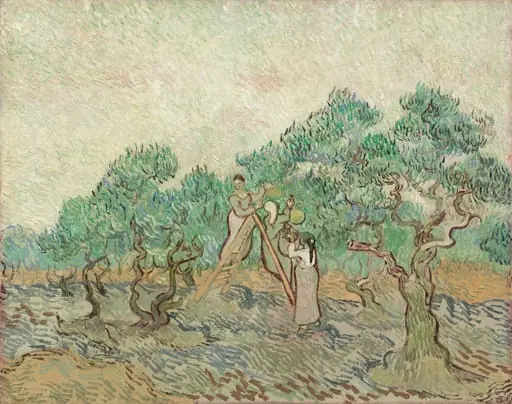
Women Picking Olives is an oil painting by the Post-Impressionist artist Vincent van Gogh. It dates from 1889 and is held in the collection of the Metropolitan Museum of Art.
About this work
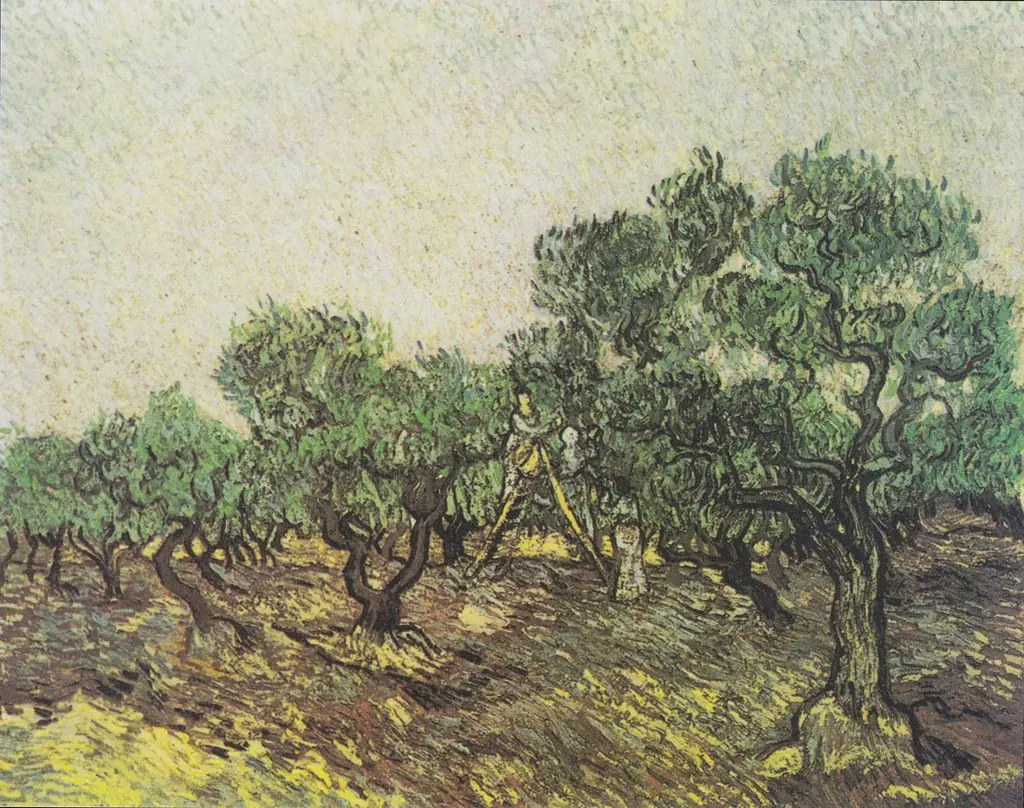
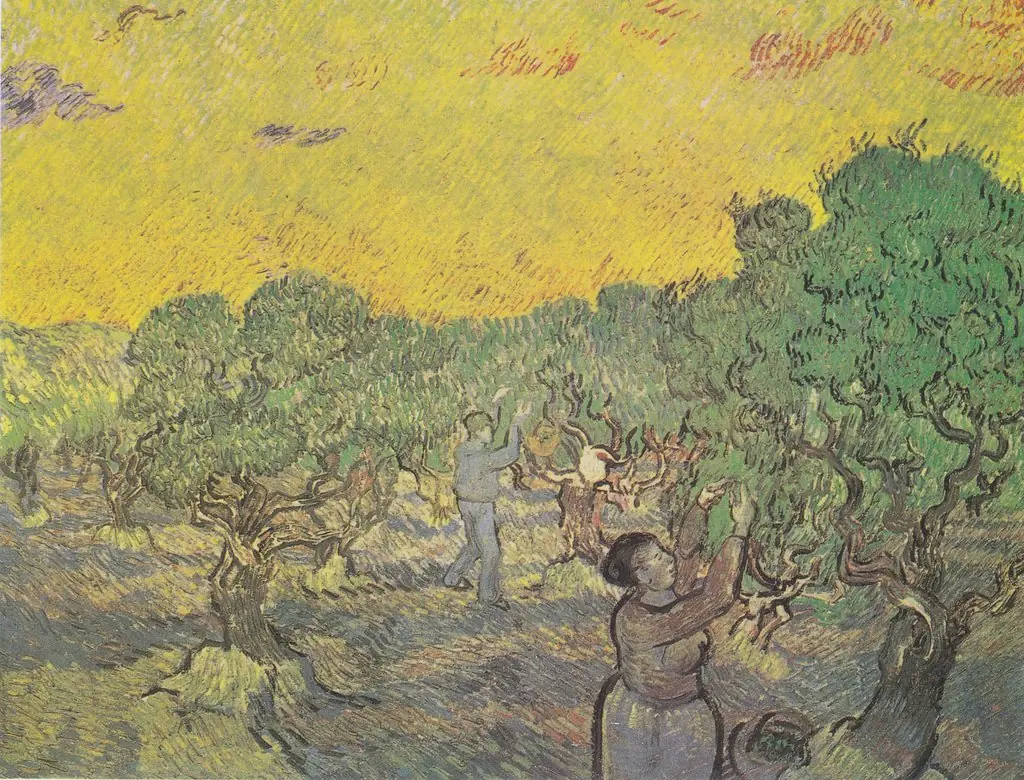
Three women in long dresses pick olives, one on a ladder, one seated on the ground, one standing beside it, among trees and hills. The palette stays muted, greens, browns, and yellows, and the brushwork is bold and full of movement. Van Gogh painted it in 1889.
Subject & Meaning
Women Picking Olives depicts female laborers harvesting olives in a Provençal grove, a subject Van Gogh treated as a landscape genre scene.
Women Picking Olives depicts female laborers harvesting olives in a Provençal grove, a subject Van Gogh treated as a landscape genre scene. The composition centers on women working among olive trees (Olea europaea), with a stepladder and ladder included among the depicted elements, situating the figures within the agricultural rhythms of southern France. Painted in 1889 at Saint-Rémy-de-Provence, the work captures the everyday rural labor of olive cultivation, a traditional activity deeply tied to the Mediterranean landscape.
The imagery reflects Van Gogh's interest in peasant life and the dignity of manual work, presenting the harvest as a quiet, sustained engagement with the land rather than a dramatic event. The olive grove itself carries longstanding symbolic resonance as a marker of peace, endurance, and rootedness, lending the scene a contemplative quality beneath its straightforward depiction of seasonal work.
Technique & Style
Women Picking Olives is an oil painting on canvas, measuring approximately 72.7 cm in height and 91.4 cm in width. The work is classified as a landscape and depicts women harvesting olives amid an olive grove with a stepladder. The medium is oil paint, and the support is a canvas ground, as indicated by the artwork's material description.
History & Provenance
Women Picking Olives was painted by Vincent van Gogh in 1889 at Saint-Rémy-de-Provence, executed in oil on canvas. The work subsequently passed through several owners. It was first held by Johanna van Gogh-Bonger, the artist's sister-in-law, before entering the collection of Dikran Kelekian.
The painting then moved through the American Art Association, the dealer Joseph Brummer, and later Wildenstein & Company, before entering the collection of the Metropolitan Museum of Art in 1967, where it is held under accession number 67.187.1. The documented chain of ownership reflects the typical early-twentieth-century circulation of Van Gogh's Saint-Rémy landscapes through prominent dealers and private collectors before eventual institutional acquisition.
Overview
Painted in November 1889 during his stay at the Saint-Paul-de-Mausole asylum in Saint-Rémy, Women Picking Olives is one of several studies Vincent van Gogh executed of olive harvesters in the surrounding fields. The composition features three women engaged in the labor of gathering olives, rendered with the artist's characteristic rhythmic brushwork and vibrant, contrasting palette. One figure stands on a ladder to reach higher branches, while another sits on the ground collecting the fruit, and a third stands nearby, all framed by the gnarled trunks of olive trees and a backdrop of rolling hills.
Van Gogh painted this work as part of his intense exploration of rural labor and the natural landscape of Provence, seeking to capture the spiritual and emotional resonance of the scene rather than a strictly documentary view. The painting reflects his mature style, where the swirling, energetic application of oil paint conveys the movement of the wind and the vitality of the harvest. It stands as a significant example of his late-period work, demonstrating his ability to find profound beauty and dignity in the everyday activities of the peasantry, a recurring theme in his oeuvre during his time in southern France.
Own this work as a print
Artist & collection
Artist
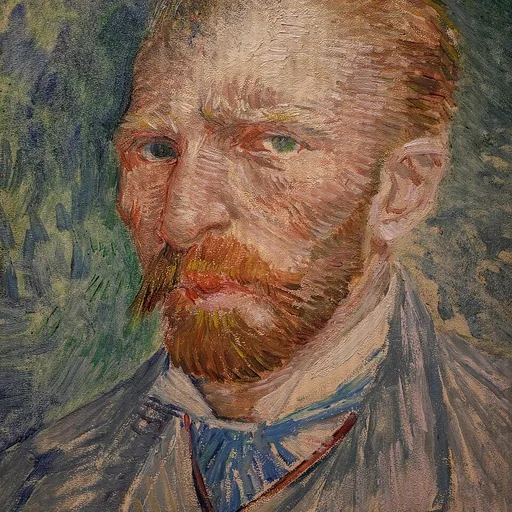
Vincent Willem van Gogh was a Dutch Post-Impressionist painter who is among the most famous and influential figures in the history of Western art.