Artwork
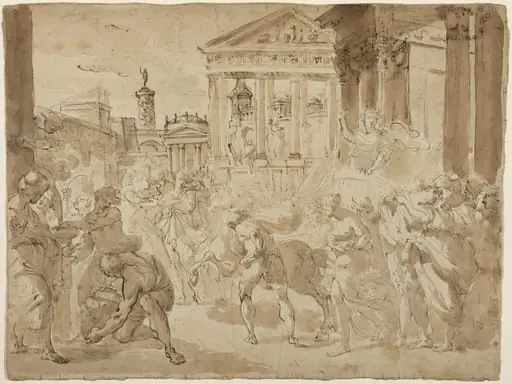
A Roman Triumph
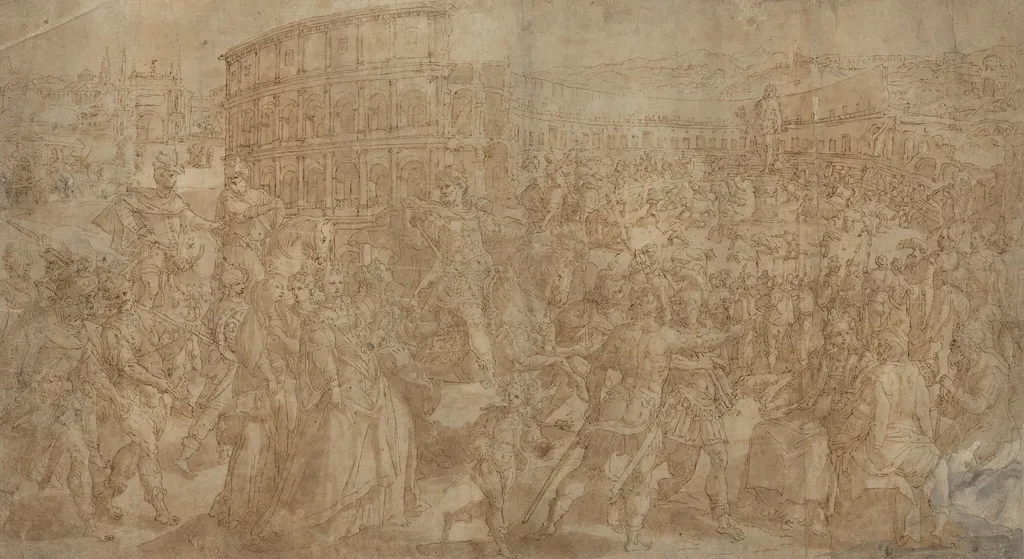
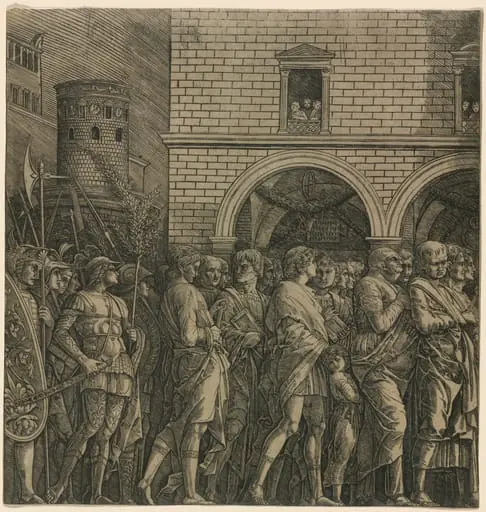
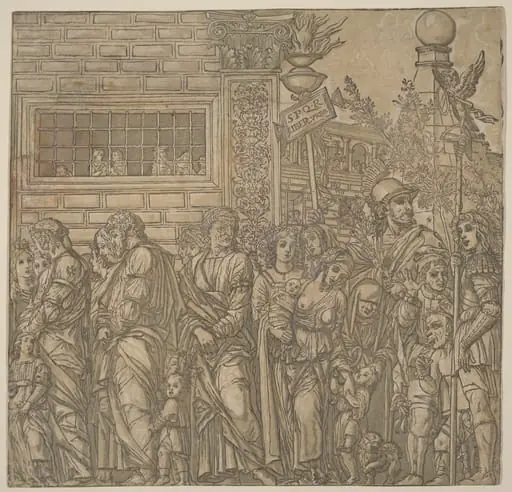
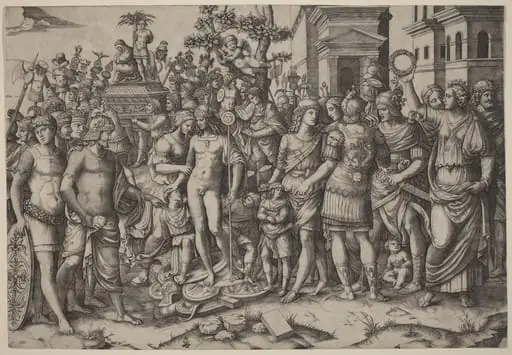
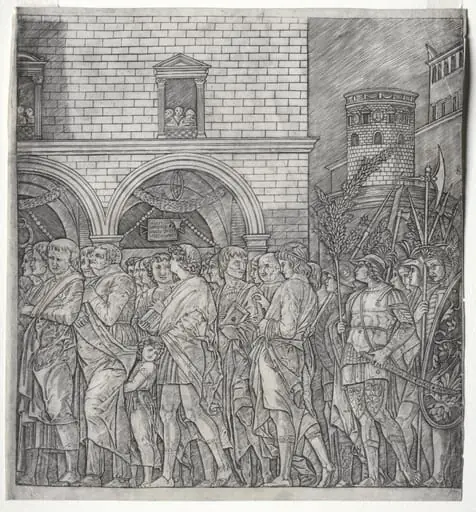
A Roman Triumph is an ink drawing by the Renaissance artist Maarten de Vos. It dates from 1568 and is held in the collection of the National Gallery of Art.
- Inscription
- Inscribed:false monogram (Karel van Mander) and date, lower left in brown ink: KI / 1613; later hand, upper center in graphite: Karl van Mander; lower center verso in graphite: #56 / ROCK MAN PRINTS; lRv//in graphite: heavy backing / 29 x 20 / MARTIN DE VOS / 1532-1603
About this work
Overview
The artist employs wash to create atmospheric depth and model the forms, distinguishing the foreground action from the architectural setting.
Created in 1568, A Roman Triumph is a pen and brown ink drawing with brown and gray wash by the Flemish Mannerist Maarten de Vos. The work depicts a dynamic and densely populated procession celebrating a military victory, set against a backdrop of monumental classical architecture featuring arches and columns. De Vos organizes the chaotic energy of the scene through a complex arrangement of hundreds of tiny figures, including soldiers on foot and cavalry on horseback, all moving in a unified direction.
The artist employs wash to create atmospheric depth and model the forms, distinguishing the foreground action from the architectural setting. Executed early in de Vos's career, shortly after his return from Italy, the drawing reflects his assimilation of Italian Renaissance compositional principles and his interest in historical and allegorical subjects. The piece demonstrates the artist's skill in managing large-scale narrative complexity on a small scale, a characteristic that would define his later, more famous altarpieces and tapestry designs.
It stands as a significant example of Northern Mannerist draftsmanship, bridging the gap between the detailed precision of the Flemish tradition and the grandiose scale of Italian art.
Subject & Meaning
The scene depicts a celebratory military parade, suggesting a Roman triumph, a ceremonial victory procession that showcased conquered peoples, spoils, and victorious soldiers. The multitude of tiny figures conveys both the scale of the event and the ordered chaos of a public spectacle, emphasizing the power and grandeur associated with Roman imperial triumphs.
Technique & Style
De Vos employs extensive cross‑hatching to model form and generate tonal variation, allowing the ink drawing to achieve a sense of depth despite its monochrome palette. The brown and gray washes add subtle atmospheric shading, while the intricate line work defines architecture, armor, and movement, reflecting the Northern Renaissance’s meticulous draftsmanship.
History & Provenance
Created in the late sixteenth century, the drawing is attributed to Maarten de Vos, a Flemish painter known for his religious and historical compositions. The work’s provenance traces through several private collections before entering a museum holding of Northern Renaissance drawings, where it remains a reference for studies of Renaissance printmaking and narrative illustration.
Artist & collection


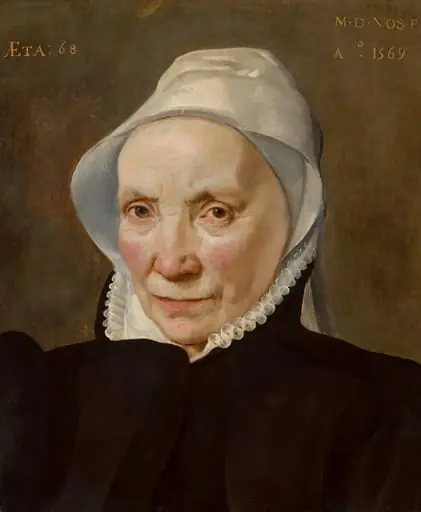 Portrait of a Woman Aged Sixty-Eight
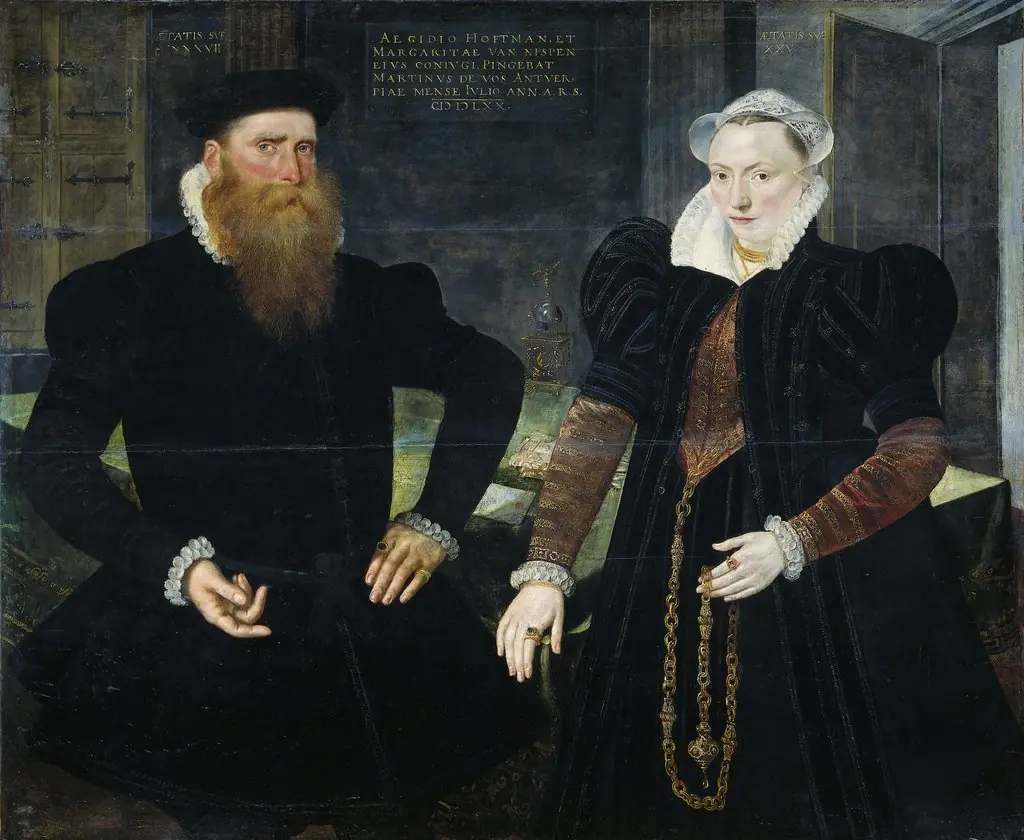 Portrait of Gillis Hooftman (1521-81). Shipowner, and his wife Margaretha van Nispen (b 1545)
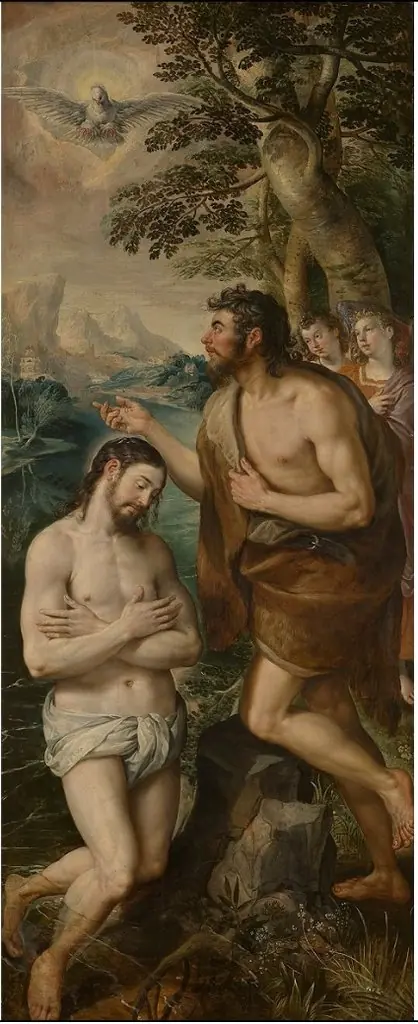 The Baptism of Christ
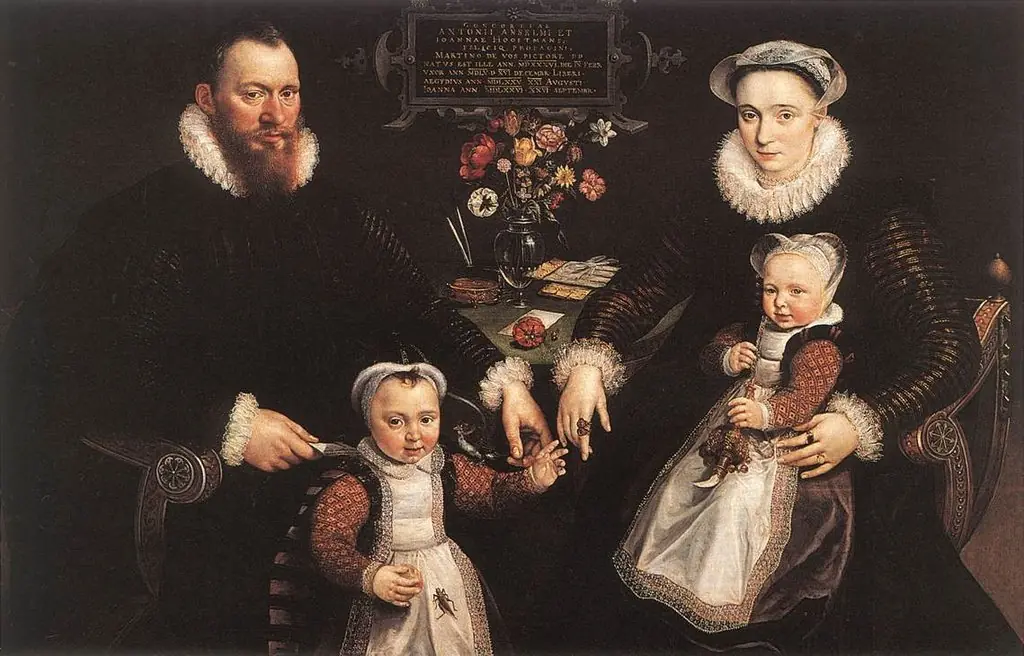 Portrait of Antonius Anselmus, His Wife and Their Children
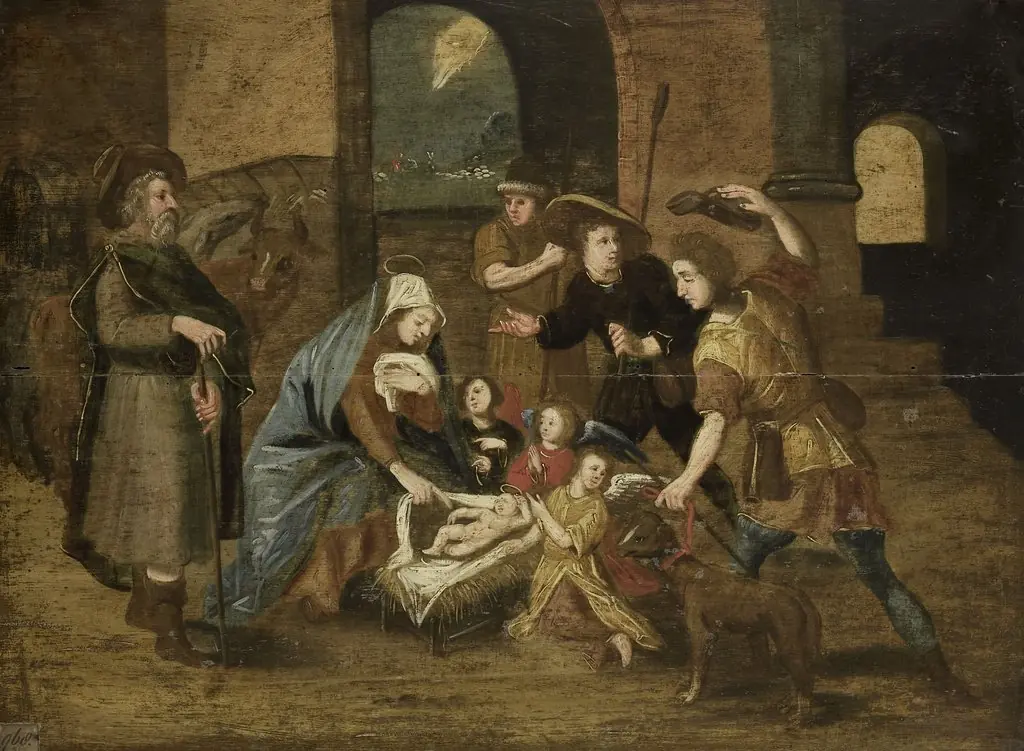 Adoration of the Shepherds
 The Adoration of the Kings
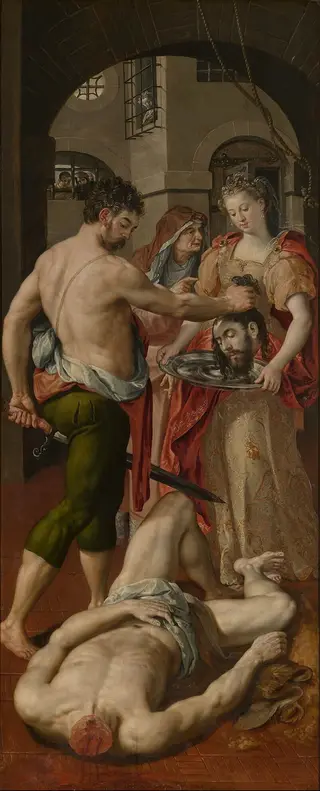 The Beheading of Saint John-Baptist
 Auferweckung des Lazarus