Artwork
Redemption Triptych: The Crucifixion
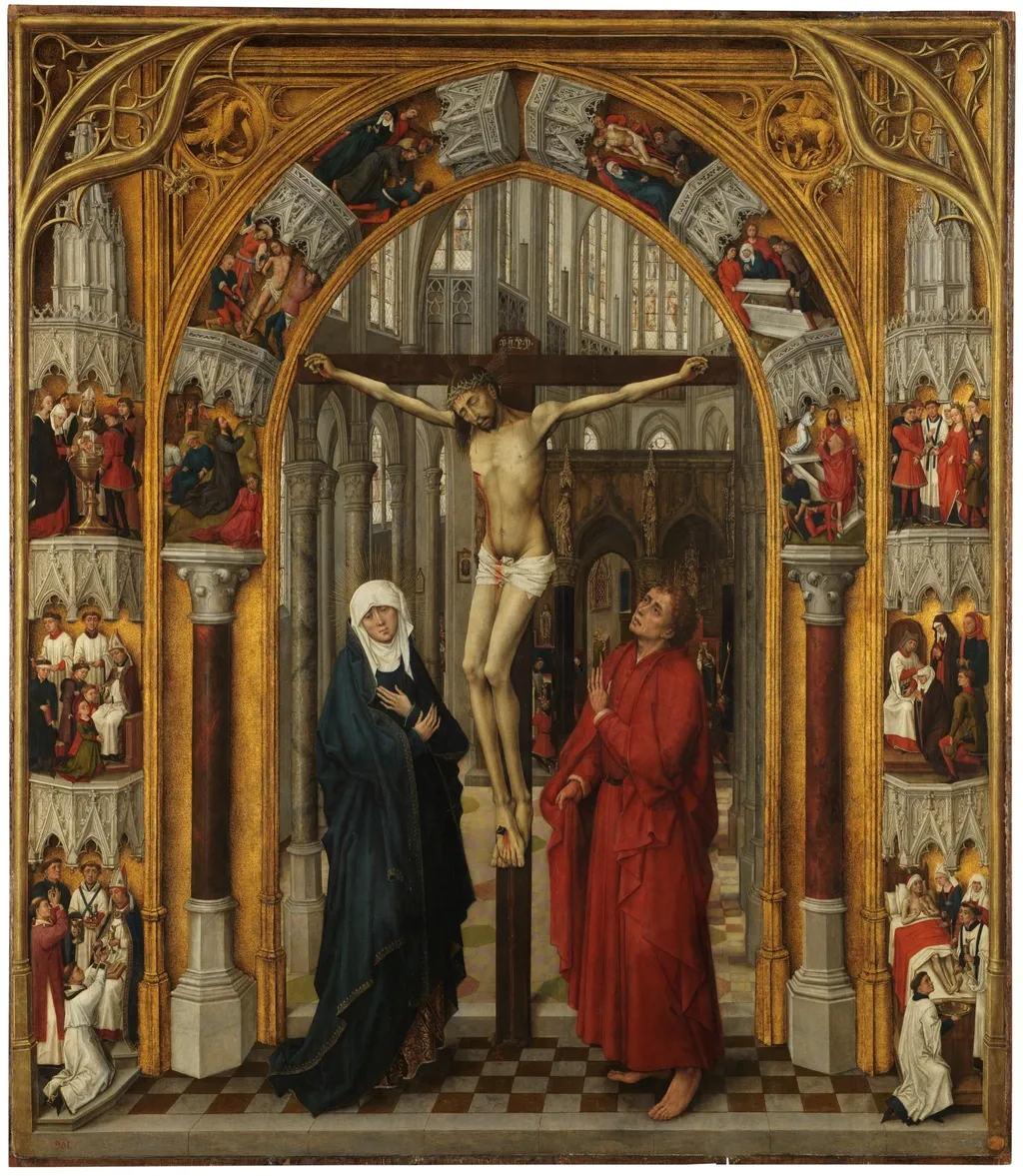
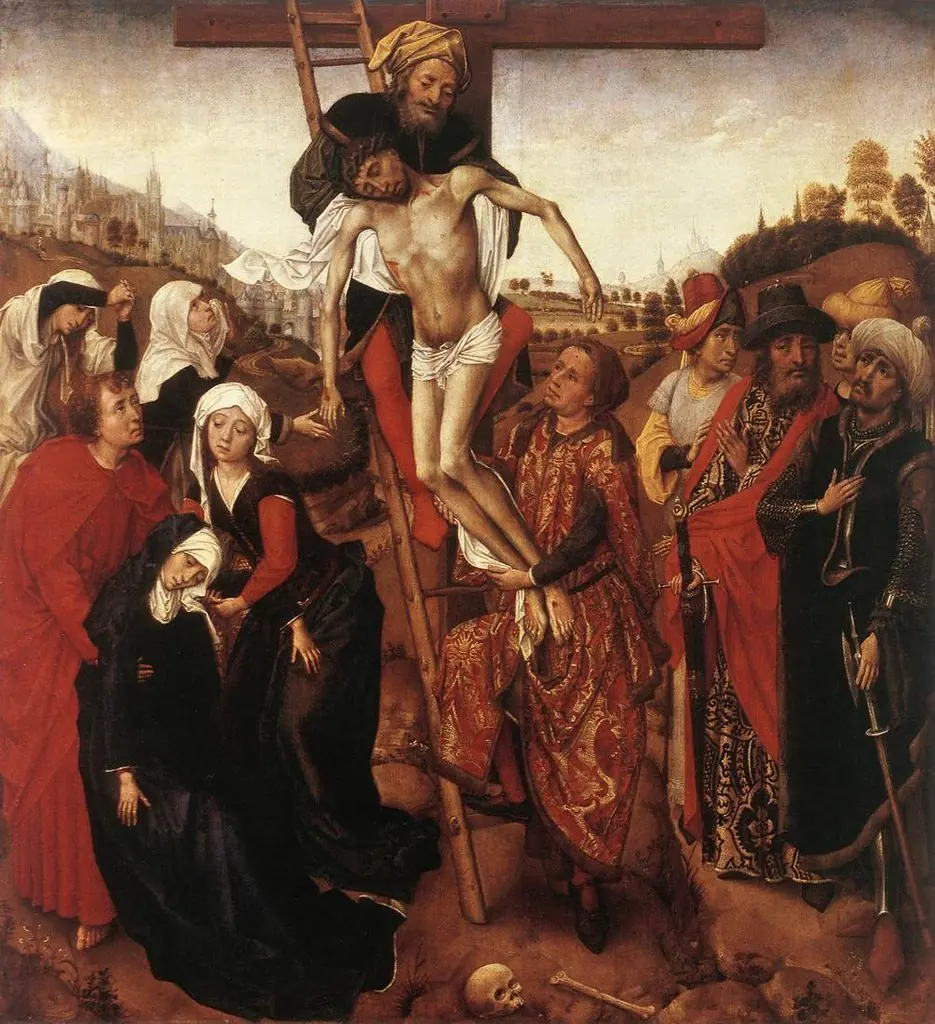
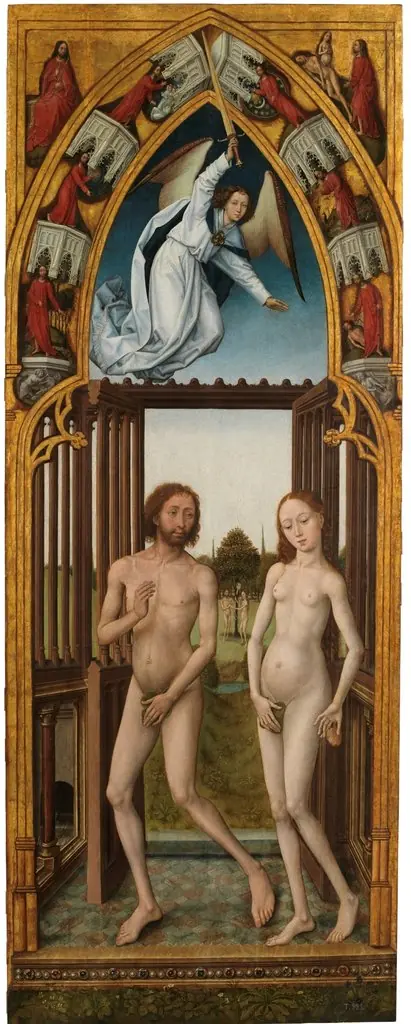
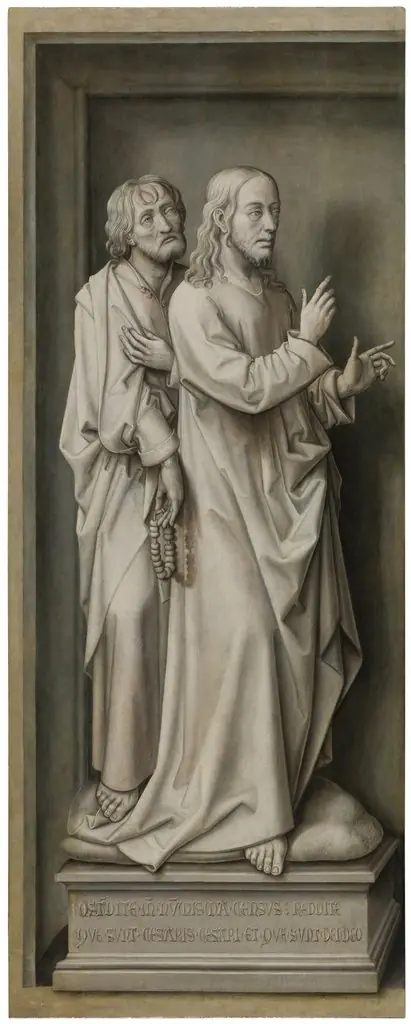
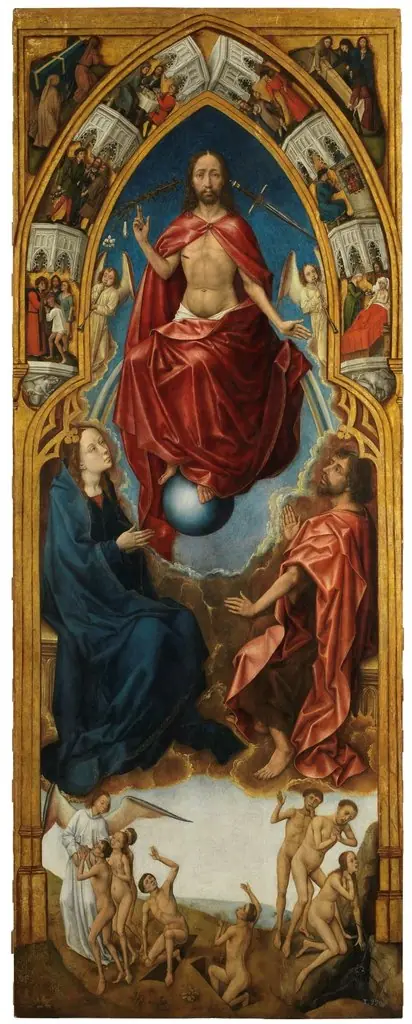
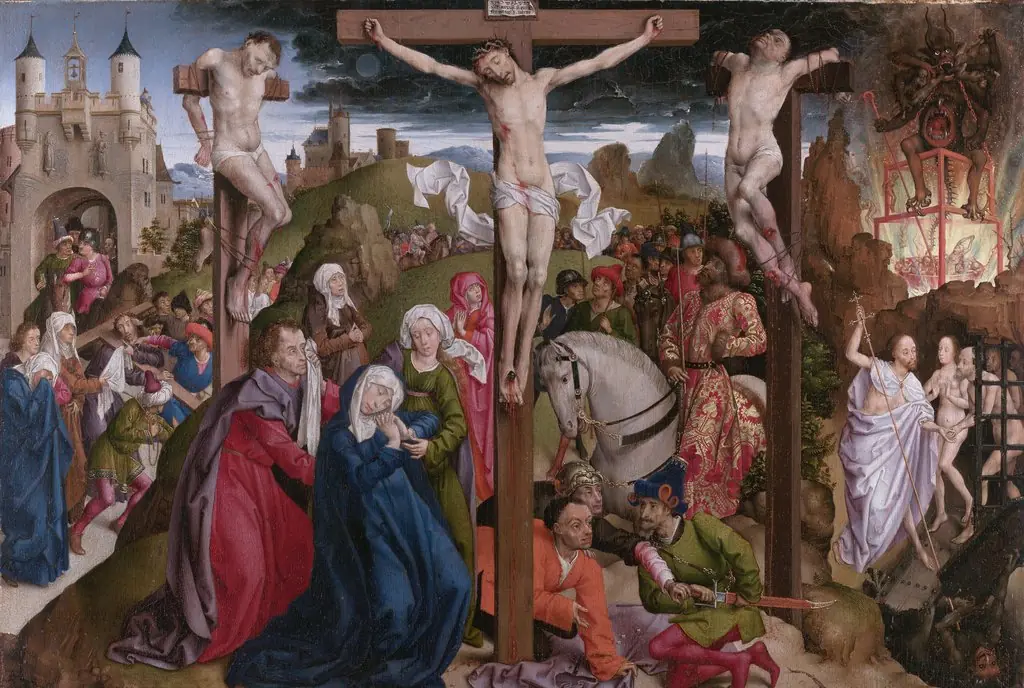
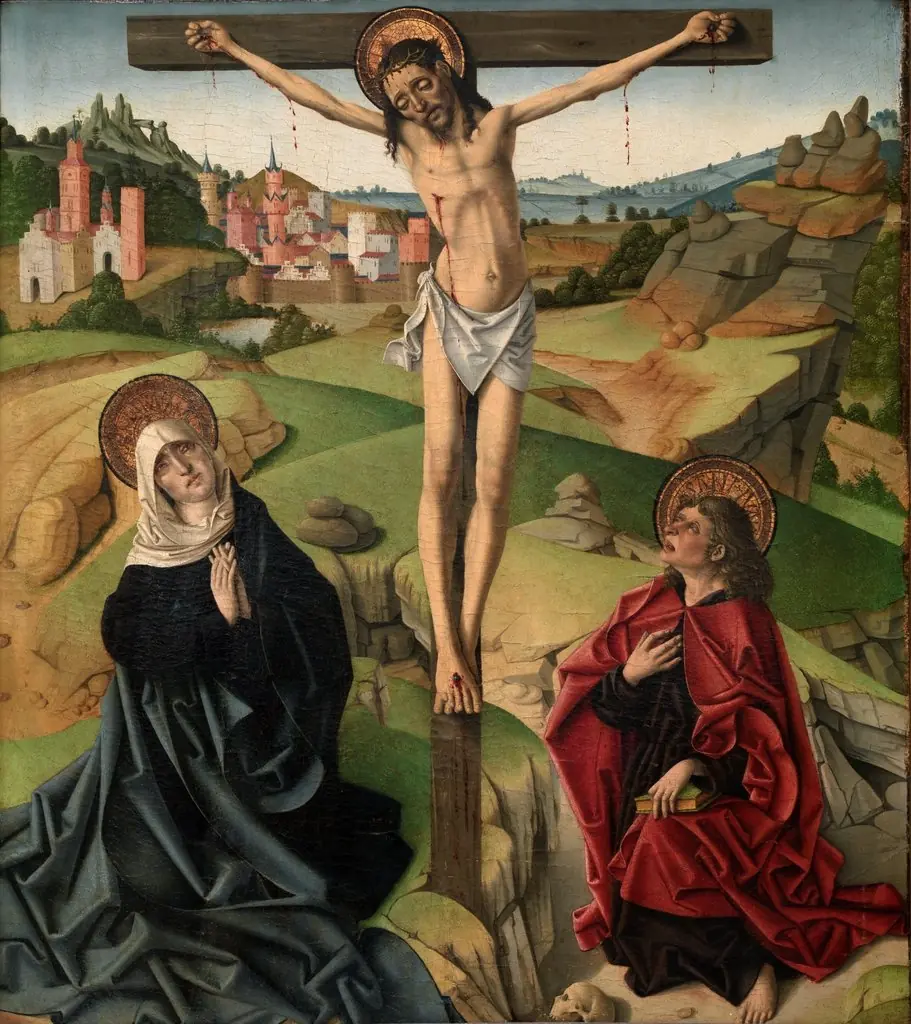
Redemption Triptych: The Crucifixion is an oil painting by the Northern Renaissance artist Vrancke van der Stockt. It dates from 1450 and is held in the collection of the Museo del Prado. Created circa 1450, the Redemption Triptych presents a central scene of the crucifixion flanked by two auxiliary panels.
About this work
Technique & Style
Stylistically, the piece is classified as a religious painting that centrally depicts the cross, reflecting the devotional genre typical of the period.
Created around 1450, the Redemption Triptych: The Crucifixion is executed in oil paint on a wooden panel support. The work measures 195 cm in height and 172 cm in width. Stylistically, the piece is classified as a religious painting that centrally depicts the cross, reflecting the devotional genre typical of the period. The application of oil medium on panel allowed for the detailed rendering characteristic of the artist's technique.
History & Provenance
The Redemption Triptych: The Crucifixion was created in 1450 by Vrancke van der Stockt as an oil painting on panel. It was originally commissioned for a religious context and later entered the collection of the Museo del Prado, where it remains housed today. The work measures 195 cm in height and 172 cm in width, reflecting its substantial devotional scale.
Overview
Created circa 1450, the Redemption Triptych presents a central scene of the crucifixion flanked by two auxiliary panels. Executed in oil on wood, the work measures roughly the dimensions typical of portable devotional triptychs and is presently housed in Madrid’s Museo del Prado. Its composition centers on a lifelike depiction of Christ on the cross, framed by architectural elements that recede into a tiled floor.
Subject & Meaning
The central image portrays the nailed body of Jesus, modestly covered by a simple cloth, suspended against a stone edifice with arched openings. Flanking figures, most notably the Virgin Mary and St. John, gaze upward, their expressions conveying grief and contemplation. The overall tone invites meditation on sacrifice and redemption, aligning with the devotional purpose of such altarpieces in the late medieval period.
Context
Produced during the Northern Renaissance, the piece exemplifies the era’s shift toward heightened naturalism and individualized emotional expression in religious art. Its triptych format catered to personal devotion, allowing viewers to engage with the narrative of Christ’s passion in a compact, portable format that could be opened for contemplation and closed for everyday use.
Own this work as a print
Artist & collection
Artist
Vrancke van der Stockt (before 1420 - 14 June 1495) was an early Netherlandish painter. He is most notable as a "direct heir and popularizer" of Rogier van der Weyden.