Artwork
Redemption Triptych: Adam and Eve Expulsed from Paradise
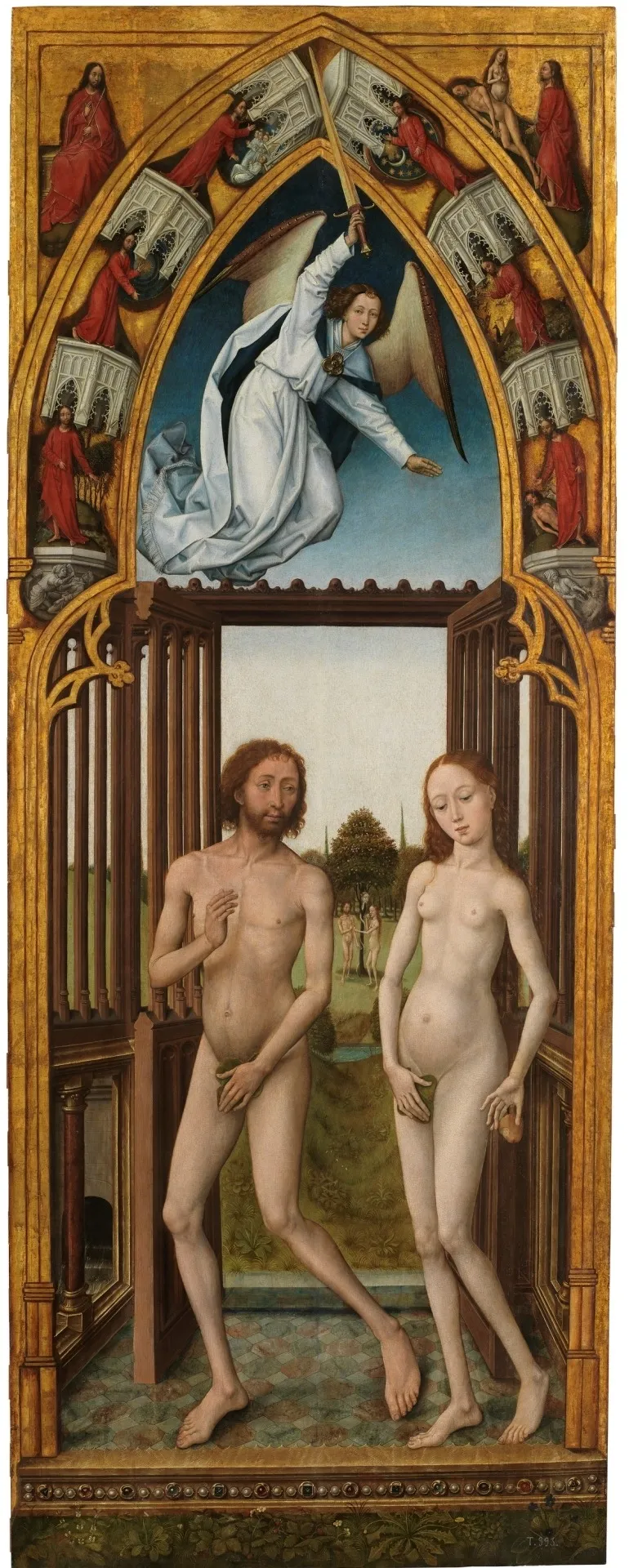
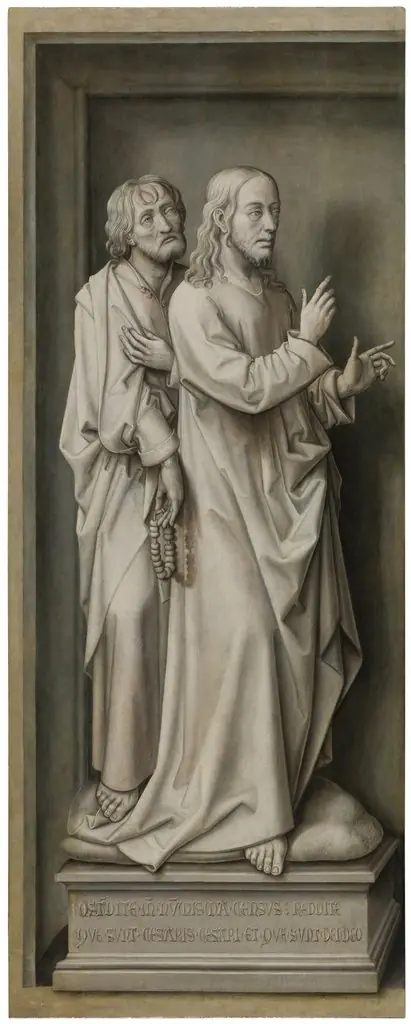
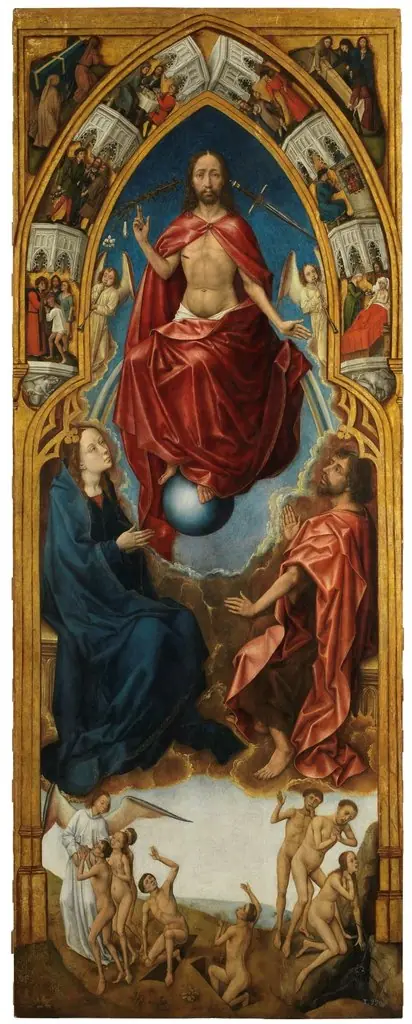
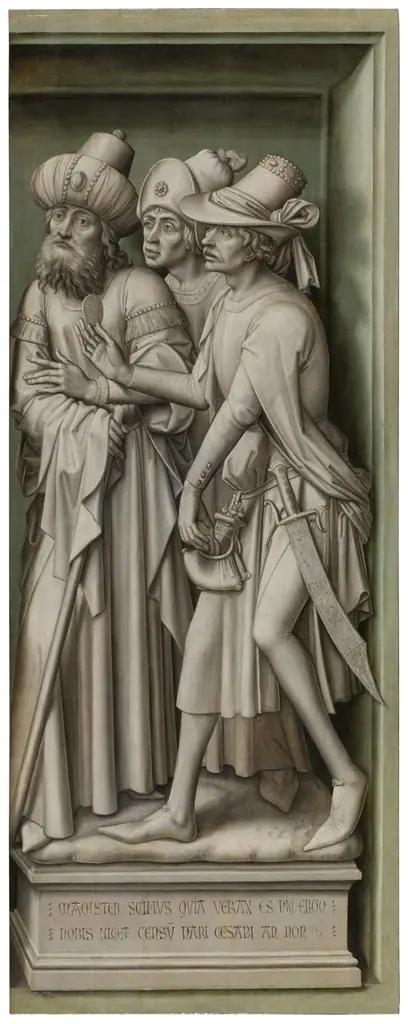
Redemption Triptych: Adam and Eve Expulsed from Paradise is an oil painting by the Northern Renaissance artist Vrancke van der Stockt. It dates from 1450 and is held in the collection of the Museo del Prado.
About this work
Subject & Meaning
Created by Vrancke van der Stockt in 1450, the painting illustrates the moment the first humans are cast out of Eden following their transgression.
The work depicts the biblical narrative of the expulsion of Adam and Eve from Paradise, serving as a central religious subject. Created by Vrancke van der Stockt in 1450, the painting illustrates the moment the first humans are cast out of Eden following their transgression. As a religious triptych, the imagery represents the theological concept of the Fall of Man and the subsequent need for redemption.
The composition focuses specifically on this pivotal event from Genesis, utilizing the medium of oil on panel to visualize the separation of humanity from divine grace.
Technique & Style
Created in 1450 by Vrancke van der Stockt, this religious work is executed in oil paint on a panel support. The triptych measures 195 cm in height and 77 cm in width. Stylistically, the composition focuses on the biblical narrative of Adam and Eve's expulsion from Paradise, adhering to the conventions of mid-15th-century religious art.
The application of oil medium on wood panel reflects the standard technical approach for Netherlandish painting of this period, allowing for the detailed rendering of figures and narrative elements central to the piece's devotional function.
History & Provenance
The Redemption Triptych panel depicting Adam and Eve Expulsed from Paradise was created by Vrancke van der Stockt in 1450, executed in oil paint on panel. The work is associated with the Museo del Prado collection, with a documented prior association with the Museo de la Trinidad, and its current location is the Museo del Prado. The panel measures 195 cm in height by 77 cm in width. No further details regarding commission, intermediate ownership, or acquisition history are recorded in the available sources.
Overview
Created circa 1450 by Vrancke van der Stockt, a Flemish painter linked to Rogier van der Weyden’s workshop, this oil triptych illustrates the biblical moment when Adam and Eve are driven from Eden. The work is part of the Northern Renaissance corpus and is currently housed in Madrid’s Museo del Prado.
Context
Van der Stockt’s work reflects the diffusion of Rogier van der Weyden’s compositional language, especially in the treatment of human emotion and spatial arrangement. The depiction of the expulsion aligns with contemporary theological emphasis on redemption, a theme frequently explored in devotional art of the period.
Artist & collection
Artist
Vrancke van der Stockt (before 1420 - 14 June 1495) was an early Netherlandish painter. He is most notable as a "direct heir and popularizer" of Rogier van der Weyden.

- Adam and Eve
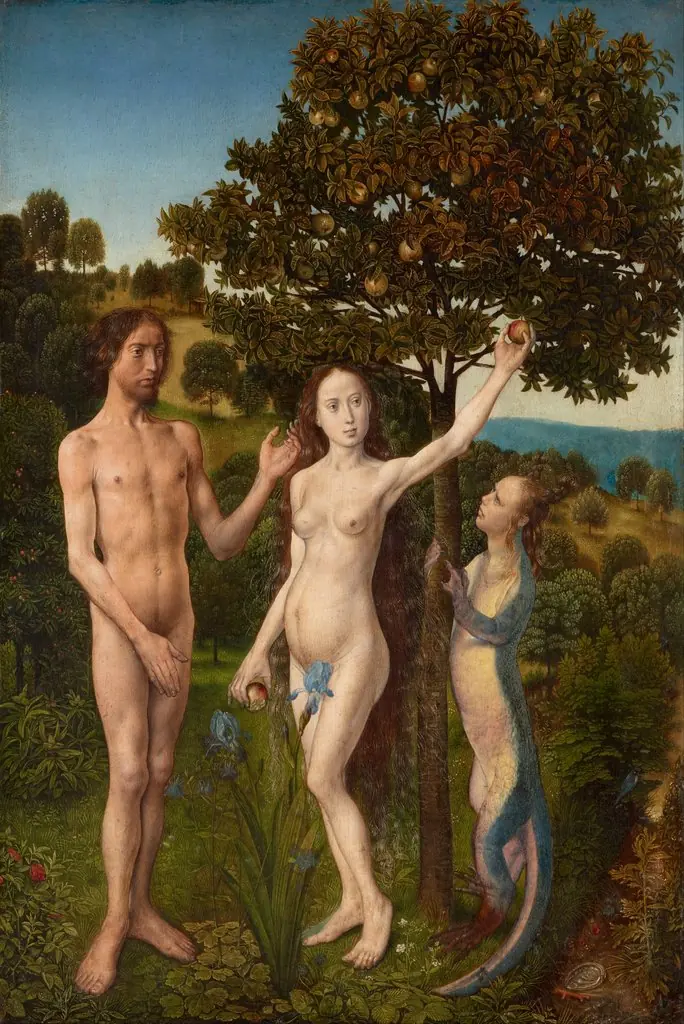 The Fall of Man
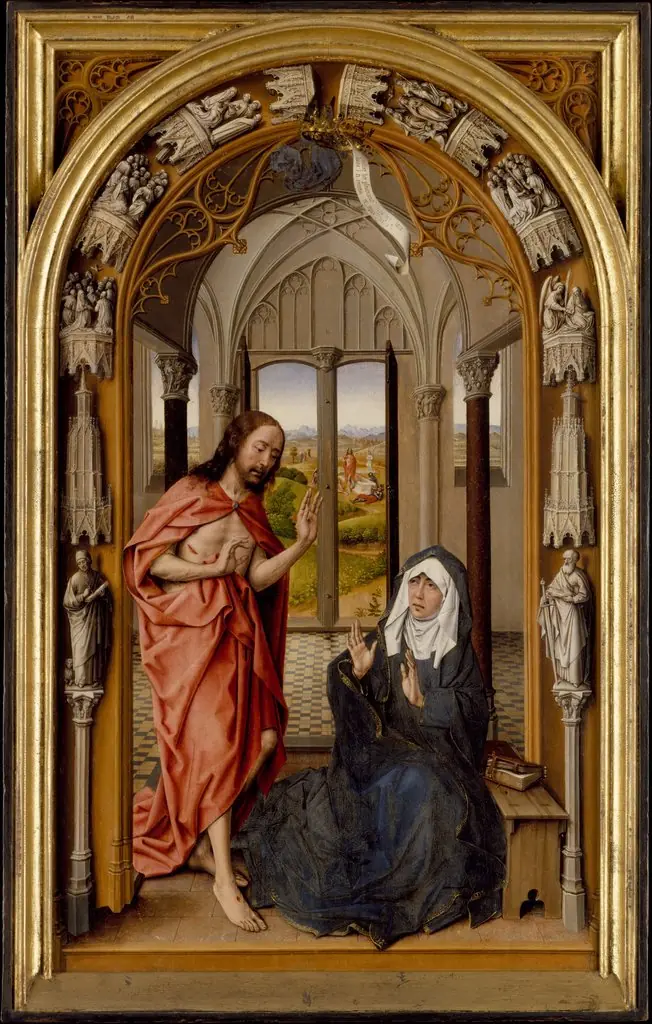 Christ Appearing to His Mother
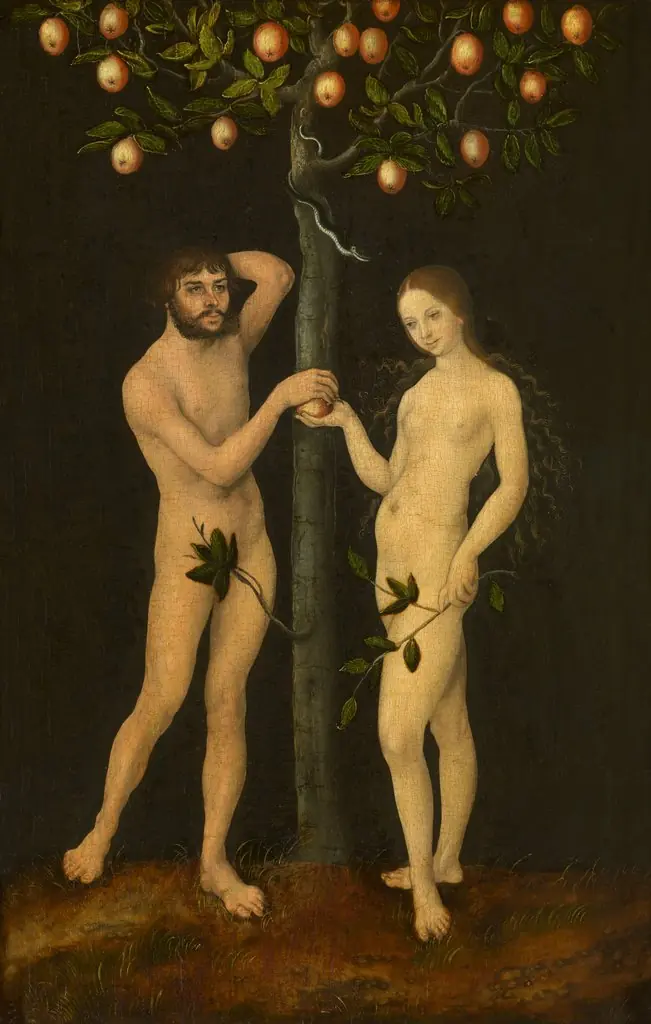 Adam and Eve
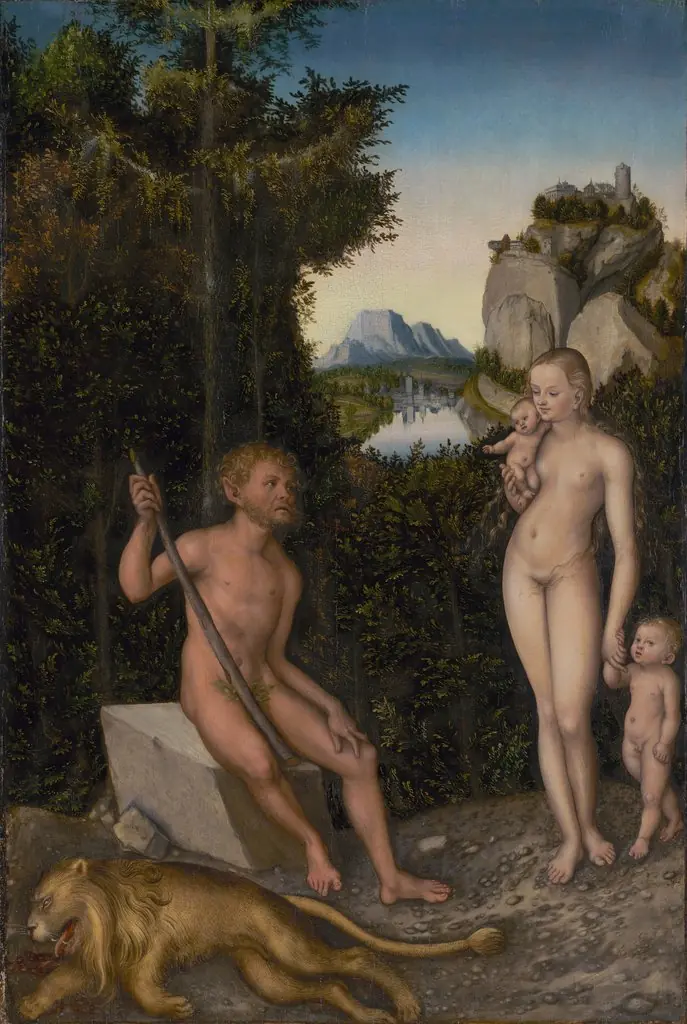 A Faun and His Family with a Slain Lion
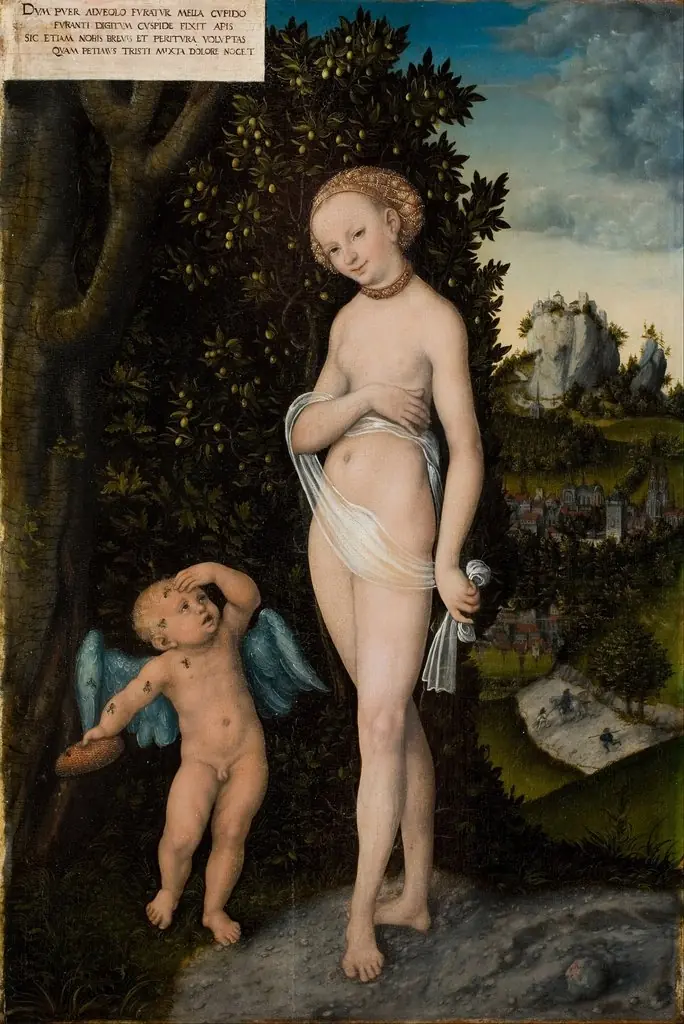 Venus with Cupid Stealing Honey
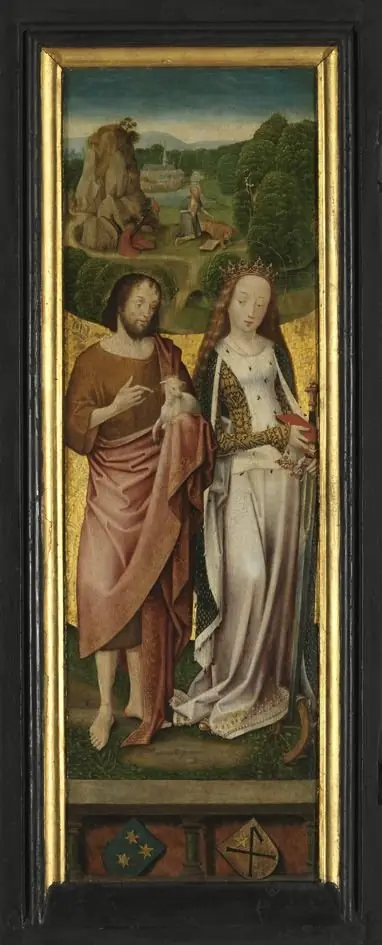 Flügelpaar: Die hll. Johannes der Täufer und Katharina (Außenseite: Engel der Verkündigung)
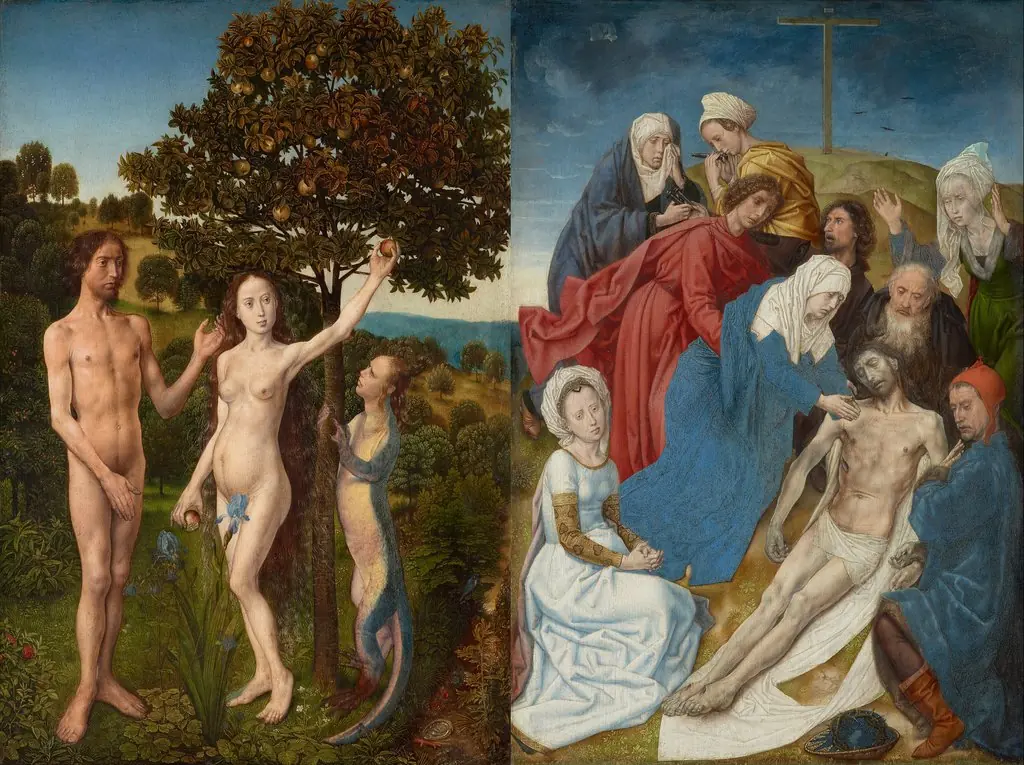 Vienna Diptych
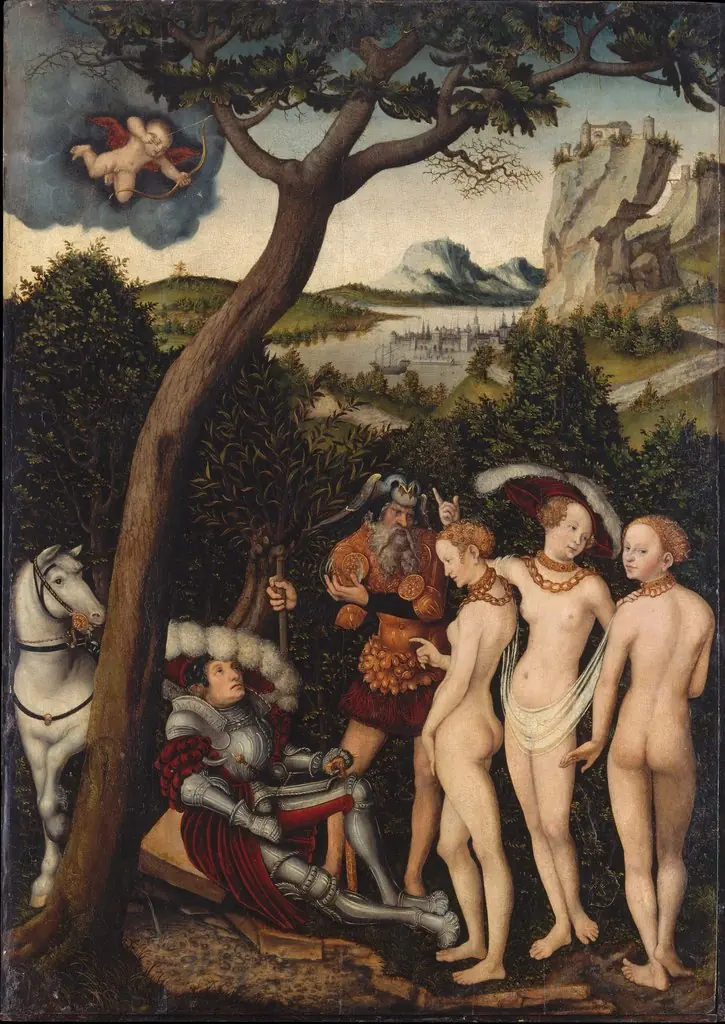 The Judgment of Paris
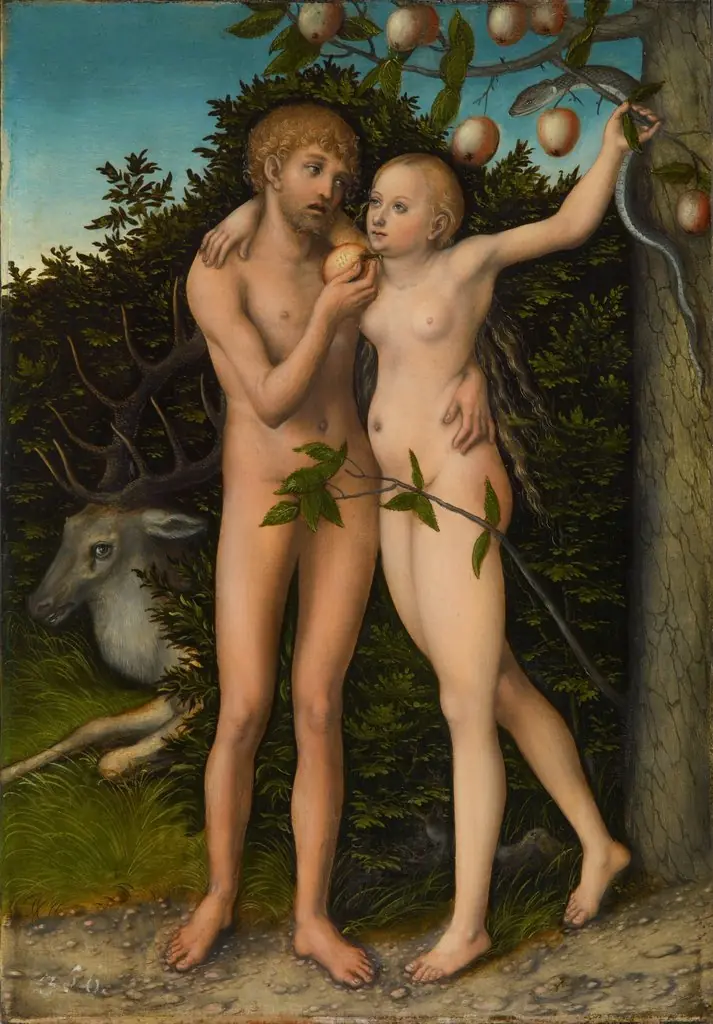 The Fall of Man
 Paradise
 The Baptism of Christ