Artwork
The Crucifixion
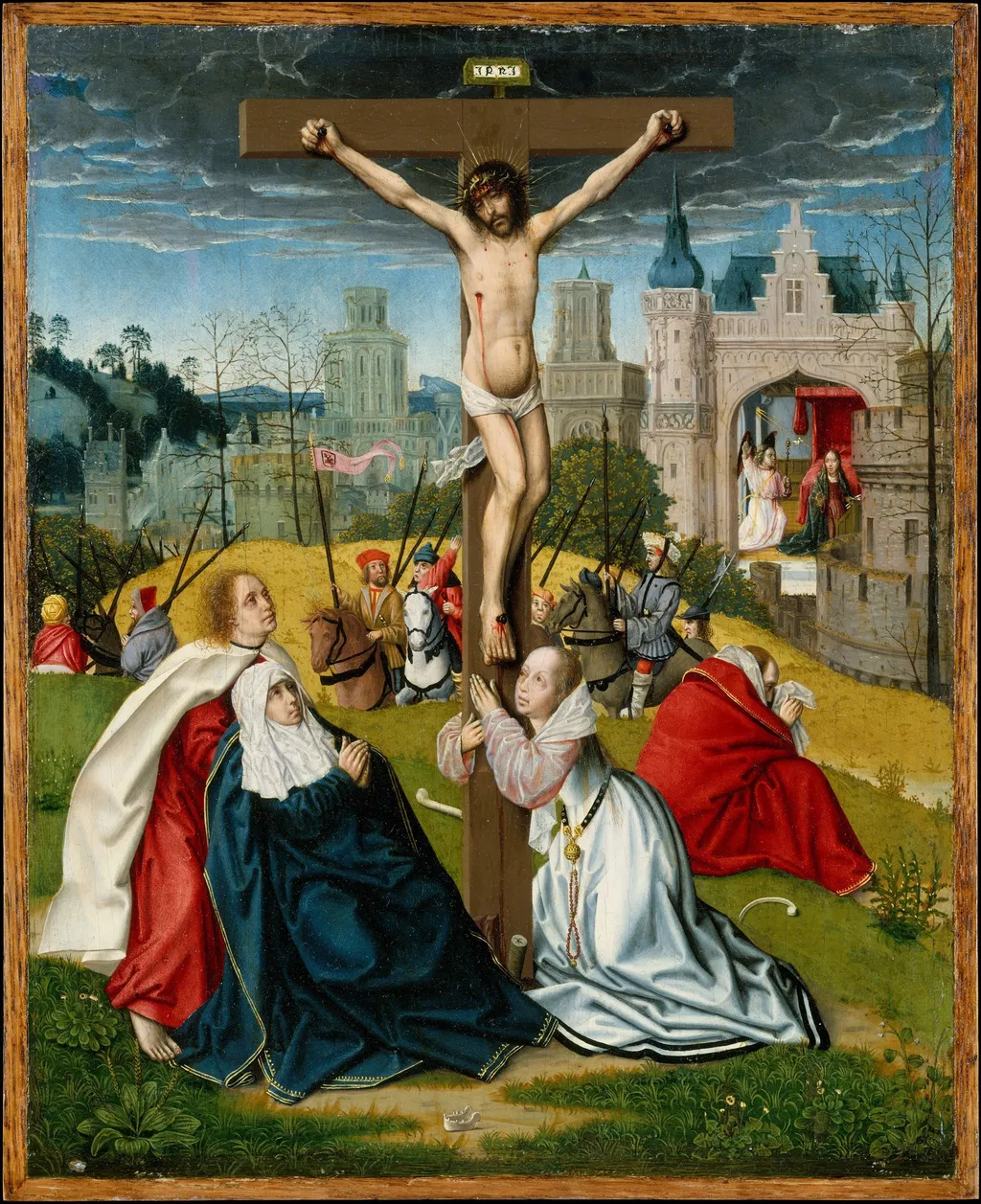
The Crucifixion is an oil painting. It dates from 1498 and is held in the collection of the Metropolitan Museum of Art.
About this work
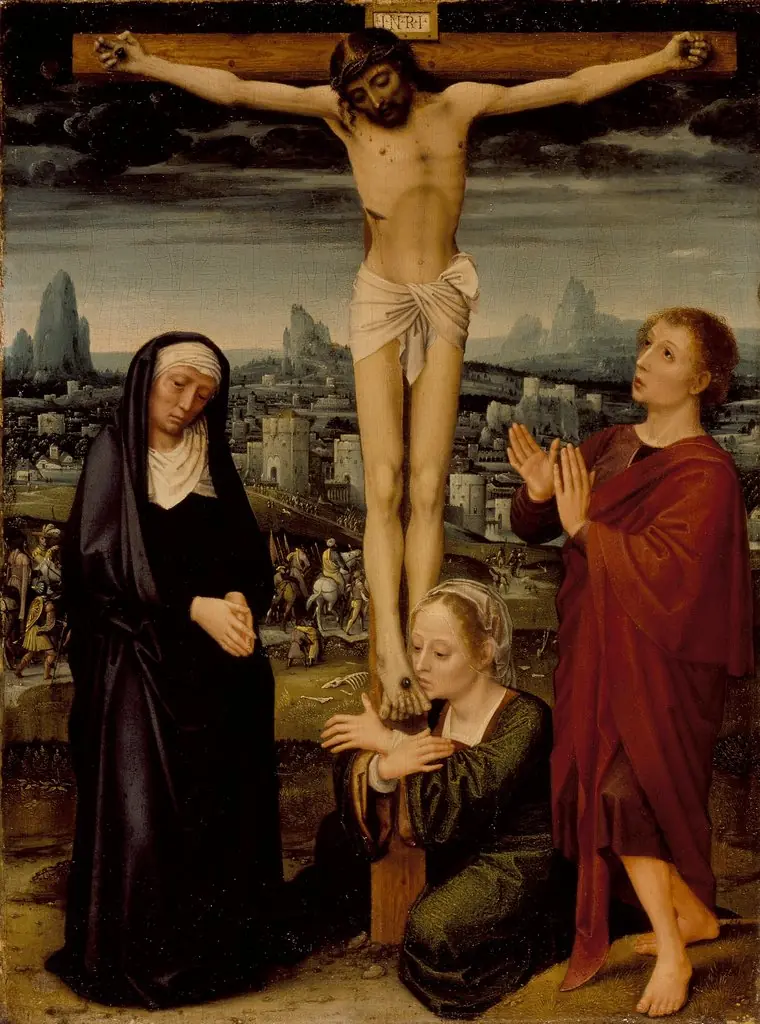
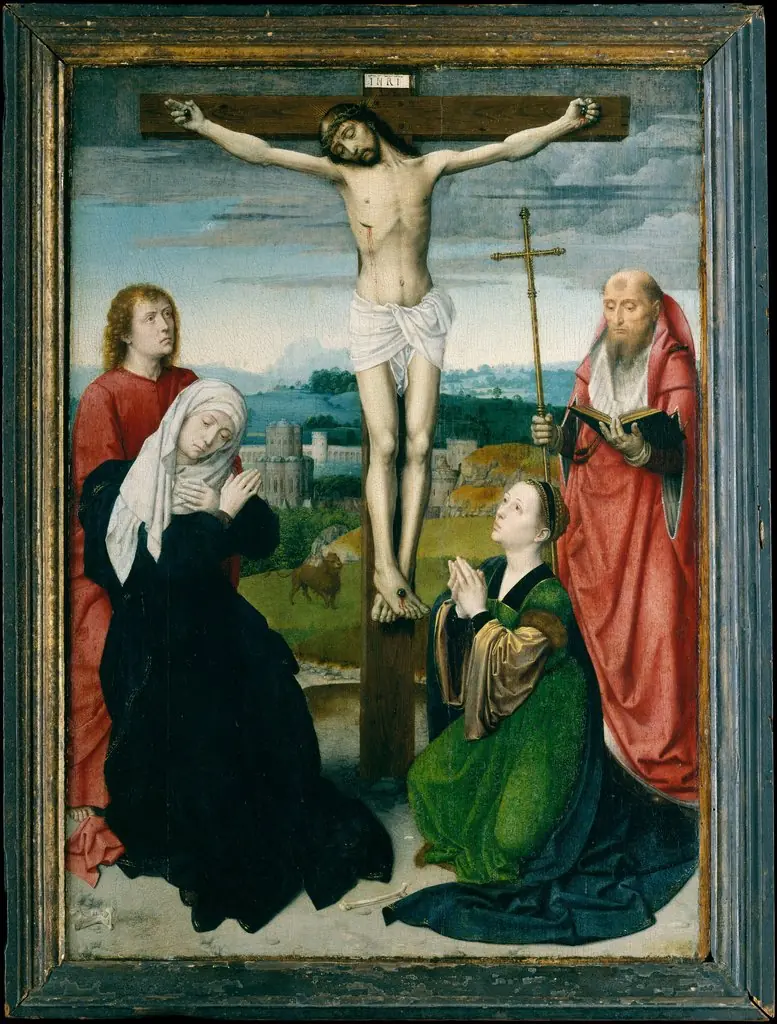
Against a darkened sky, the Virgin Mary collapses into Saint John's arms at the foot of the cross, while the Annunciation appears in a garden behind. Painted around 1495 by an artist in the circle of Jan Provoost, this small oil-on-wood panel joins the sorrow of Golgotha to the joy of the Incarnation. Bones below the cross evoke Adam's skull, linking the Fall to redemption.
Subject & Meaning
The work is classified as religious art and takes the crucifixion as its primary subject, aligning with late medieval devotional practices.
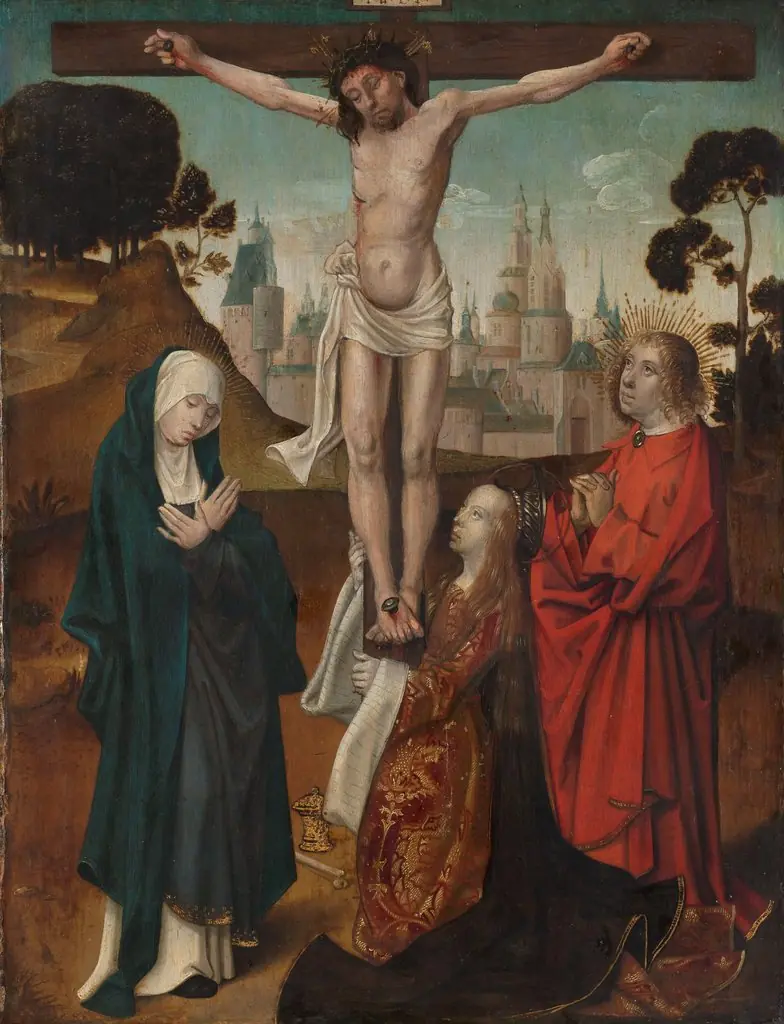
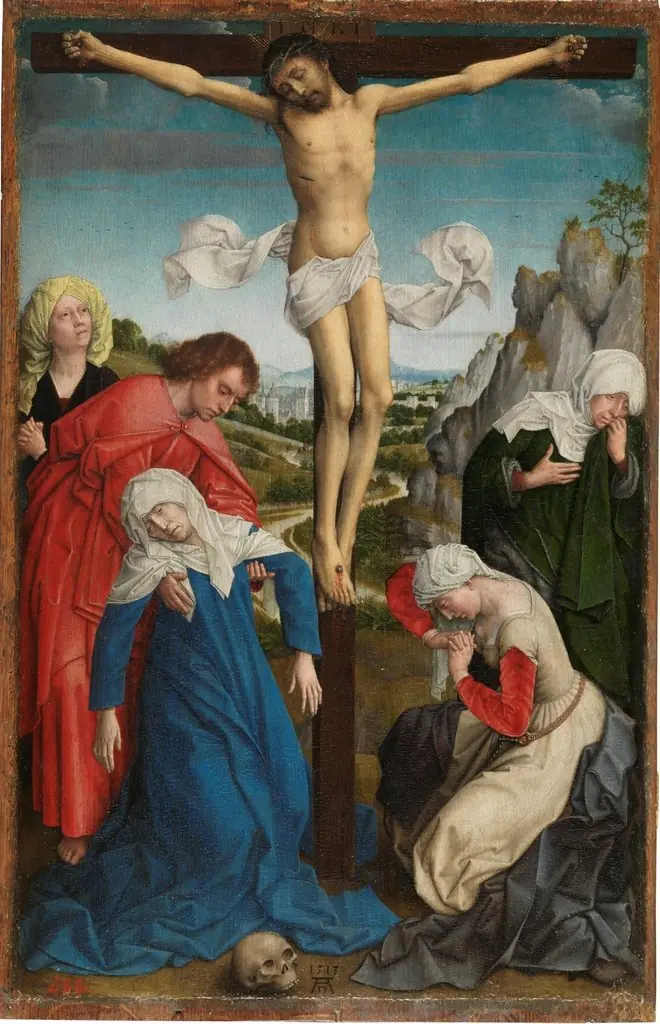
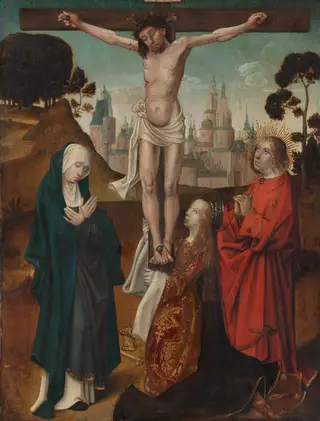
The painting's subject is the Crucifixion of Jesus Christ, a central event in Christian theology. It depicts Christ on the cross, accompanied by the Virgin Mary, John the Evangelist, and Mary Magdalene. Uniquely, the work also includes an Annunciation scene and a bedroom setting, elements that may imbue the composition with additional doctrinal or allegorical meaning.
The inclusion of these domestic and prefigurative motifs situates the Crucifixion within a broader narrative of salvation. The work is classified as religious art and takes the crucifixion as its primary subject, aligning with late medieval devotional practices.
Technique & Style
The painting is executed in oil on panel, measuring 32.1 × 26 cm. Dated to 1495, it belongs to the medium of oil paint on a wooden support, typical of Northern Renaissance devotional works. The composition focuses on the crucifixion of Jesus, with figures including Mary Magdalene and John the Evangelist. No further details on brushwork or handling are available from the sources.
Overview
The Crucifixion is a small oil painting on wood, created around 1495 and attributed to the circle of the Netherlandish artist Jan Provoost. This devotional panel presents the central Christian narrative of Christ's sacrifice. Its intimate scale suggests it was intended for private contemplation, offering a condensed visual meditation on salvation history, from humanity's original sin to ultimate redemption.
Context
This unusual pairing of the Crucifixion and Annunciation reflects a medieval liturgical tradition. March 25 was historically commemorated as the date for both the Annunciation and the Crucifixion, and sometimes even Adam's creation. This practice unified the Fall, the Incarnation, and Redemption into a single narrative arc, underscoring the theological connection between these pivotal events in Christian doctrine.
Artist & collection