Artwork
Album of Landscapes: Leaf 3
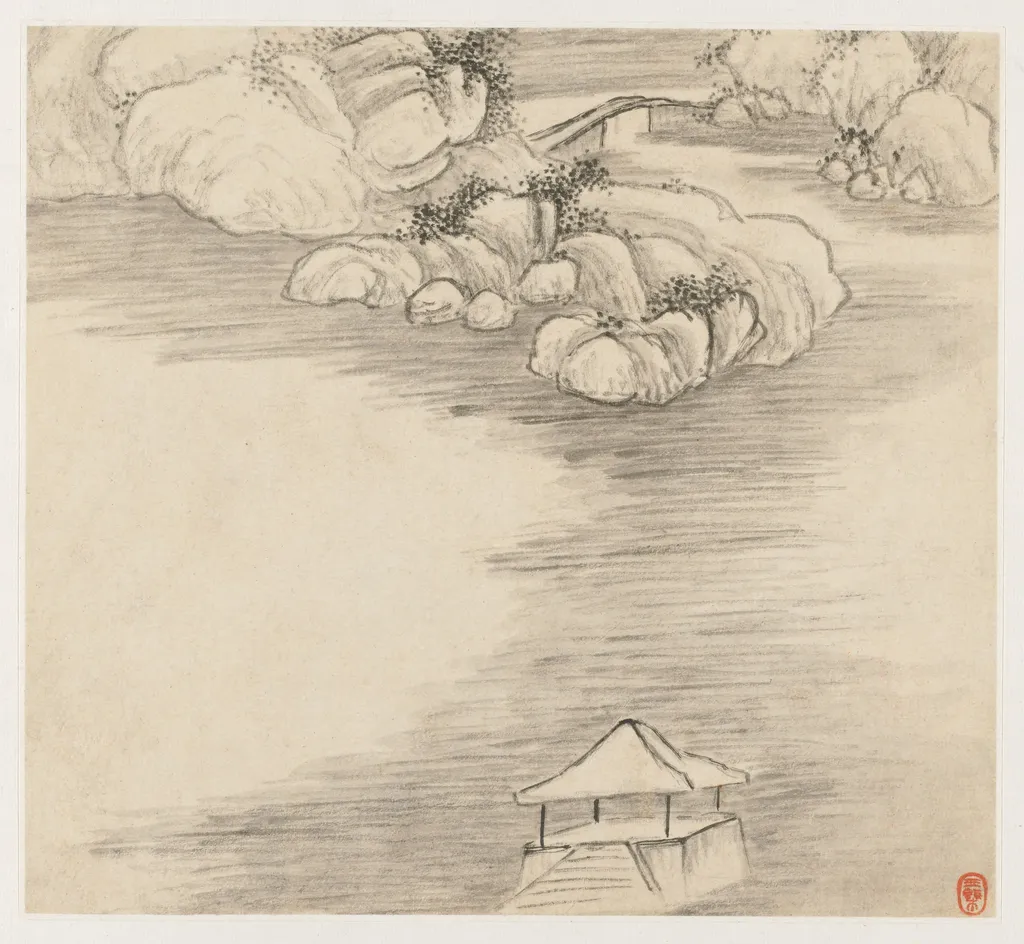
Album of Landscapes: Leaf 3 is an unspecified painting by the Qing dynasty painting artist Wang Gai. It dates from 1689 and is held in the collection of the Cleveland Museum of Art.
About this work
History & Provenance
The work is held in the collection of the Cleveland Museum of Art, where it is catalogued under the accession number 1975.
Album of Landscapes: Leaf 3 was created by Wang Gai in 1677, produced in China. The work is held in the collection of the Cleveland Museum of Art, where it is catalogued under the accession number 1975.64.3. The sources do not provide further detail on the chain of ownership prior to its acquisition by the museum, the circumstances of any commission, or intermediate custodians.
No additional provenance, commission, or creation-history information is documented in the available sources.
Context
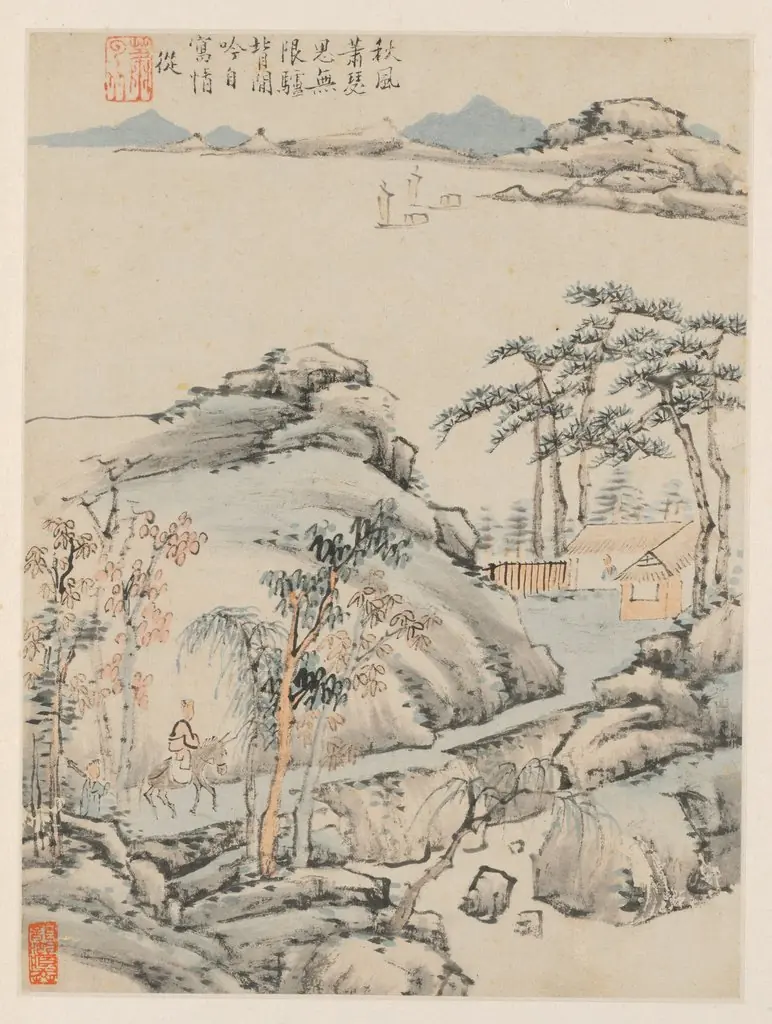
The album exemplifies Wang Gai's mature landscape style developed during his tenure in the Qing court, situating his work within the broader tradition of Chinese literati painting that emphasized scholarly retreat and natural harmony. This piece reflects contemporary scholarly discourse on the integration of poetic inscription with visual art, a practice central to the artist's generation. Its inclusion in the Cleveland Museum of Art's collection since 1975, cataloged as 1975.64.3, underscores its significance as a representative example of 17th-century Chinese landscape painting.
Legacy
The work remains in the Cleveland Museum of Art collection and continues to be cited in scholarly studies of 17th-century Chinese landscape painting. Its compositional approach influenced subsequent generations of artists working in the Southern School tradition, particularly in the treatment of atmospheric space and brushwork rhythm. The album as a whole is regarded as a key reference point for understanding Wang Gai's role in the transition from Ming to Qing visual aesthetics.
Overview
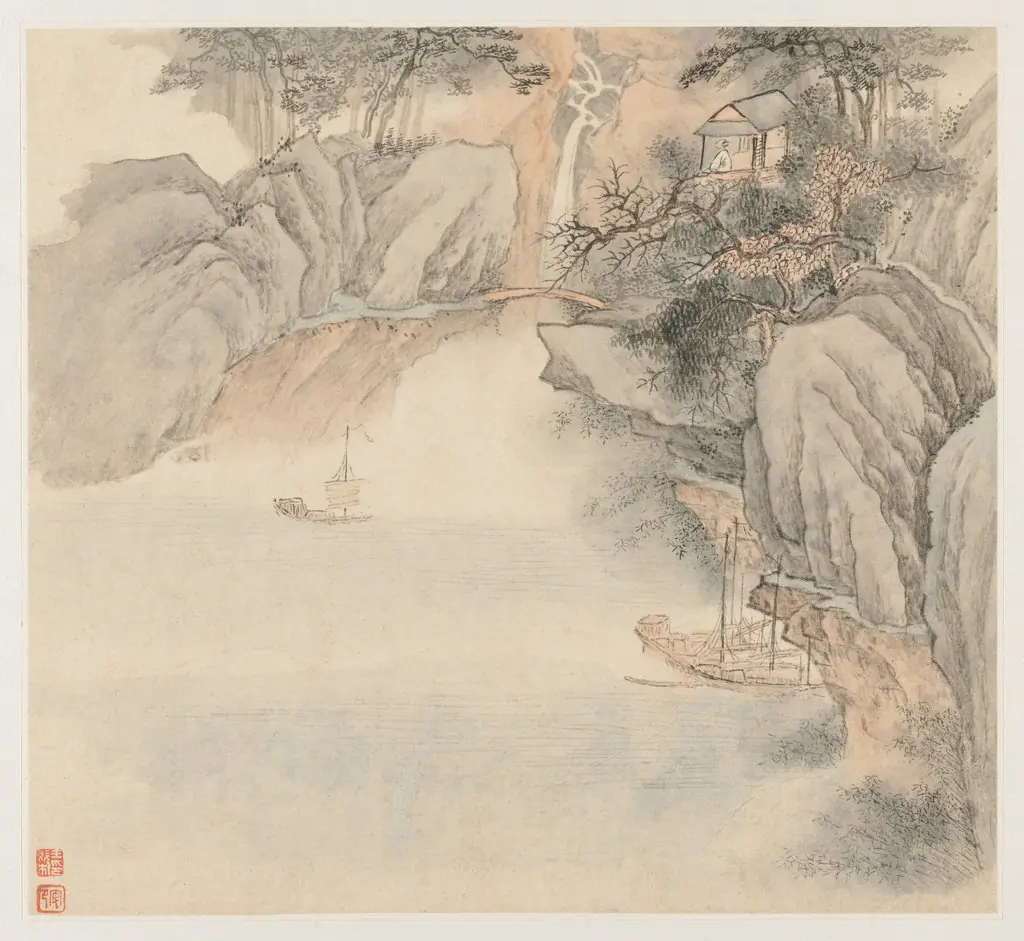
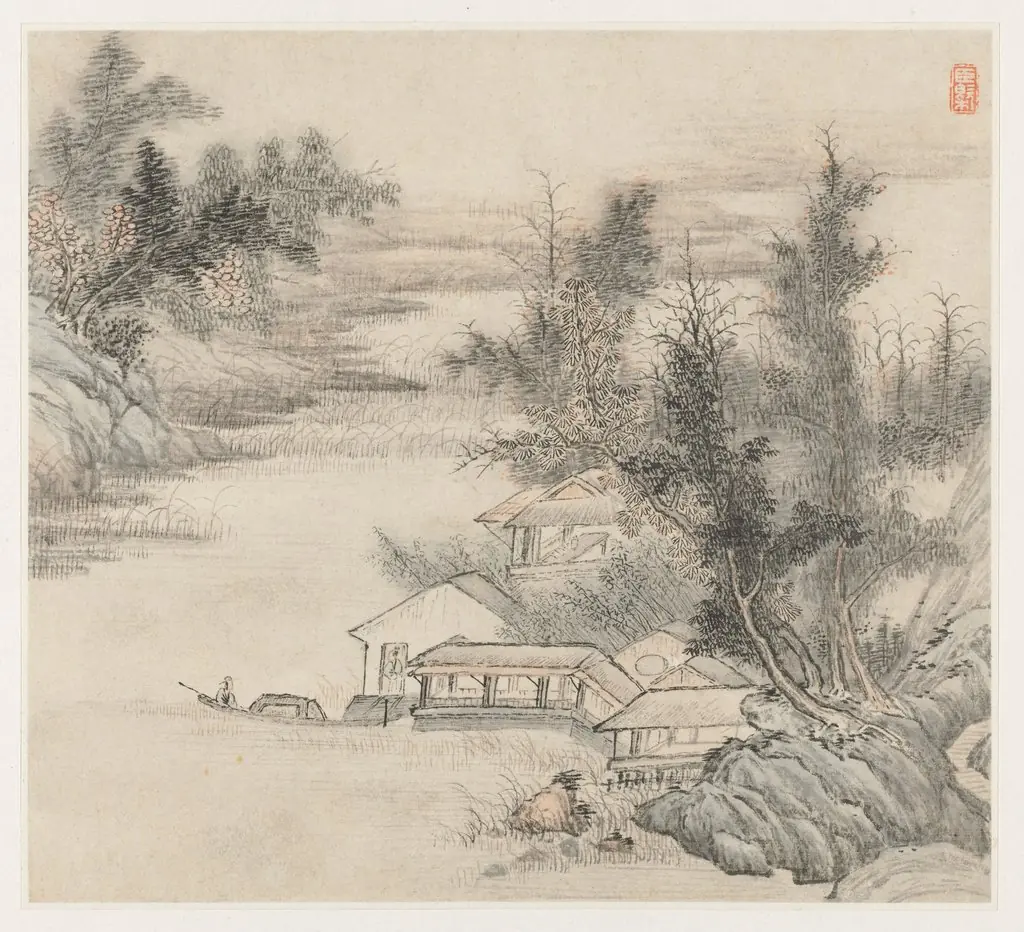
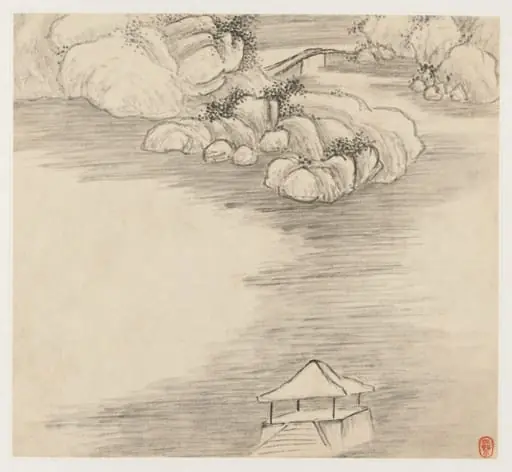
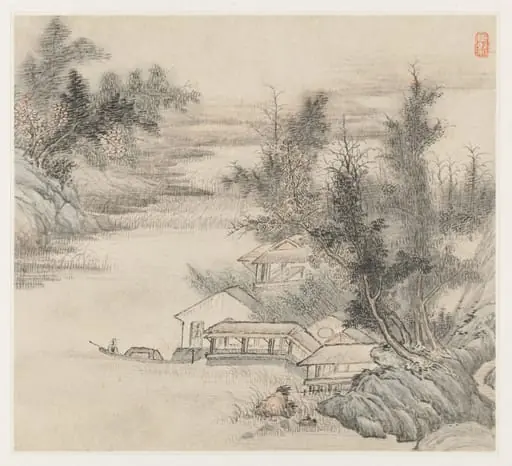
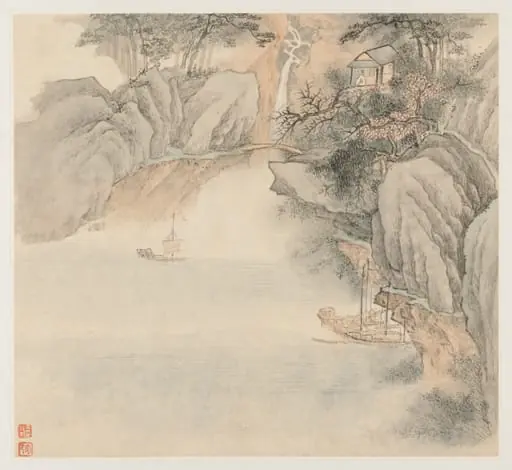
Created in 1689, this work belongs to Wang Gai’s Album of Landscapes series and is part of the Cleveland Museum of Art’s collection. The painting presents a tranquil river setting, with rounded stones drifting in the water, a modest pavilion perched on the right bank, and distant hills and trees rendered in delicate, airy lines.
Subject & Meaning
The composition captures a serene moment of rural life, emphasizing the harmony between human shelter and the surrounding natural environment. The pavilion, simple in design, suggests a place of quiet contemplation, while the gentle flow of the river and the soft outlines of foliage evoke a sense of calm and timelessness.
Technique & Style
Wang Gai employs a loose, sketch‑like brushwork that favors spontaneity over meticulous detail. The strokes are fluid, highlighting the texture of water ripples, the grain of bark, and the smooth contours of the stones. This approach creates an impression of immediacy, allowing the viewer to sense the atmosphere rather than exact forms.
Own this work as a print
Artist & collection