Artwork
Album of Landscapes: Leaf 4
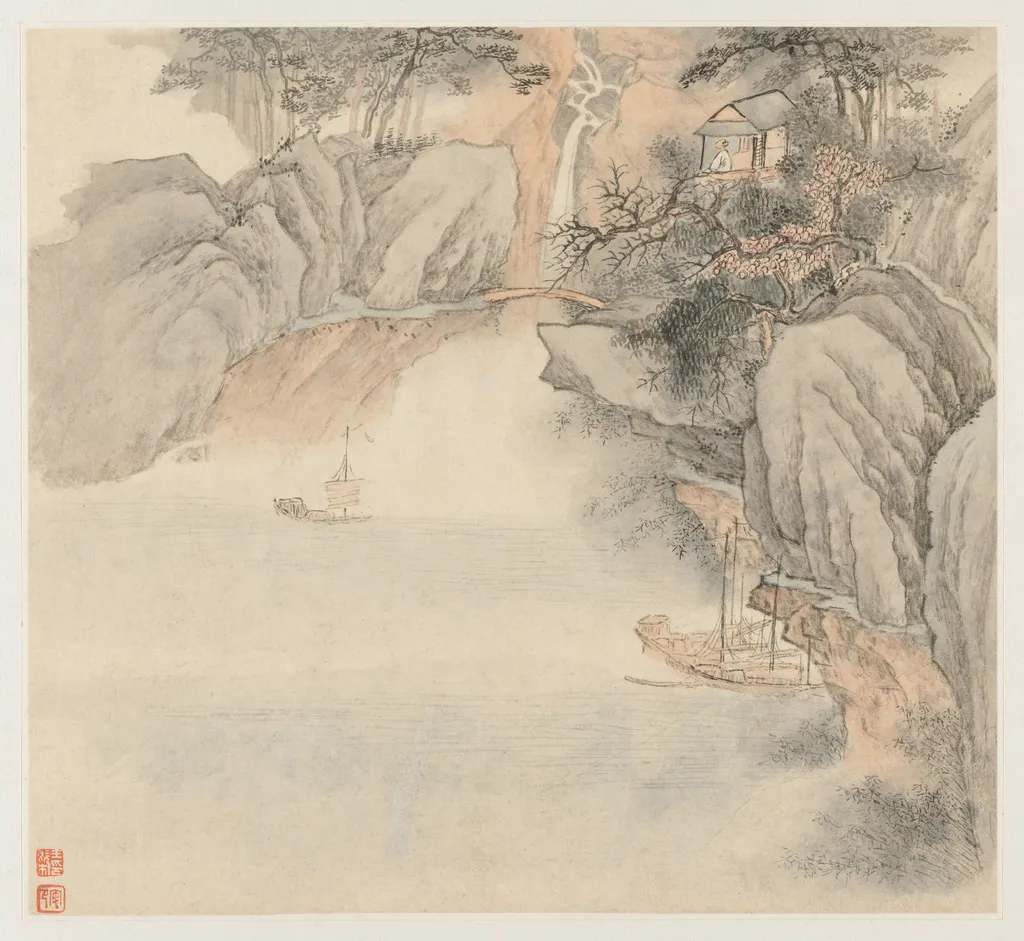
Album of Landscapes: Leaf 4 is an unspecified painting by the Chinese Orthodox School artist Wang Gai. It dates from 1689 and is held in the collection of the Cleveland Museum of Art.
About this work
Technique & Style
The support is delicate paper, handled as a folio leaf within the album format, preserving its structural integrity.
The painting is executed in ink on paper, forming a leaf within a bound album of landscapes. Wang Gai's technique demonstrates controlled brushwork characteristic of late Ming dynasty landscape tradition, with subtle gradations of ink wash creating atmospheric depth. The support is delicate paper, handled as a folio leaf within the album format, preserving its structural integrity.
Formal qualities include compositional balance and restrained tonal modulation typical of Chinese literati painting, while the condition remains stable with no noted deterioration. The work originates from China and is housed at the Cleveland Museum of Art.
History & Provenance
The leaf originates from a 17th-century album of landscapes painted by Wang Gai in China around 1677. It entered the collection of the Cleveland Museum of Art, where it remains today.
The work was created circa 1677 in China and is part of the museum's holdings under accession number 1975.64.4.
Overview
Album of Landscapes: Leaf 4 is a Chinese ink painting executed in 1689 by the artist Wang Gai. The work forms part of a larger album of landscape studies and is presently in the collection of the Cleveland Museum of Art in Ohio, United States.
Subject & Meaning
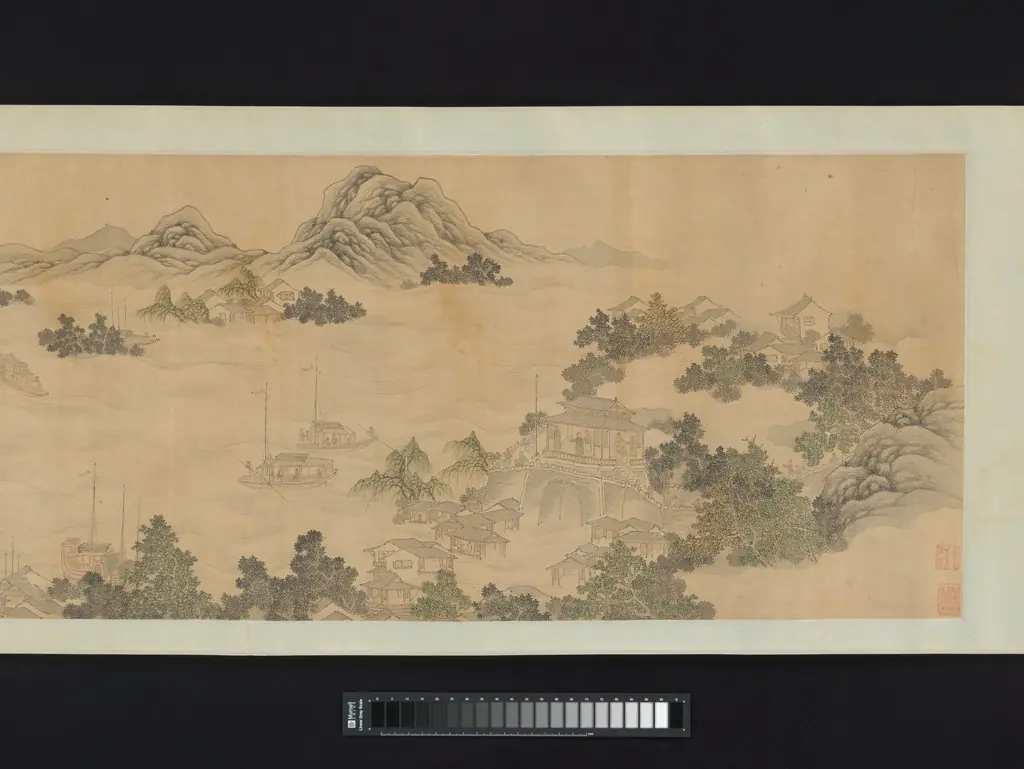
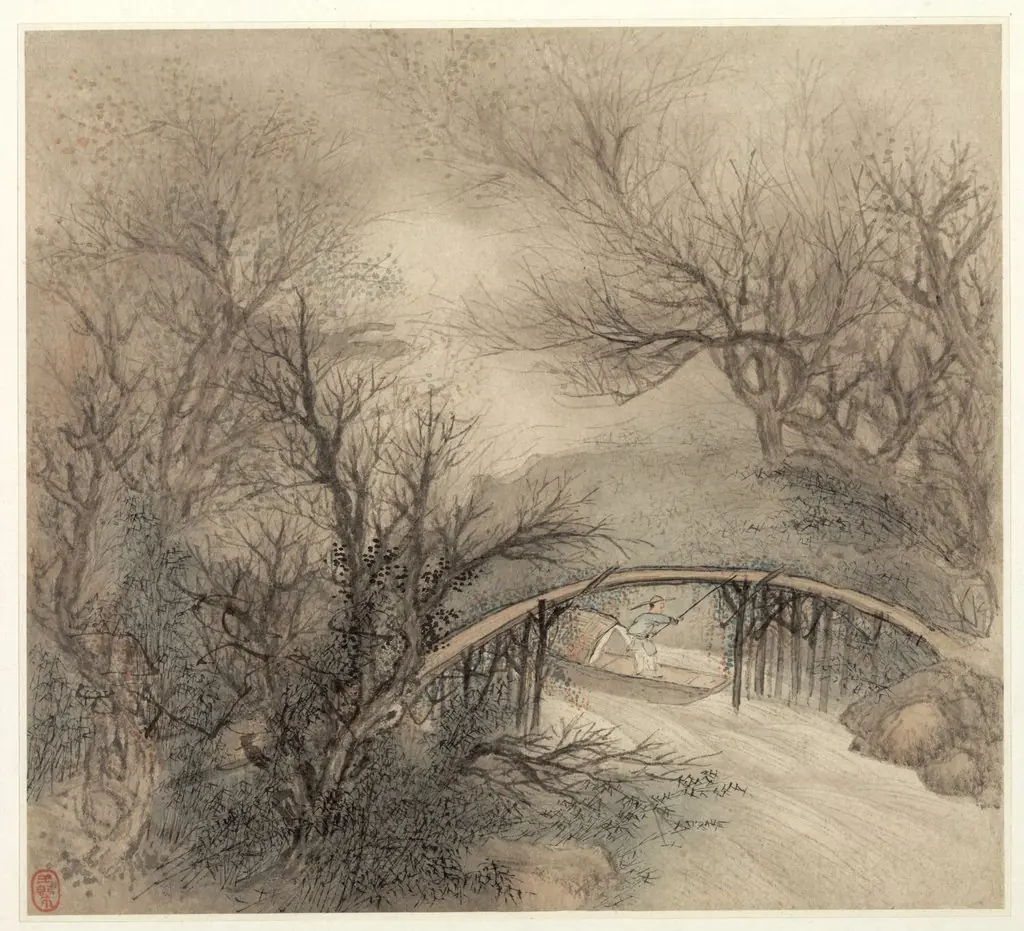
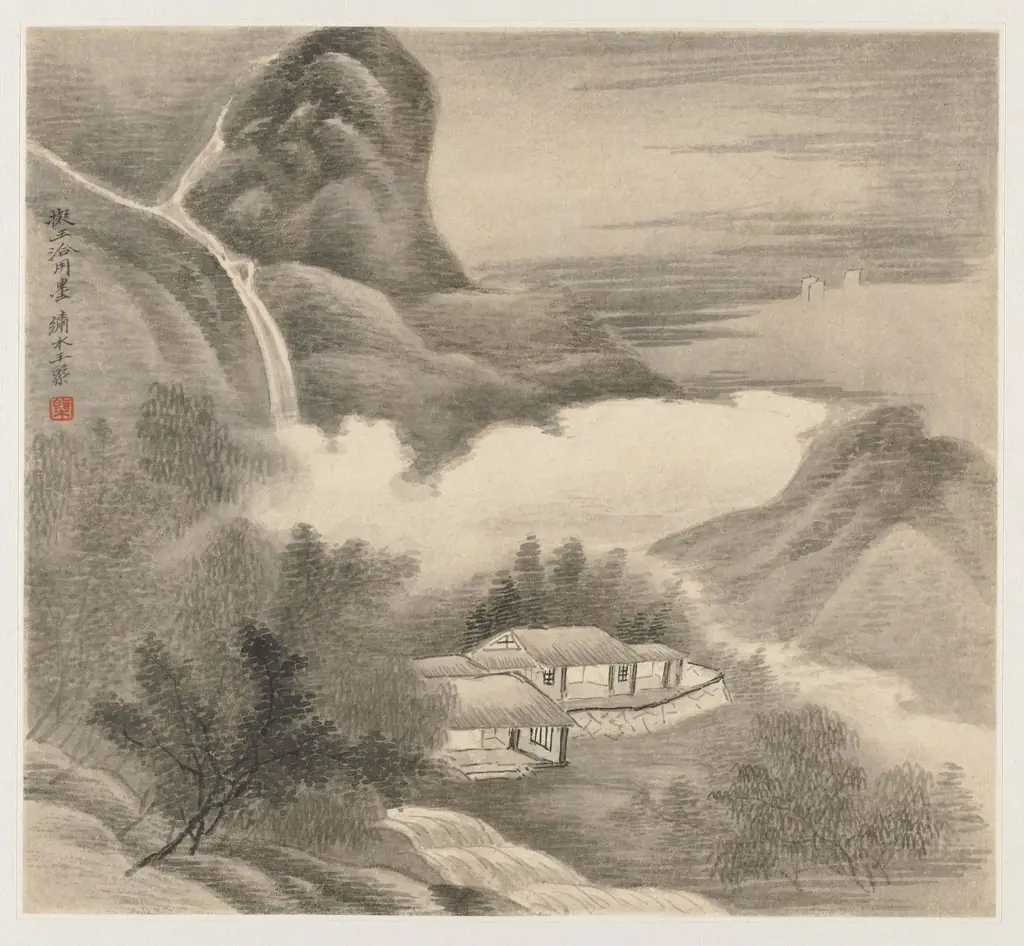
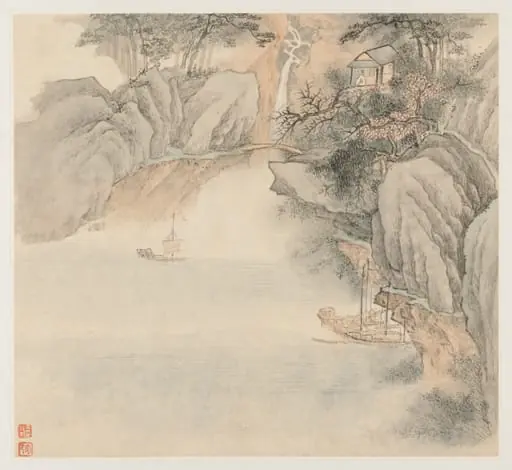
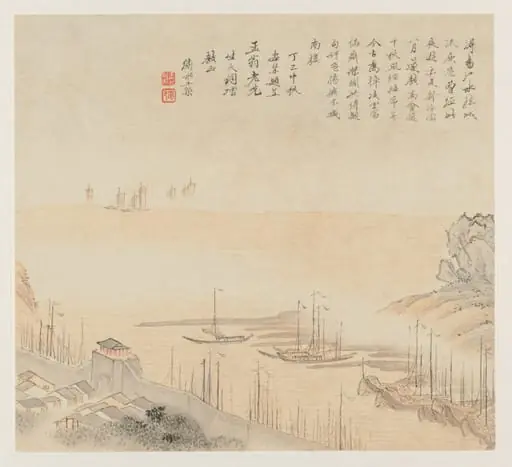
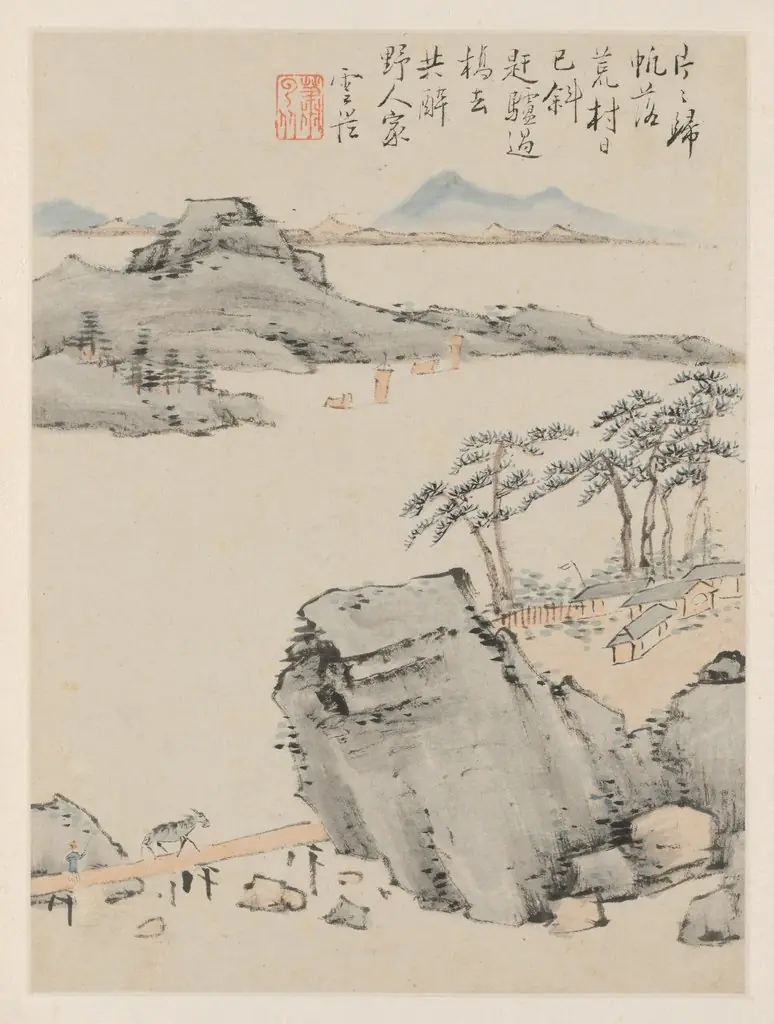
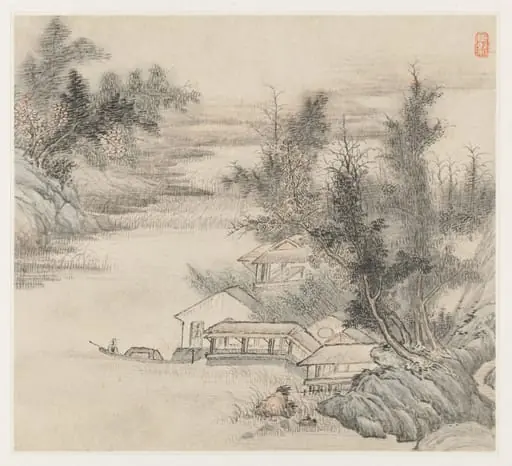
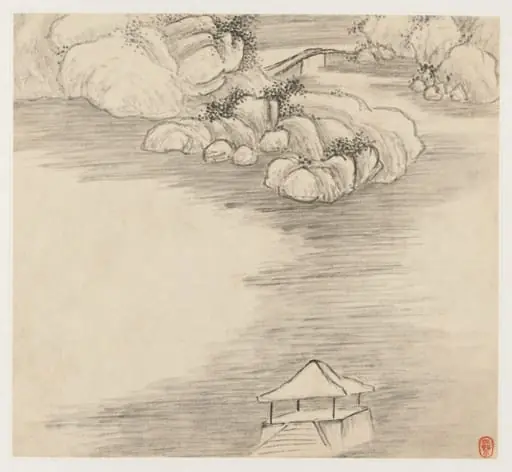
The composition depicts a tranquil river that winds its way through craggy hills. Two modest boats drift on the water, while a solitary figure is seated in a small pavilion on the right bank, surrounded by leafless trees and sparse shrubbery. Steep mountains rise in the background, a narrow path leading to a concealed building, suggesting a contemplative retreat from the world.
Context
The scene reflects the aesthetic ideals of the Zhejiang region, an area whose rugged terrain and river valleys frequently inspired scholars and painters of the Qing dynasty. Such depictions often served as visual meditations on nature’s harmony, aligning with contemporary literati traditions that valued understated, poetic representation of the natural world.
Own this work as a print
Artist & collection