Artwork
Circles in a Circle
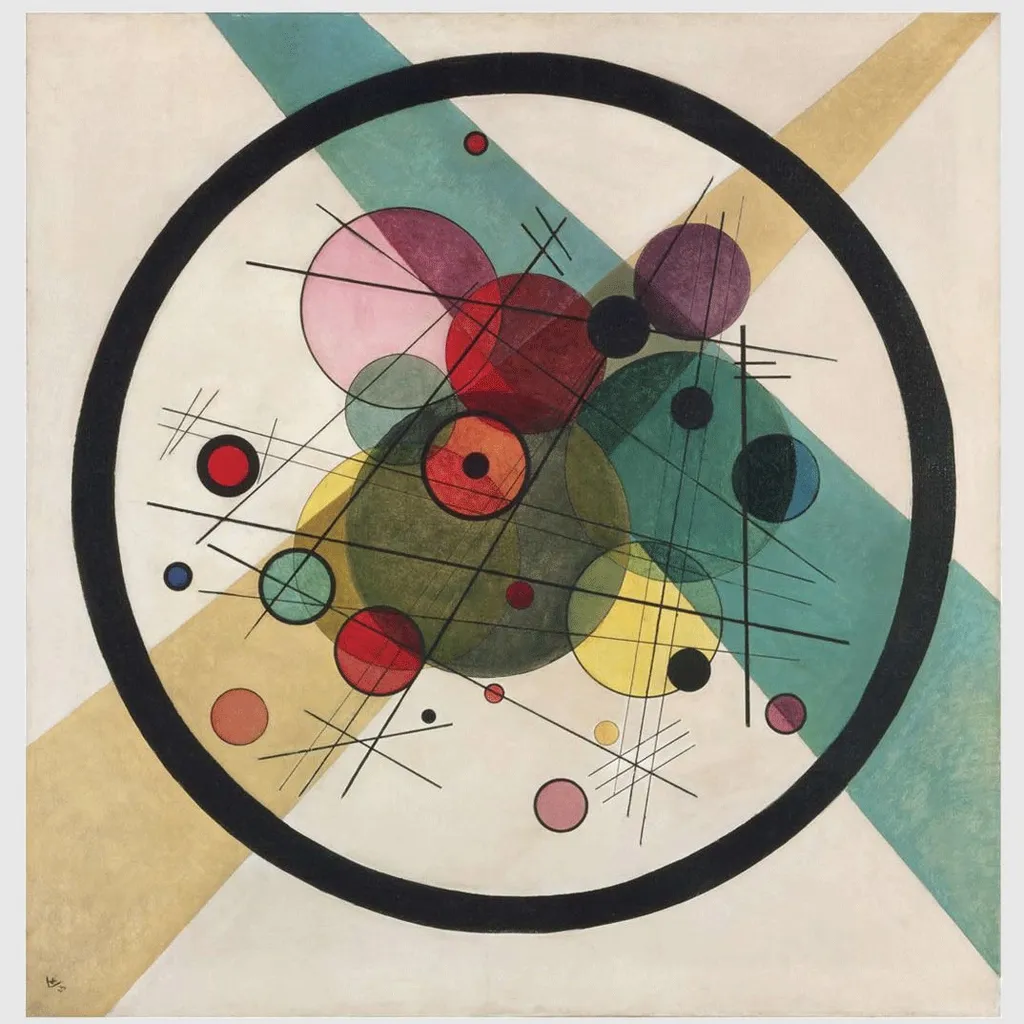
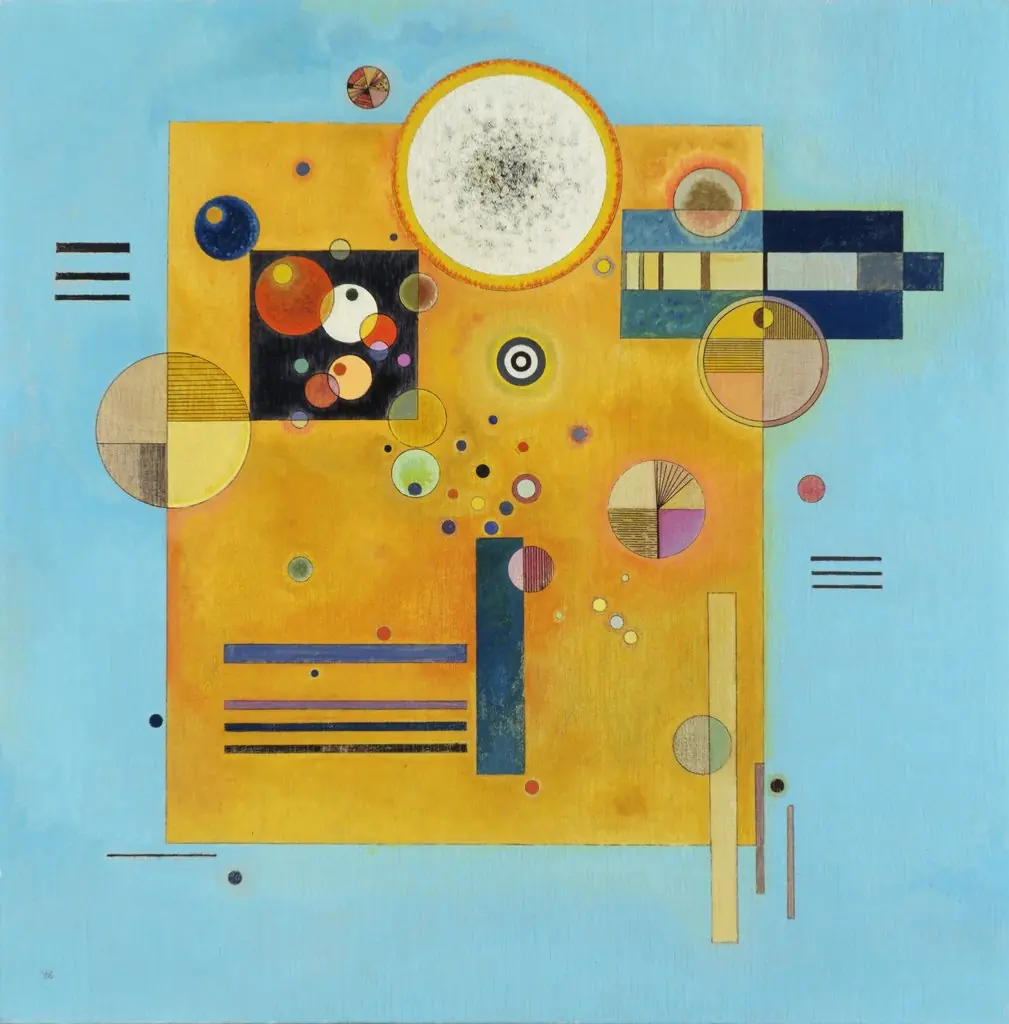
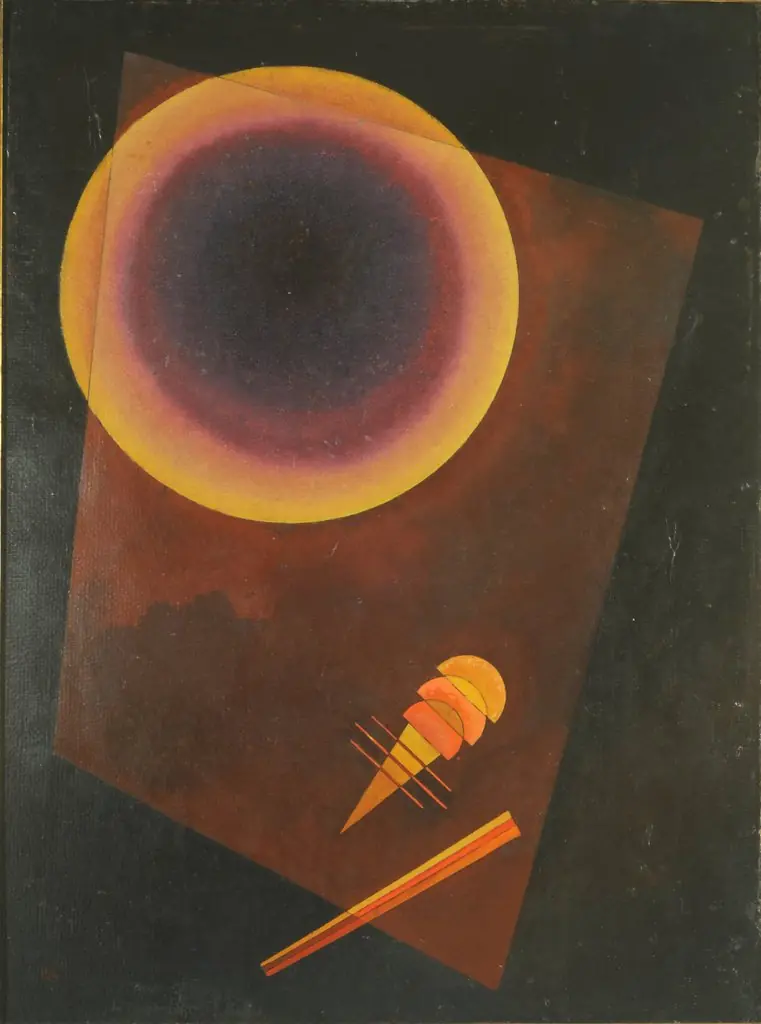
Circles in a Circle is an oil painting by the Bauhaus artist Wassily Kandinsky. It dates from 1923 and is held in the collection of the Philadelphia Museum of Art.
About this work
Overview
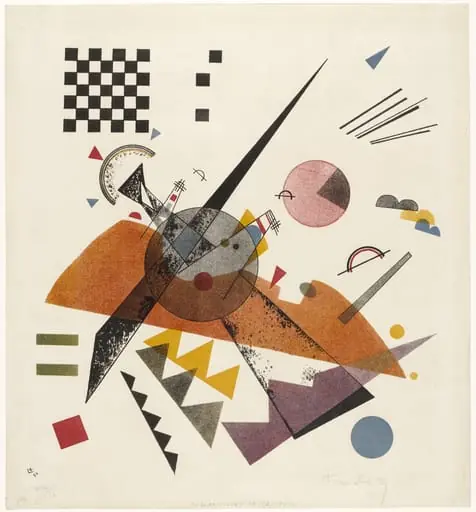
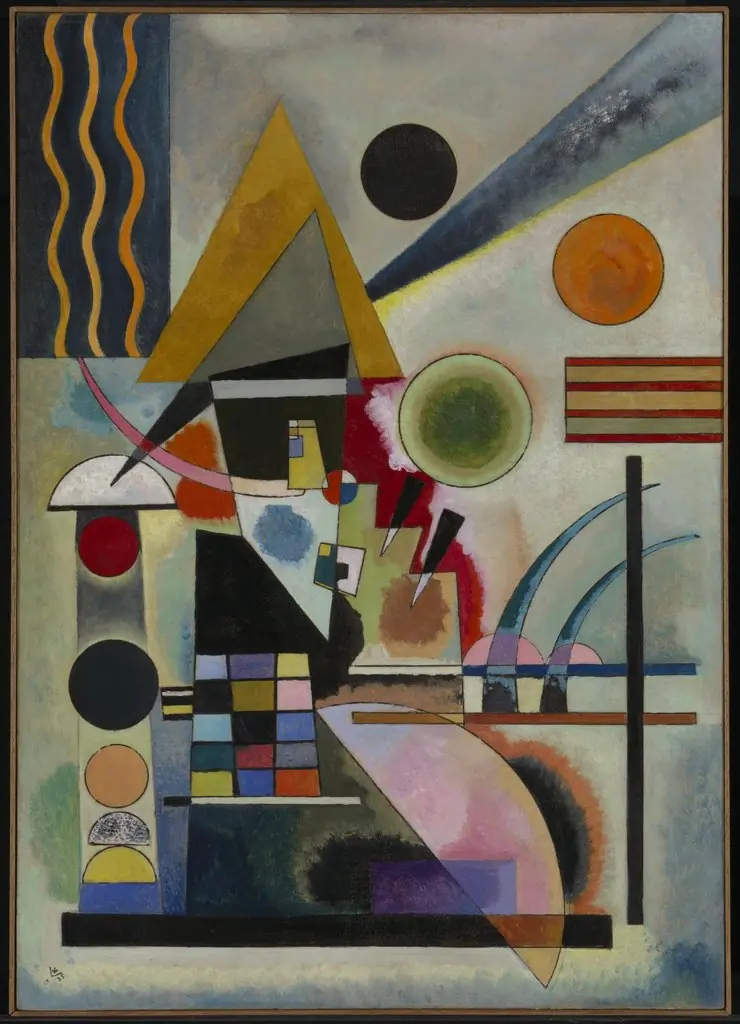
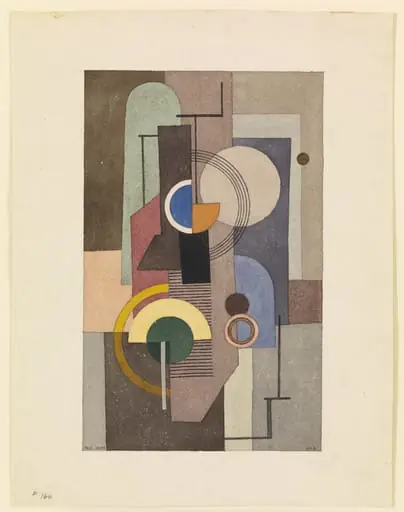
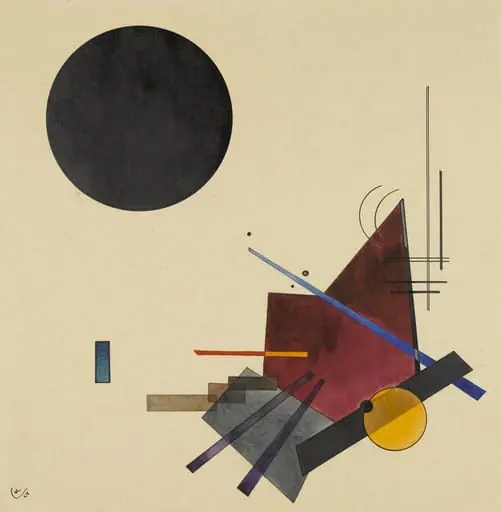
Created in 1923, Circles in a Circle is an oil painting by Russian-born artist Wassily Kandinsky. Executed during his German period, the work belongs to his abstract phase and is part of the Philadelphia Museum of Art’s collection. Its composition consists of overlapping circles and intersecting lines rendered in a restrained palette, generating a sense of rhythmic motion across the canvas.
Subject & Meaning
The picture does not depict recognizable objects; instead it arranges geometric forms, primarily circles of varying size and hue, into a dynamic network.
The picture does not depict recognizable objects; instead it arranges geometric forms, primarily circles of varying size and hue, into a dynamic network. The interplay of solid areas, interior linework, and dotted textures suggests an exploration of visual vibration and the emotional resonance of color, a concern central to Kandinsky’s theoretical writings on the spiritual potential of abstract shapes.
Technique & Style
Executed in oil on canvas, Kandinsky employs flat color fields combined with fine linear markings to delineate the circles. The background merges muted beige, blue, and yellow planes, allowing the central forms to stand out. The overall aesthetic reflects the Bauhaus emphasis on geometric abstraction, balance of form and color, and a disciplined yet expressive handling of medium.
History & Provenance
After its completion, the painting entered the market and was eventually acquired by the Philadelphia Museum of Art, where it remains on display. Its provenance traces back to Kandinsky’s late‑1920s period in Germany, a time when he was actively involved with the Bauhaus school and its interdisciplinary approach to art and design.
Context
Circles in a Circle exemplifies Kandinsky’s contribution to the development of non‑representational art in the early twentieth century. By integrating Bauhaus principles with his own synesthetic theories, the work helped shape subsequent explorations of geometric abstraction in modernist painting, influencing both contemporaries and later generations of abstract artists.
Artist & collection
Artist
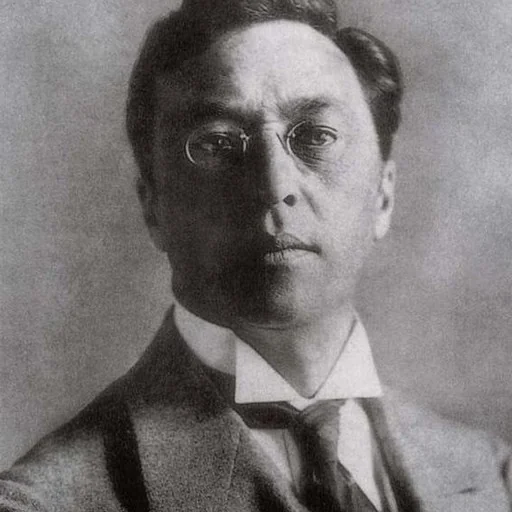
Wassily Wassilyevich Kandinsky (16 December 1866 – 13 December 1944) was a Russian painter and art theorist active in Germany during the late Belle Époque and Interwar eras.