Artwork
Swinging
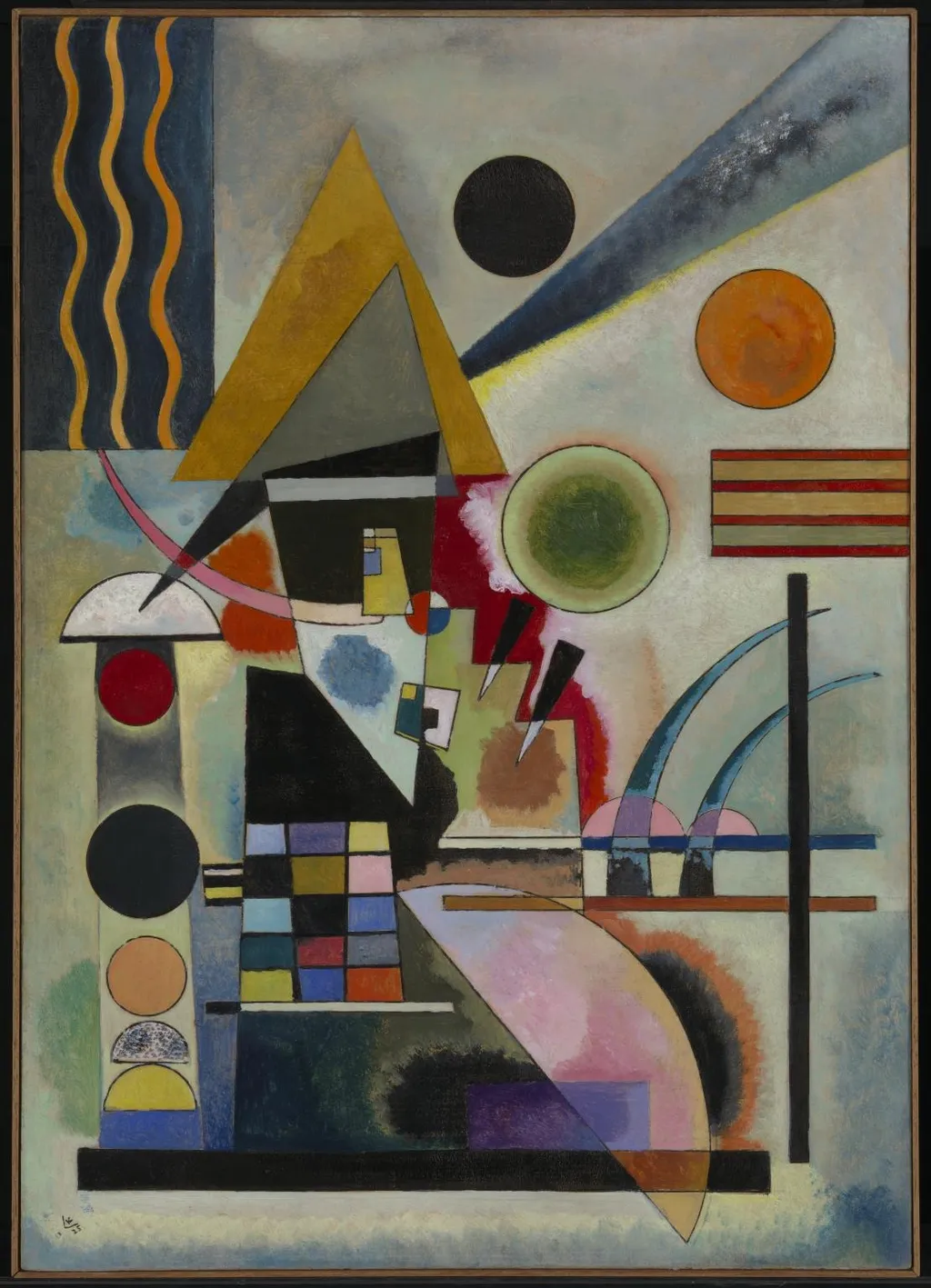
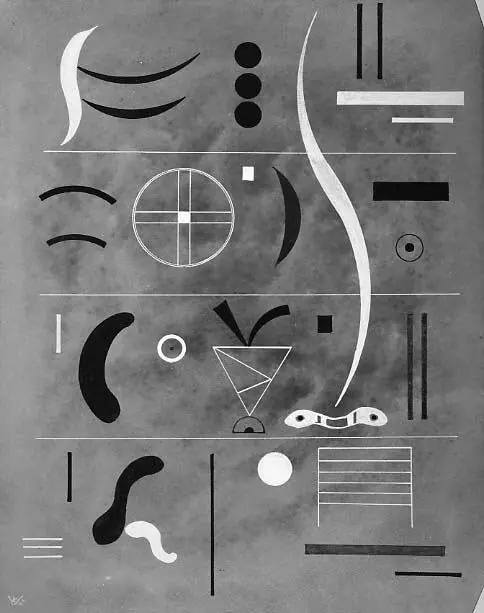
Swinging is an oil painting by the Abstract Expressionist artist Wassily Kandinsky. It dates from 1925 and is held in the collection of the Tate.
About this work
Overview
The work belongs to a phase in which Kandinsky refined his visual language through structured compositions, balancing spontaneity with deliberate arrangement.
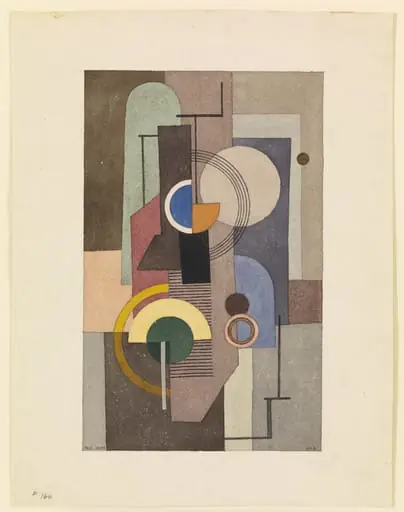
Swinging (1925) is an abstract oil painting by Wassily Kandinsky, created during his time at the Bauhaus in Germany. It exemplifies his move toward geometric abstraction, where form and color function independently of representational content. The work belongs to a phase in which Kandinsky refined his visual language through structured compositions, balancing spontaneity with deliberate arrangement.
Subject & Meaning
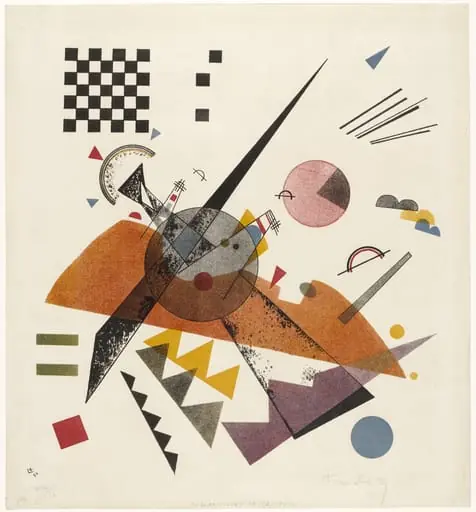
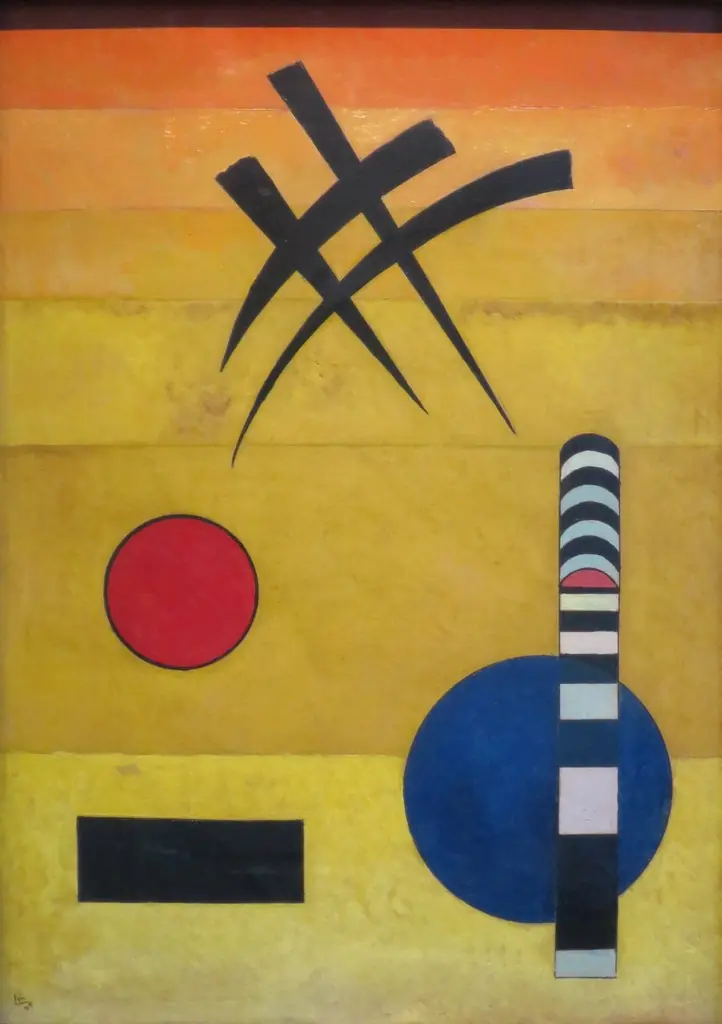
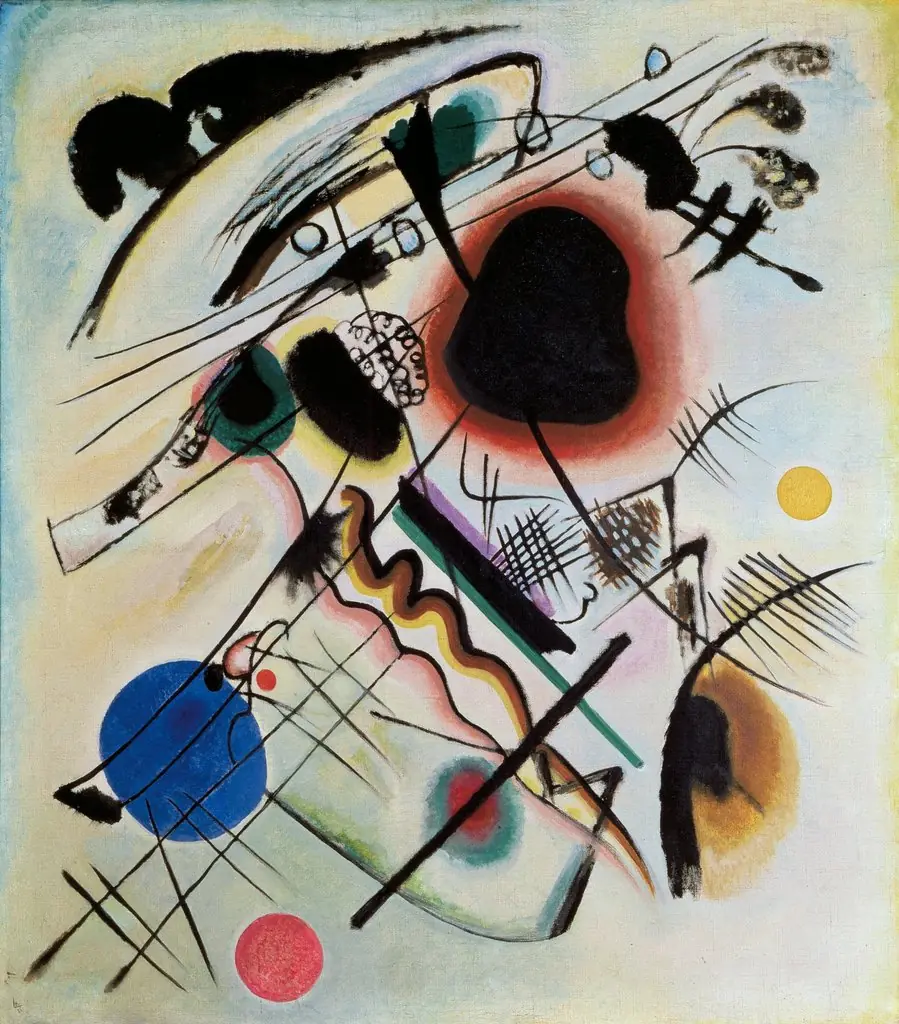
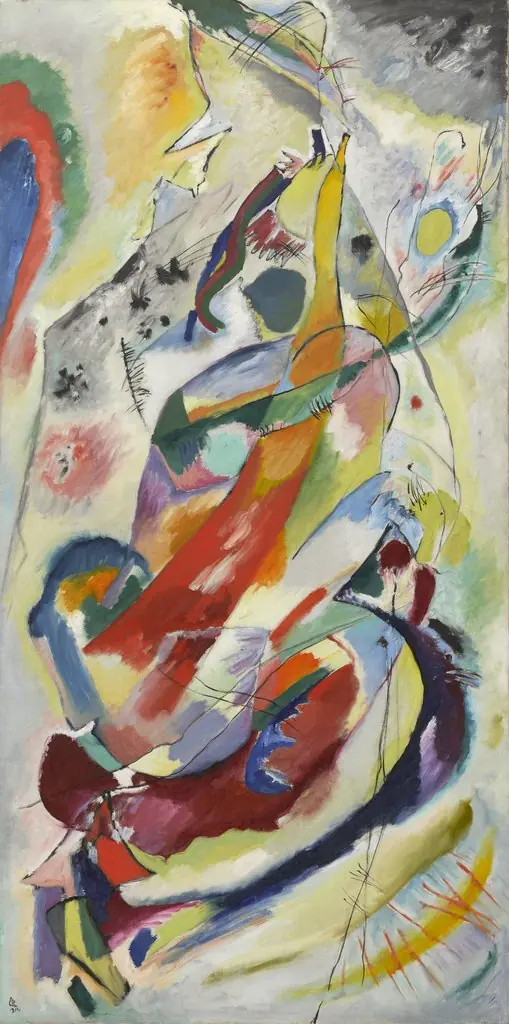
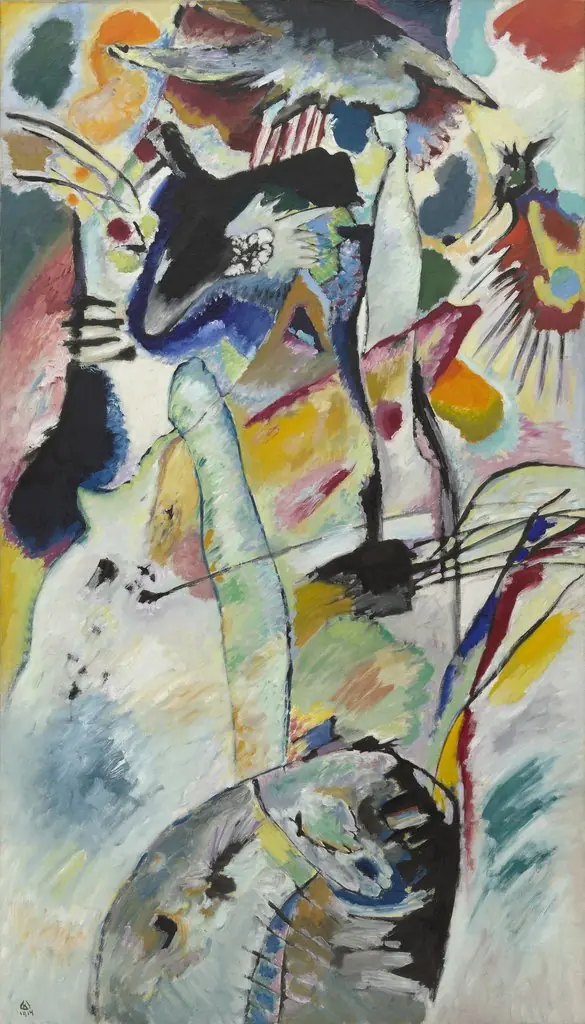
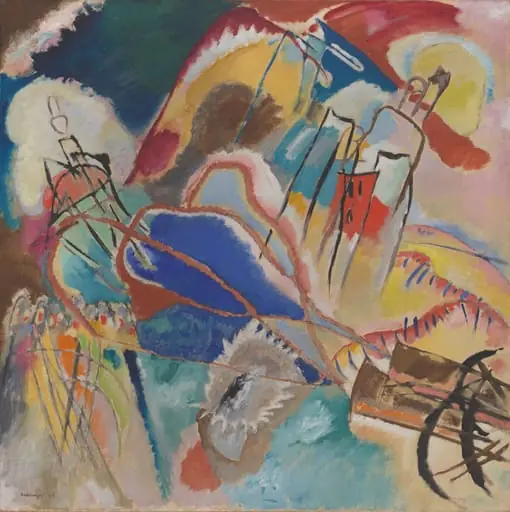
The painting does not depict recognizable objects but instead uses geometric shapes, circles, triangles, and rectangles, as carriers of emotional and spiritual resonance. Kandinsky believed these forms could evoke inner experiences, akin to musical notes. The apparent motion of the shapes suggests rhythm and dynamism, reflecting his interest in synesthesia and the interplay between visual and auditory sensation.
Technique & Style
Kandinsky applied oil paint with varied textures, combining smooth fields with areas of layered or stippled pigment. Shapes are defined by sharp edges and contrasting hues, while the background subtly gradates to create depth without perspective. Some forms are solid, others patterned or translucent, contributing to a sense of visual vibration and rhythmic movement across the surface.
History & Provenance
Created in 1925, the painting emerged from Kandinsky’s tenure at the Bauhaus, where he taught and developed his theoretical writings on art. It remained in his personal collection until his death in 1944. Later acquired by the Tate, it entered their holdings as part of a broader effort to document the evolution of modern abstraction in early 20th-century Europe.
Context
Swinging reflects the intellectual climate of the Bauhaus, where art, design, and theory converged. Kandinsky’s work during this period responded to broader modernist inquiries into non-representational form, influenced by scientific thought, music theory, and spiritual philosophy. His approach contrasted with the political realism favored in Soviet Russia, where he had previously lived.
Legacy
The painting contributes to Kandinsky’s enduring influence on abstract art’s development in the 20th century. His integration of geometry and color as expressive tools informed later movements, including Color Field and lyrical abstraction. Swinging remains a reference point in discussions of how visual elements can convey motion, emotion, and structure without literal subject matter.
Artist & collection
Artist
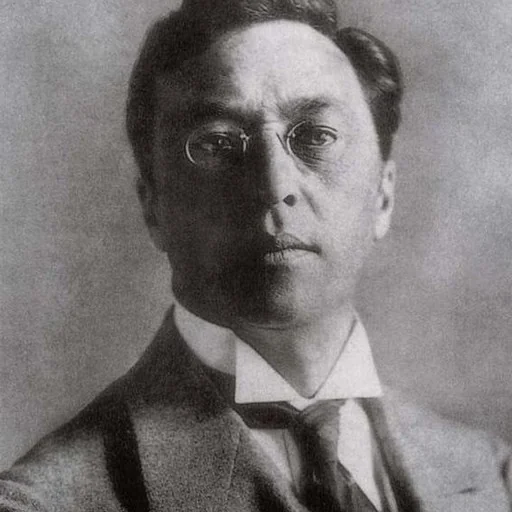
Wassily Wassilyevich Kandinsky (16 December 1866 – 13 December 1944) was a Russian painter and art theorist active in Germany during the late Belle Époque and Interwar eras.