Artwork
明/清 文止 疏影橫斜 扇|Plum Blossoms
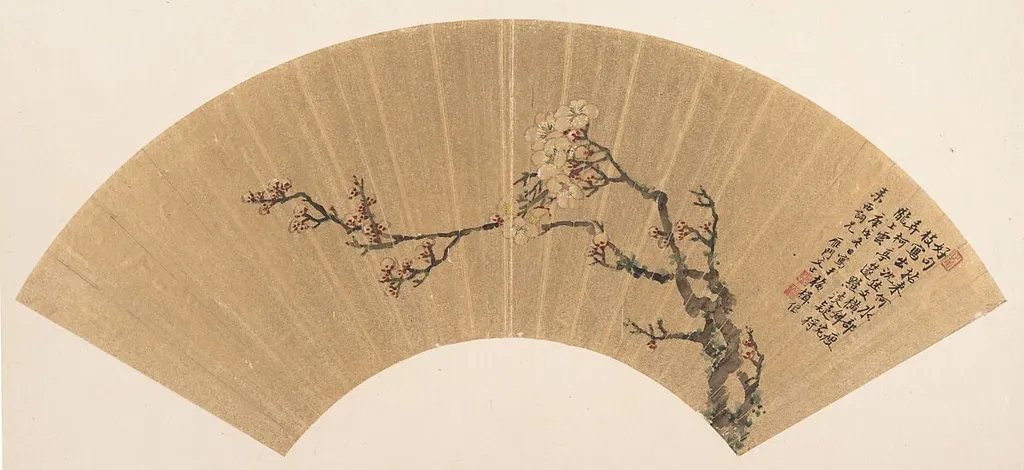
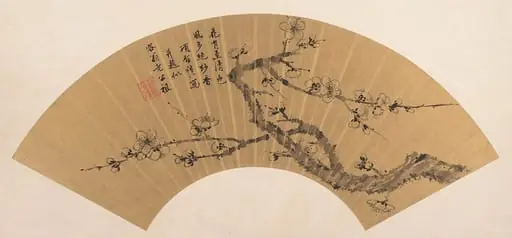
明/清 文止 疏影橫斜 扇|Plum Blossoms is an ink painting by the Baroque artist Wen Zhi. It dates from 1670 and is held in the collection of the Metropolitan Museum of Art.
- Accession no.
- 13.100.91
- Credit line
- John Stewart Kennedy Fund, 1913
About this work
The gold paper glows under the ink, making the flowers feel alive in candlelight.
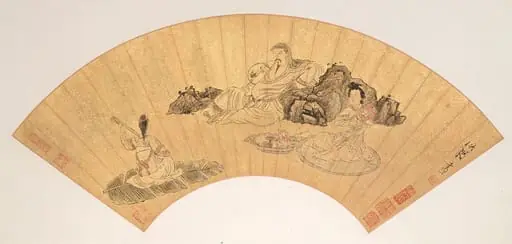
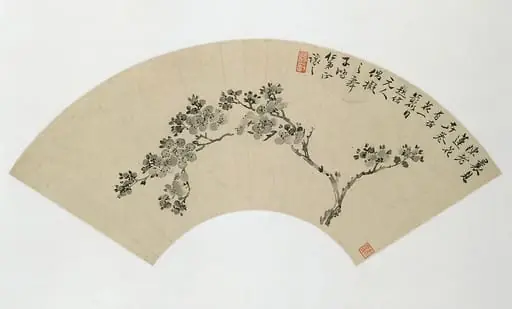
You see a single branch of plum blossoms stretching across a small gold fan. The petals are soft pink, the twigs dark and gnarled.
Wen Zhi painted this in 1670, when fans were everyday objects, not just art. The gold paper glows under the ink, making the flowers feel alive in candlelight. It’s quiet, no birds, no snow, just the branch and its shadow.
If you like this, look up other works in the subject: flowers, china, flower.
Subject & Meaning
The artwork depicts a flower, specifically focusing on plum blossoms. The title, which translates to "Sparse Shadows Slanting Across," directly evokes the iconic poetic imagery associated with the plum blossom in Chinese literary and artistic traditions. This phrasing references the renowned verse by the Song dynasty poet Lin Bu, which describes the subtle beauty of plum blossoms casting their delicate shadows across the water.
Consequently, the painting represents not merely a botanical study, but a deeply symbolic subject. The plum blossom is a traditional emblem of resilience and purity, as it blooms in the harshness of winter, while the specific iconography of slanting shadows underscores themes of quiet elegance and ephemeral beauty.
Technique & Style
The work is a folding fan assembled as an album leaf, painted with ink and polychrome pigments on gold-flecked paper, a technique typical of late‑Ming/early‑Qing literati fan painting. Its support is a thin fan leaf that folds into a compact format, allowing the image to be displayed either as a fan or as a mounted leaf within an album. The composition depicts plum blossoms in a still‑life genre, employing sparse, slanting shadows that create a delicate, airy spatial rhythm.
The piece measures 16.5 cm in height and 50.2 cm in width and is housed in the collection of the Metropolitan Museum of Art.
History & Provenance
The work, titled Plum Blossoms, was created by the artist Wen Zhi in 1670. Executed in ink and color on gold paper, the piece originated as a folding fan that was subsequently mounted as an album leaf. It depicts floral subjects, specifically plum blossoms, and was produced in China.
The artwork is currently held in the collection of the Metropolitan Museum of Art. The object measures 16.5 cm in height and 50.2 cm in width. No further details regarding specific commissioning patrons or the chain of ownership prior to its museum acquisition are provided in the available records.
The folding fan leaf titled Plum Blossoms by Wen Zhi is held in the collection of the Metropolitan Museum of Art. Created in 1670, the work measures 16.5 cm in height and 50.2 cm in width. The provided sources confirm its location within this institution but do not list a specific accession number or detail any past exhibitions.
Overview
Created in 1670 by the painter Wen Zhi, this work is a folding fan rendered as an album leaf. Executed with ink and color on a sheet of gold‑toned paper, the piece presents a solitary plum branch that stretches diagonally across the fan’s surface. The composition is restrained, focusing solely on the branch and its delicate blossoms without any surrounding narrative elements.
Artist & collection