Artwork
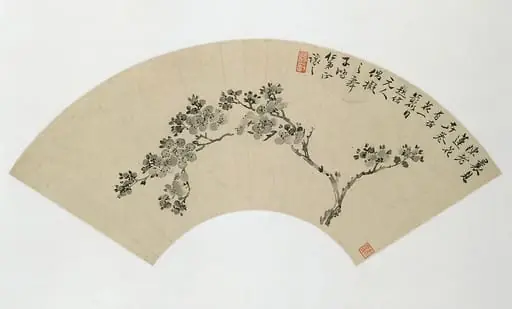
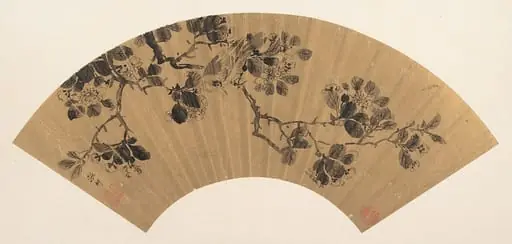
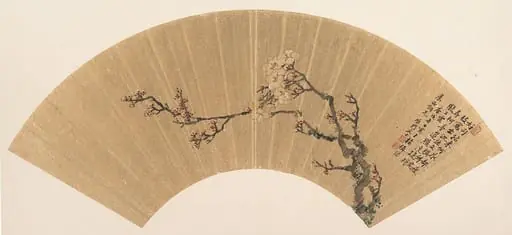
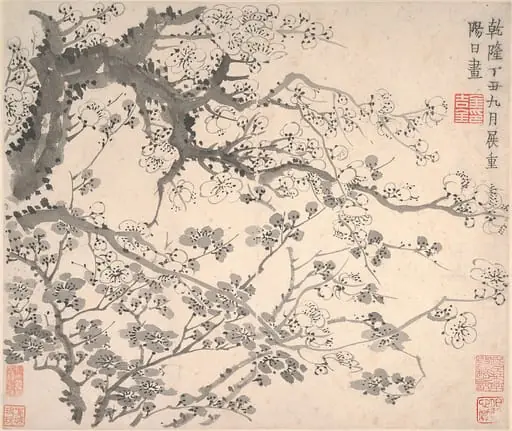
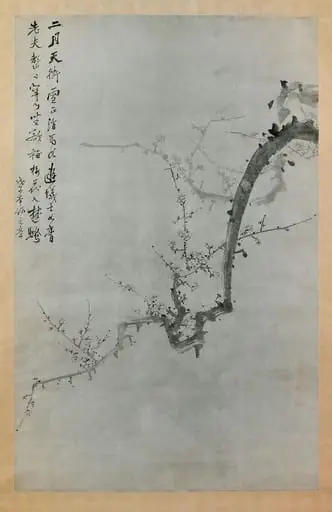
明/清 項聖謨 梅花 扇|Branch of Blossoming Plum
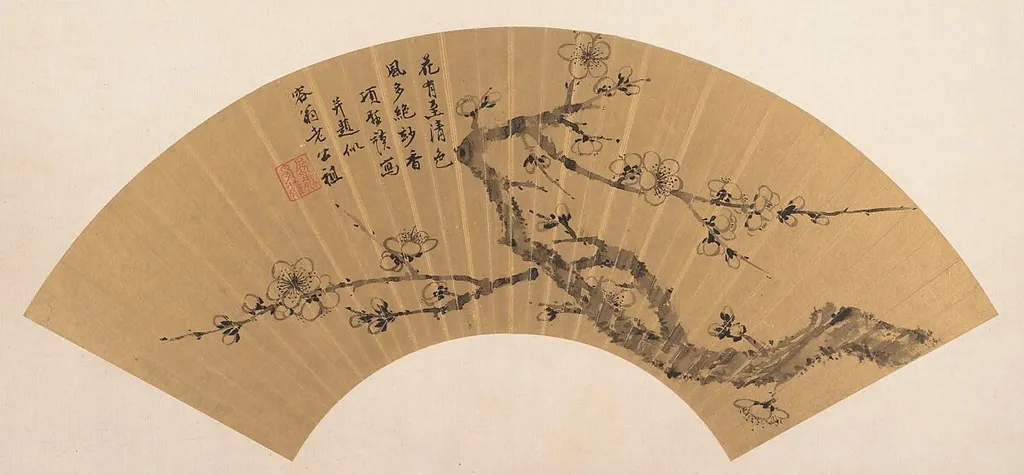
明/清 項聖謨 梅花 扇|Branch of Blossoming Plum is an ink painting by the Ming dynasty painting artist Xiang Shengmo. It dates from 1620 and is held in the collection of the Metropolitan Museum of Art.
- Accession no.
- 13.100.55
- Credit line
- John Stewart Kennedy Fund, 1913
About this work
Subject & Meaning
The plum blossom is a traditional motif in Chinese art, often symbolizing resilience and the arrival of spring due to its ability to bloom in cold weather.
Created in 1620 by Xiang Shengmo, this work depicts a branch of blossoming plum flowers. Executed in ink on gold paper, the image focuses on the floral subject as a still life composition. The plum blossom is a traditional motif in Chinese art, often symbolizing resilience and the arrival of spring due to its ability to bloom in cold weather.
While the specific symbolic intent of this particular fan leaf is not explicitly detailed in the available records, the choice of the plum flower aligns with established literati themes of purity and endurance. The artwork is currently held in the collection of the Metropolitan Museum of Art.
Technique & Style
Created in 1620 by Xiang Shengmo, this work features a branch of blossoming plum rendered in ink on gold paper. The piece was originally executed as a folding fan but has since been mounted as an album leaf. The composition focuses on floral subject matter, utilizing the reflective quality of the gold support to enhance the inked botanical forms.
Measuring 16.5 cm in height and 50.8 cm in width, the painting demonstrates the artist's handling of ink against a metallic ground, a technique characteristic of certain Ming and Qing dynasty fan paintings. The work is classified as a still life within the museum's collection.
History & Provenance
Branch of Blossoming Plum was created by Xiang Shengmo in 1620, during the late Ming dynasty, and is executed in ink on gold paper as a folding fan mounted as an album leaf. The work entered the collection of the Metropolitan Museum of Art, where it is presently held. Its dimensions are recorded as 16.5 cm in height by 50.8 cm in width, consistent with the format of a folding fan leaf.
No further details regarding an earlier ownership chain, commission, or intermediate provenance prior to the work's accession by the Metropolitan Museum of Art are documented in the available sources.
The folding fan titled Branch of Blossoming Plum by Xiang Shengmo, dated 1620, is held in the collection of the Metropolitan Museum of Art in New York. Measured at 16.5 cm height and 50.8 cm width, the fan was created in China. The work is recorded in the museum’s catalogue as part of its Asian painting holdings, though no specific accession number is provided in the available documentation. No exhibition history for this piece is documented in the sources consulted.
Legacy
Branch of Blossoming Plum, a folding fan mounted as an album leaf by Xiang Shengmo, was created in 1620 using ink on gold paper and classified as a still‑life painting of a flower. The work is held in the Metropolitan Museum of Art, a placement that underscores its recognized significance within the corpus of Ming‑Qing Chinese art.
Its portrayal of plum blossoms informs scholarly analyses of floral symbolism in Chinese painting and demonstrates the piece’s role in shaping later understandings of the motif.
Overview
Created in 1620 by the Chinese painter Xiang Shengmo, this work presents a solitary plum branch rendered on a folding fan that serves as an album leaf. The composition is set against a luminous gold paper, a material traditionally reserved for affluent patrons. The piece belongs to the broader tradition of flower painting, emphasizing the elegance of a single blossom motif.
Artist & collection