Artwork
清 金? 梅花 扇面|Plum
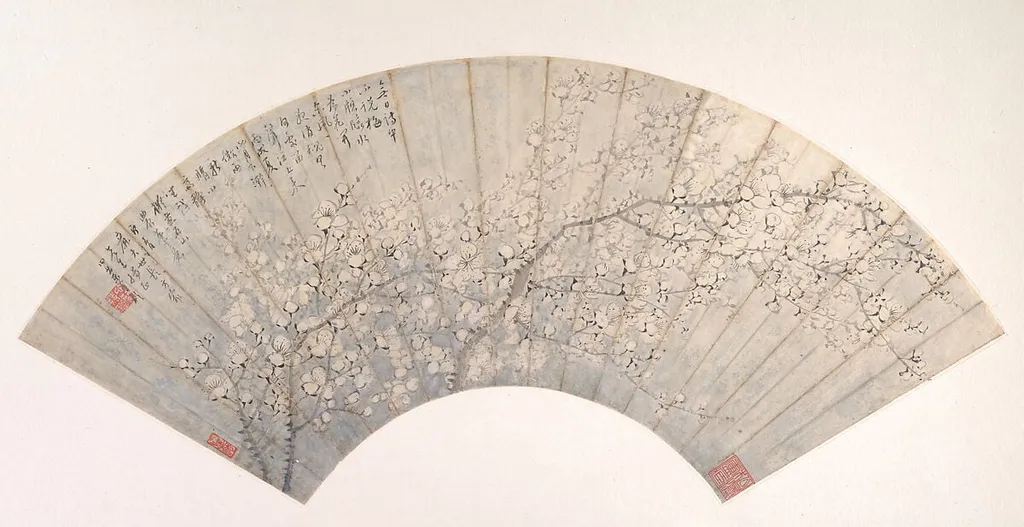
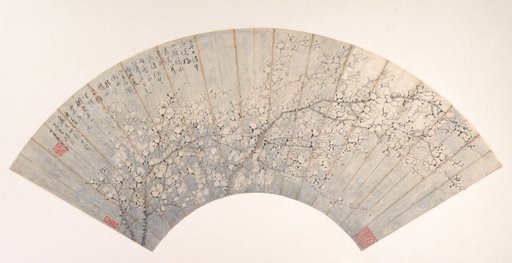
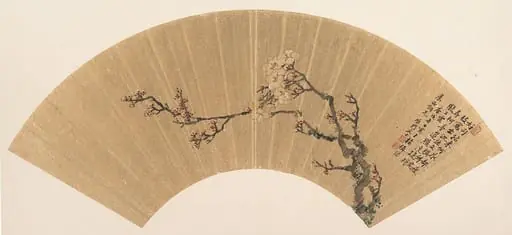
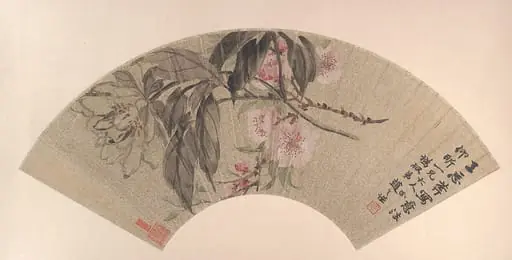
清 金? 梅花 扇面|Plum is an ink painting by the Impressionist artist Jin Lan. It dates from 1886 and is held in the collection of the Metropolitan Museum of Art.
About this work
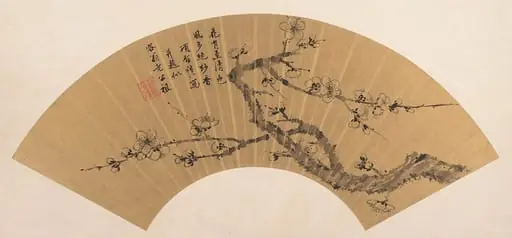
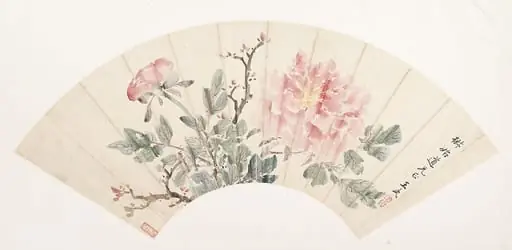
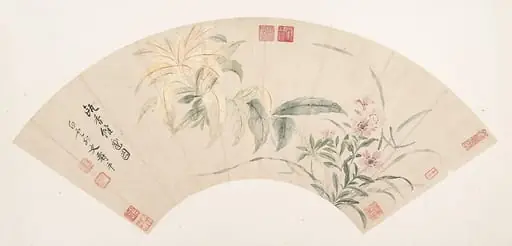
You see a single branch of plum blossoms on a pale fan-shaped sheet. The petals are soft pink, the twigs dark and crooked.
Jin Lan painted this in 1886, when fans were often given as gifts. The paper is treated with alum so the ink doesn’t bleed, tiny brushstrokes stay sharp even after 130 years.
Look up other works in the subject: trees.
Subject & Meaning
As a subject in Chinese art, the plum tree is a traditional motif often associated with resilience and endurance, blooming in the cold of late winter.
The work depicts a tree, specifically identified in the title as a plum blossom, rendered in ink and color on alum paper. As a subject in Chinese art, the plum tree is a traditional motif often associated with resilience and endurance, blooming in the cold of late winter. While the specific iconographic details or symbolic intent of this particular composition are not elaborated upon in the available records, the choice of the plum blossom aligns with established genre conventions where the tree represents moral fortitude and the arrival of spring. The piece is classified within the landscape genre, situating the tree within a broader natural context.
Technique & Style
Created in 1886, this work by Jin Lan is executed in ink and color on alum paper. The piece originated as a folding fan that has since been remounted as an album leaf, a common preservation method for fan paintings. Measuring 17.8 cm in height and 53.3 cm in width, the support reflects the elongated format typical of fan surfaces adapted for album viewing.
The composition falls within the landscape genre, depicting a tree motif. The use of alum paper suggests an intention to control the absorption of ink and pigment, allowing for precise brushwork characteristic of the artist's style.
History & Provenance
The painting was created in 1886 by Jin Lan, executed in ink and color on alum paper as a folding fan mounted as an album leaf. It was produced in China during the Qing dynasty. The work is held in the collection of the Metropolitan Museum of Art, where it remains located.
The work is held in the collection of the Metropolitan Museum of Art. It is cataloged as a painting by Jin Lan created in 1886, depicting a tree. The piece measures 17.8 cm in height and 53.3 cm in width.
No specific accession number or exhibition history is provided in the available records.
Legacy
The 1886 folding fan painting Plum (Qing Jin? Plum Blossom) by Jin Lan, depicting a tree in ink and color on alum paper, entered the Metropolitan Museum of Art collection, a placement that signals its accepted significance within the corpus of Qing dynasty fan art. Its presence in a prominent museum supports ongoing scholarly attention to Jin Lan’s contribution to the landscape genre and to the visual tradition of plum blossom imagery.
By being catalogued and exhibited, the work influences contemporary understandings of late‑19th‑century Chinese painting and reinforces the artist’s reputation beyond his lifetime.
Overview
Created in 1886 by the Chinese artist Jin Lan, this work depicts a single branch of plum blossoms rendered in ink and color on alum paper. The composition is adapted to the folding fan format, presenting a sparse, elegant arrangement where dark, crooked twigs contrast against a pale background. The petals are painted in soft pink tones, emphasizing the delicate nature of the subject.
The use of alum-treated paper is a technical choice characteristic of the medium, ensuring that the ink remains sharp and does not bleed, preserving the clarity of the tiny brushstrokes. As a fan leaf mounted as an album leaf, the piece reflects the tradition of creating portable, intimate artworks often exchanged as gifts during the late Qing dynasty. Jin Lan's approach aligns with the scholarly aesthetic of the period, focusing on the symbolic resilience of the plum blossom while demonstrating mastery over the specific constraints and opportunities of the fan surface.
Context
In the late nineteenth century, Chinese artisans often produced painted fans for both functional and decorative purposes, integrating traditional botanical subjects into everyday objects. Jin Lan’s choice of the plum tree aligns with the era’s continued reverence for symbolic flora within decorative media.
Artist & collection