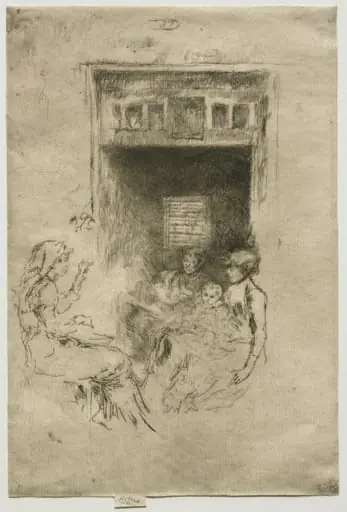
Artwork
Flaming Forge
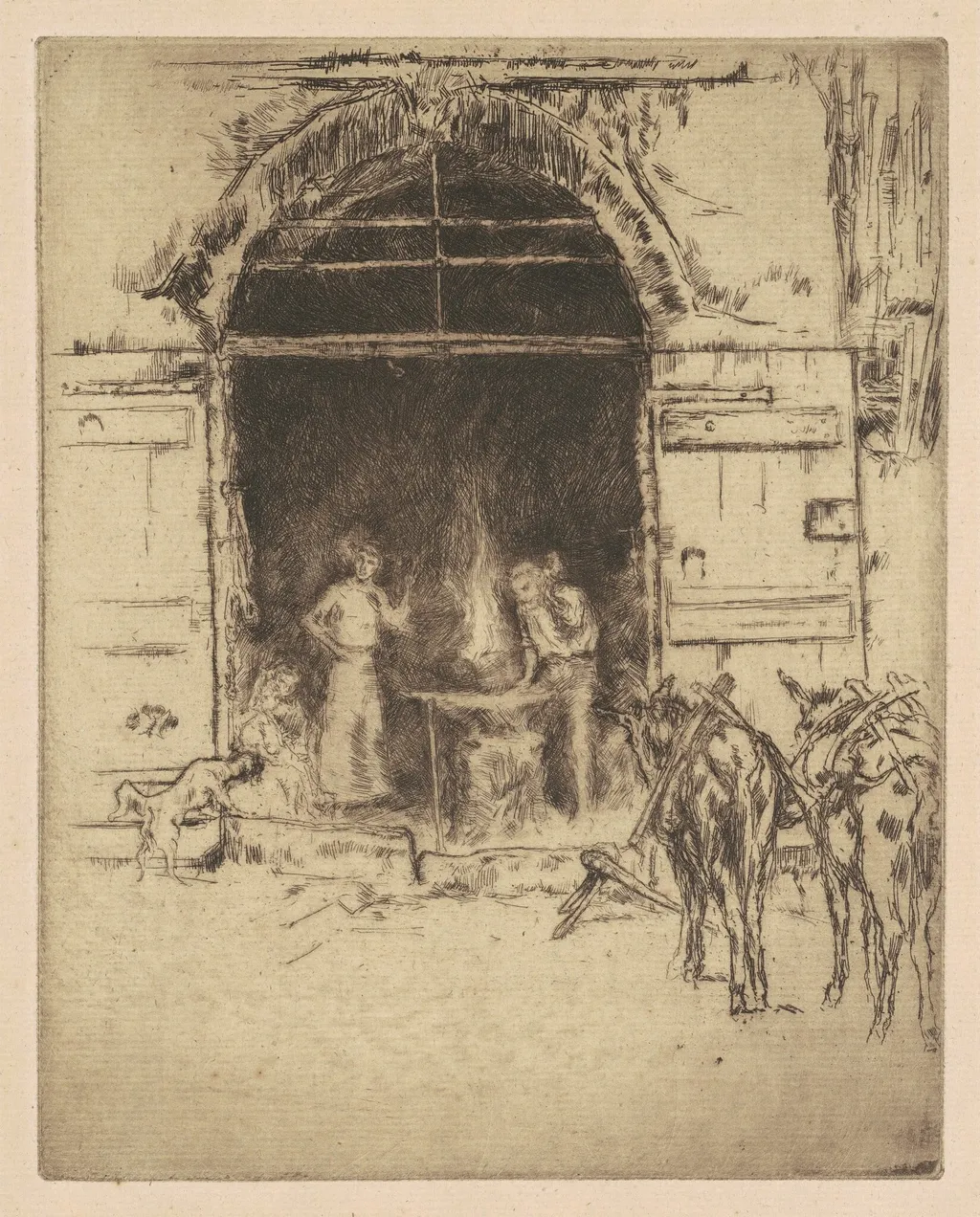
Flaming Forge is an ink print by James McNeill Whistler. It dates from 1901 and is held in the collection of the National Gallery of Art.
- Inscription
- Inscribed:lower center in graphite by unknown hand: The Flaming Forge, Ajaccio; lower right in graphite by unknown hand: C3766- / S38377; center verso in graphite: Nathaniel Sparks imp.
About this work
Overview
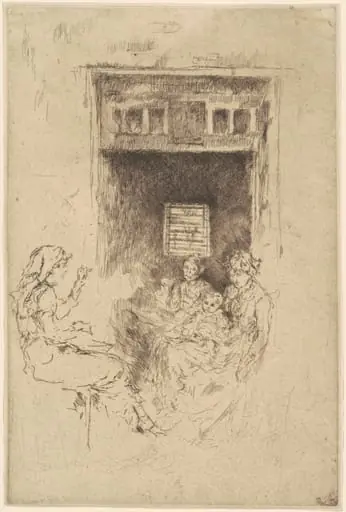
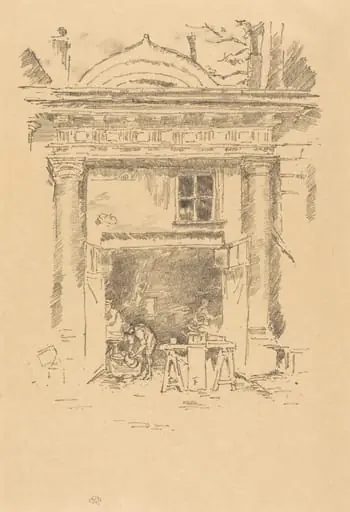
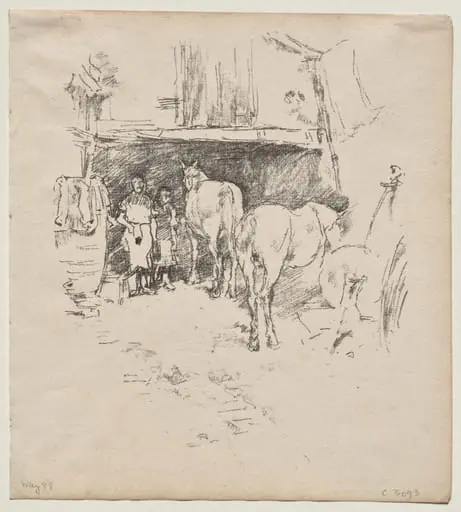
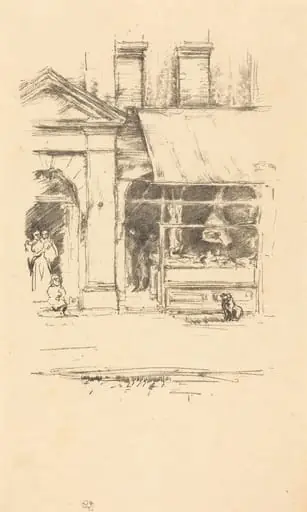
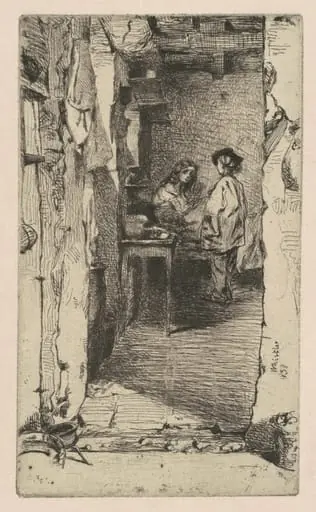
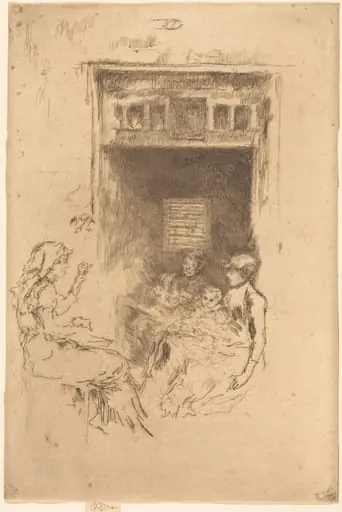
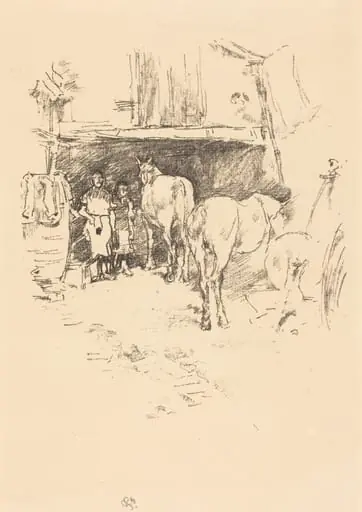
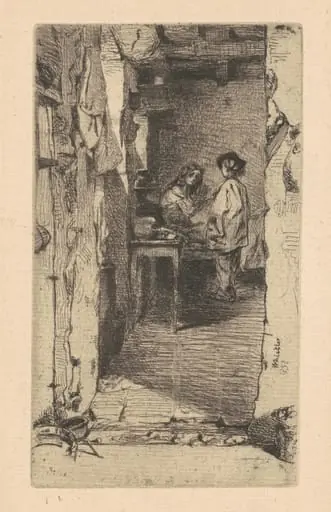
Flaming Forge is an etching by James McNeill Whistler, executed in dark brown ink on laid paper. It captures a quiet interior of a rural barn at dusk, where light enters through an open doorway and falls across the foreground. The composition emphasizes texture and tone rather than narrative, focusing on the stillness of domestic farm life.
Subject & Meaning
The scene portrays animals and farming tools arranged near the threshold of a barn, suggesting a pause in daily labor. No human figures are present, yet their absence heightens the sense of quiet routine. The work conveys an unembellished view of agricultural existence, valuing the dignity of ordinary moments over dramatic storytelling.
Technique & Style
Whistler employed etching to achieve subtle gradations of light and shadow, using fine lines to render the roughness of wood, fur, and metal. The dark brown ink enhances the atmospheric depth, while the soft contrast between illuminated and shadowed areas reflects his interest in tonal harmony over detail. His approach aligns with the aesthetic principles of quiet observation.
History & Provenance
Created during Whistler’s early career, Flaming Forge belongs to a series of rural scenes he produced in the 1850s and 1860s, before his shift toward more abstract compositions. It was likely made during or shortly after his time in Europe, where he studied printmaking techniques. The work remained in private collections until entering institutional holdings in the 20th century.
Context
In mid-19th century Europe, interest in rural life was growing among artists and intellectuals, often as a counterpoint to industrialization. Whistler’s etchings, including this one, reflect a broader trend of documenting everyday environments with sensitivity rather than idealization. His focus on light and texture aligned with emerging printmaking practices in France and England.
Legacy
Flaming Forge exemplifies Whistler’s early commitment to the etching medium as a vehicle for quiet realism. Though less known than his later portraits, this work contributed to the revival of etching as a serious artistic form in the 19th century. Its restrained composition influenced subsequent generations of printmakers seeking emotional resonance through minimalism.
Own this work as a print
Artist & collection
Artist
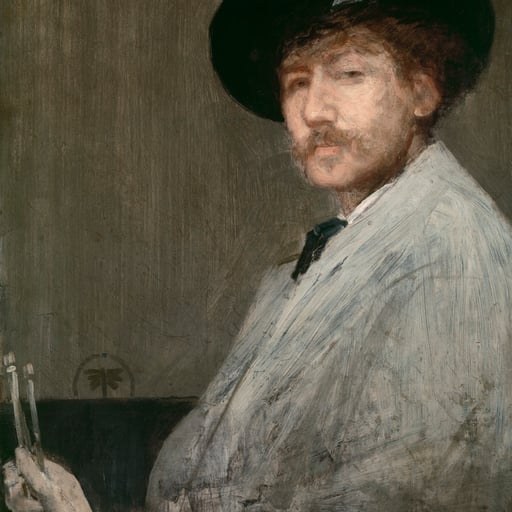
James Abbott McNeill Whistler (; July 10, 1834 – July 17, 1903) was an American painter in oils and watercolor, and printmaker, active during the American Gilded Age and based primarily in the United Kingdom.

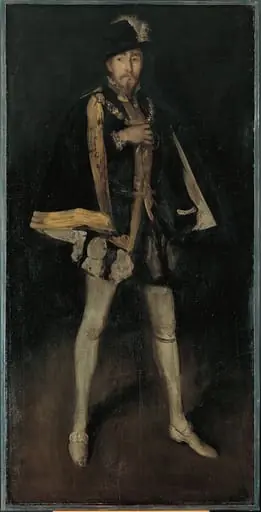 Arrangement in Black, No. 3: Sir Henry Irving as Philip II of Spain
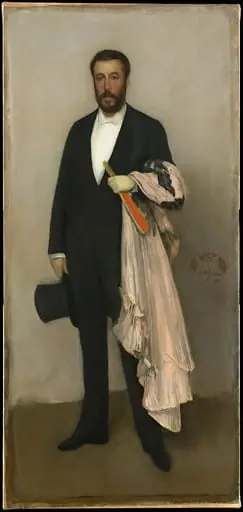 Arrangement in Flesh Colour and Black: Portrait of Theodore Duret
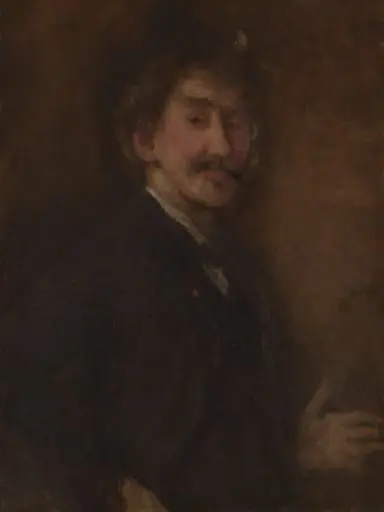 Gold and Brown: Self-Portrait
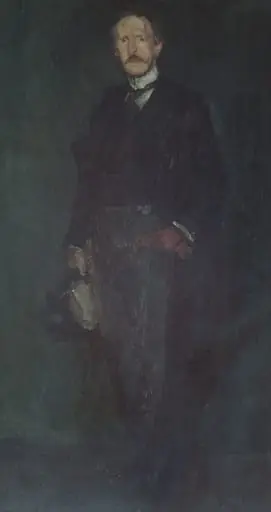 Edward Guthrie Kennedy
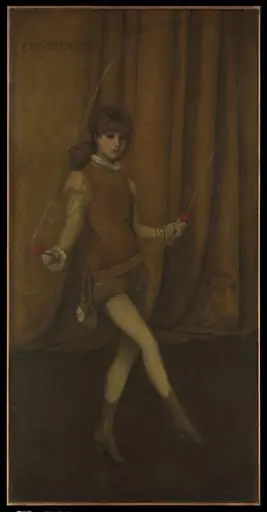 Harmony in Yellow and Gold: The Gold Girl—Connie Gilchrist
 George W. Vanderbilt
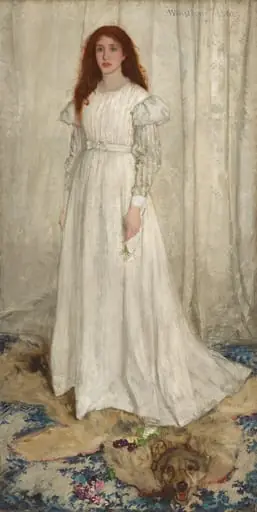 Symphony in White, No. 1: The White Girl
 Henry Irving as Philip II of Spain