Artwork
Gold and Brown: Self-Portrait
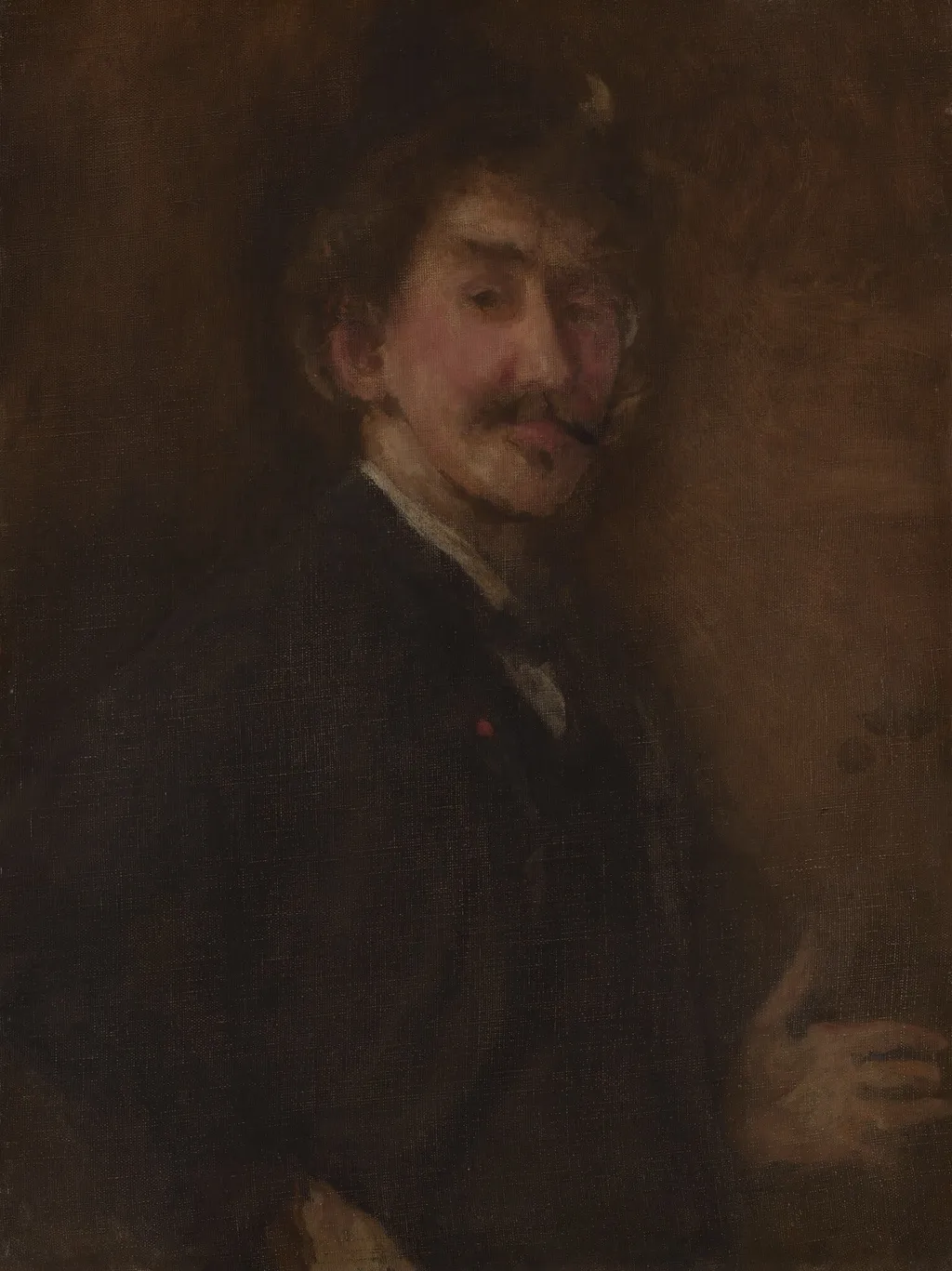
Gold and Brown: Self-Portrait is an oil painting by the American Impressionist artist James McNeill Whistler. It dates from 1897 and is held in the collection of the National Gallery of Art.
- Inscription
- Inscribed:center right with the artist's butterfly mark
About this work
A man in a simple suit looks straight out at us with a calm face. Whistler kept the colors muted to create a sense of quiet. He painted it in 1897, while artists were experimenting with new approaches to color and style.
Subject & Meaning
The restrained color scheme and minimalist background direct attention to the artist’s physiognomy, suggesting a meditation on identity and artistic presence.
The subject of Gold and Brown: Self-Portrait is James McNeill Whistler himself, rendered in a close-up, frontal pose that emphasizes his facial features and contemplative expression. The title’s emphasis on “gold and brown” reflects the dominant palette, rich earth tones and metallic hues, that dominate the composition, evoking both material opulence and a muted, introspective mood. The restrained color scheme and minimalist background direct attention to the artist’s physiognomy, suggesting a meditation on identity and artistic presence.
The work functions as a self-representation rather than a conventional likeness, aligning with Whistler’s broader aesthetic of harmonizing form and mood.
Technique & Style
Gold and Brown: Self-Portrait is an oil painting executed on canvas, measuring 62.5 by 46.8 centimeters. The work belongs to the genre of self-portraiture and is classified as a painting. Whistler's handling of the oil medium is evident in the restrained, harmonized palette of gold and brown tones that give the composition its title.
The relatively modest scale of the canvas supports the intimate, closely observed character of the portrait, in which the artist depicts himself. The painting is held in the collection of the National Gallery of Art in Washington, D.C., and its oil-on-canvas support remains in stable condition as a museum-held work.
History & Provenance
James McNeill Whistler painted Gold and Brown: Self-Portrait in 1897, as established by the artist’s dating and corroborated by contemporary accounts (1, 2). The work remained in Whistler’s studio until at least 1892, when Charles Lang Freer documented its presence there (1). By 1900, it was sold to George W. Vanderbilt, though it likely stayed with Whistler until around 1904 (1).
Following Vanderbilt’s death in 1914, ownership passed to his widow, Edith Stuyvesant Dresser Vanderbilt (later Mrs. Peter G. Gerry), who retained it until 1959, when she gifted it to the National Gallery of Art in Washington, D.C. (1, 2). There is no evidence of a formal commission; the portrait appears to have been created as a personal work.
Gold and Brown: Self-Portrait has been held by the National Gallery of Art in Washington, D.C., since 1959, when it entered the collection as a gift. It had previously been part of the Vanderbilt family holdings, having been sold by 1900 to George W. Vanderbilt of Asheville, North Carolina, though it remained in Whistler's studio until probably 1904. Charles Lang Freer recorded seeing the canvas there as late as 1892.
On Vanderbilt's death in 1914, the painting passed to his widow, Edith Stuyvesant Dresser Vanderbilt (later Mrs. Peter G. Gerry), residing in Asheville and Providence, Rhode Island, before its eventual transfer to the NGA.
Overview
James McNeill Whistler's Gold and Brown: Self-Portrait, painted around 1897, is an oil on canvas work depicting the artist himself. This piece exemplifies his approach to portraiture, characterized by a subdued palette and a direct gaze. It reflects the experimental spirit of late 19th-century art, where artists explored new ways to represent form and emotion through color and brushwork.
Context
Created during a period of significant artistic innovation, this self-portrait reflects Whistler's engagement with contemporary styles like American Impressionism. As an American expatriate living in the United Kingdom, he was a prominent figure who advocated for "art for art's sake," a philosophy that championed art's intrinsic beauty over its didactic or emotional function. This stance challenged traditional academic approaches to painting.
Legacy
Whistler's distinctive butterfly signature, integrated into the painting, served as a personal emblem. This stylized mark symbolized both the delicate, almost ethereal quality of his artistic output and his often combative public persona. It became a recognizable symbol of his unique brand, reflecting his commitment to aesthetic refinement alongside his independent and often controversial character.
Own this work as a print
Artist & collection
Artist
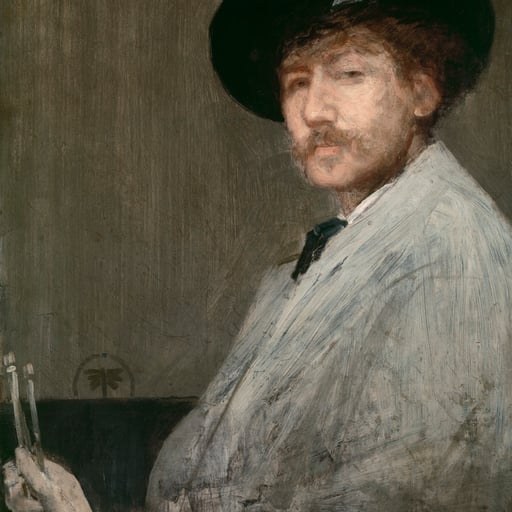
James Abbott McNeill Whistler (; July 10, 1834 – July 17, 1903) was an American painter in oils and watercolor, and printmaker, active during the American Gilded Age and based primarily in the United Kingdom.

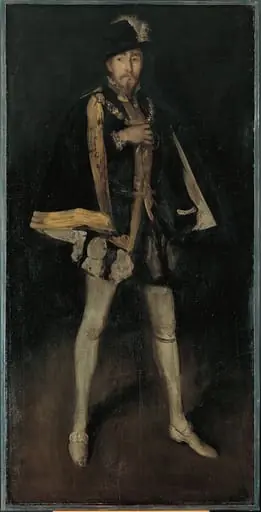 Arrangement in Black, No. 3: Sir Henry Irving as Philip II of Spain
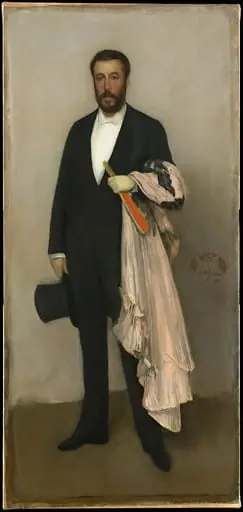 Arrangement in Flesh Colour and Black: Portrait of Theodore Duret
 Edward Guthrie Kennedy
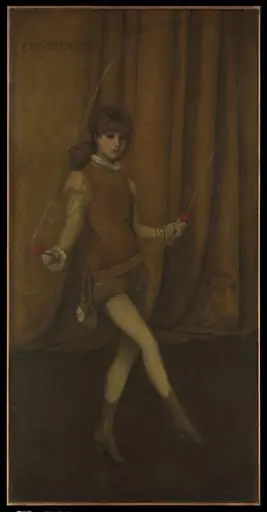 Harmony in Yellow and Gold: The Gold Girl—Connie Gilchrist
 George W. Vanderbilt
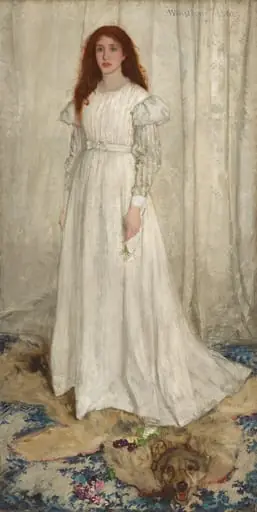 Symphony in White, No. 1: The White Girl
 Henry Irving as Philip II of Spain
 ‘Arrangement in Yellow and Gray’: Effie Deans
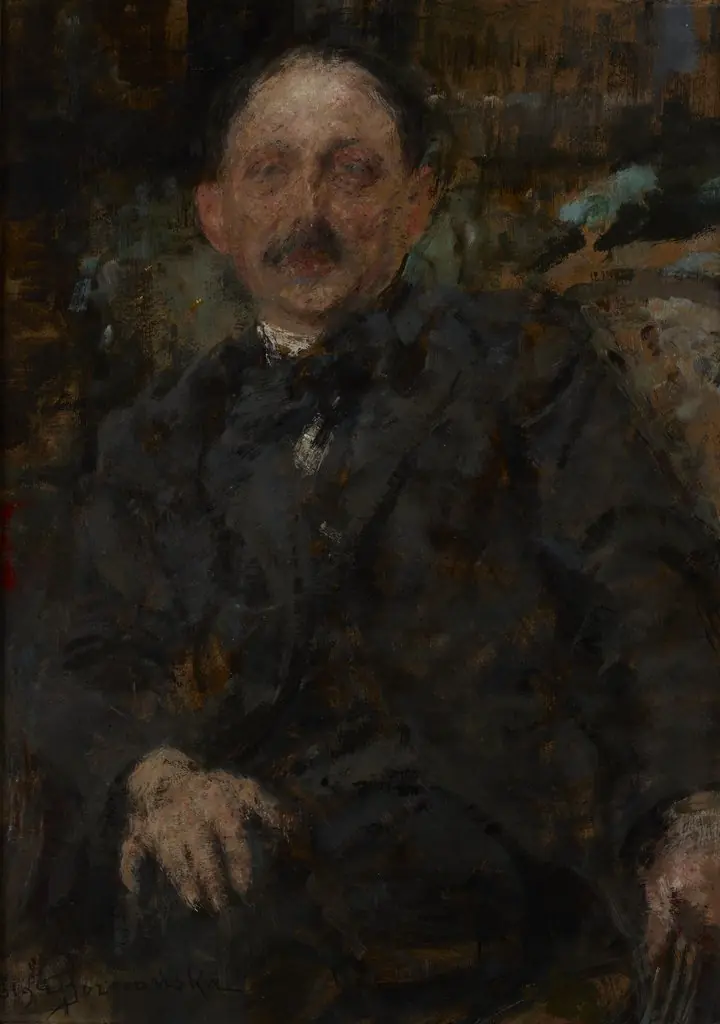
- Portrait of Painter Marcin Samlicki
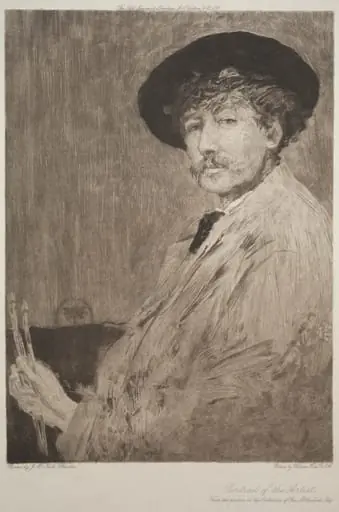 James McNeill Whistler
 Ettore Pinelli, the Violinist
 Jacinto Octavio Picón
 Jacinto Felipe Picón y Pardiñas
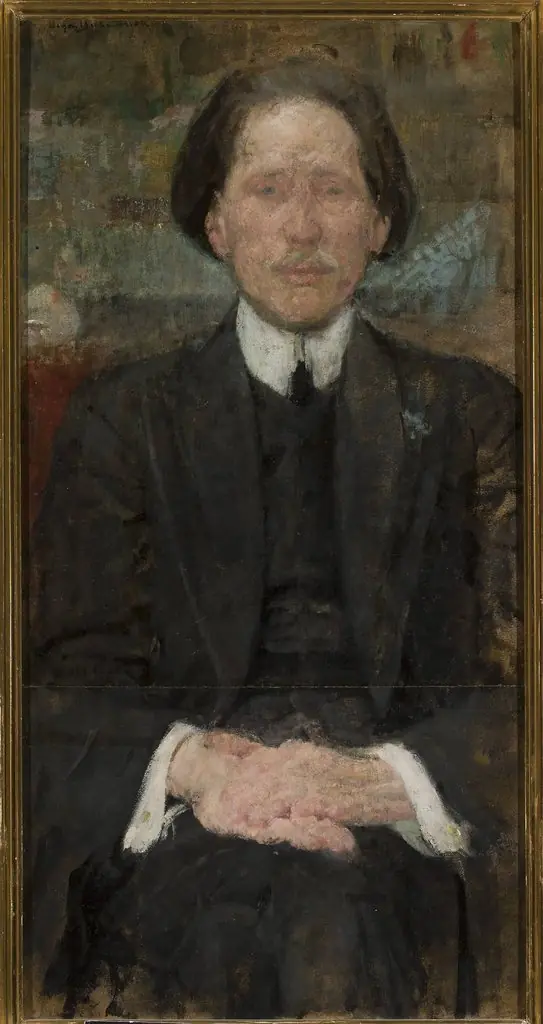 Portrait of a young man in black
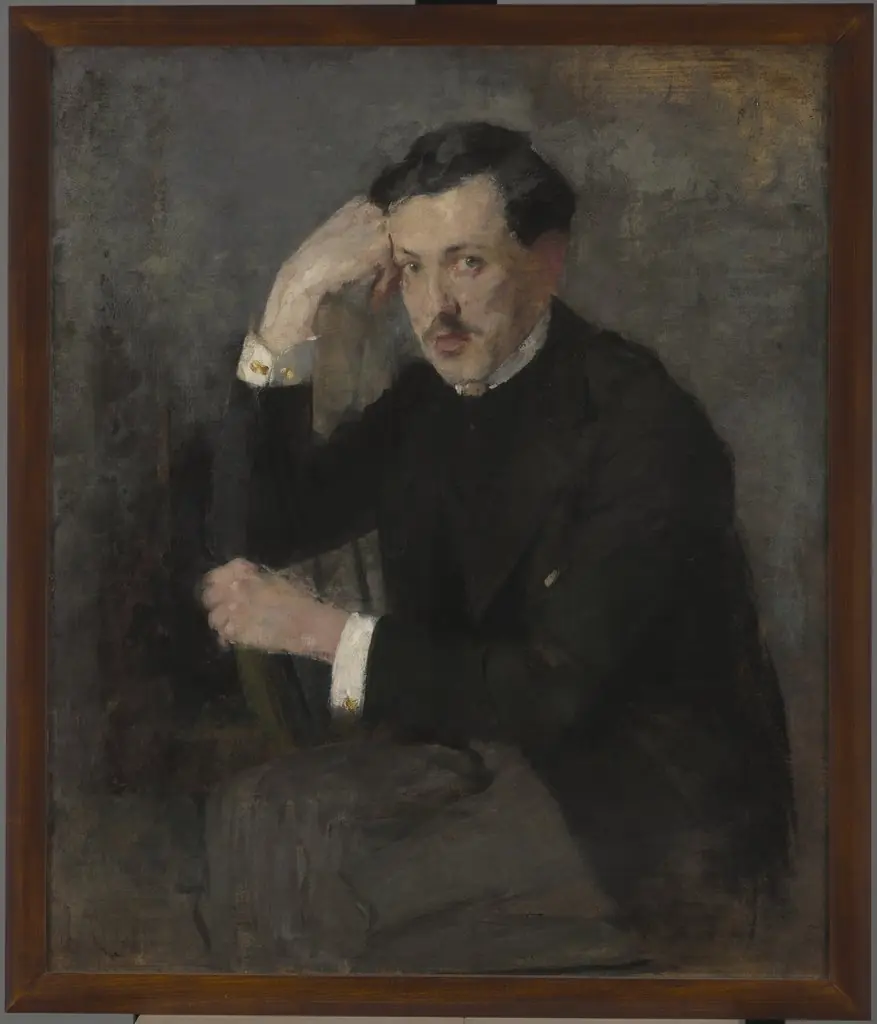 Portrait of Józef Czajkowski – two-sided painting
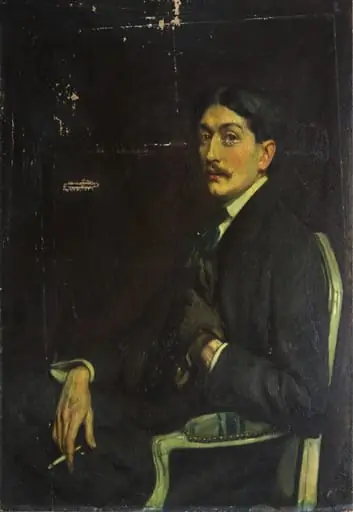 Portretul arhitectului Edmond van Saanen Algi
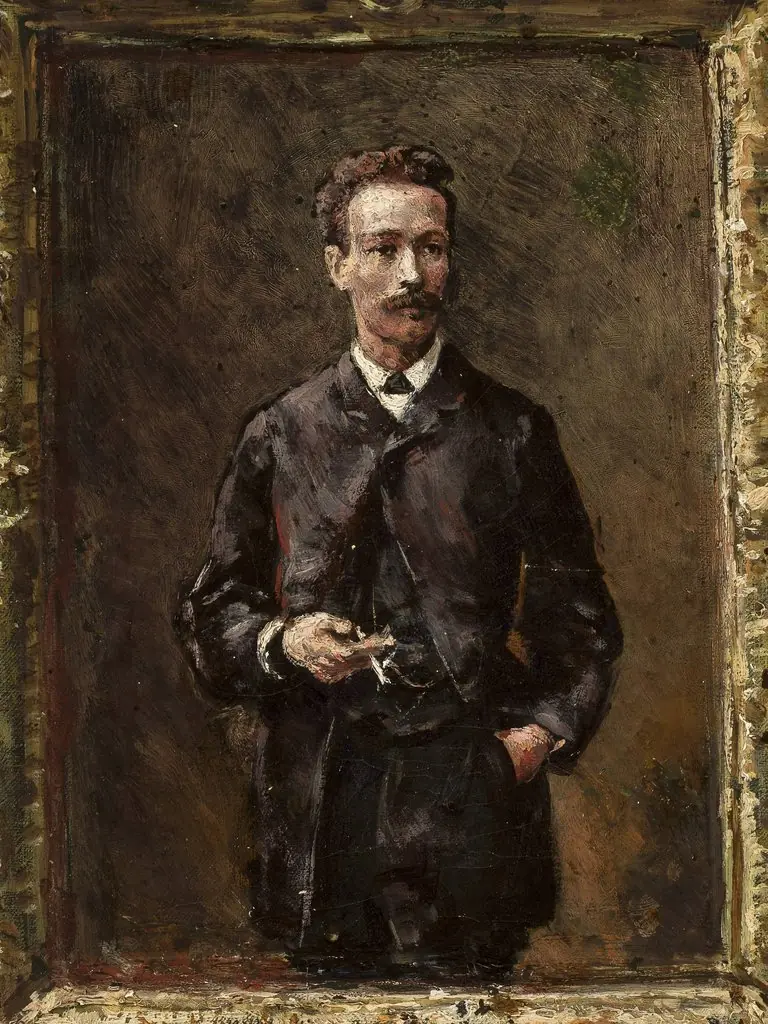 Portrait of Artur Gruszecki, sketch
 Gentleman portrait
 Self-Portrait, Aged 21
 Self-Portrait with White Collar