Artwork
Still Life with Oysters, a Silver Tazza, and Glassware
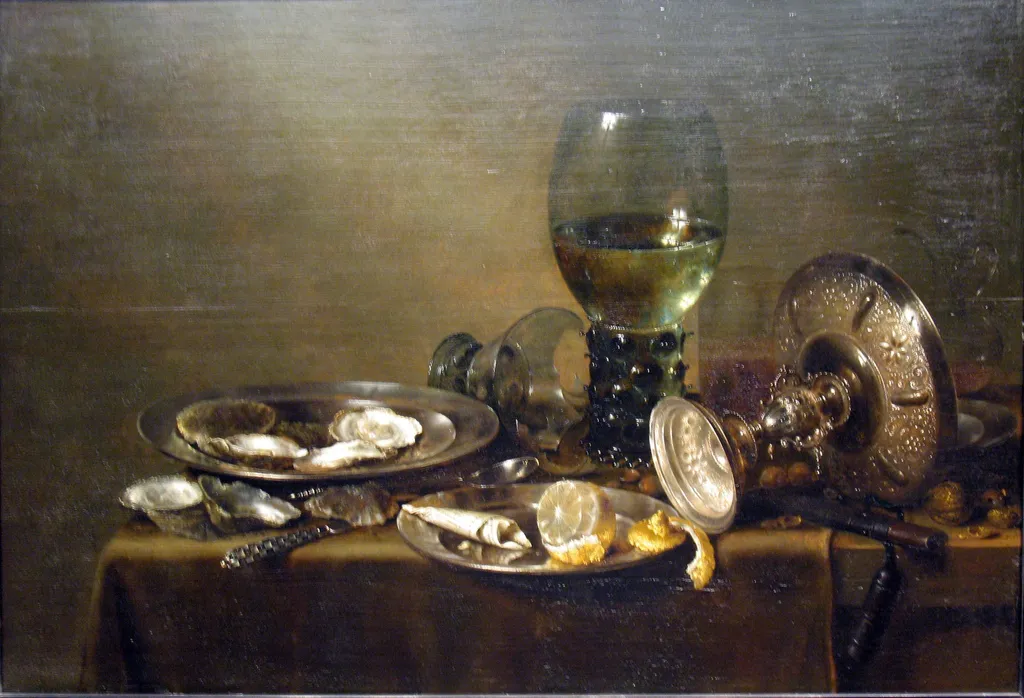
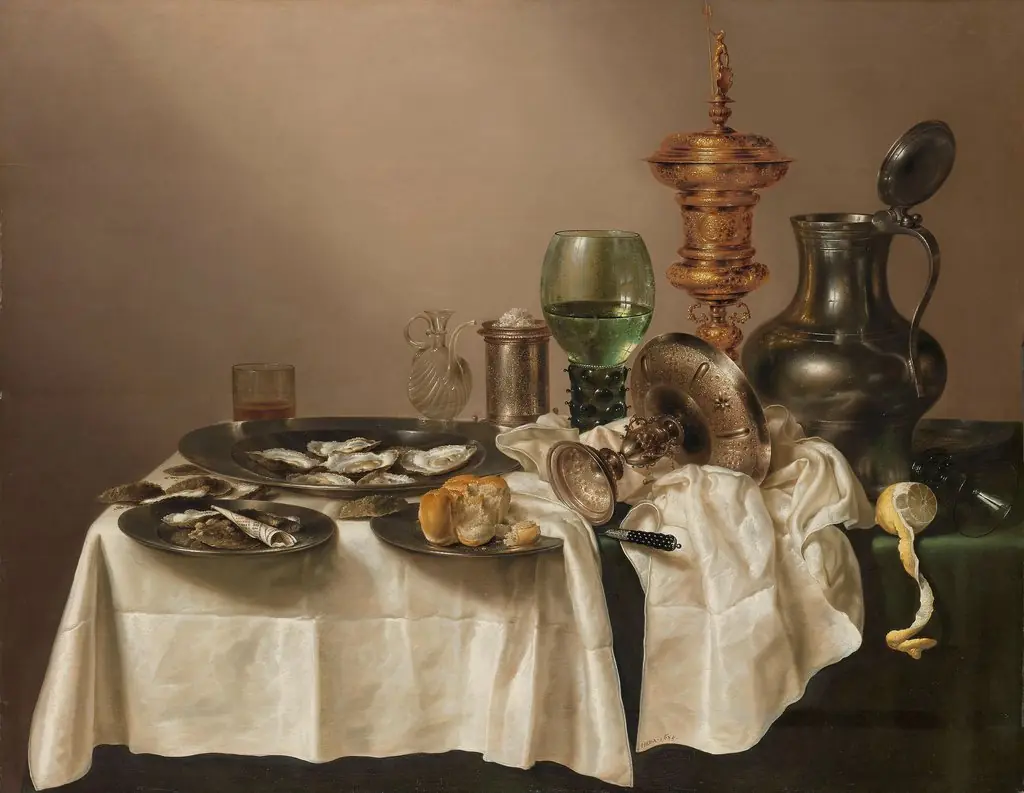
Still Life with Oysters, a Silver Tazza, and Glassware is an oil painting by the Dutch Golden Age artist Willem Claesz Heda. It dates from 1635 and is held in the collection of the Metropolitan Museum of Art.
About this work
Subject & Meaning
The presence of the lemon, often associated with bittersweetness or the transience of life in such contexts, complements the display of material abundance.
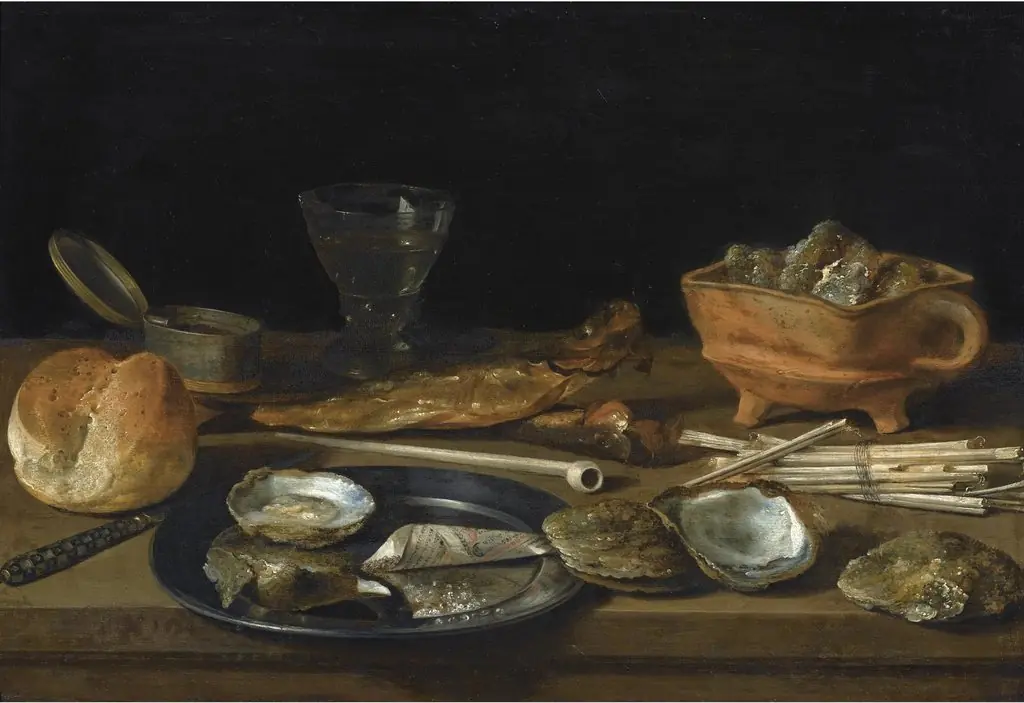
Created in 1635, this Dutch Golden Age painting depicts a meticulously arranged table setting featuring oysters, a silver tazza, and glassware alongside a lemon. As a representative work of the still life genre by Willem Claesz. Heda, the composition focuses on the tangible presence of luxury items and foodstuffs.
The inclusion of oysters, a silver tazza, and drinking glasses highlights themes of wealth and sensory pleasure characteristic of the era. The presence of the lemon, often associated with bittersweetness or the transience of life in such contexts, complements the display of material abundance. The work serves as a detailed record of 17th-century domestic opulence, capturing the textures and reflective qualities of the depicted objects.
Technique & Style
Created in 1635, this work is an oil painting on an unspecified support, executed by Willem Claesz. Heda within the Dutch Golden Age tradition. The composition measures 49.8 cm in height and 80.6 cm in width.
Stylistically, the piece exemplifies the still life genre through its meticulous rendering of specific objects, including oysters, a lemon, and drinking glassware. Heda's handling of the medium demonstrates the technical precision characteristic of his era, focusing on the interplay of light and texture across metallic and glass surfaces. The painting is currently held in the collection of the Metropolitan Museum of Art, having previously belonged to the Grand Ducal collection of Oldenburg. Its formal qualities reflect the period's emphasis on realistic depiction and the careful arrangement of luxury items.
History & Provenance
The painting Still Life with Oysters, a Silver Tazza, and Glassware by Willem Claesz Heda is dated to 1635, aligning with the artist’s mature period within the Dutch Golden Age of still-life painting. The work entered the public record as part of the Grand Ducal collection of Oldenburg, held by Peter II, Grand Duke of Oldenburg, and later by his successor Frederick Augustus II. By the late 19th century, the painting had passed through the intermediary hands of Frederik Muller & Co. before entering the collection of the Metropolitan Museum of Art, where it remains housed in the Augusteum.
Context
Willem Claesz Heda’s 1635 Still Life with Oysters, a Silver Tazza, and Glassware exemplifies the tonal delicacy and compositional balance characteristic of Dutch Golden Age still‑life painting. As documented in the work’s catalogue entry and the Metropolitan Museum of Art’s collection data, Heda specialized in modest banquets that convey the material prosperity of the Dutch Republic through muted lighting and precise rendering of textures. Scholars have noted his influence on later practitioners of breakfast pieces, positioning this canvas within a trajectory of refined genre painting that emphasized everyday luxury and subtle visual poetry.
Legacy
The 1635 oil painting Still Life with Oysters, a Silver Tazza, and Glassware by Willem Claesz Heda is recognized as a representative work of Dutch Golden Age still-life. Its composition of oysters, lemon, and a drinking glass exemplifies the genre, and the work has been part of the Metropolitan Museum of Art’s collection since entering the museum’s holdings through the Grand ducal collection of Oldenburg, previously owned by Peter II and Frederick Augustus II. The painting’s dimensions (49.8 × 80.6 cm) and provenance illustrate its historical trajectory, contributing to the understanding of 17th‑century Dutch art and informing later scholarship on Heda’s influence on subsequent still-life traditions.
Overview
This oil painting, created in 1635 by Willem Claesz Heda, exemplifies the Dutch Golden Age still life tradition. Titled Still Life with Oysters, a Silver Tazza, and Glassware, the work showcases the artist's characteristic arrangement of various objects, including a lemon, oysters, and drinking vessels. Heda, a painter from Haarlem, dedicated his career exclusively to this genre, becoming a notable figure in its development. The artwork is presently housed at The Metropolitan Museum of Art.
Own this work as a print
Artist & collection
Artist
Willem Claeszoon Heda (December 14, 1593/1594 – c. 1680/1682) was a Dutch Golden Age painter from the city of Haarlem devoted exclusively to the painting of still life. He is known for his innovation of the late…

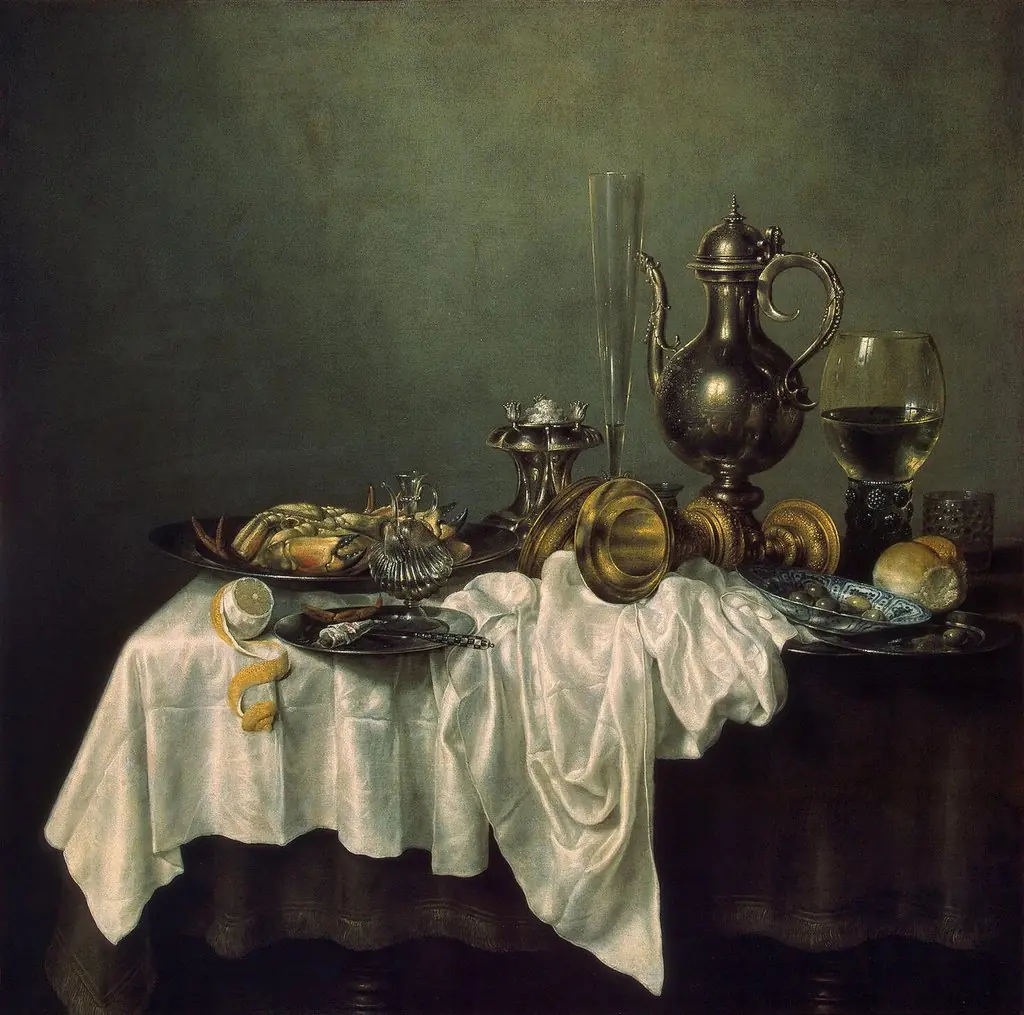
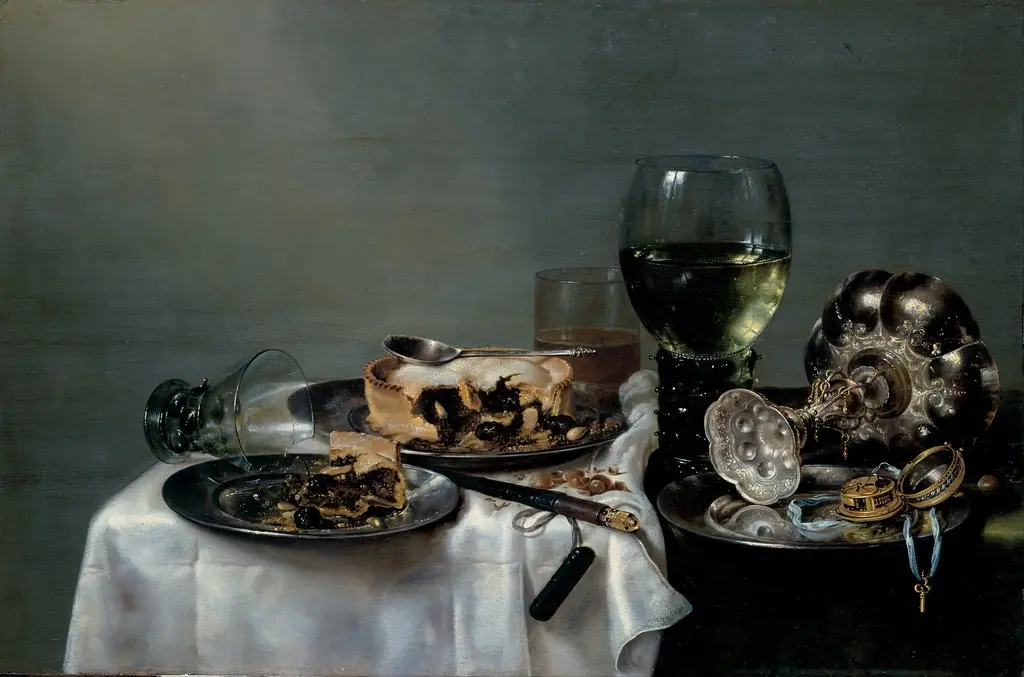
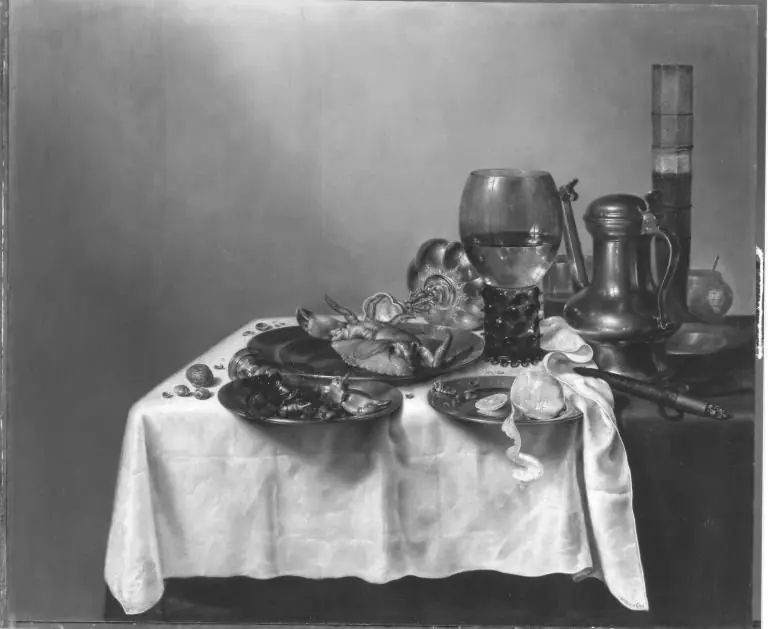
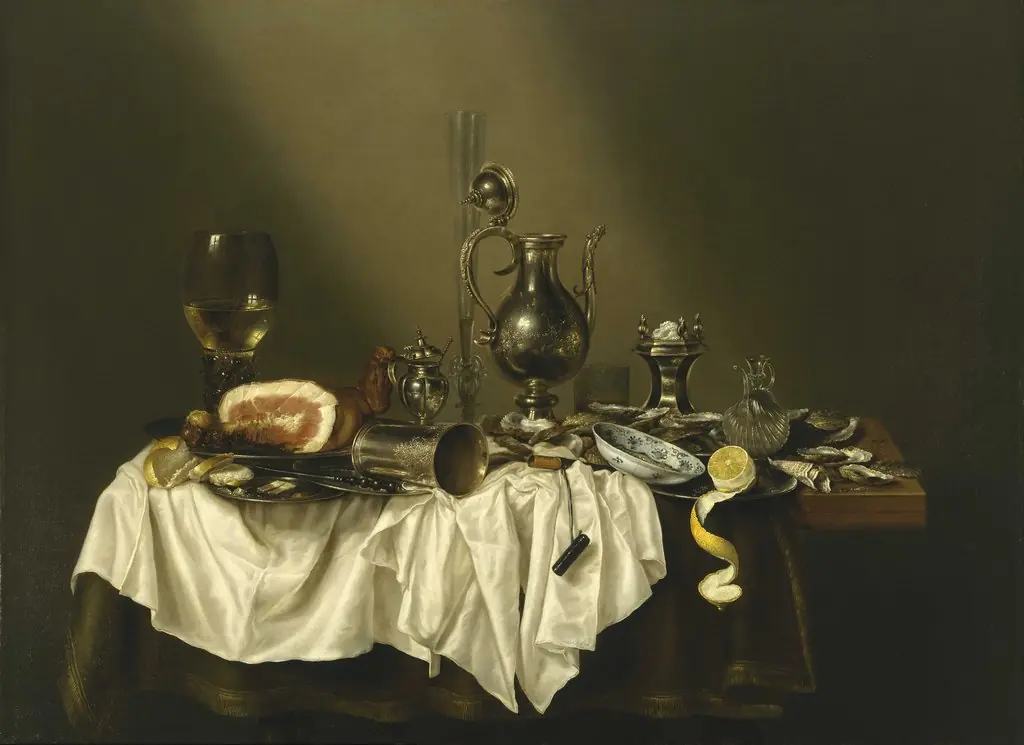
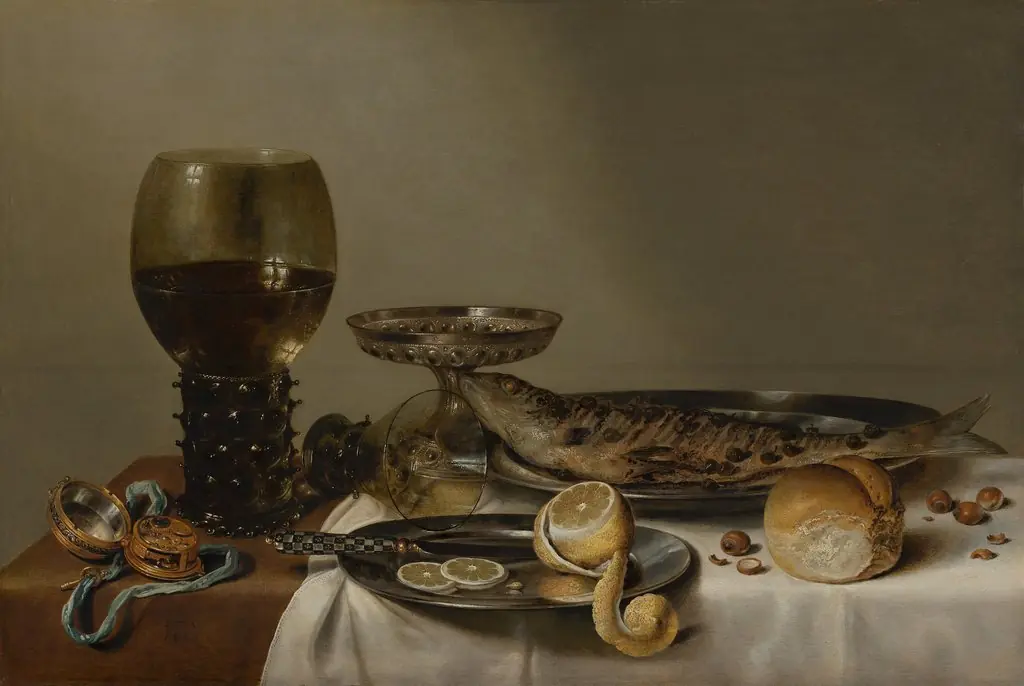
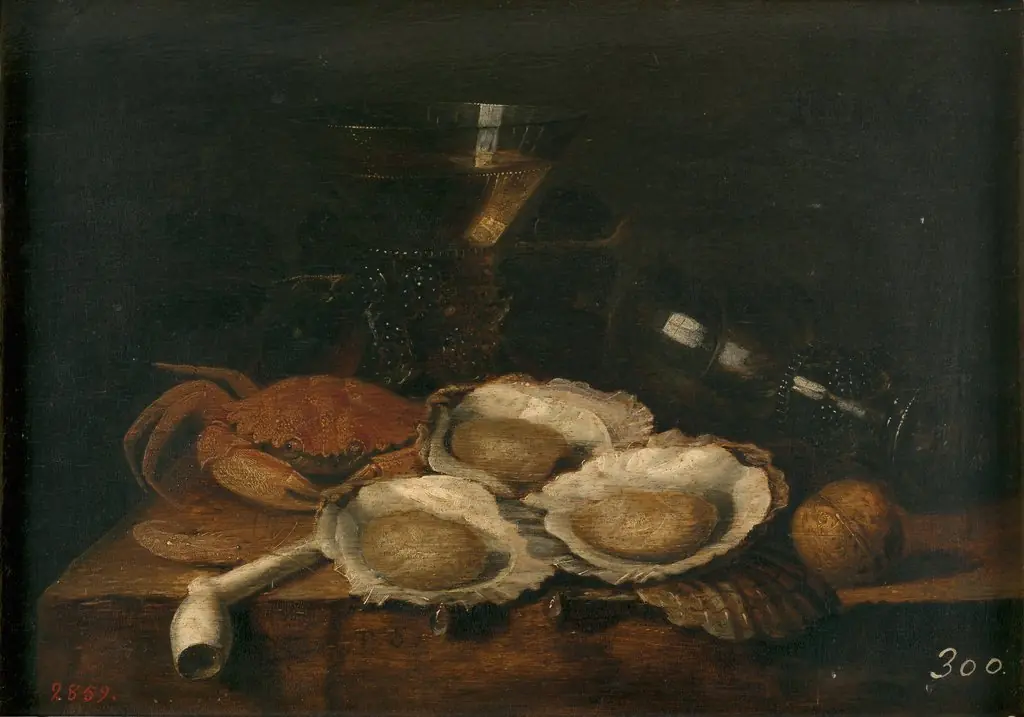
- Still life with crab and oysters
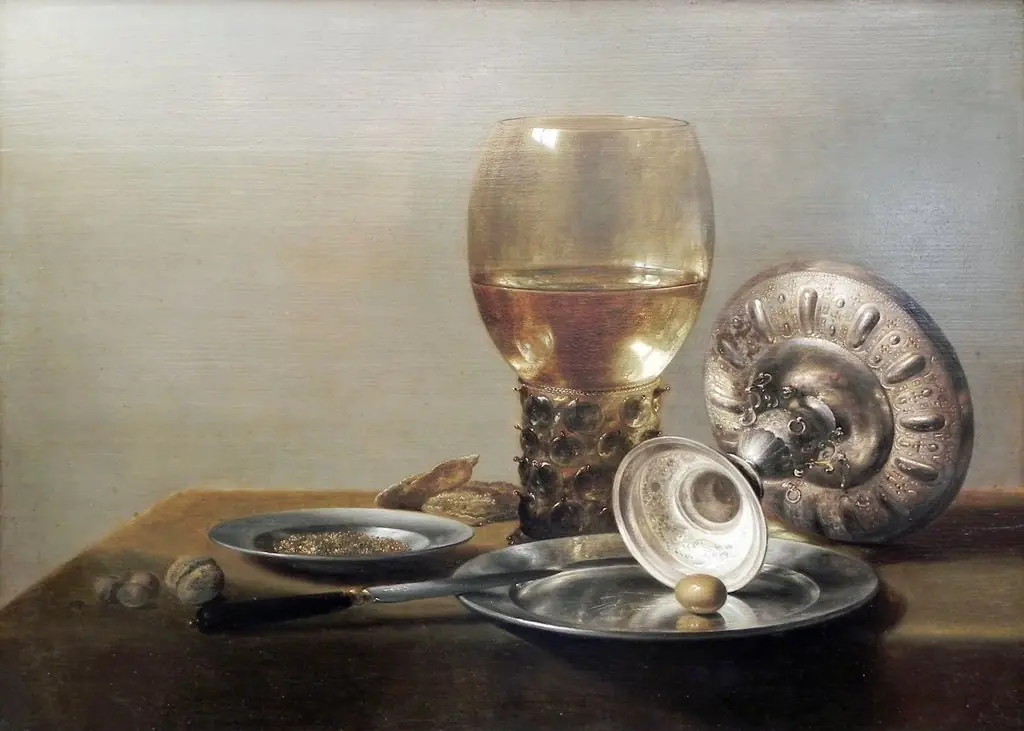 Still-life with Wine Glass and Silver Bowl
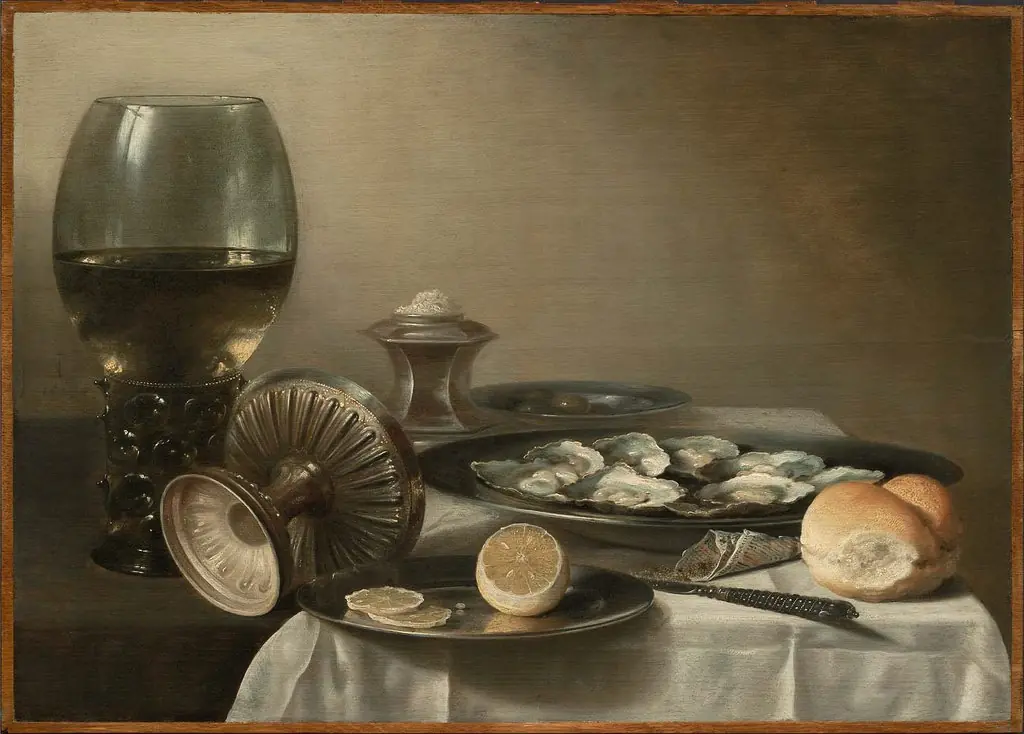 Still Life with Wine Goblet and Oysters
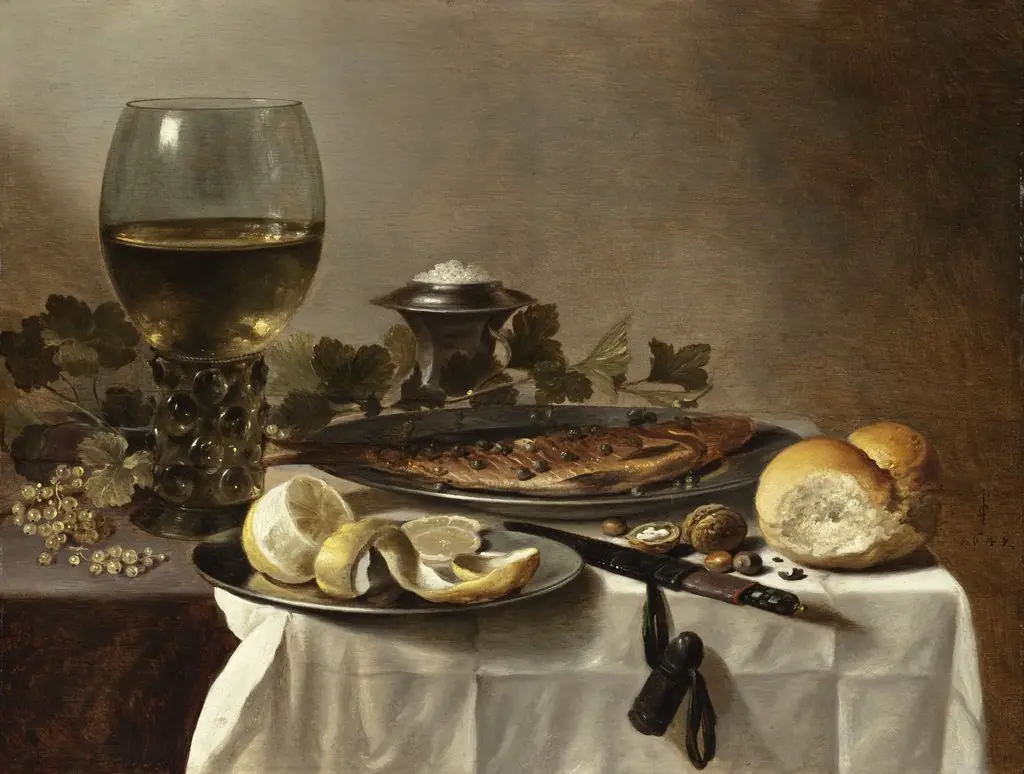 Still Life with Herring, Wine and Bread
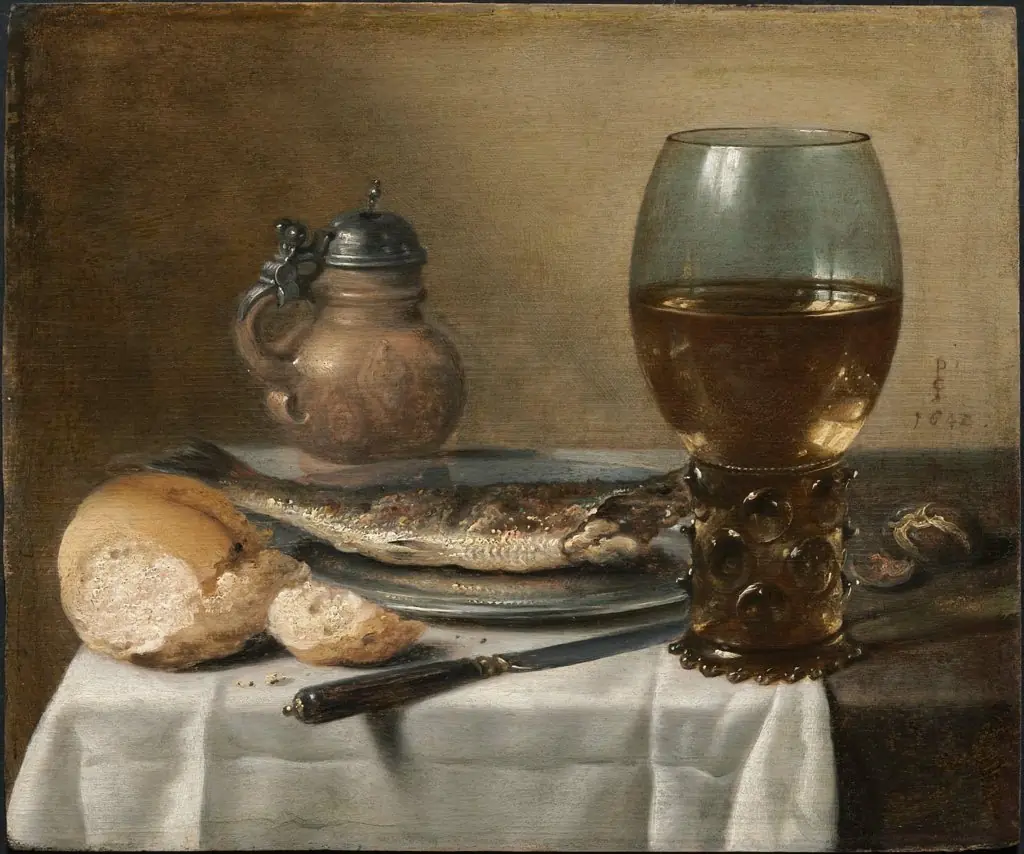 Still Life with Stoneware Jug, Wine Glass, Herring, and Bread
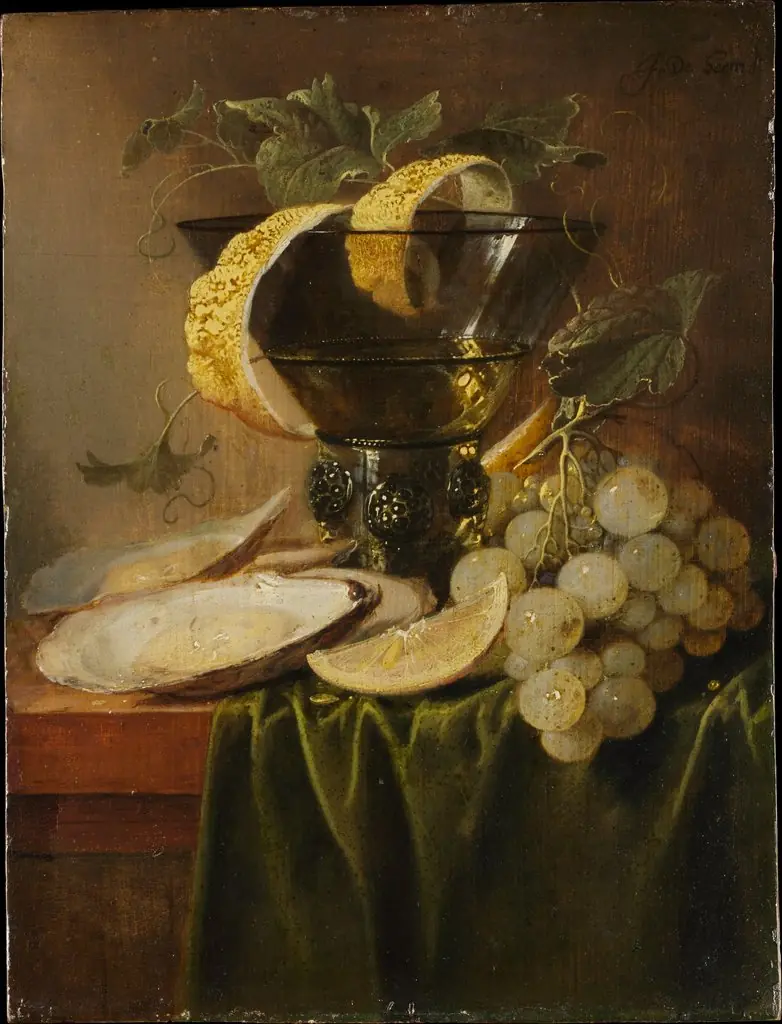 Still Life with a Glass and Oysters
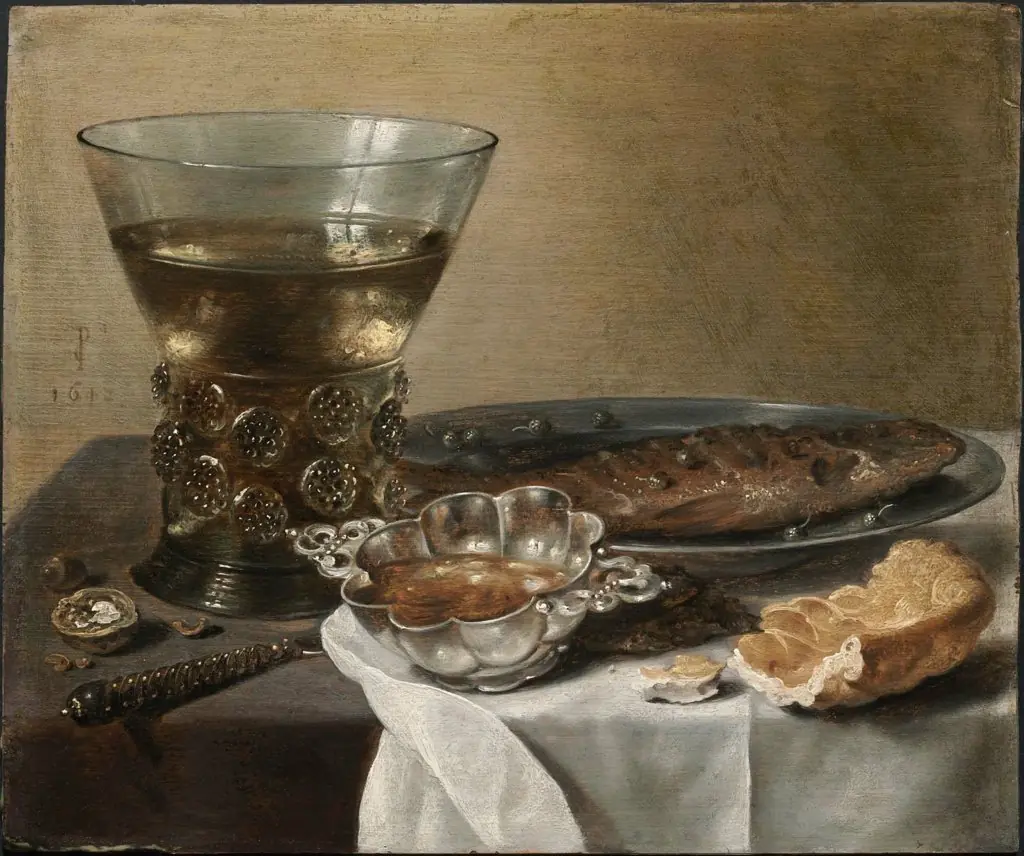 Still Life with Silver Brandy Bowl, Wine Glass, Herring, and Bread
 Still life with a brazier, a wine-glass, herring, oysters, bread, smoking paraphenalia, and a pewter plate