Artwork
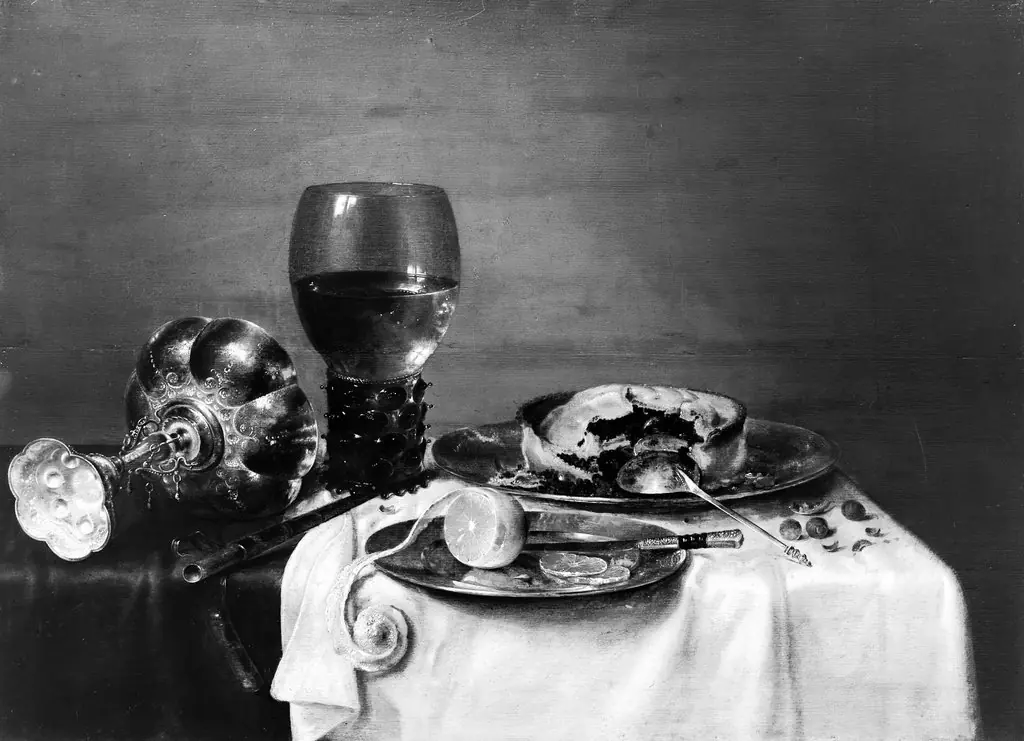
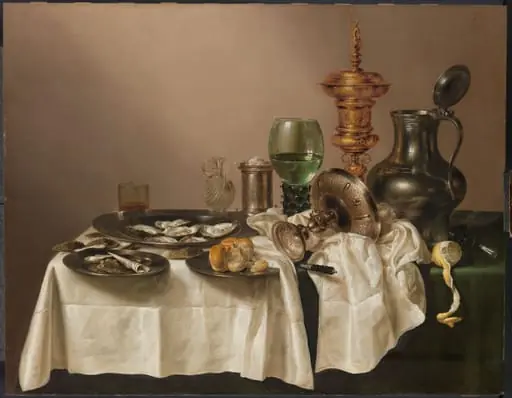
Still life with passglass, Jan Steen pitcher and roemer
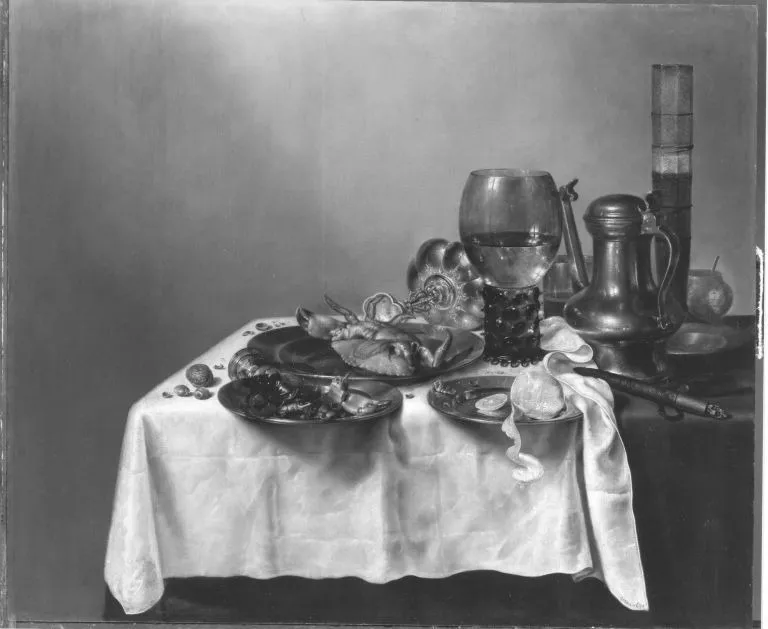
Still life with passglass, Jan Steen pitcher and roemer is an unspecified painting by the Dutch Golden Age artist Willem Claesz Heda. It dates from 1634 and is held in the collection of the Bavarian State Painting Collections.
About this work
Subject & Meaning
Executed in 1634, the work belongs to the still‑life genre and is housed in the Bavarian State Painting Collections at the Alte Pinakothek.
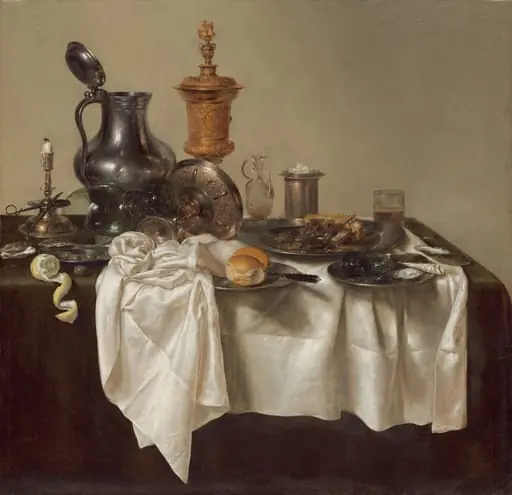
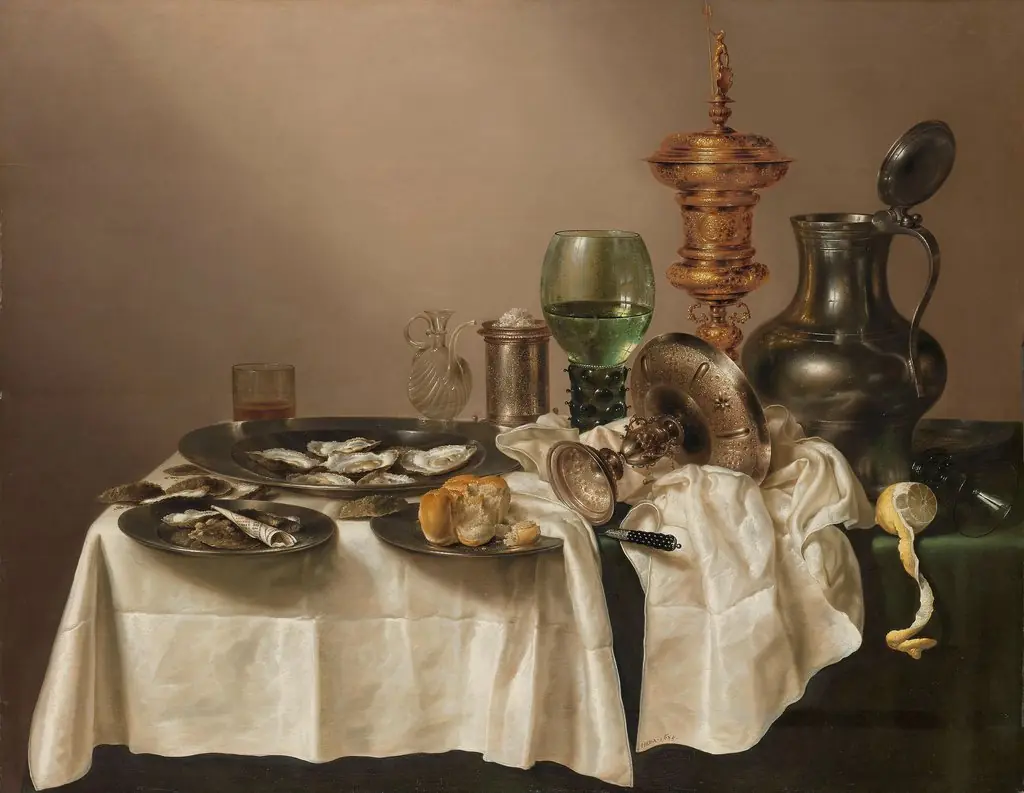
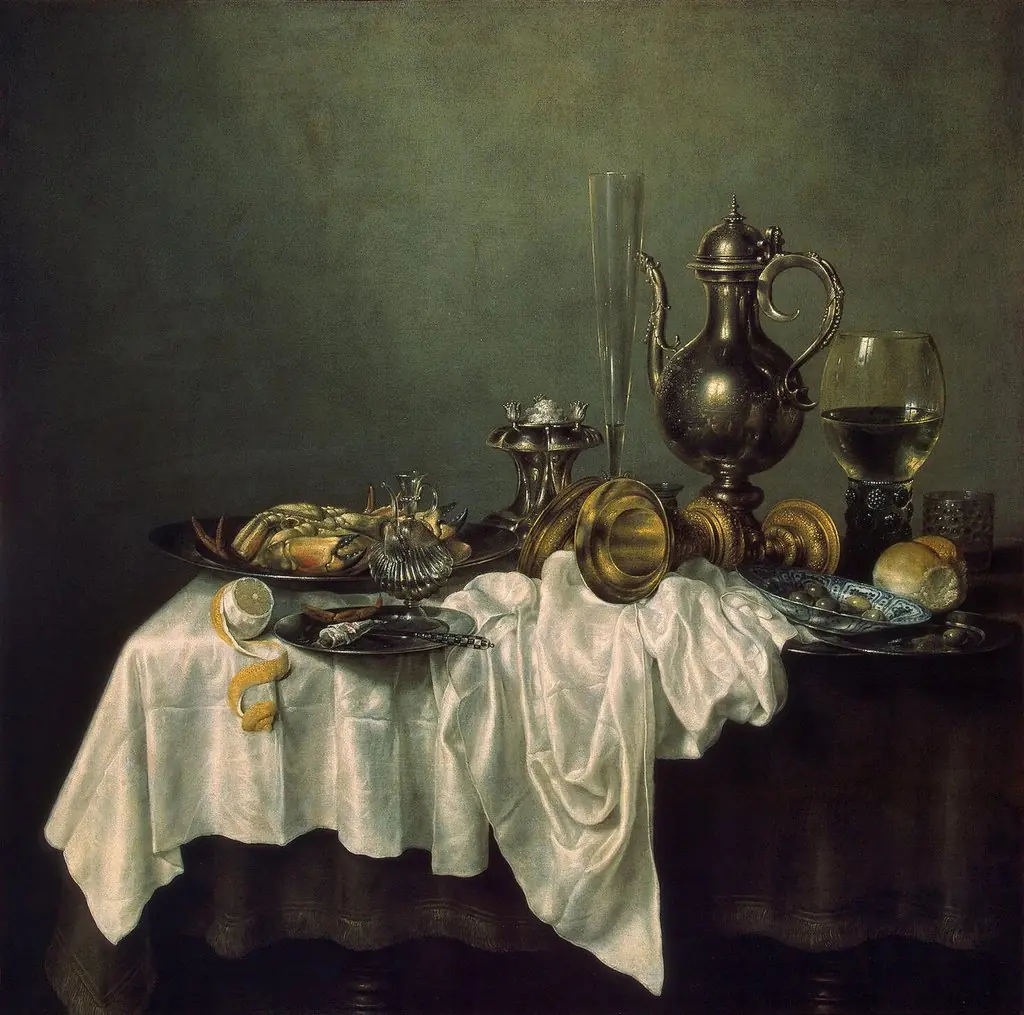
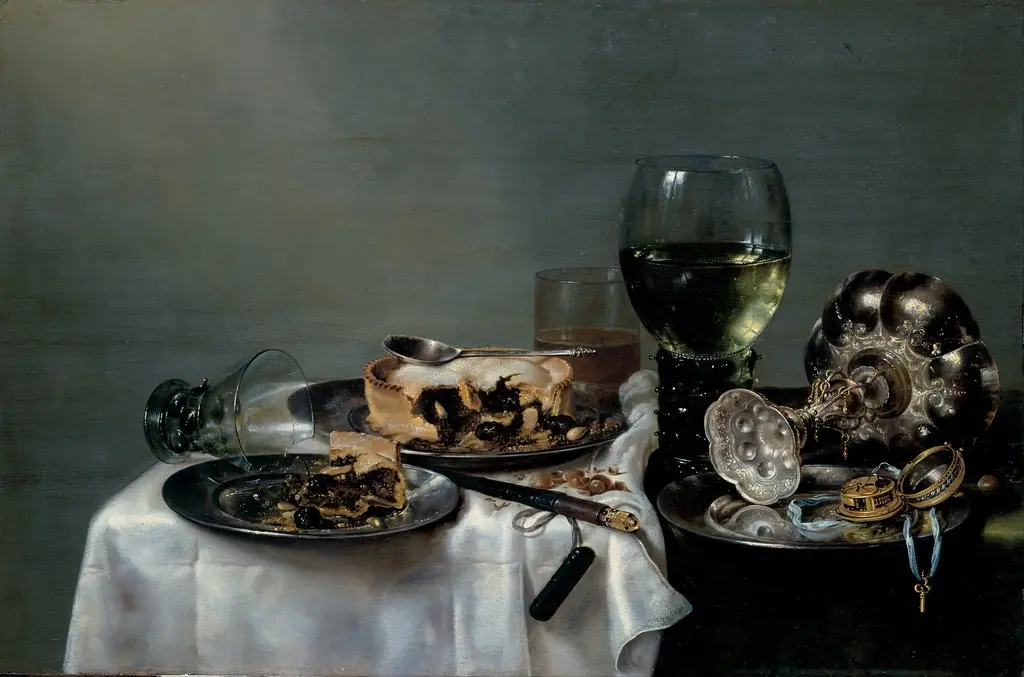
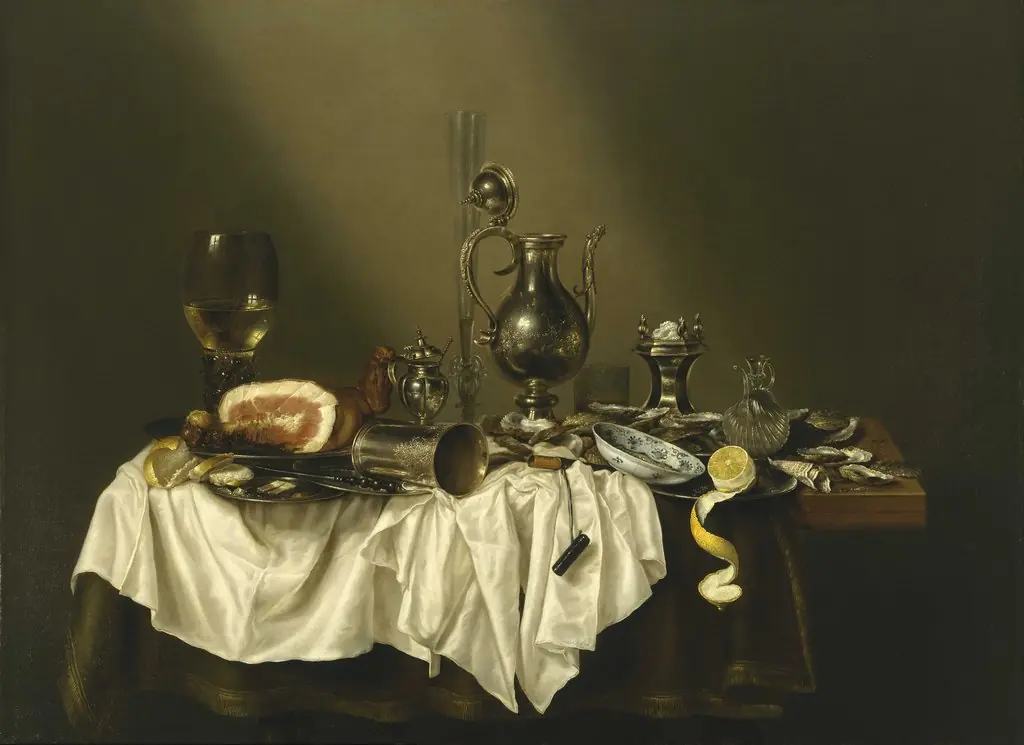
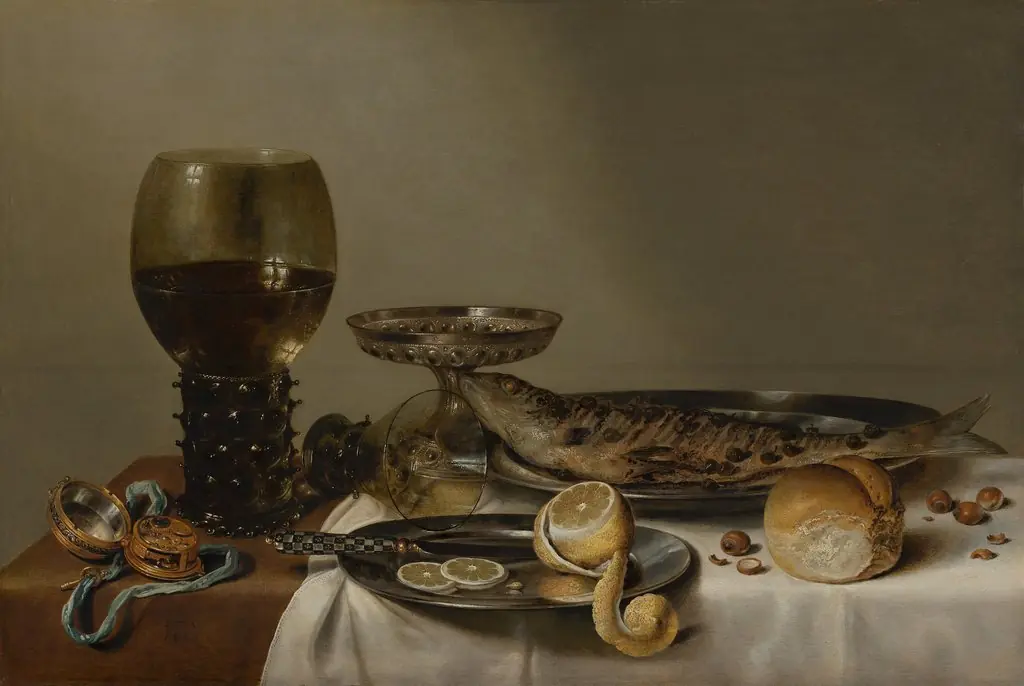
The painting presents a meticulously arranged tabletop, or laid table, as its central motif. Visible elements include a richly patterned tablecloth, a crystal pass‑glass, a Jan Steen pitcher, a roemer, a knife, a tazza and a crab, all rendered in the characteristic chiaroscuro of Willem Claesz Heda. The composition emphasizes abundance while subtly referencing transience through objects such as the cracked crab and the delicate glass.
Executed in 1634, the work belongs to the still‑life genre and is housed in the Bavarian State Painting Collections at the Alte Pinakothek.
History & Provenance
Willem Claesz. Heda created the still life painting Still life with passglass, Jan Steen pitcher and roemer in 1634. The work depicts a laid table featuring a passglass, a Jan Steen pitcher, a roemer, a knife, a tazza, and a crab.
It is currently held by the Bavarian State Painting Collections at the Alte Pinakothek. The provided sources do not contain information regarding the original commission, the specific chain of ownership prior to the current collection, or the detailed circumstances of its creation beyond the date of inception.
The painting is held by the Bavarian State Painting Collections in Munich, where it is inventoried as Alte Pinakothek, inv. no. 633.
It was shown in the exhibition "Dutch and Flemish still lifes from the Alte Pinakothek and the Sammlung Jacobsen" held at the Wallraf-Richartz-Museum in Cologne from 19 March to 19 June 2016.
Overview
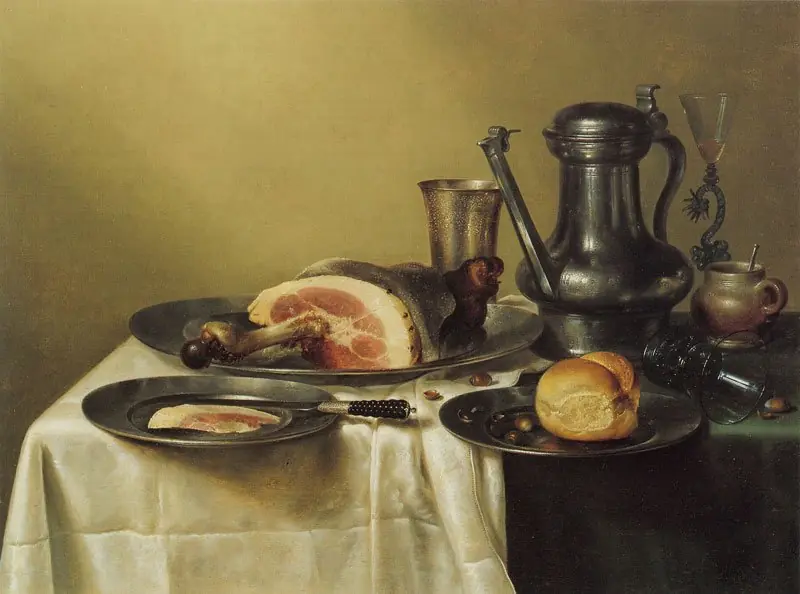
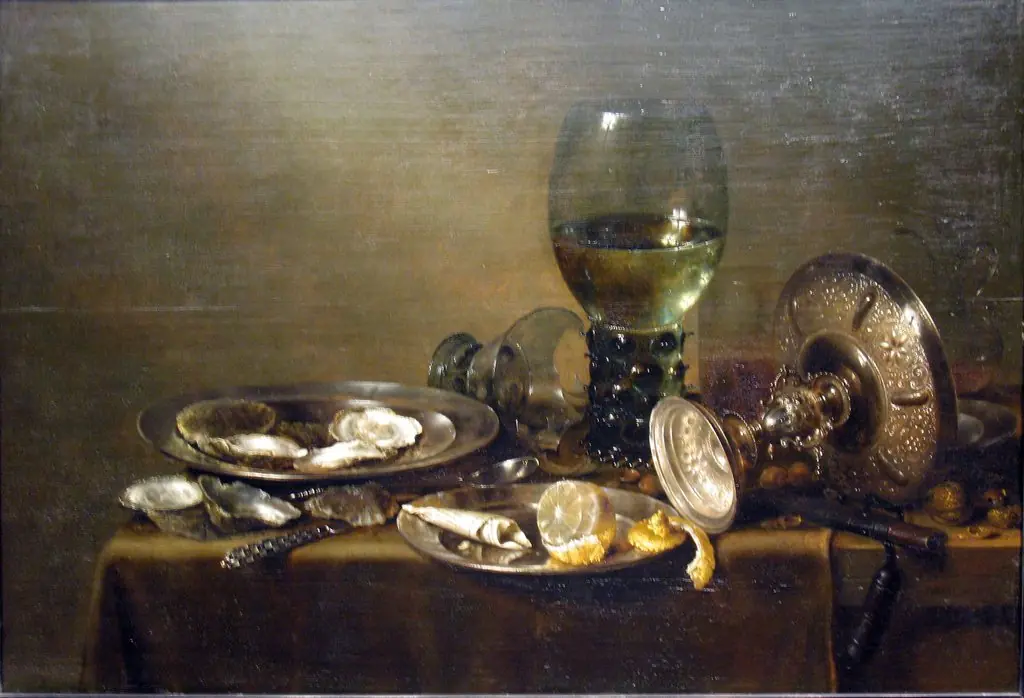
Willem Claesz Heda, a painter from Haarlem during the Dutch Golden Age, created Still life with passglass, Jan Steen pitcher and roemer in 1634. This oil painting presents a detailed arrangement of objects on a white-draped table, characteristic of the artist's specialization in still life compositions. It exemplifies the "late breakfast" genre, a popular subject during the period, showcasing various foodstuffs and elegant tableware. The work is currently housed in the Alte Pinakothek.
Technique & Style
Heda meticulously arranges the various objects on a table covered with a white cloth, creating a balanced yet dynamic composition. A dark background serves to emphasize the forms and textures of the items, making them visually prominent. The artist's skill is evident in the rendering of details, such as the lifelike crab, and the interplay of light and shadow that gives depth and dimension to the glassware and metalwork. This careful execution enhances the sense of material presence.
Context
Willem Claesz Heda was a prominent figure among Haarlem painters during the 17th-century Dutch Golden Age, a period renowned for its artistic innovation. He dedicated his practice almost exclusively to still life painting, a genre that flourished in the Netherlands. Heda played a significant role in refining the "late breakfast" still life, a subgenre characterized by its depiction of partially consumed meals and luxurious table settings, often conveying subtle moral or symbolic messages.
Artist & collection
Artist
Willem Claeszoon Heda (December 14, 1593/1594 – c. 1680/1682) was a Dutch Golden Age painter from the city of Haarlem devoted exclusively to the painting of still life. He is known for his innovation of the late…