Artwork
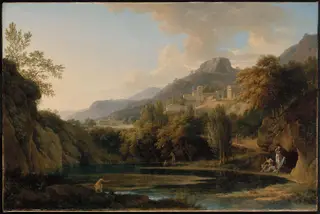
Pan and Syrinx
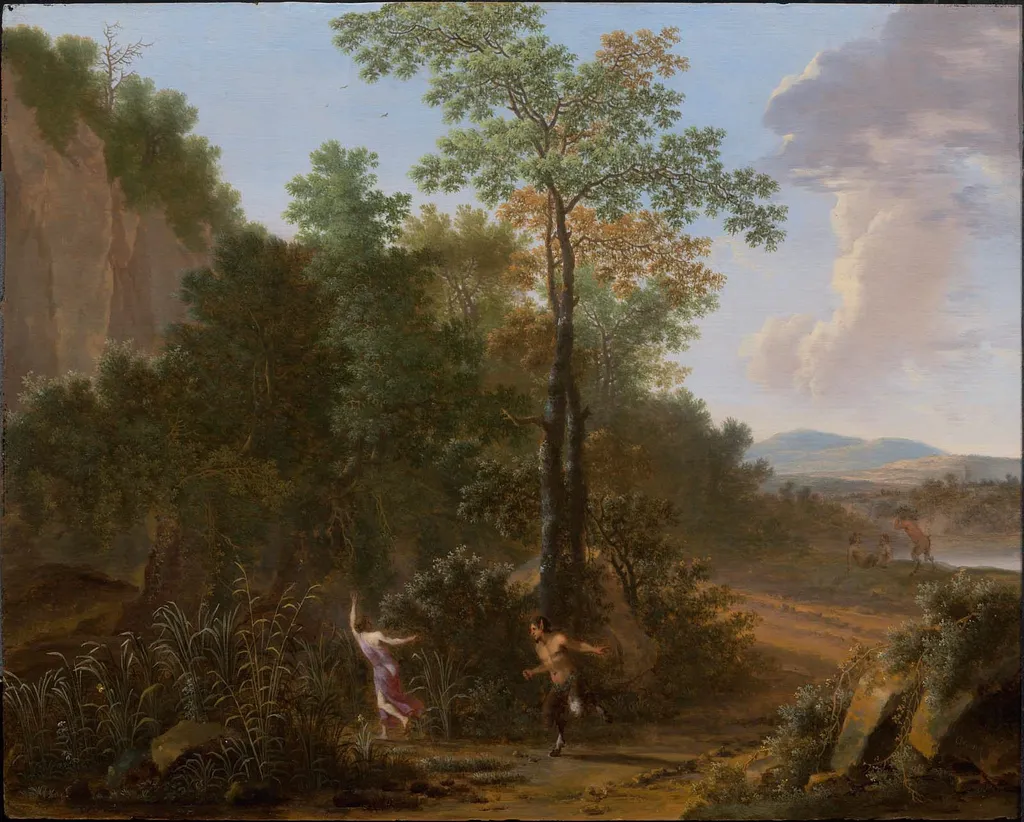
Pan and Syrinx is an unspecified painting by the Dutch Golden Age artist Willem de Heusch. It dates from 1650 and is held in the collection of the Museum of Fine Arts Boston.
About this work
History & Provenance
It has been part of the museum’s collection since its acquisition, reflecting its established presence within the institution’s European art holdings.
Pan and Syrinx is a 1650 mythological painting by Willem de Heusch depicting the figures Pan and Syrinx. The work measures 41 cm in height and 51.1 cm in width. It is held in the collection of the Museum of Fine Arts Boston, where it has been part of the museum's holdings since at least its acquisition date recorded in the museum's provenance documentation.
The painting's creation history is tied to de Heusch's body of work from the mid-seventeenth century, reflecting his engagement with mythological subjects during that period.
Pan and Syrinx is held at the Museum of Fine Arts Boston, where it is cataloged under the accession number 1919.1021. The painting was created by Willem de Heusch in 1650 and exemplifies mythological painting. It has been part of the museum’s collection since its acquisition, reflecting its established presence within the institution’s European art holdings.
The work was exhibited in the museum’s European Paintings galleries, where it was featured in displays of 17th‑century Dutch and Flemish art. Its inclusion in these exhibitions underscores its significance within the broader narrative of mythological subjects in the museum’s program.
Overview
Willem de Heusch’s mid‑17th‑century canvas, titled Pan and Syrinx, presents a wooded tableau in which two mythic figures occupy a forest clearing. The work measures roughly a typical panel size for the period and is part of the collection of the Museum of Fine Arts in Boston. Its composition balances a dynamic leap against a still, grounded figure, set beneath a softly lit sky.
Subject & Meaning
The painting draws on the classical tale of the god Pan pursuing the nymph Syrinx, who transforms into reeds to escape his advances. De Heusch captures the moment of pursuit: the nymph, rendered in a pinkish, flowing garment, is captured mid‑air, while Pan, depicted nude and barefoot, watches upward with an outstretched arm, suggesting both tension and the inevitability of transformation.
Technique & Style
De Heusch employs a pronounced chiaroscuro, using contrasts of light and shadow to model the figures and the surrounding foliage. The illumination falls on the faces and the leaping form, while the dense trees and rocky outcrops recede into deeper shade, creating a sense of depth. The brushwork is smooth in the flesh tones yet more textured in the foliage, underscoring the painter’s control of varied surfaces.
Context
De Heusch, a Dutch landscape specialist, often incorporated mythological narratives into his natural settings, a practice common among his contemporaries seeking to blend genre scenery with classical allegory. The choice of Pan and Syrinx reflects the period’s fascination with pastoral themes and the moral undertones of unrequited desire, aligning the work with the broader cultural interest in antiquity during the Dutch Golden Age.
Own this work as a print
Artist & collection

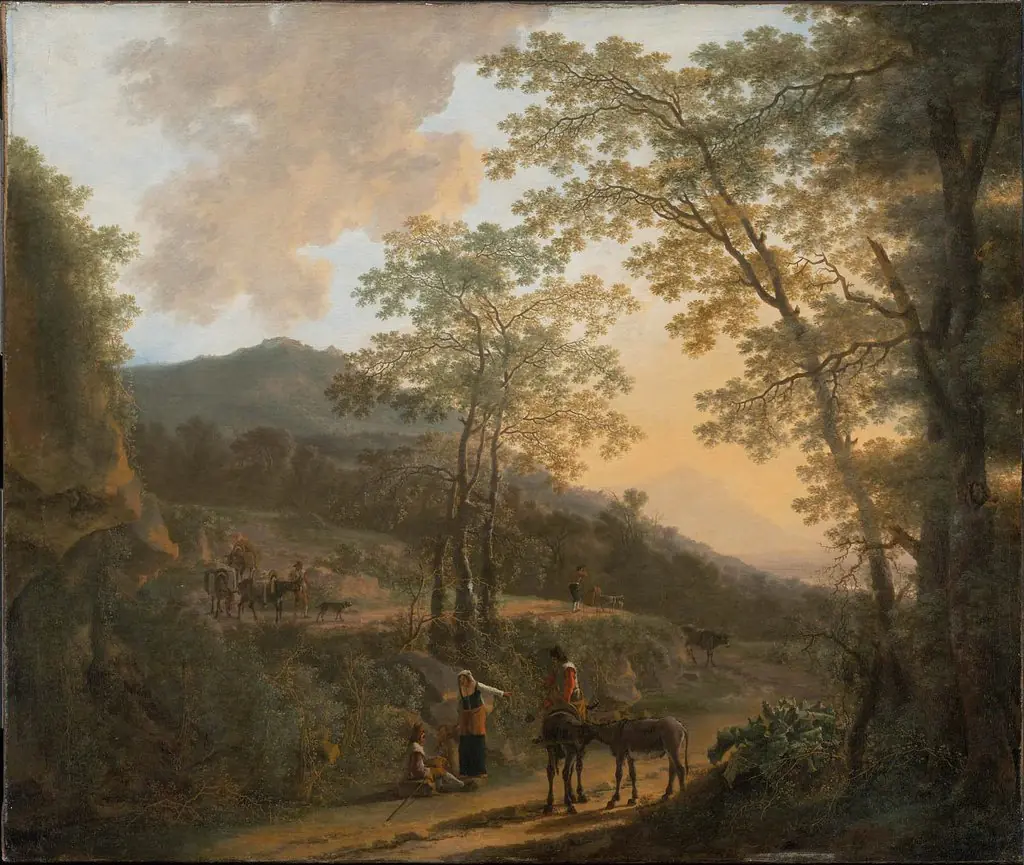
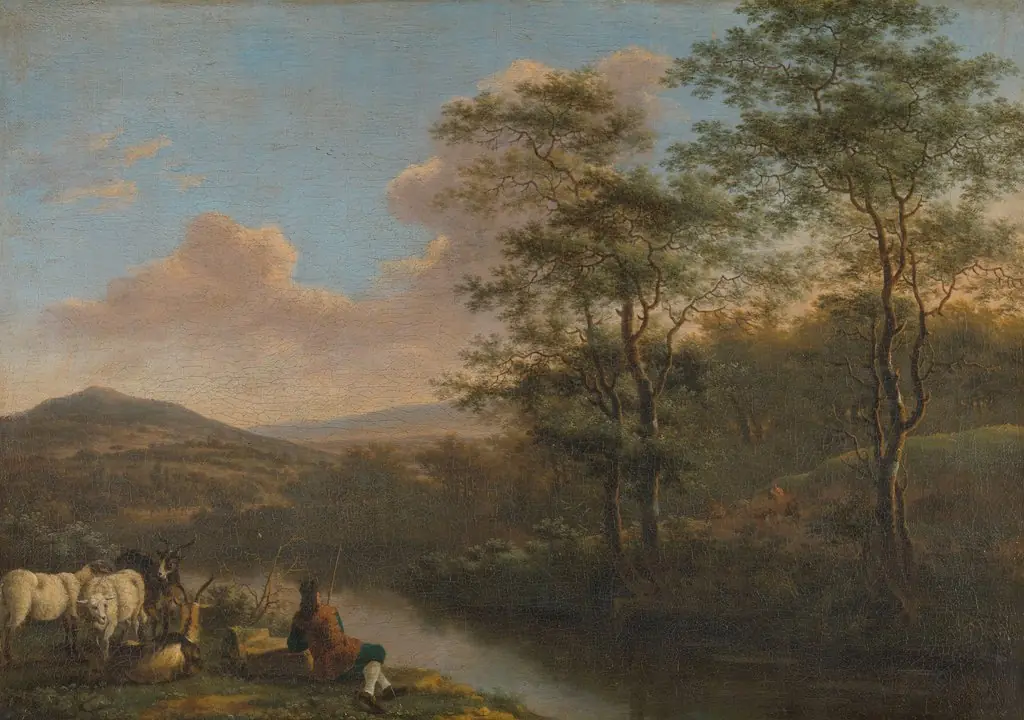
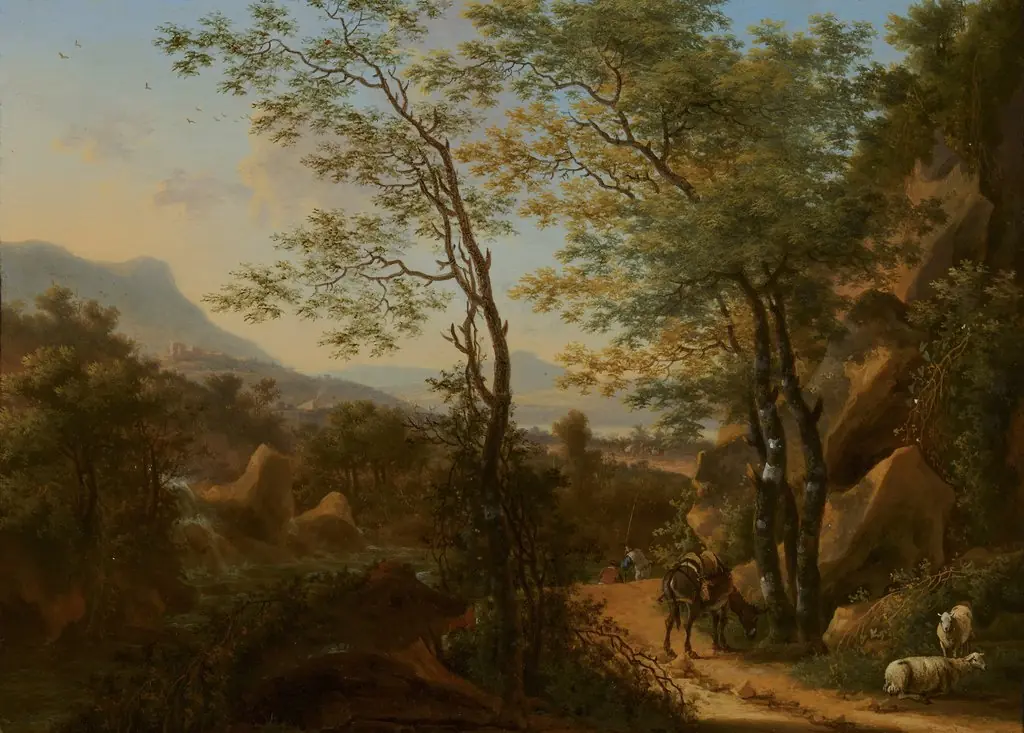
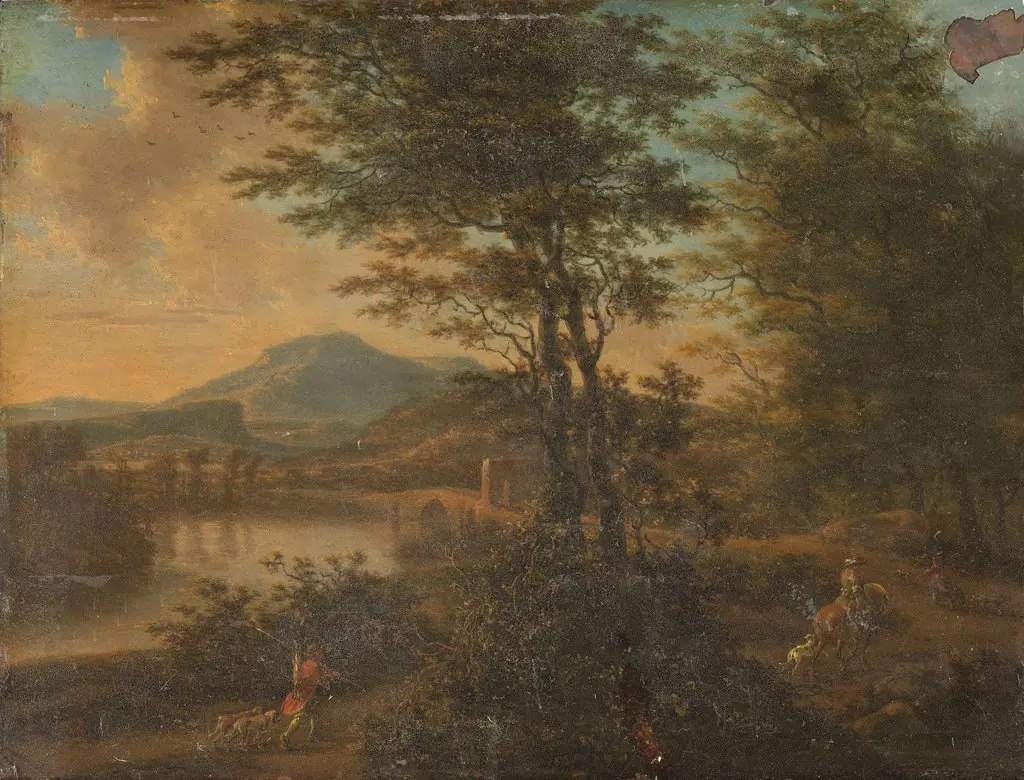
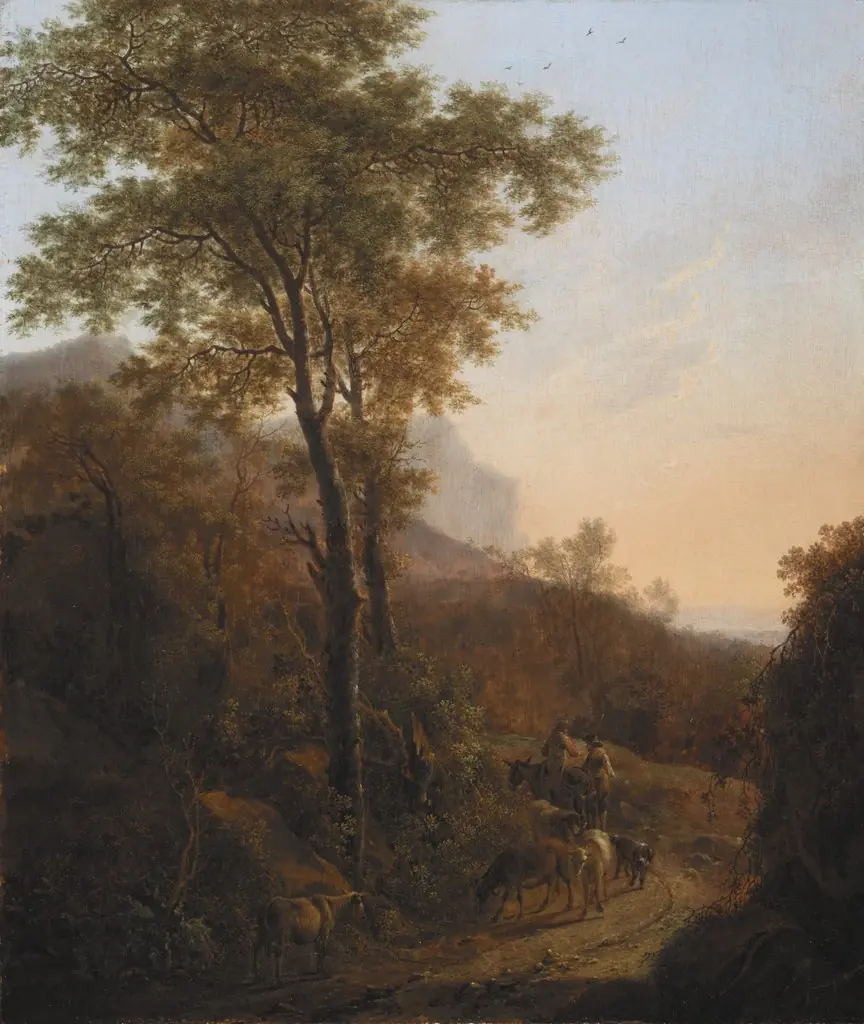
- A Forest with Apollo and Daphne
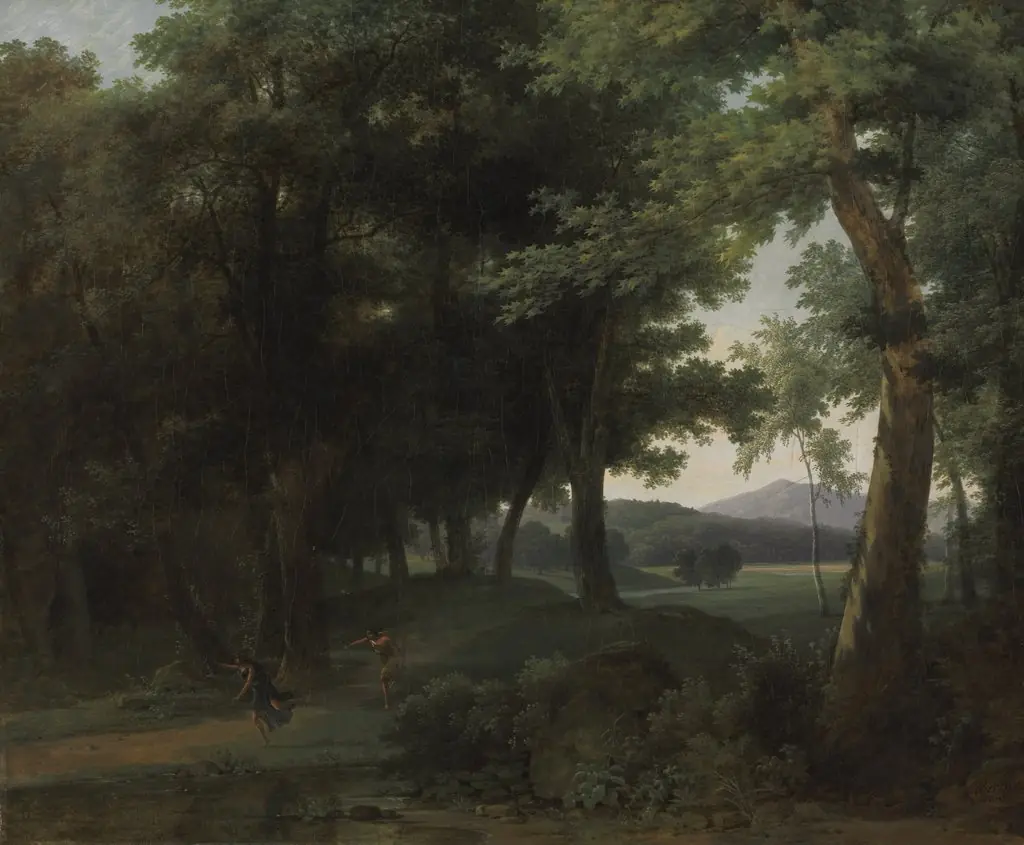 A Forest with Apollo and Daphne
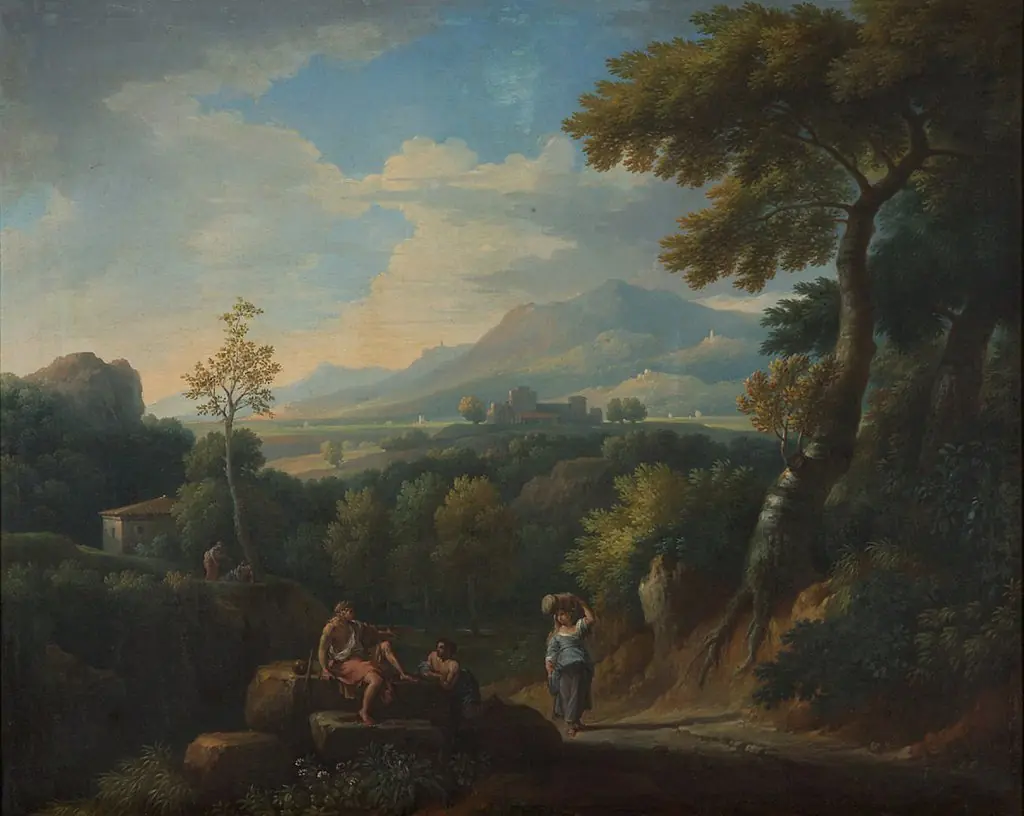 Italian Landscape
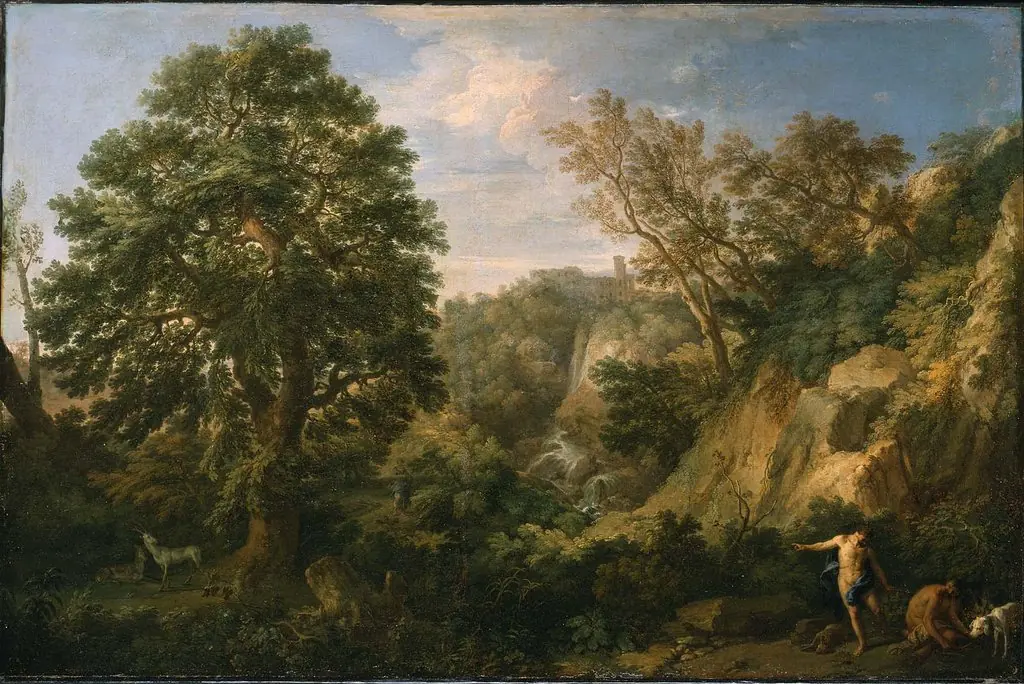 Landscape with Hunters
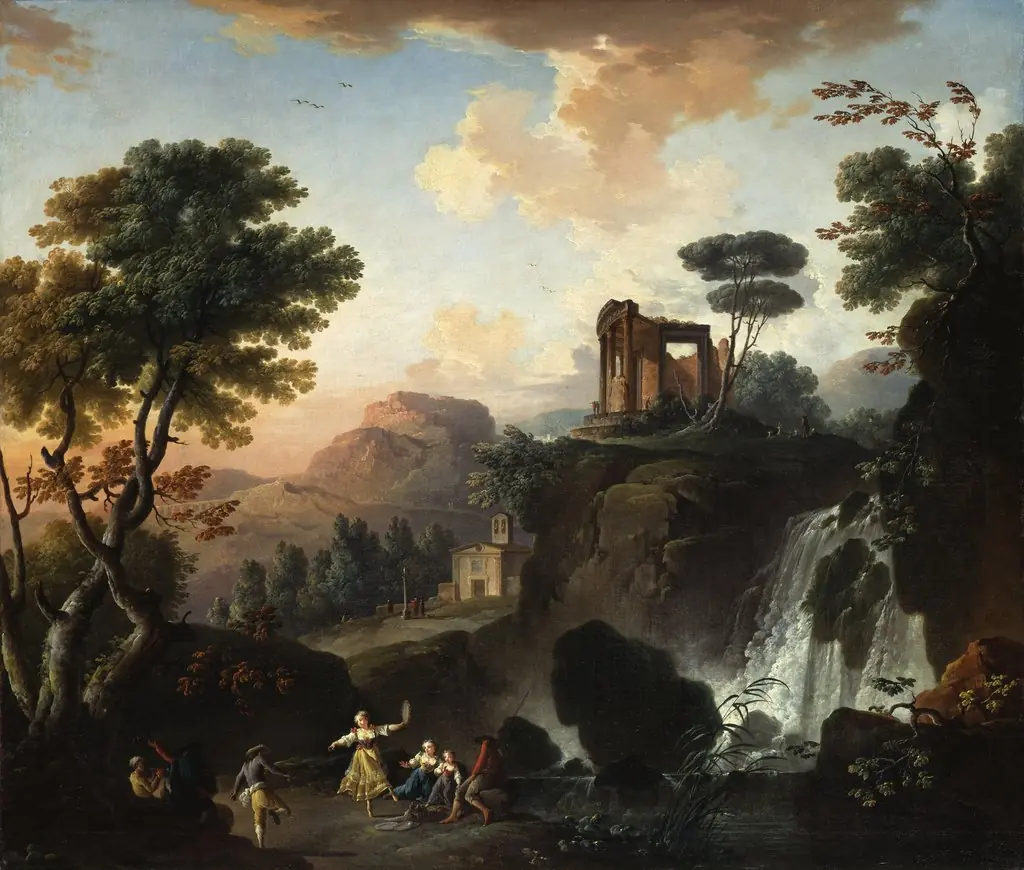 The Temple of Vesta in Tivoli
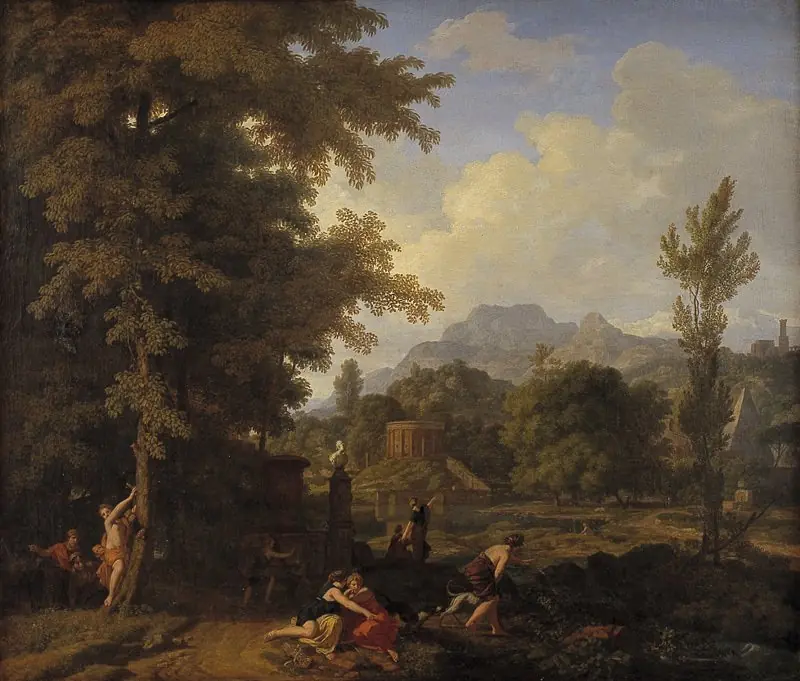 Classical Landscape with Diana (?) and her Nymphs
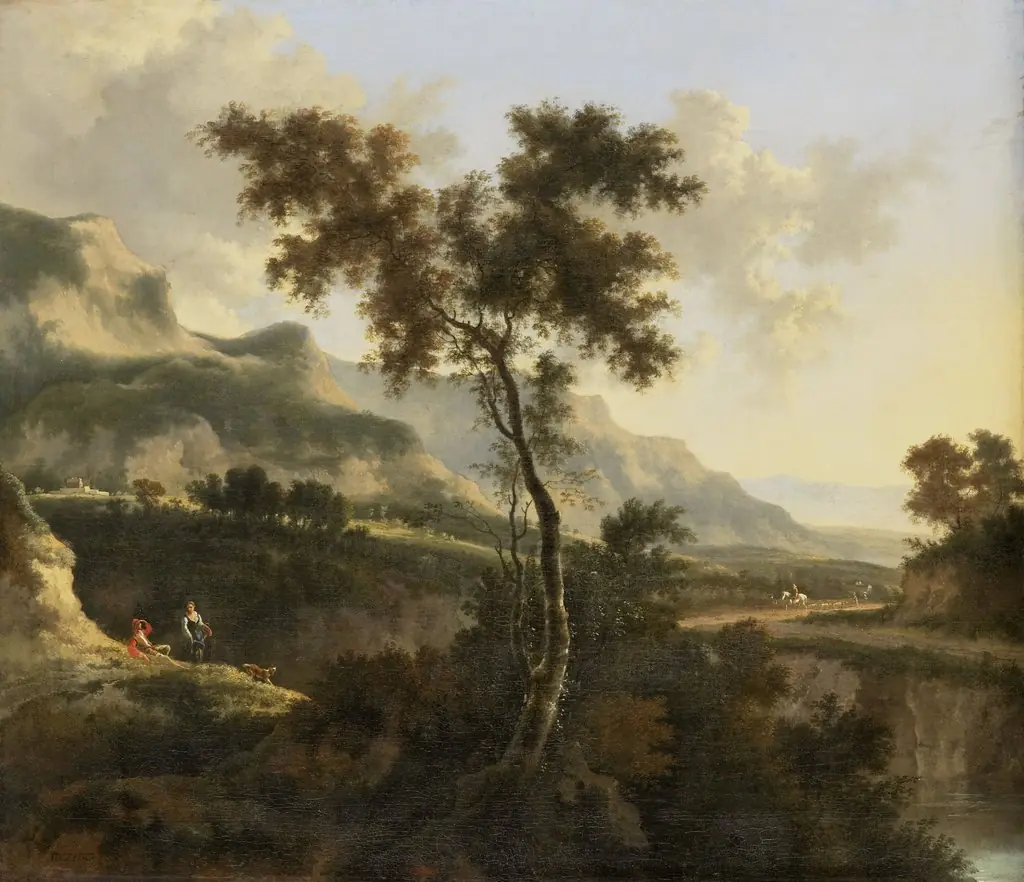 Mountainous landscape
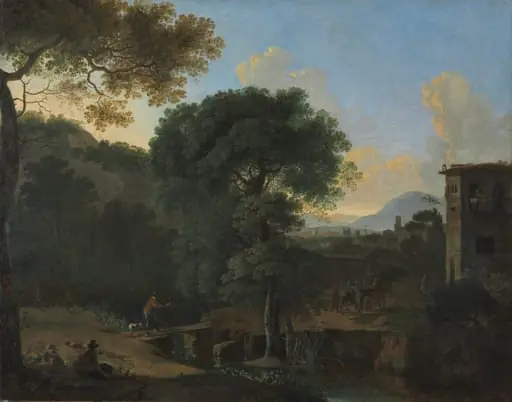 Landscape with Travelers
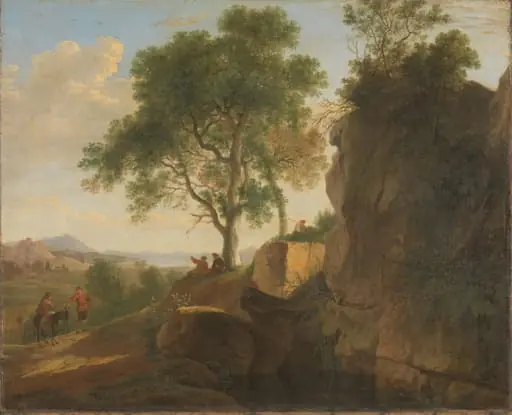 Italian landscape
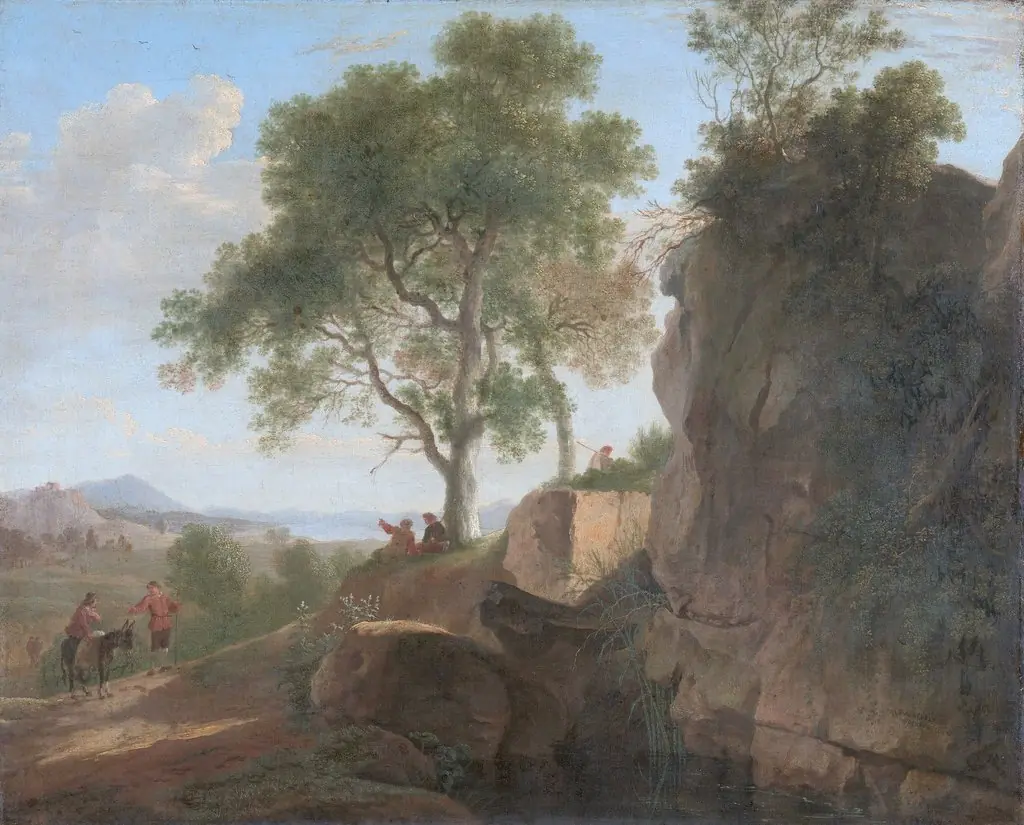 Italian landscape
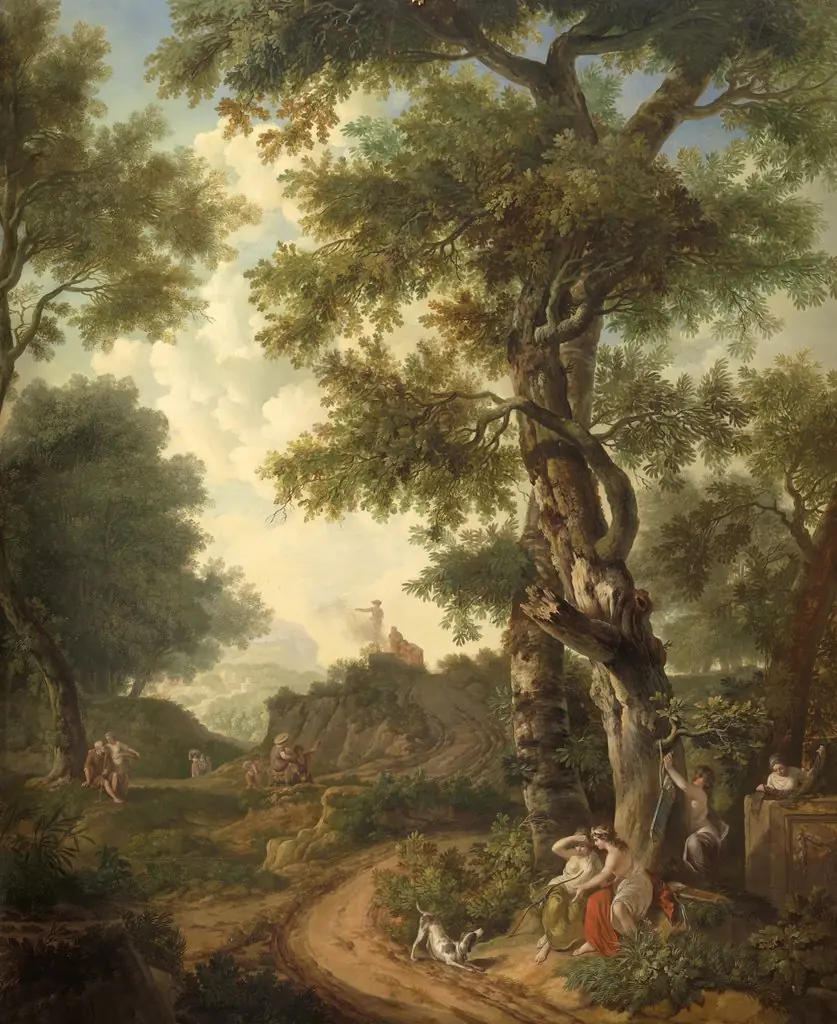 Arcadisch landschap met reizigers
 Italian Landscape with Bathers