Artwork
Italian Landscape with Peasants and Donkeys
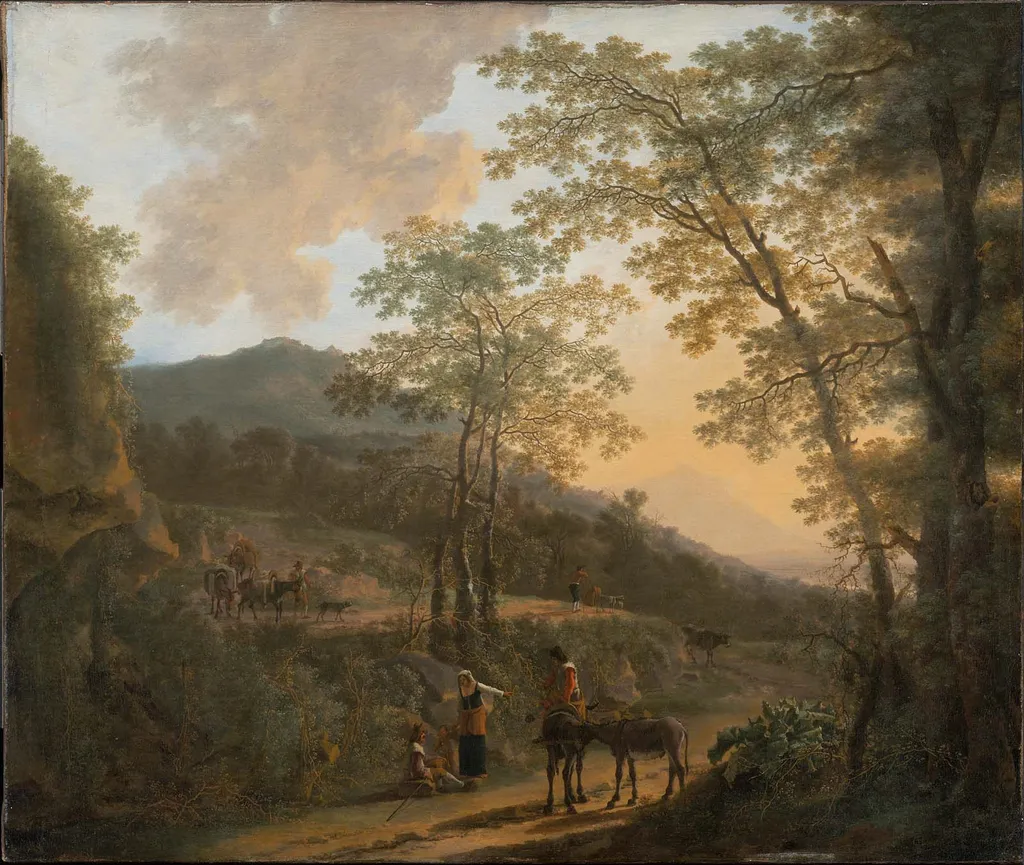
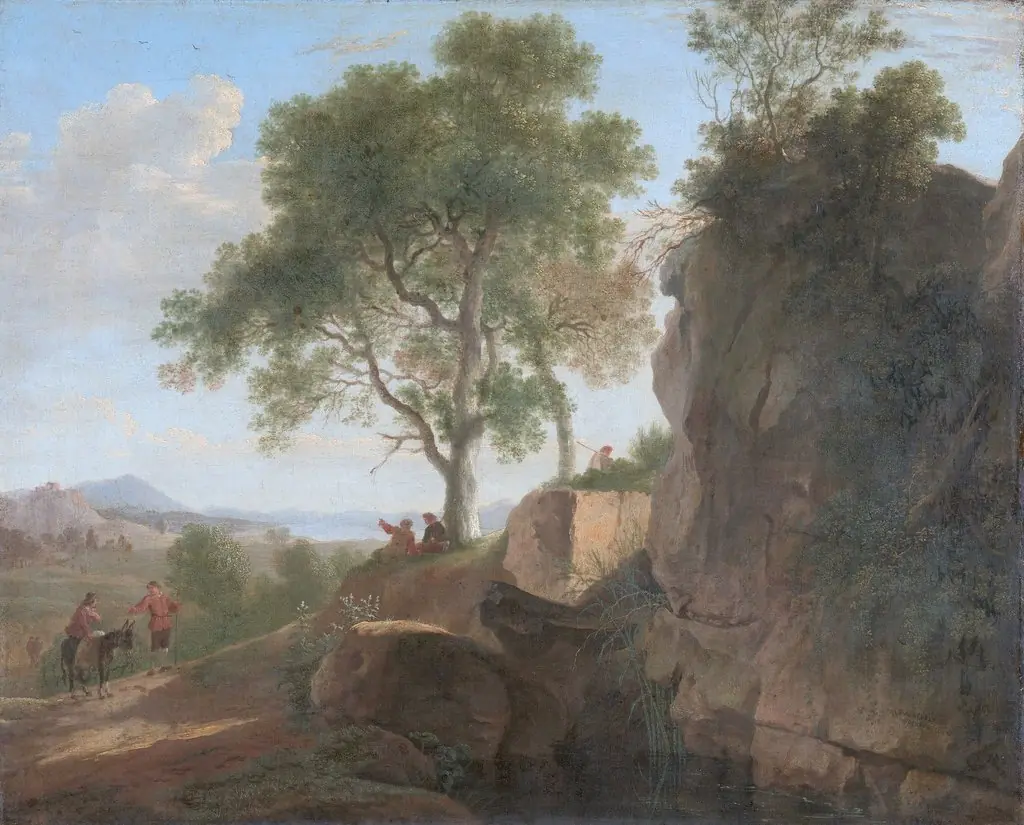
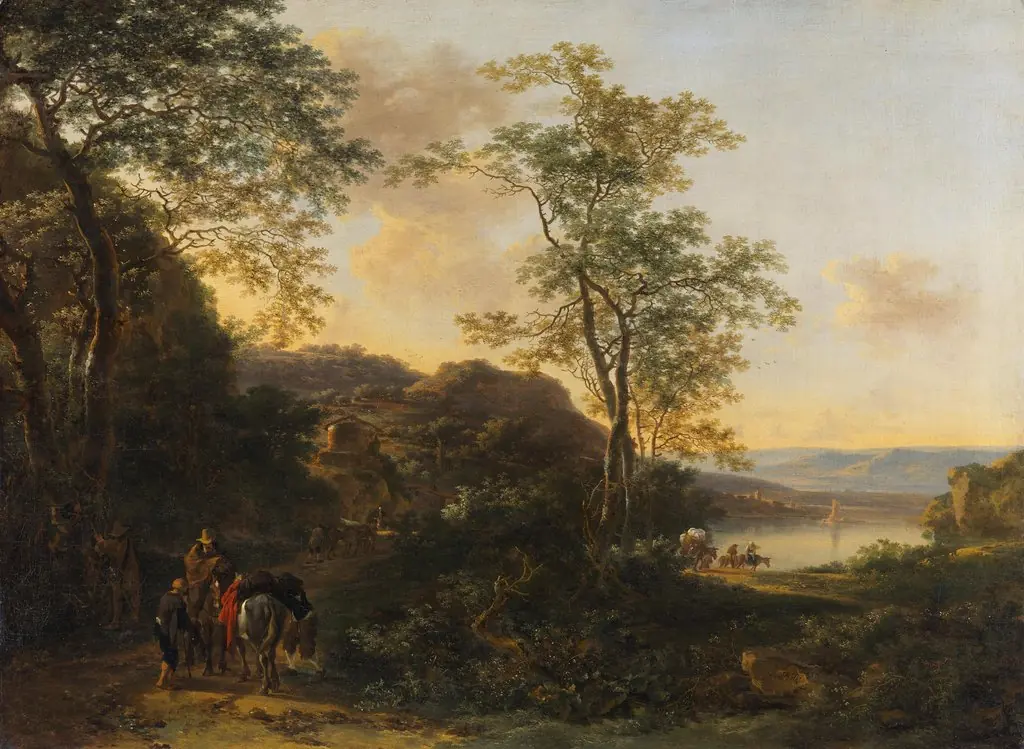
Italian Landscape with Peasants and Donkeys is an oil painting by the Dutch Golden Age artist Willem de Heusch. It dates from 1666 and is held in the collection of the Museum of Fine Arts Boston.
About this work
Subject & Meaning
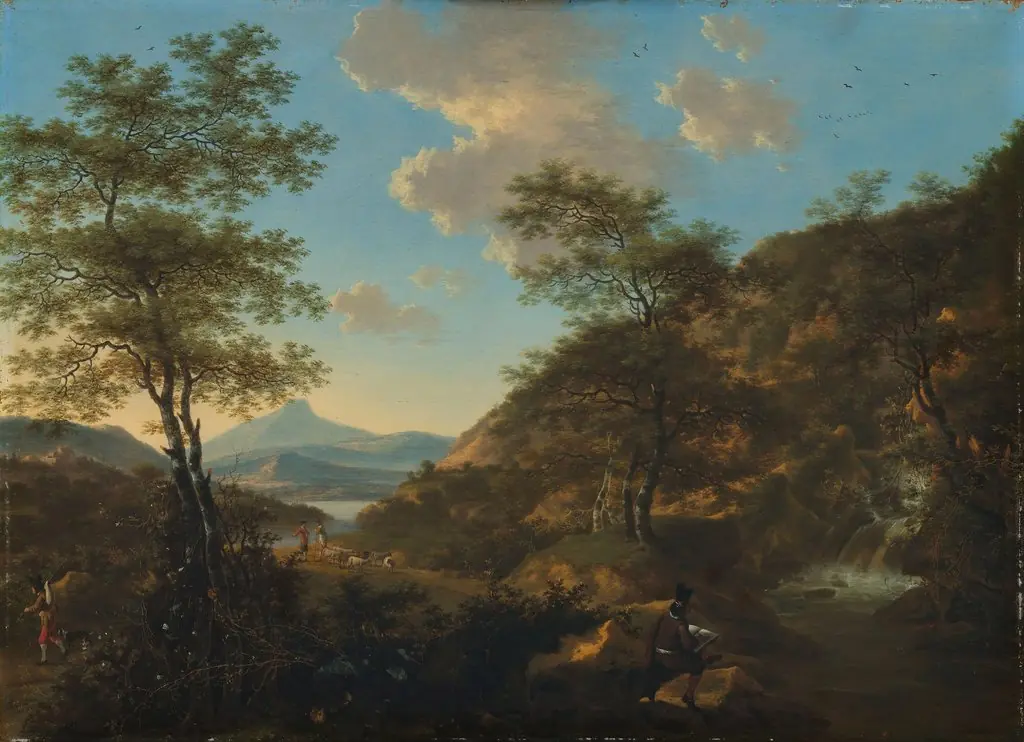
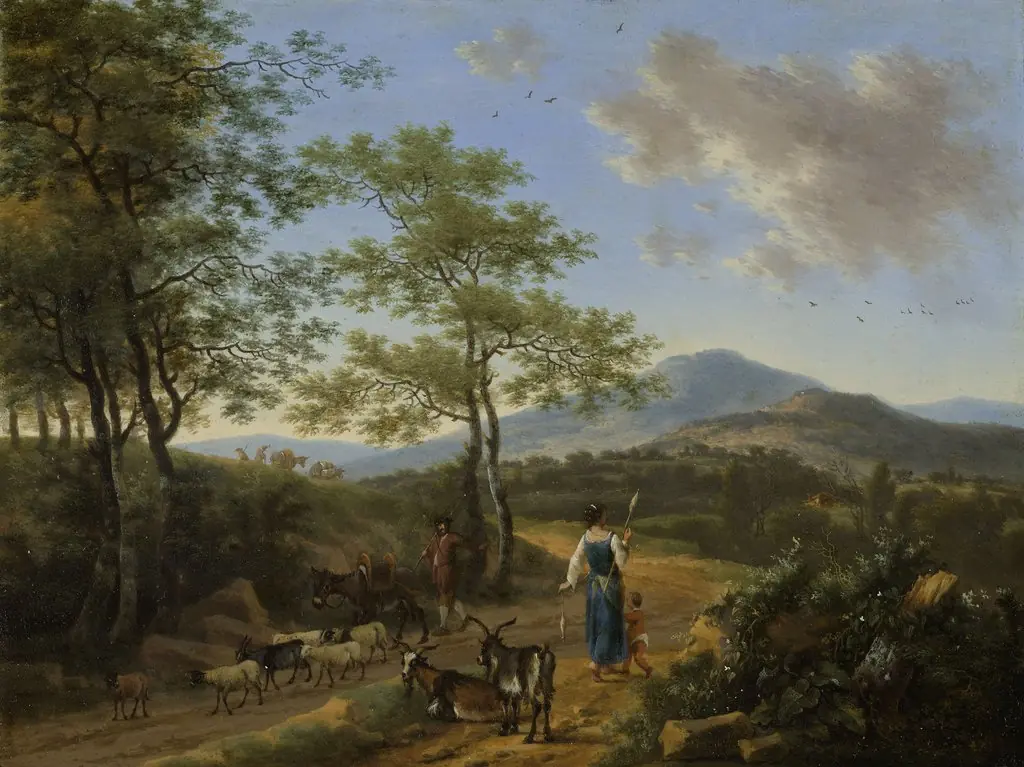
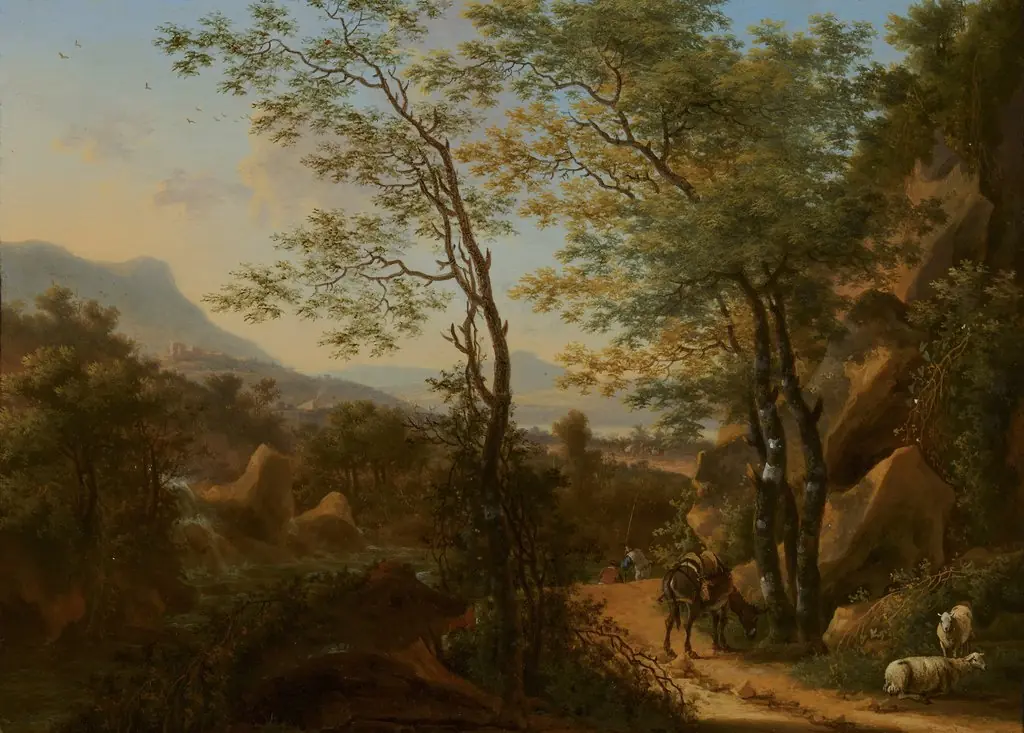
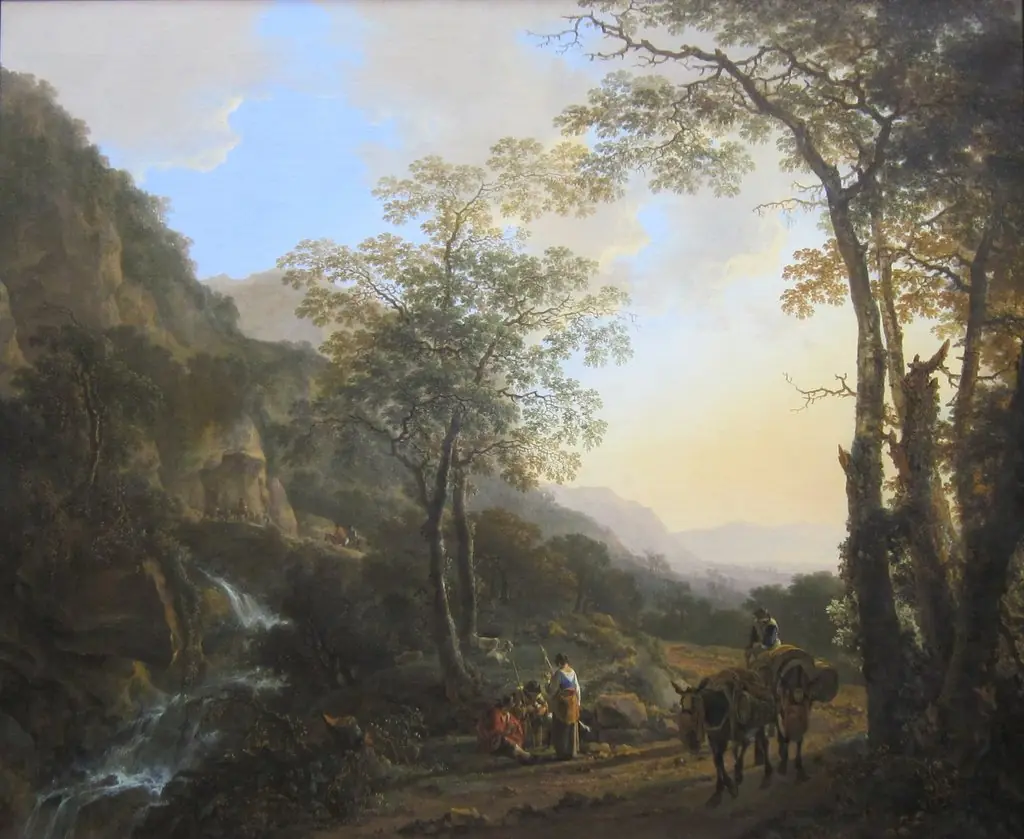
Italian Landscape with Peasants and Donkeys, painted by Willem de Heusch in 1666, presents a pastoral Italianate scene populated by figures and animals set within a rural landscape. The composition depicts a man and a donkey, situating the work within the tradition of 17th-century Dutch landscape painting that idealized the countryside of Italy. The pairing of peasants with working animals such as donkeys evokes themes of rural labor, travel, and the everyday rhythms of agrarian life, common motifs in Italianate landscapes of the period.
The donkey in particular carries layered symbolic resonance, traditionally associated with humility, burden-bearing, and humble service in European visual culture. By placing such figures within a sunlit, idealized Italian setting, the painting reflects the Dutch fascination with the warm, classical countryside south of the Alps, offering viewers an image of pastoral simplicity and timeless rural existence.
Technique & Style
Italian Landscape with Peasants and Donkeys is executed in oil paint on canvas, the standard support for Willem de Heusch's Italianate landscapes.
Italian Landscape with Peasants and Donkeys is executed in oil paint on canvas, the standard support for Willem de Heusch's Italianate landscapes. The canvas measures 93.6 by 111.1 cm, a horizontal format suited to its panoramic pastoral subject of men and donkeys set within the landscape genre. The work is dated 1666 and classified as a painting, consistent with de Heusch's mature output produced in collaboration with Jan Both.
Its current home is the Museum of Fine Arts Boston, having previously passed through the collection of Grigory Kushelev-Bezborodko.
No specific information about the artist's handling, brushwork, surface condition, or stylistic qualities is provided in the available sources, so those aspects cannot be elaborated.
History & Provenance
The painting Italian Landscape with Peasants and Donkeys was created by Willem de Heusch in 1666. Executed in oil on canvas, the work measures 93.6 cm in height and 111.1 cm in width. Historical records indicate that the artwork was formerly owned by Grigory Kushelev-Bezborodko before entering the collection of the Museum of Fine Arts, Boston.
While some records associate the creation with Jan Both, the primary attribution for this specific 1666 work rests with Willem de Heusch.
Italian Landscape with Peasants and Donkeys is held by the Museum of Fine Arts Boston, as recorded in the work's cataloguing data. Its earlier provenance traces to the collection of Grigory Kushelev-Bezborodko. No accession number or specific exhibition history is documented in the available sources.
Overview
Willem de Heusch’s oil painting, Italian Landscape with Peasants and Donkeys, dates to 1666 and is part of the collection at the Museum of Fine Arts in Boston. The work presents a tranquil rural tableau, centered on a winding dirt track that threads through a grove of trees and gentle hills under a softly illuminated sky.
Context
De Heusch, a pupil of Jan Both, was known for integrating Italianate light and composition into Dutch settings. This work reflects that synthesis, combining the luminous atmosphere typical of Italian countryside scenes with the detailed observation of Dutch genre painting, thereby situating the piece within the cross‑cultural artistic currents of its time.
Own this work as a print
Artist & collection