Artwork
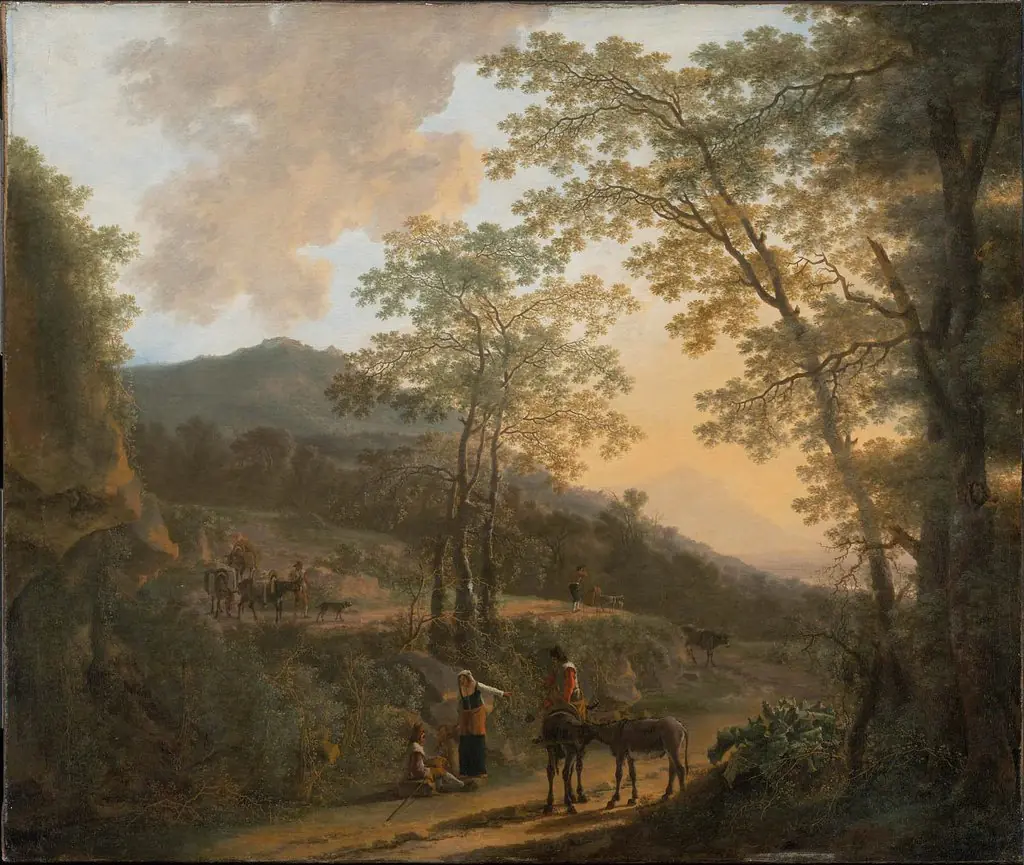
Italian landscape with resting herdsman
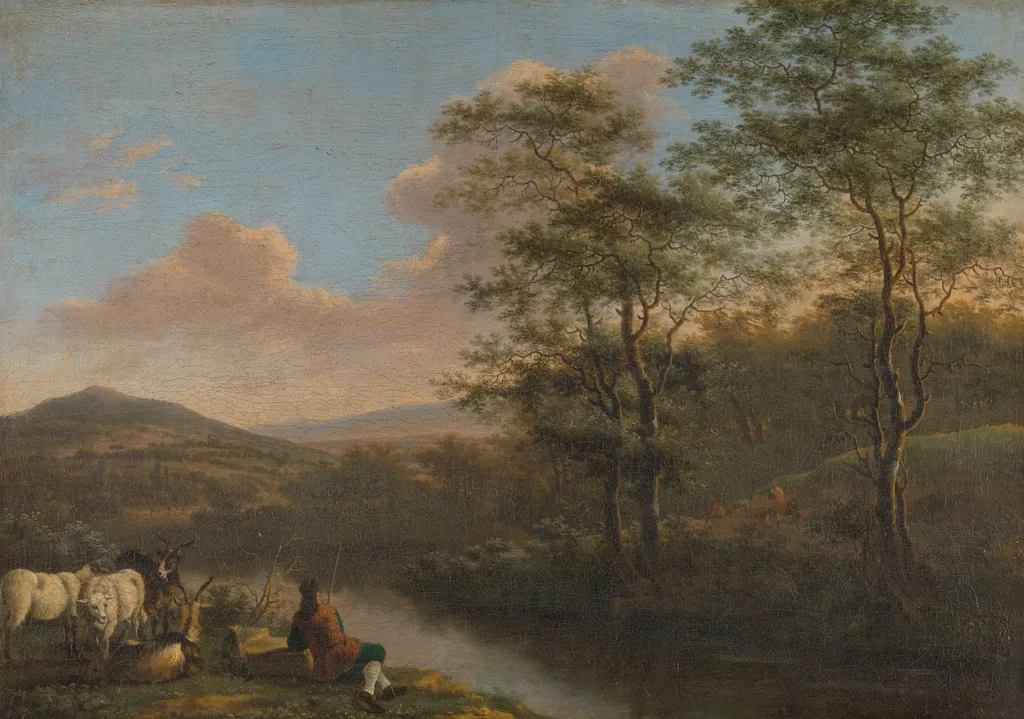
Italian landscape with resting herdsman is an oil painting by the Dutch Golden Age artist Willem de Heusch. It dates from 1650 and is held in the collection of the Rijksmuseum.
About this work
Technique & Style
Willem de Heusch applied oil paint to create the composition, which depicts an Italianate landscape with a resting herdsman.
The work is an oil painting executed on canvas. Willem de Heusch applied oil paint to create the composition, which depicts an Italianate landscape with a resting herdsman. The support is canvas, consistent with typical 17th-century easel painting practices.
The painting measures 40 cm in height and 56 cm in width. It was created in 1650 and is part of the Rijksmuseum's collection, originally owned by Leendert Dupper.
The formal treatment emphasizes naturalistic landscape elements rendered in a restrained palette, with attention to atmospheric depth and figure integration within the terrain. There is no indication of later damage or restoration in the cited records.
History & Provenance
The Italian landscape with resting herdsman was painted by Willem de Heusch in 1650 as an oil on canvas work measuring 40 cm by 56 cm. It entered the collection of Leendert Dupper before being acquired by the Rijksmuseum, where it remains today. The painting was created in the Dutch Golden Age tradition, depicting a genre scene of a pastoral landscape.
Willem de Heusch specialized in Italianate landscapes, and this work exemplifies his mature style with its classical composition and luminous atmosphere.
Italian landscape with resting herdsman is held by the Rijksmuseum in Amsterdam, which lists the work in its collection as an oil-on-canvas landscape painted in 1650 by Willem de Heusch. The painting, measuring 40 by 56 cm, was formerly owned by Leendert Dupper before entering the museum's holdings. No further exhibition history is documented in the available sources.
Overview
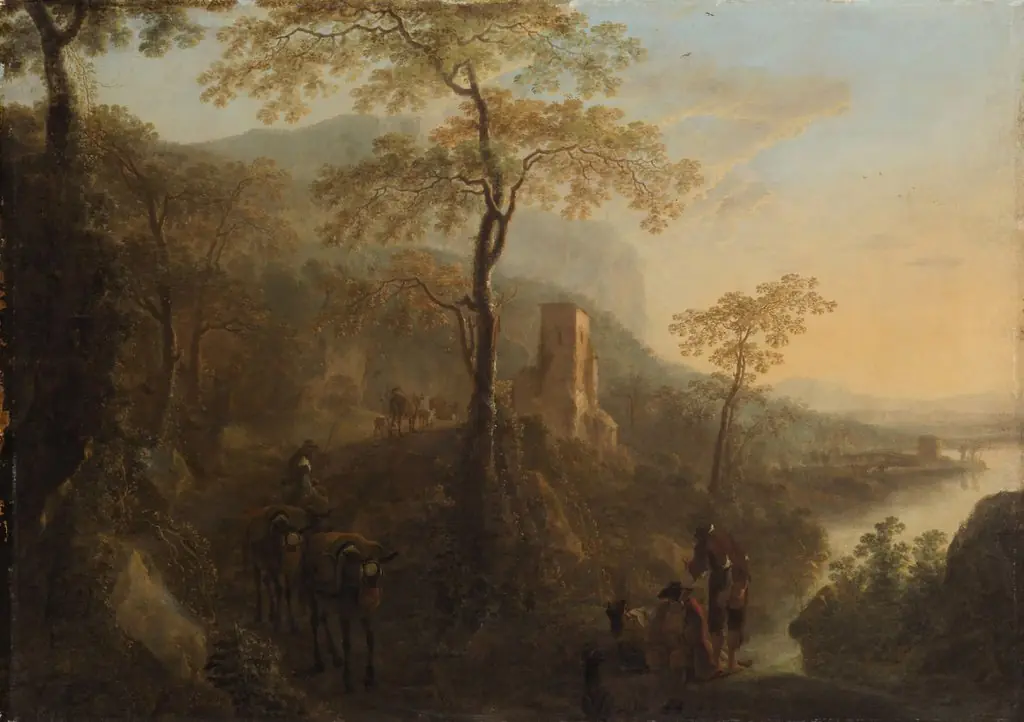
Italian landscape with resting herdsman, painted by Willem de Heusch in 1650, is a characteristic example of Dutch Italianate landscape painting. The work depicts a pastoral scene set in an idealized Italian countryside, featuring a tranquil river, lush vegetation, and rolling hills that recede into a hazy distance. In the foreground, a herdsman rests on the ground, attended by his cattle, anchoring the composition with a sense of quiet daily life.
De Heusch employs a warm, golden color palette and soft, atmospheric brushwork to evoke the Mediterranean light and heat, a technique influenced by his contemporaries such as Jan Both and the broader Utrecht Caravaggisti tradition. Created during the height of the Dutch Golden Age, this painting reflects the period's fascination with the Italian south, which was often imagined rather than directly observed by Northern European artists. The composition balances naturalistic detail with a harmonious, structured arrangement of forms, showcasing de Heusch's skill in synthesizing observed elements with an idealized vision of the Italian landscape.
This work stands as a significant contribution to the genre of imaginary Italian landscapes produced in the Netherlands during the seventeenth century.
Subject & Meaning
The composition centers on a resting herdsman seated beside his livestock, suggesting a moment of pause within daily pastoral labor. The tranquil river and gently rolling terrain convey a sense of repose, inviting contemplation of the simple, harmonious relationship between man and nature in an idealized Italian landscape.
Own this work as a print
Artist & collection

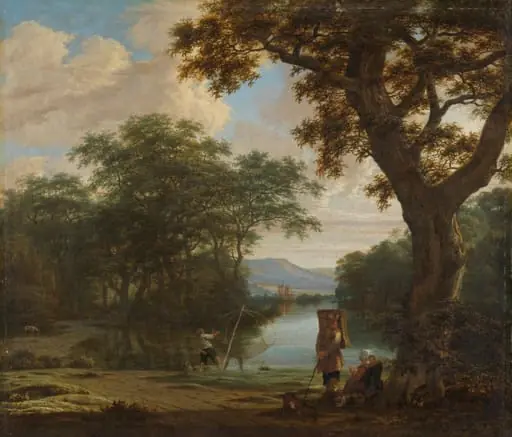 Landscape with Fisherman with a square Net
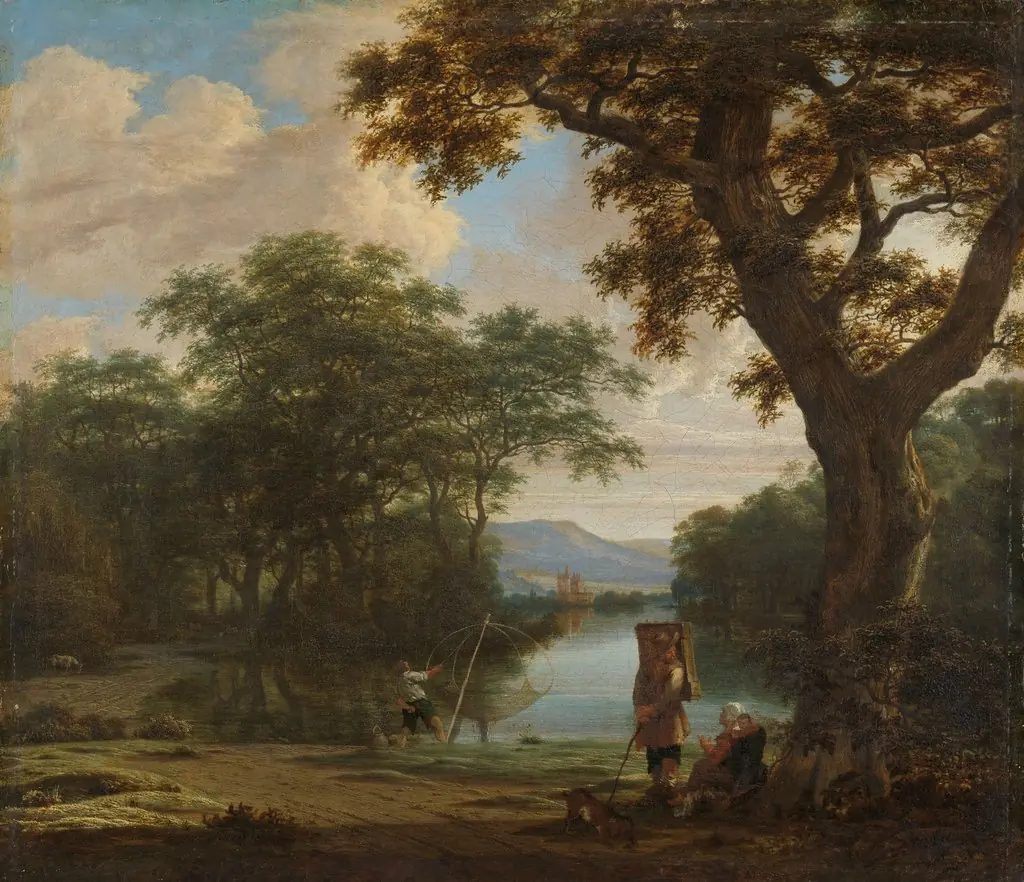 Landscape with fisherman with a square net
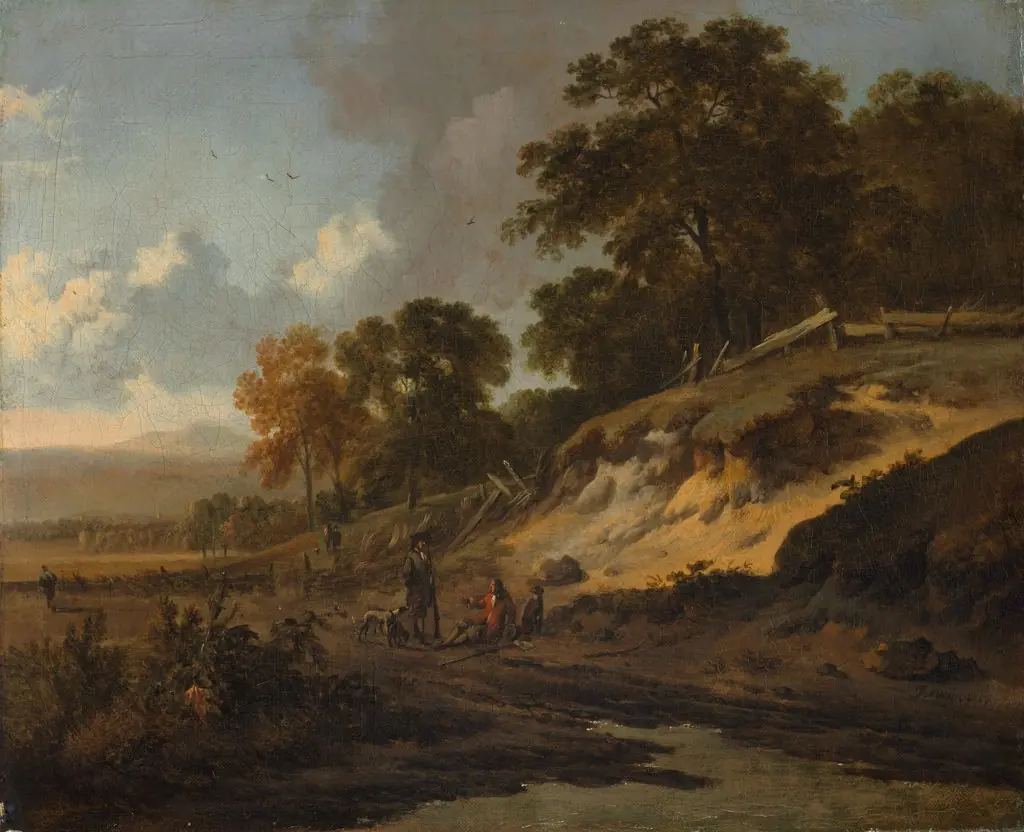 Landscape with Hunters
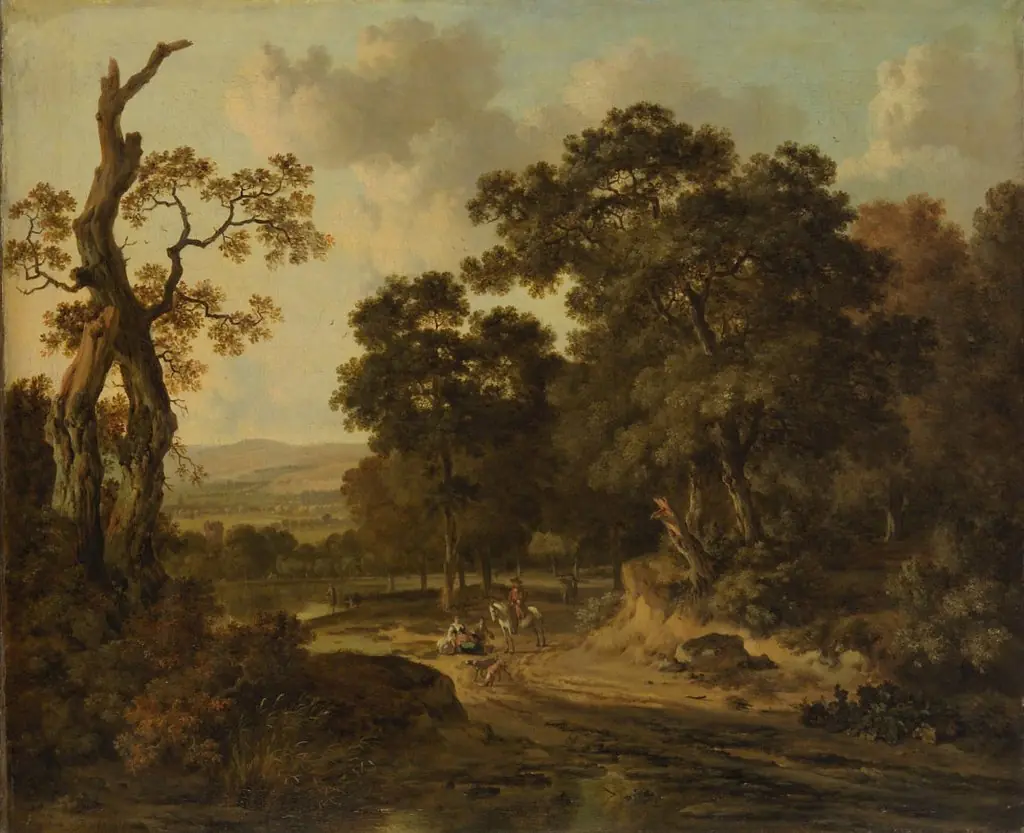 Waldeingang
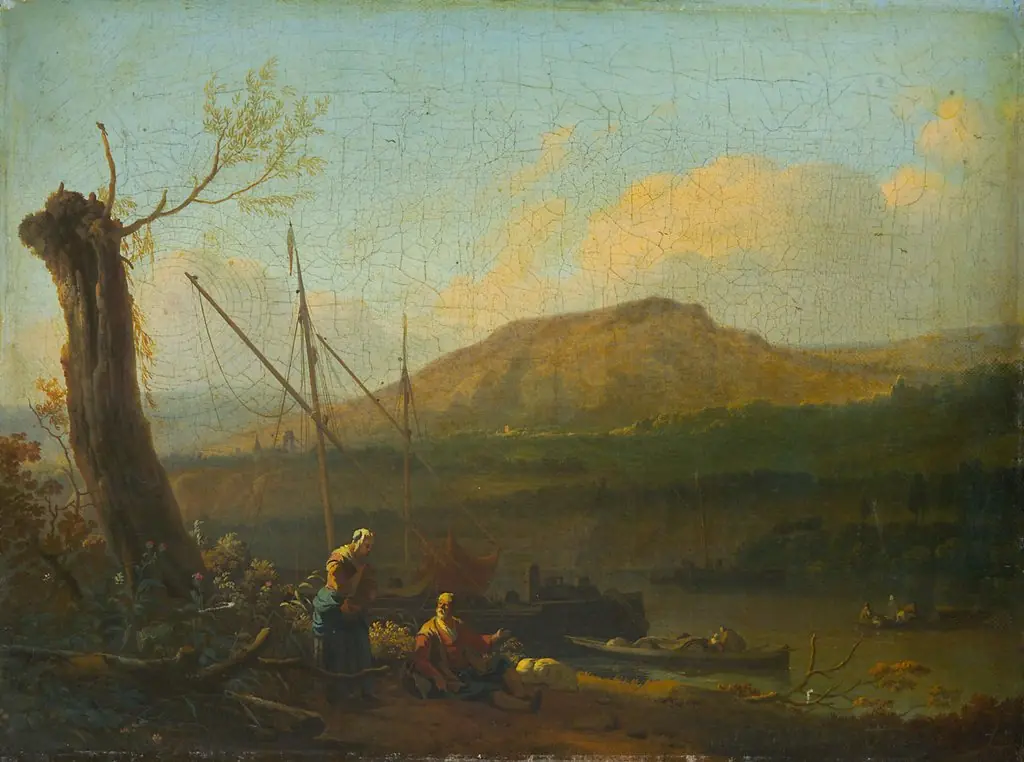 Flußlandschaft
 Landscape with Hunters
 Italian Landscape with Ferry
 Mountain landscape with a lake and buildings
 Landscape with a Brook and Hikers
 Landscape with snow mountain
- An Italian Landscape