Artwork
Pakhuizen aan een Amsterdamse gracht op Uilenburg
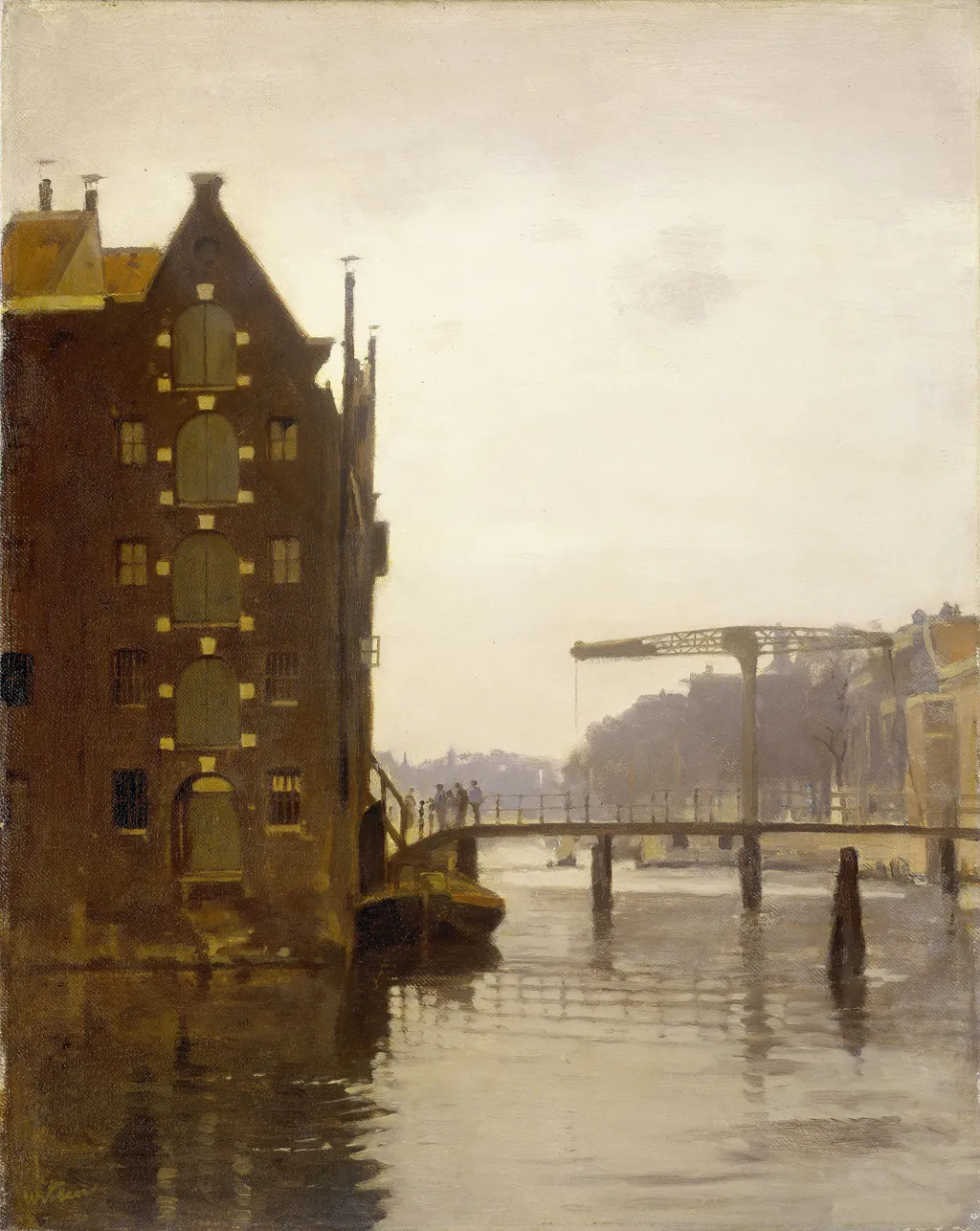
Pakhuizen aan een Amsterdamse gracht op Uilenburg is an oil painting by the Impressionist artist Willem Witsen. It dates from 1911 and is held in the collection of the Rijksmuseum.
About this work
Subject & Meaning
The calm water reflects a light, cloudy sky, enhancing the work's quiet, dreamy atmosphere.
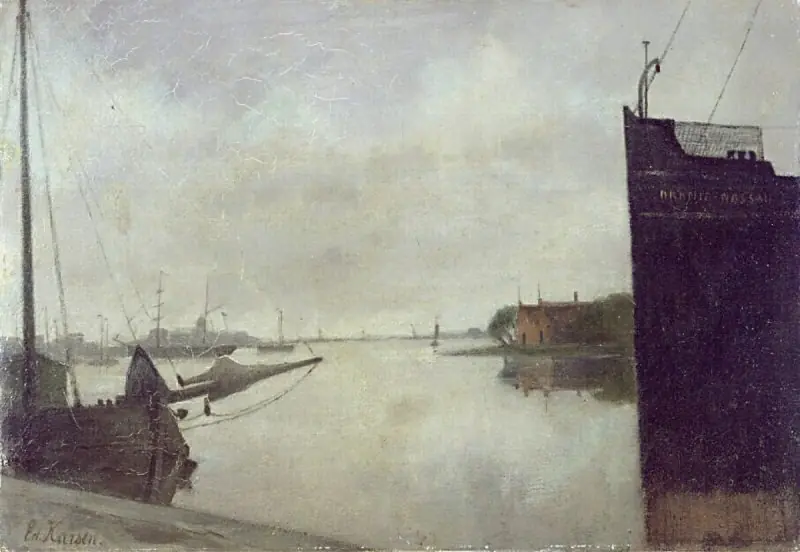
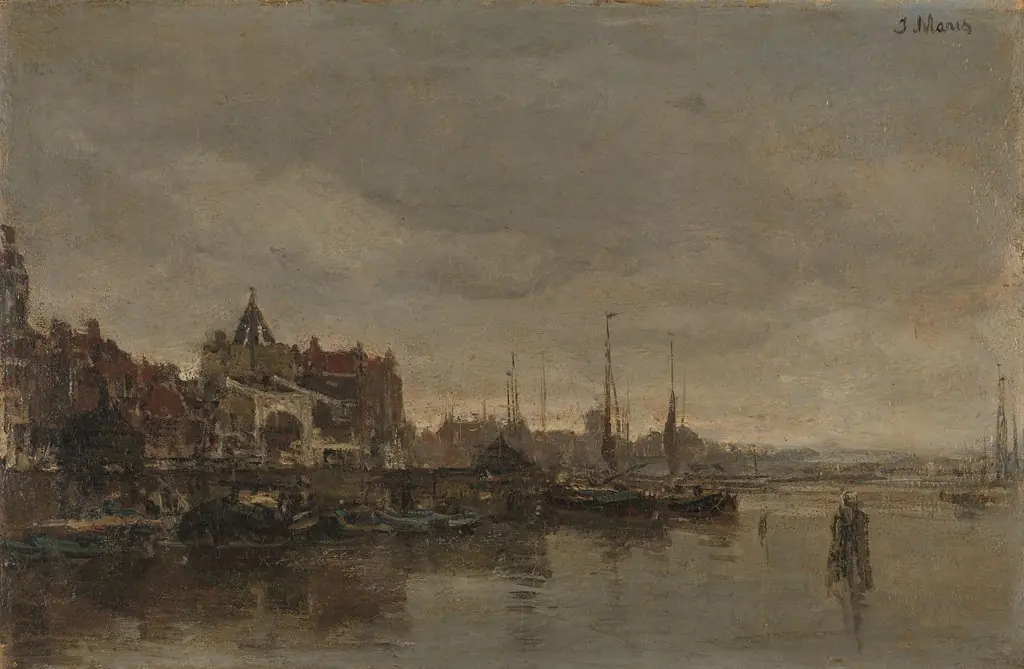
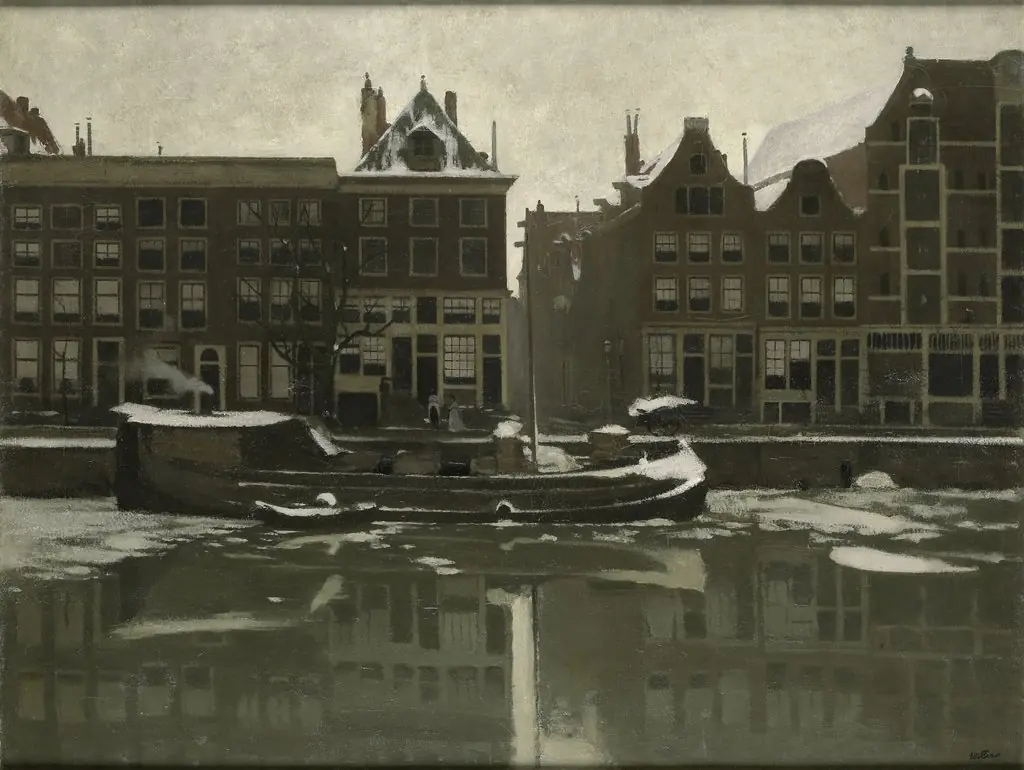
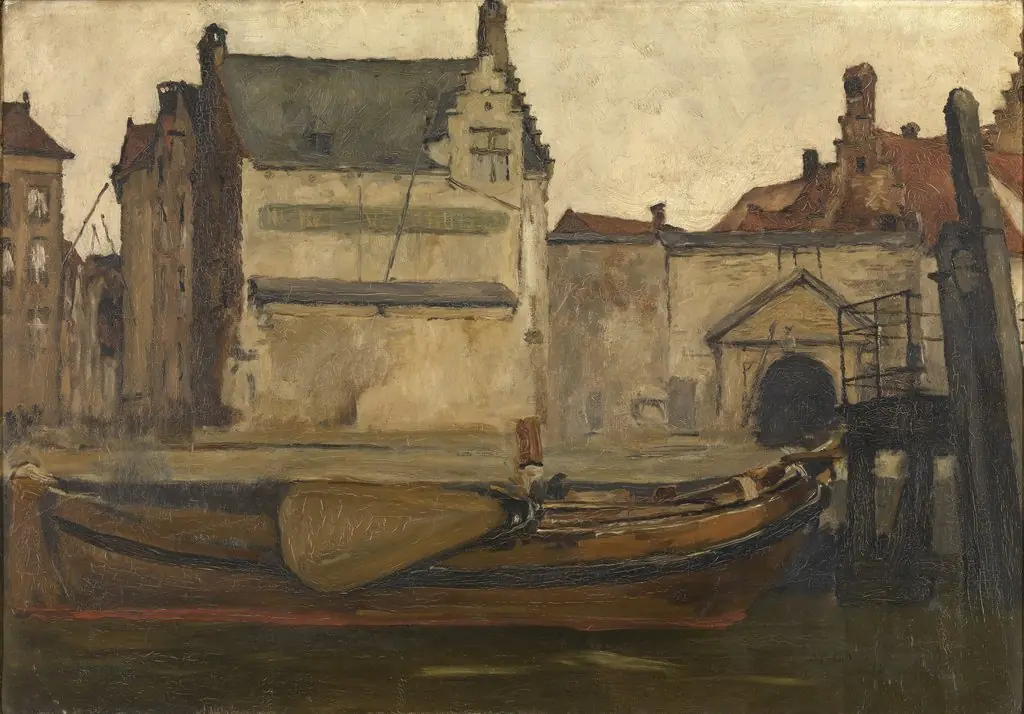
The painting depicts a tranquil cityscape of the Uilenburgergracht, featuring warehouses, an iron drawbridge (Peperbrug) leading to Rapenburg, and a moored barge, with a few figures standing on the bridge. The calm water reflects a light, cloudy sky, enhancing the work's quiet, dreamy atmosphere. Unlike contemporaries who captured bustling modern urban life, Witsen focused on a motionless, timeless city, a quality his friend Jan Veth once described as "sleeping Amsterdam snow canals."
This melancholic, aesthetic mood reflects the influence of James McNeill Whistler. Painted from a remarkably low, horizontal perspective, achieved by working from his studio barge on the water, the composition emphasizes the serene, reflective character of Amsterdam's harbor architecture.
Technique & Style
Pakhuizen aan een Amsterdamse gracht op Uilenburg is an oil‑on‑canvas cityscape measuring 52 × 42 cm. The work was painted in 1911 and has been part of the Rijksmuseum collection since 1922. Witsen created the image from his floating studio, a boat on the canal, which accounts for the unusually low, horizontal viewpoint that flattens the scene. The composition shows warehouses, a canal, a footbridge and a barge, rendered in a calm, reflective water surface under a muted sky, producing a melancholic, Whistler‑inspired atmosphere.
The painting’s formal qualities include a restrained palette, soft tonal transitions and a focus on architectural detail within a timeless urban setting.
History & Provenance
Pakhuizen aan een Amsterdamse gracht op Uilenburg was created in 1911 by Willem Witsen, executed in oil on canvas and measuring 52 by 42 centimeters. The work was not a formal commission but emerged from Witsen's personal practice of painting the city from the water. In 1910 he acquired a small boat to work afloat, and a year later he purchased a covered barge, the Augusta Maria, named after his second wife Johanna Schorr, which served as his floating studio.
From this dekschuit he produced a series of works depicting the warehouses of Uilenburg, including paintings, watercolors, and etchings. Witsen's diary entry of 27 June 1911 records: "Uilenburg geteekend brug Peperstraat voor ets," documenting his on-site work at the Rapenburg drawbridge that same year. The painting entered the Rijksmuseum collection in 1922, where it has remained since.
Pakhuizen aan een Amsterdamse gracht op Uilenburg is housed in the Rijksmuseum in Amsterdam. The Wikidata record lists the painting as part of the Rijksmuseum collection, and the Dutch Wikipedia entry notes that it entered the museum’s collection in 1922. No accession or inventory number is provided in the available sources. The sources do not mention any dedicated exhibition history beyond its inclusion in the museum’s permanent holdings.
Context
Willem Witsen’s Pakhuizen aan een Amsterdamse gracht op Uilenburg (1911) is situated within his sustained engagement with atmospheric cityscapes, distinguished from contemporaries like George Hendrik Breitner by a muted, timeless quality that Jan Veth characterized as “slapende Amsterdamse sneeuwgrachten.” Painted from his floating studio, the Augusta Maria, the work reflects Witsen’s adaptation of Whistlerian melancholy and aesthetic refinement, evident in the low, horizontal viewpoint and reflective stillness of the canal. The painting and its mirror-image etching are regarded as high points of his post-London oeuvre and of Amsterdam Impressionism, consolidating his reputation for poetic urban quietude.
Scholarly attention emphasizes the technical innovation of working from water and the thematic coherence of Uilenburg motifs across media, positioning the work as a culmination of his mature style.
Legacy
Pakhuizen aan een Amsterdamse gracht op Uilenburg has become one of Willem Witsen's most celebrated cityscapes, frequently cited as a high point of his later oeuvre and of Amsterdam Impressionism. The work exemplifies his dreamy, Whistler‑inspired atmosphere and the low, horizontal perspective achieved from his floating studio. Since 1922 it has been part of the Rijksmuseum collection, reinforcing its standing in Dutch art history.
Scholars repeatedly reference the painting when discussing Witsen’s role in shaping the genre of nocturnal, tranquil urban landscapes. Its inclusion in major exhibitions and publications has cemented its reputation as a hallmark of the artist’s mature style.
Overview
Willem Witsen's 1911 oil painting, Pakhuizen aan een Amsterdamse gracht op Uilenburg, captures a specific Amsterdam canal scene. This work exemplifies the artist's engagement with urban landscapes, a characteristic of his association with Amsterdam Impressionism. The painting is held in the collection of the Rijksmuseum, representing a significant aspect of early 20th-century Dutch art.
Own this work as a print
Artist & collection
Artist
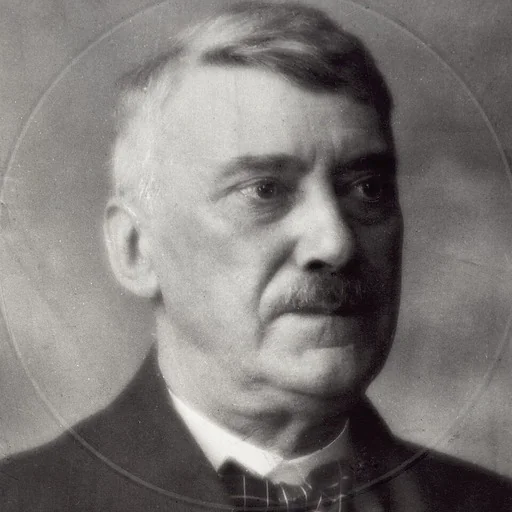
Willem Arnoldus Witsen (13 August 1860 – 13 April 1923, Amsterdam) was a Dutch painter and photographer associated with the Amsterdam Impressionism movement.