Artwork
Cityscape
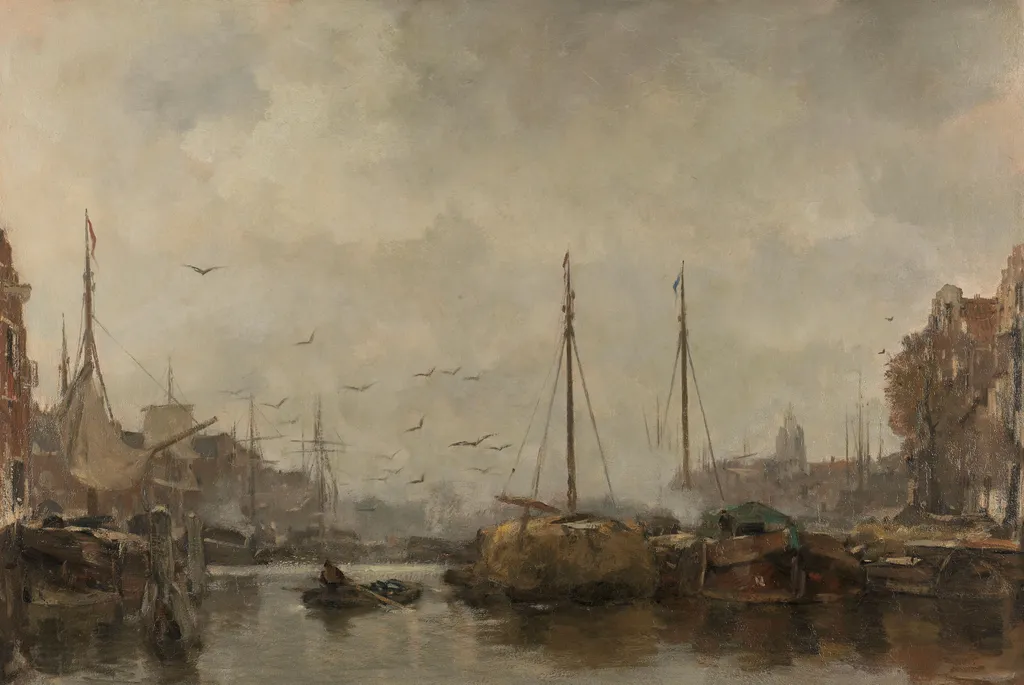
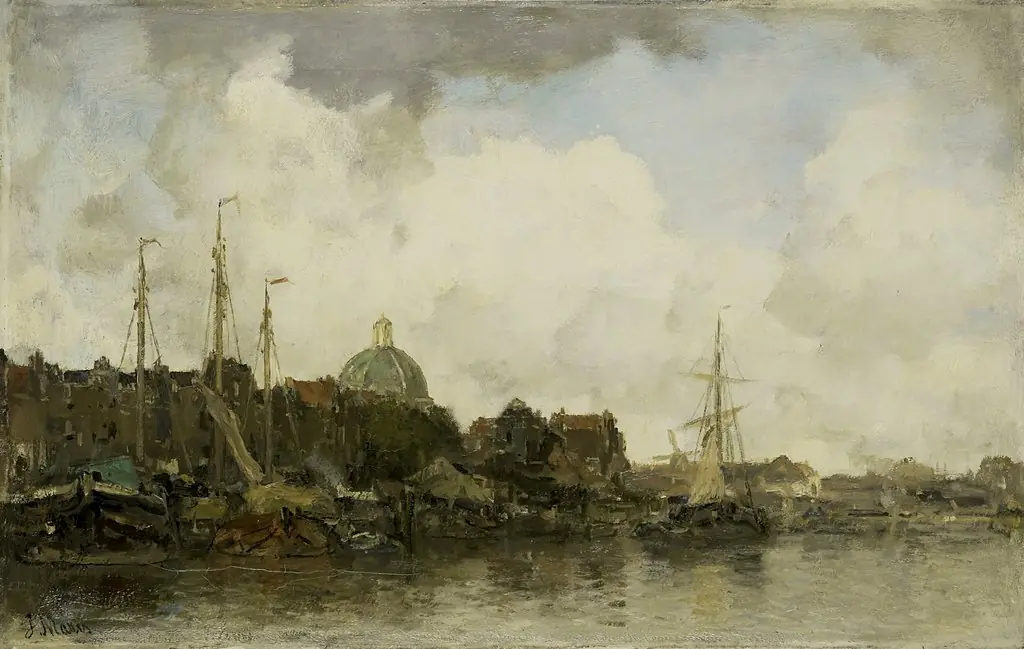
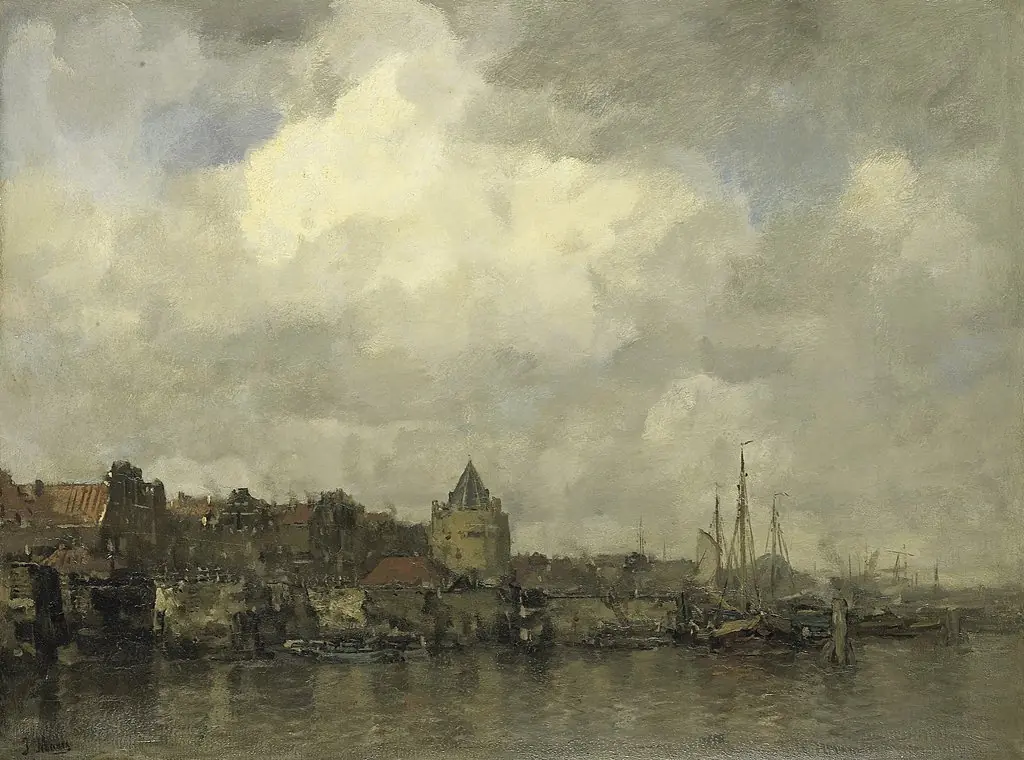
Cityscape is an oil painting by the Impressionist artist Jacob Maris. It dates from 1894 and is held in the collection of the Rijksmuseum.
About this work
Subject & Meaning
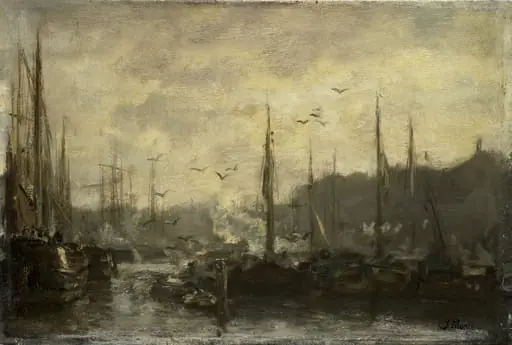
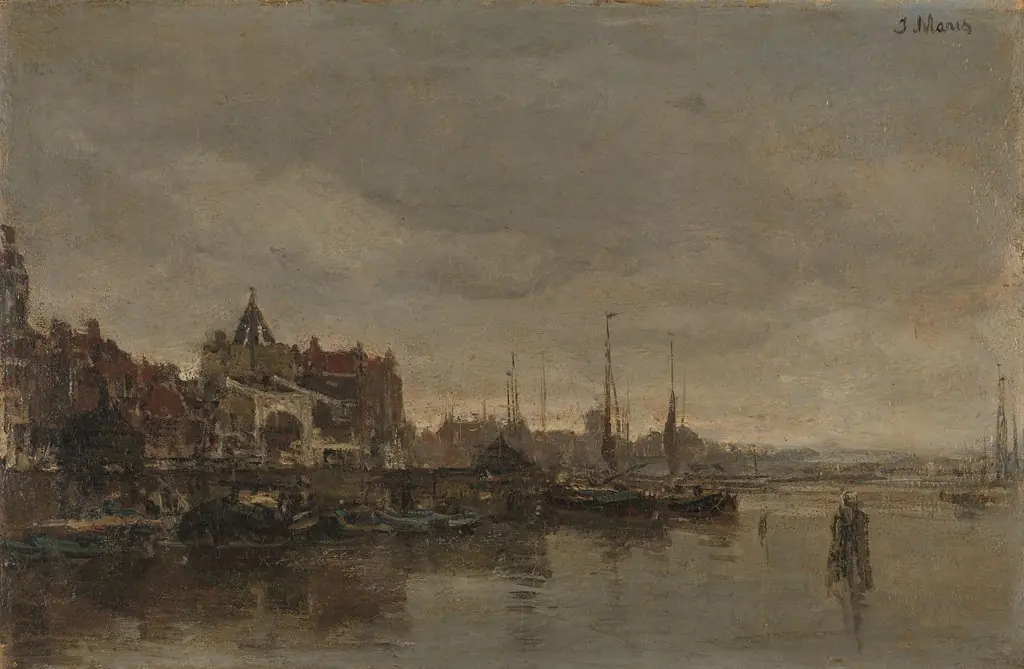
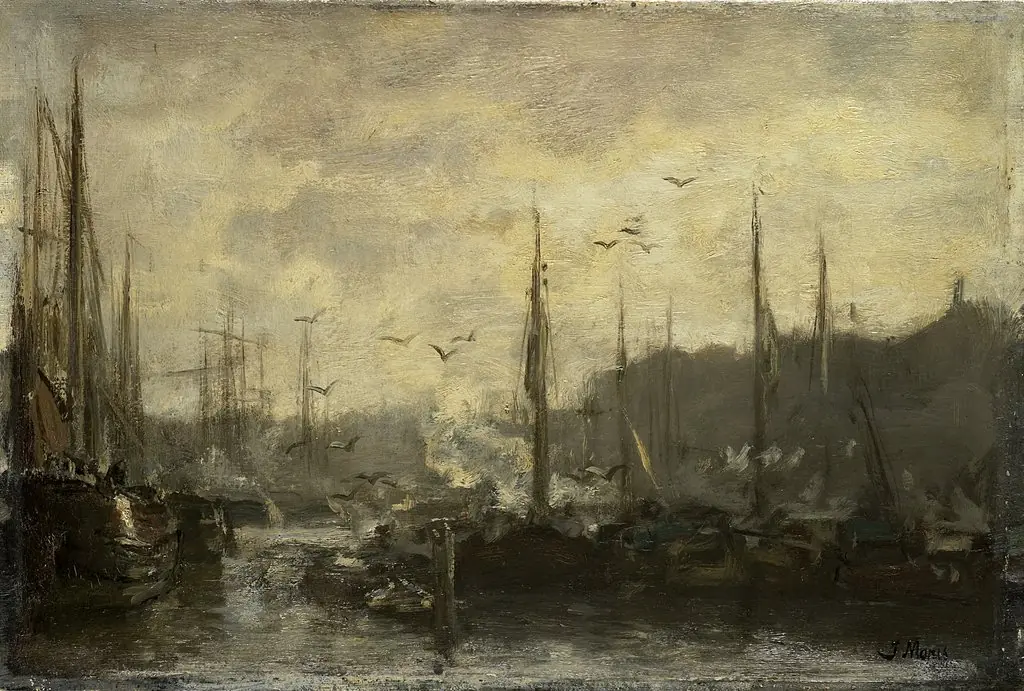
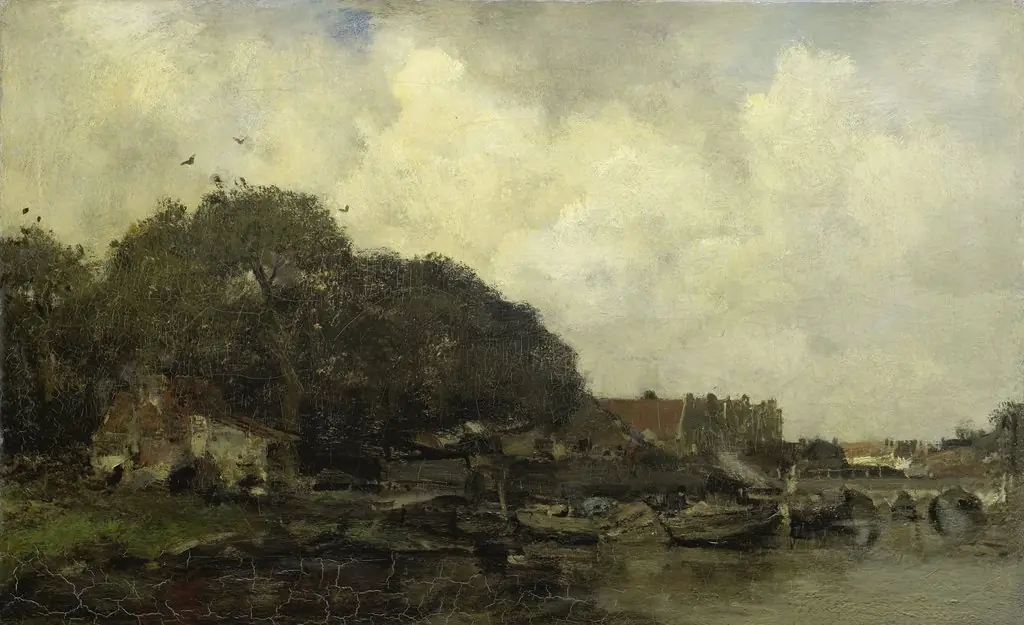
Jacob Maris's Cityscape depicts an invented harbor scene rather than a precise topographical view, blending fantasy with reality to capture the character of a Dutch city. The composition features moored boats, a rower in a small vessel, and seagulls flying above shimmering water, all set beneath an imposing gray sky that occupies a significant portion of the canvas. Maris prioritized atmosphere and composition over strict accuracy, famously stating he felt entitled to build his own cities and even alter rooflines to better support the sky or cloud formations.
The work represents a poetic interpretation of urban life, where architectural details emerge from a gray mist and vibrant light effects create a sense of space and movement. As noted by contemporaries, the painting evokes a whole city submerged in an atmosphere of silver-gray haze, illustrating the artist's goal of creating character studies rather than literal portraits.
Technique & Style
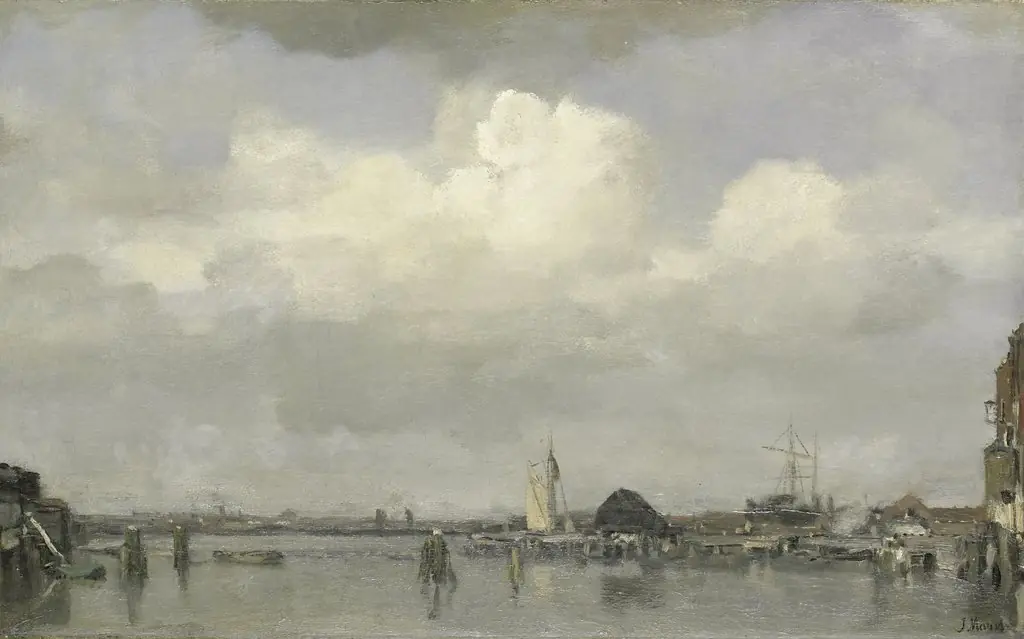
The visual effect relies on a dominant, imposing grey sky that occupies significant space, with light vibrating across the water surface to create reflections.
Executed between 1885 and 1887, this work is an oil painting on canvas measuring 86 by 126 centimetres. Created entirely within the artist's studio rather than en plein air, the piece exemplifies the Hague School style through its use of broad, grey-blue brushstrokes. Maris employed a heavily worked, almost sculpted application of paint to render a fictionalized harbor scene, prioritizing atmospheric composition over strict topographical accuracy.
The visual effect relies on a dominant, imposing grey sky that occupies significant space, with light vibrating across the water surface to create reflections. Despite the seemingly spontaneous handling, the architecture and cloud formations were deliberately constructed by the painter to serve the overall mood, resulting in a cityscape where bridges, houses, and ships appear submerged in a silvery, misty atmosphere.
History & Provenance
The painting was created between 1885 and 1887, aligning with Maris's mature period in the Hague School style. It was purchased by the Rijksmuseum in Amsterdam in 1887 from the Tentoonstelling van Levende Meesters (Exhibition of Living Masters), where it was shown that year. The museum's accession number SK-A-1404 confirms its institutional ownership since acquisition.
Context
Jacob Maris's Cityscape is a definitive example of the Hague School, prioritizing atmospheric composition over precise topography. The work exemplifies Maris's artistic philosophy of constructing idealized urban environments where mood supersedes literal representation, a method his friend Théophile de Bock described as seeking "character images" rather than portraits. Maris freely altered architectural lines to support the sky, famously asserting his right to build his own cities.
Acquired by the Rijksmuseum in 1887, the painting illustrates the movement's focus on capturing the unique silver light and grey mists of Holland.
Overview
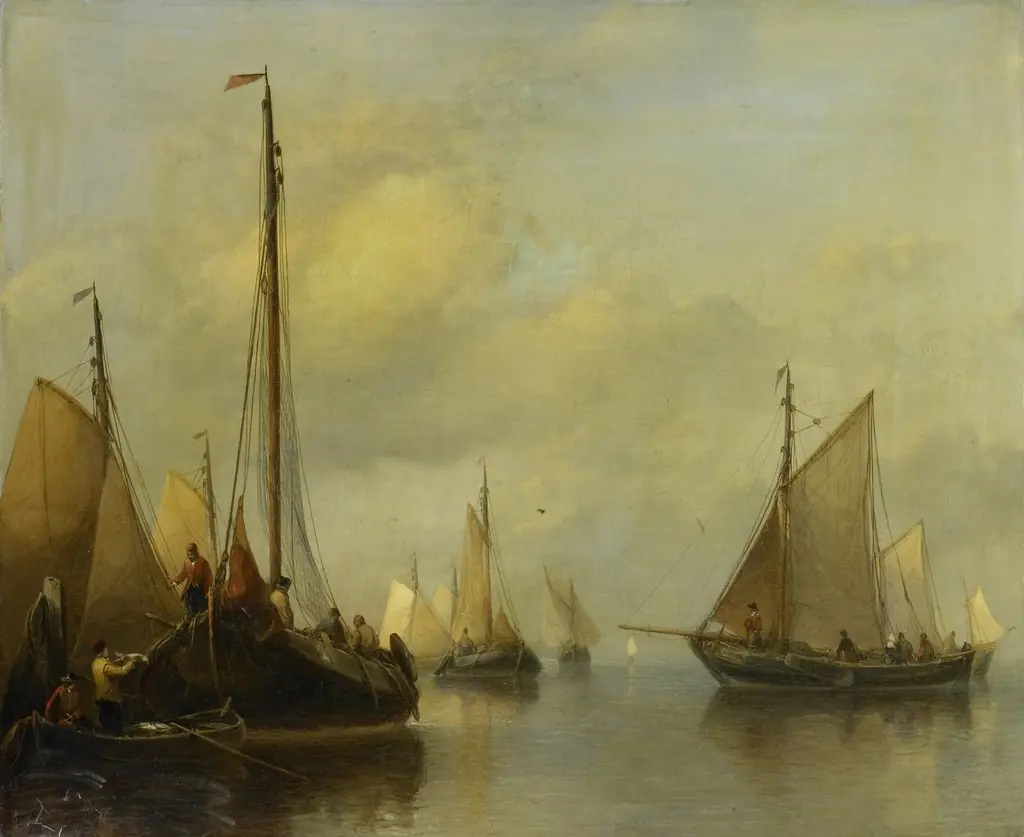
Jacob Maris painted Cityscape in 1894, employing oil on canvas to capture a tranquil harbor. The composition centers on three tall vessels anchored close to shore, a modest boat in the foreground, and a line of buildings framing the left edge. A pale, hazy sky merges with the muted tones of water and sky, creating a unified, atmospheric scene.
Own this work as a print
Artist & collection
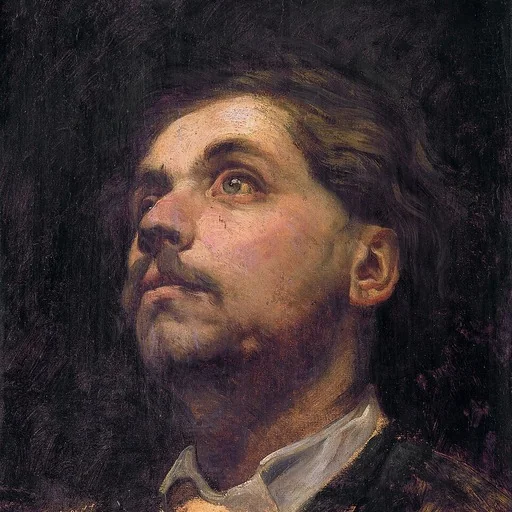
Artist
Jacob Henricus Maris (August 25, 1837 – August 7, 1899) was a Dutch painter, who with his brothers Willem and Matthijs belonged to what has come to be known as the Hague School of painters.