Artwork
Poo-Ta-La, or Great Temple of Fo, near Zhehol in China
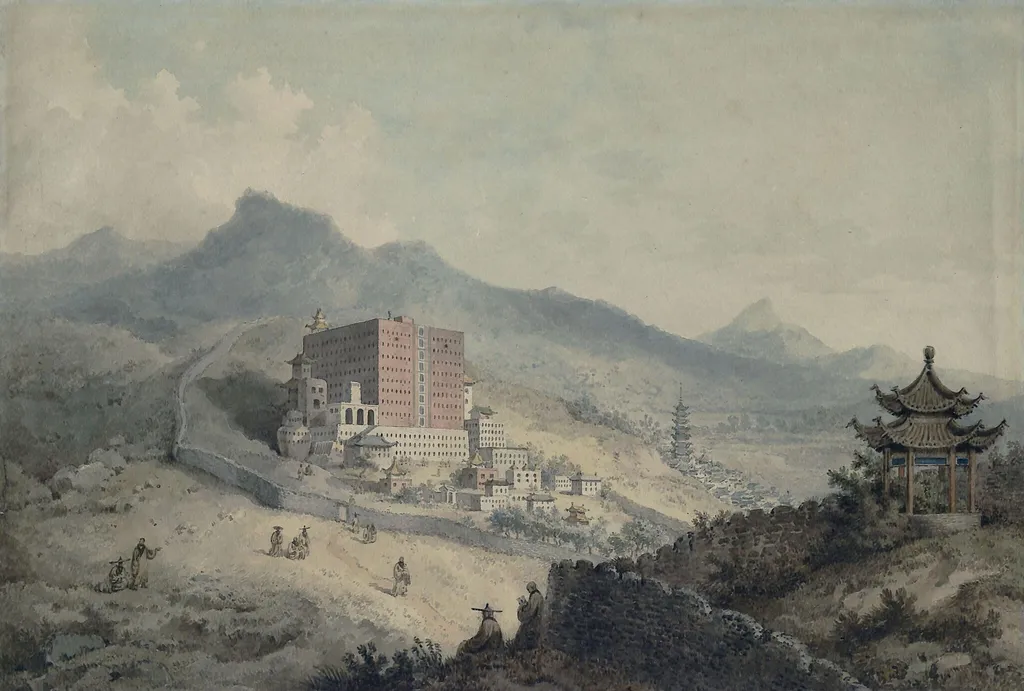
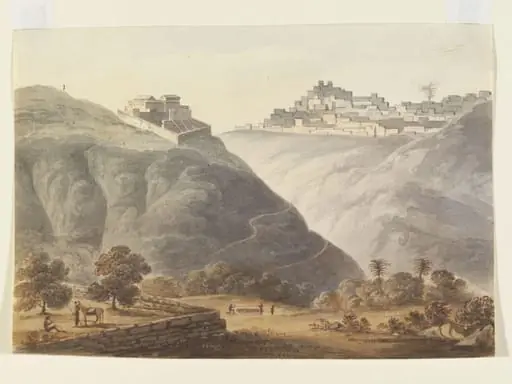
Poo-Ta-La, or Great Temple of Fo, near Zhehol in China is a watercolor work on paper by the Aestheticist artist William Alexander. It dates from 1794 and is held in the collection of the Victoria and Albert Museum.
About this work
Overview
Rendered in delicate washes and muted tones, the scene presents a serene mountain valley where architecture integrates subtly with the natural terrain.
Painted in 1794 by William Alexander, this watercolour captures the Poo-Ta-La, a Buddhist temple complex near Zhehol in China. Rendered in delicate washes and muted tones, the scene presents a serene mountain valley where architecture integrates subtly with the natural terrain. The composition emphasizes stillness and scale, with human figures rendered minimally to enhance the sense of remoteness and contemplative quiet.
Subject & Meaning
The Poo-Ta-La, or Great Temple of Fo, is depicted as a central religious structure nestled within a rugged landscape. Its red walls and tiered roofs distinguish it from surrounding smaller buildings, suggesting its spiritual significance. The winding path leading to the temple implies a journey of devotion, while the sparse human presence underscores the site’s isolation and meditative atmosphere, aligning with Buddhist ideals of detachment and harmony with nature.
Technique & Style
Alexander employed light, translucent watercolour washes to evoke atmospheric depth and soft focus. The brushwork is restrained, with gentle gradients in the sky and hazy mountain contours creating a sense of distance. Buildings are outlined with precision but rendered in subdued hues, allowing them to merge with the land. The minimal detailing of figures reinforces the painting’s tranquil, almost ethereal mood.
History & Provenance
Created during Alexander’s tenure as a draughtsman on the Macartney Embassy to China, this watercolour was part of a visual record commissioned by the British government. It was later acquired by the Victoria and Albert Museum, where it remains as part of a broader collection documenting early Western encounters with Chinese architecture and landscape. The work reflects the diplomatic mission’s aim to document China’s cultural and physical environment.
Context
Alexander’s depiction aligns with late 18th-century European interest in China as a land of ancient traditions and harmonious design. His approach, avoiding overt exoticism, reflects a growing preference for observational accuracy over romanticized fantasy. The quiet, unpopulated landscape contrasts with more dramatic Western depictions of the East, suggesting a more restrained, respectful engagement with the subject.
Legacy
This watercolour contributes to a historical archive of early Western visual documentation of Chinese religious sites. Its understated aesthetic influenced later European perceptions of Chinese architecture as integrated with nature rather than dominating it. Though not widely exhibited, it remains a key example of how diplomatic travelers shaped cross-cultural understanding through careful, quiet observation.
![View of an Egyptian Temple. [Dendara]. 1807](https://artifactworldgallery.com/img/dominique-vivant-denon--view-of-an-egyptian-temple-dendara-1807--69b7b6b17d97f4dc-w320.webp)
Artist & collection
Artist
William Alexander, known as Bill Alexander on his TV show, was a German painter, art instructor, and television host.

- View of an Egyptian Temple. [Dendara]. 1807
 Bethlehem
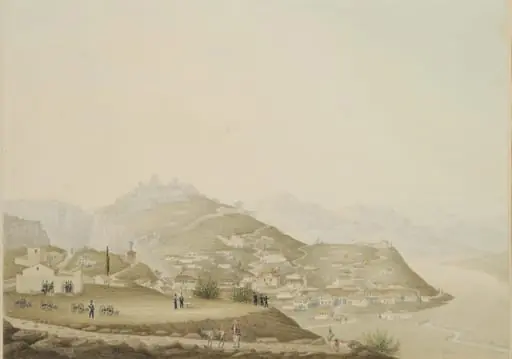 Η Λιβαδειά το 1833
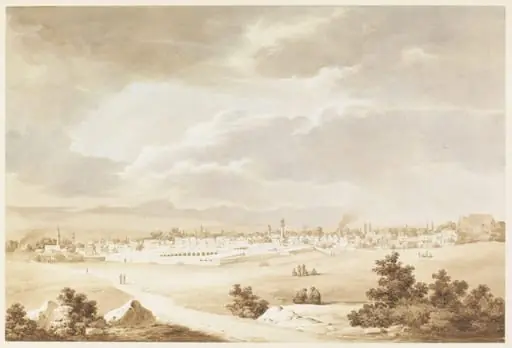 Tarsus
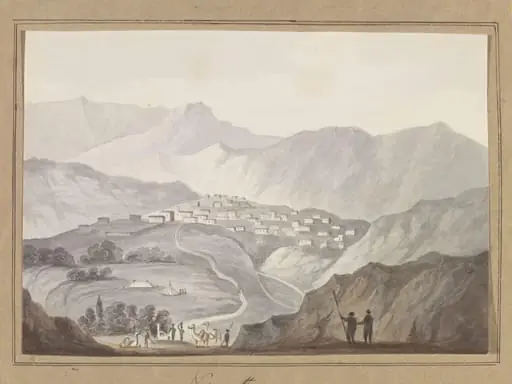 Nazareth
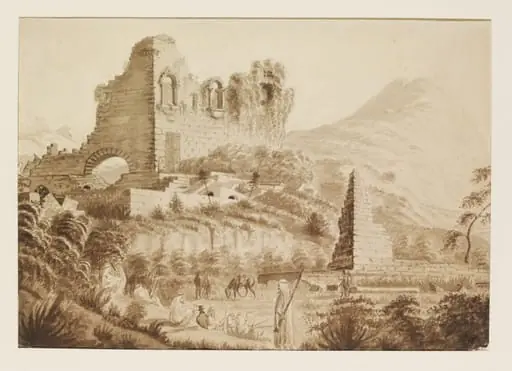 Villa Sevillana on the Road from Bona to Constantine
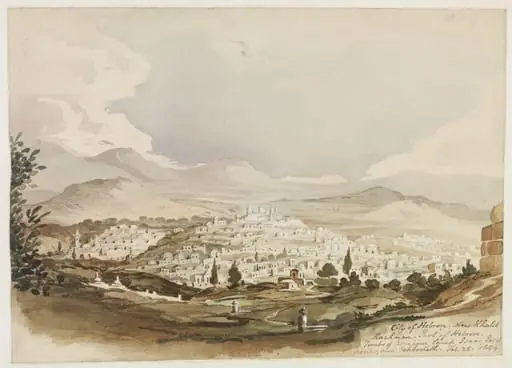 City of Hebron - Now Khalil Rachman - Pool of Hebron. Tombs of Abraham, Sarah, Isaac, Jacob, Abner, and Ishbosheth
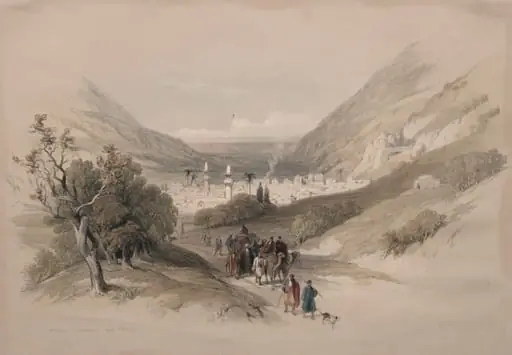 Entrance to Nablus
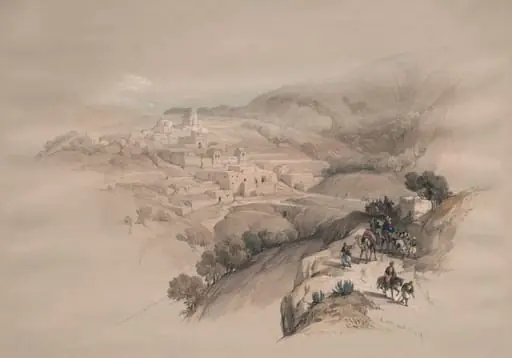 Bethany
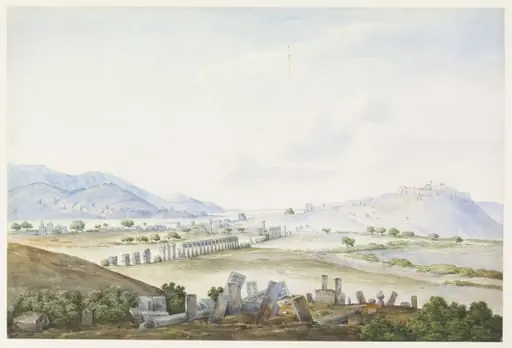 Ephesus
 View of Latifgarh near Chunar
 A Landscape with Villas in the Middle Distance and Mountains in the Background