Artwork
Ezekiel's Wheels
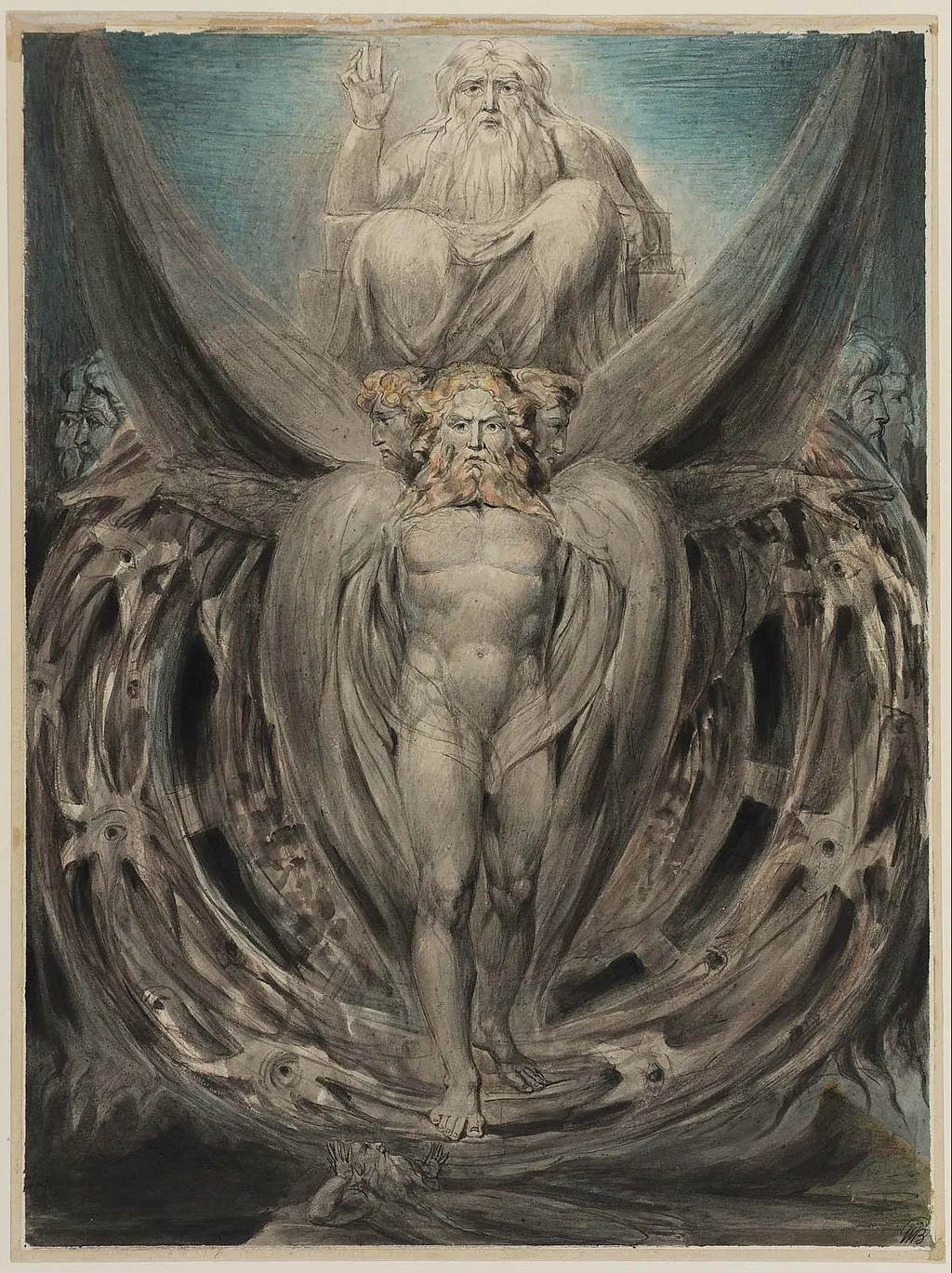
Ezekiel's Wheels is a graphite painting by William Blake. It dates from 1800 and is held in the collection of the Museum of Fine Arts Boston.
About this work
Overview
Created in 1800, Ezekiel’s Wheels is a graphite drawing by the English poet‑artist William Blake. The work portrays two bearded figures amid a turbulent, cloud‑filled space, their forms rendered in loose, sketchy lines. It is held in the collection of the Museum of Fine Arts, Boston, and exemplifies Blake’s engagement with biblical themes through a highly personal visual language.
Subject & Meaning
The composition references the prophetic vision of Ezekiel, in which celestial beings and moving wheels appear in a stormy firmament. One figure points upward, suggesting an act of revelation, while the other stands passively. The ambiguous, swirling background evokes the mystical atmosphere of the biblical passage, inviting contemplation of divine motion and prophetic insight.
Technique & Style
Blake employed graphite to produce a rapid, gestural rendering, allowing the figures and surrounding vortex to emerge from energetic strokes. The drawing’s unfinished quality, with its rough contours and overlapping lines, creates a sense of immediacy and spiritual turbulence, characteristic of Blake’s broader practice of merging poetic imagination with visual experimentation.
History & Provenance
Although Blake spent most of his life in London, he produced Ezekiel’s Wheels during a period of intense personal output. The work remained relatively obscure until after Blake’s death, when his reputation grew within Romantic circles. It entered the Museum of Fine Arts, Boston’s collection as part of a broader acquisition of Blake’s graphic oeuvre.
Context
Ezekiel’s Wheels reflects this synthesis, embodying both devotional content and experimental draftsmanship.
Blake’s career straddled poetry and visual art, with a focus on symbolic, visionary subjects. In the early nineteenth century, his unconventional approach was largely unappreciated, yet his integration of biblical narrative and imaginative form anticipated later Romantic and Symbolist movements. Ezekiel’s Wheels reflects this synthesis, embodying both devotional content and experimental draftsmanship.
Artist & collection
Artist
William Blake (28 November 1757 – 12 August 1827) was an English poet, painter and printmaker.

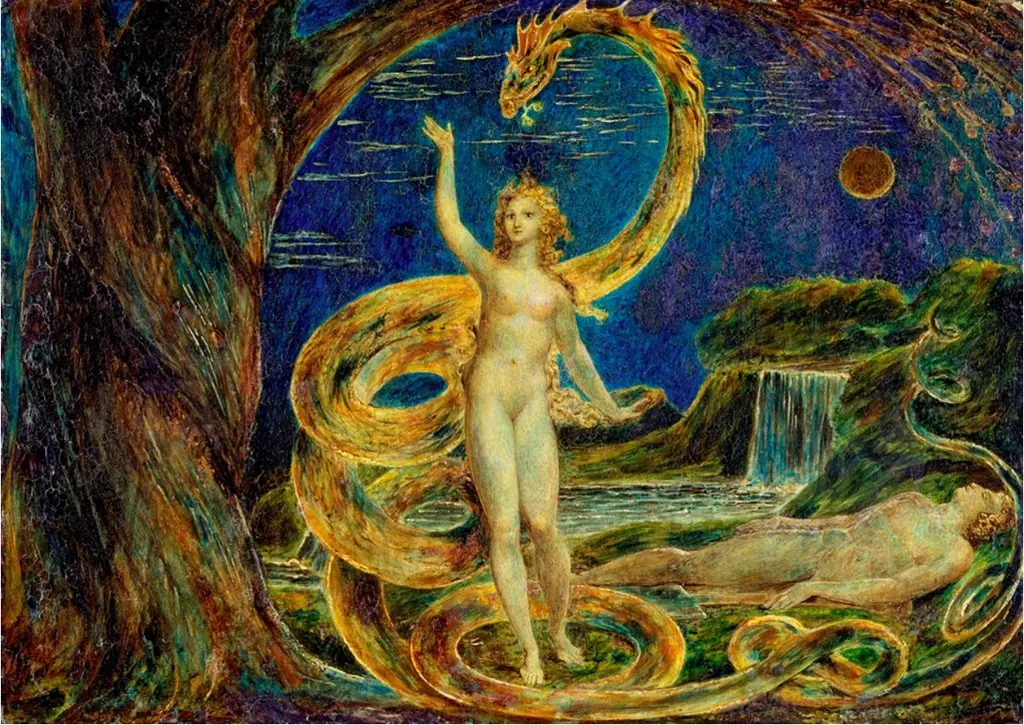
- The Fall of Man
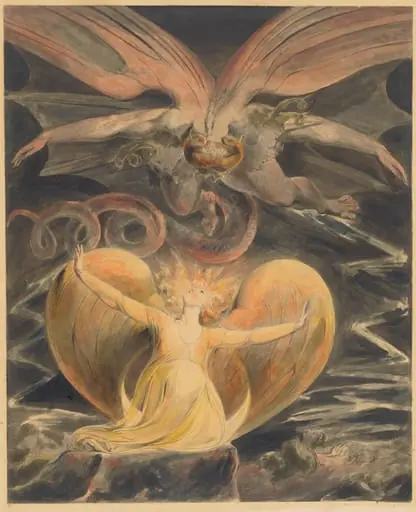 The Great Red Dragon and the Woman Clothed with the Sun
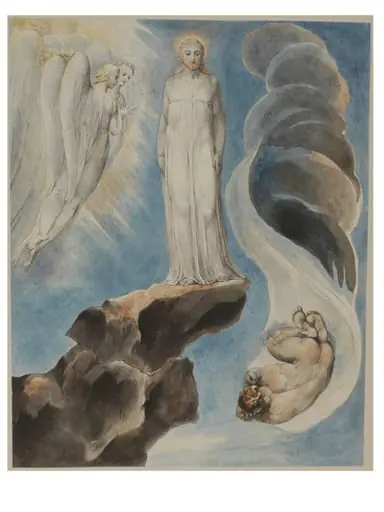 The Third Temptation
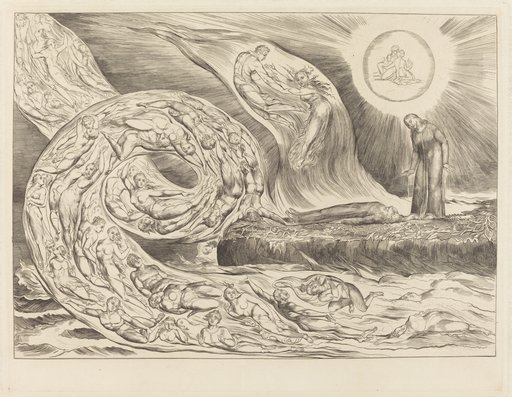
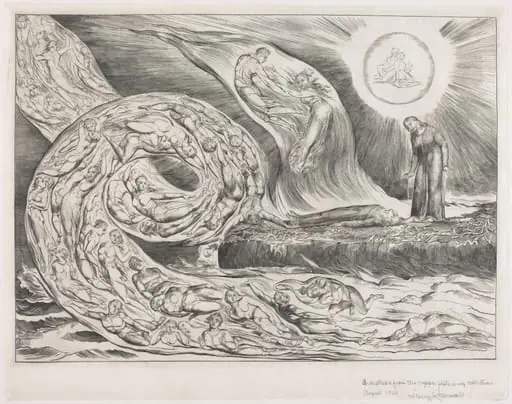 The Circle of the Lustful: Paolo and Francesca
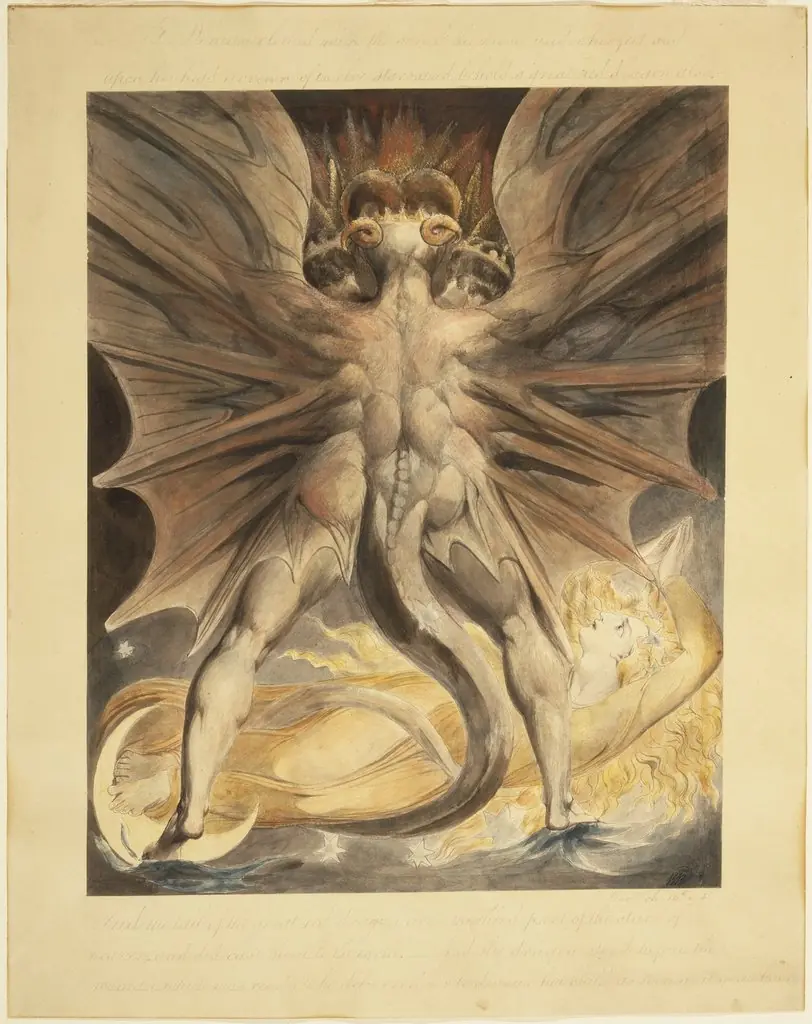 The Great Red Dragon and the Woman Clothed with the Sun (Rev. 12: 1-4)
 The Circle of the Lustful: Paolo and Francesca
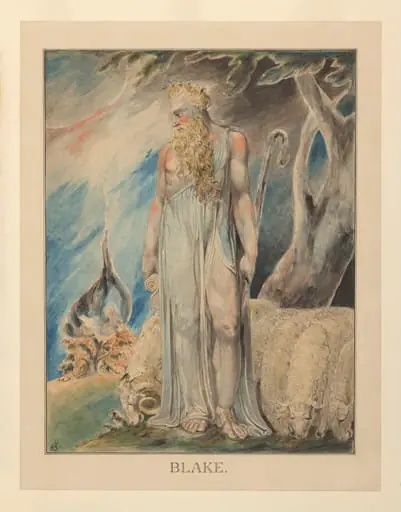 Moses and the Burning Bush
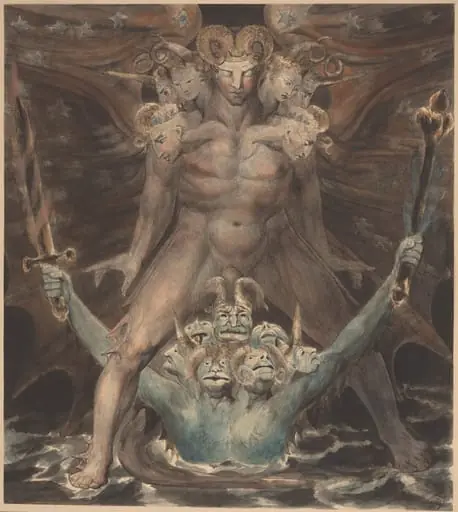 The Great Red Dragon and the Beast from the Sea
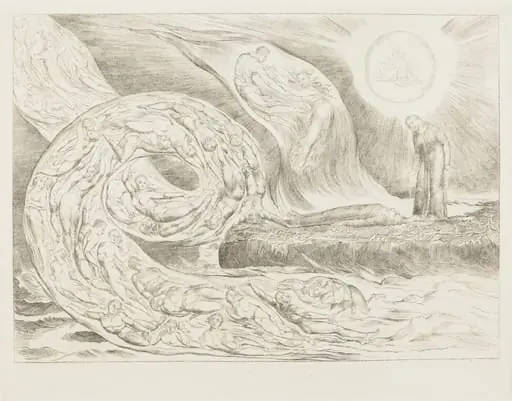 The Circle of the Lustful: Paolo and Francesca
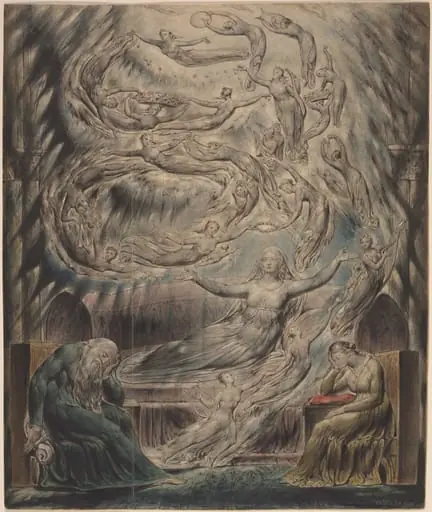 Queen Katherine's Dream
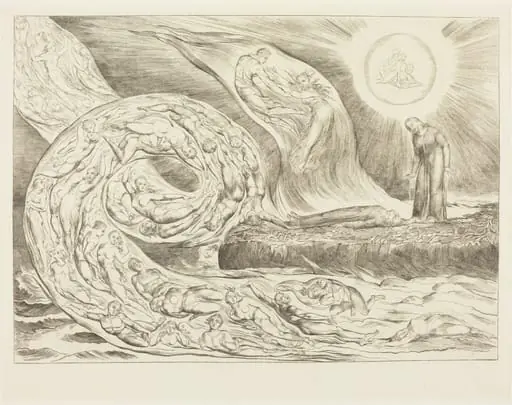 The Circle of the Lustful: Paolo and Francesca
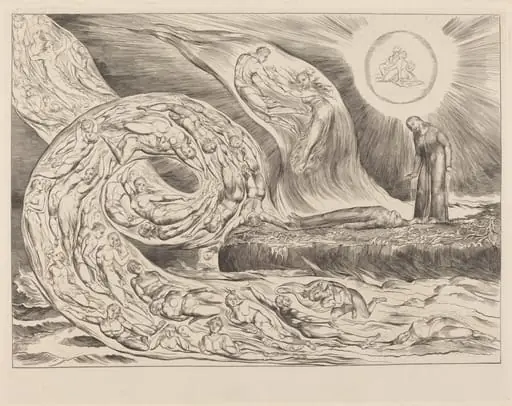 The Circle of the Lustful: Paolo and Francesca