Artwork
The Last Supper
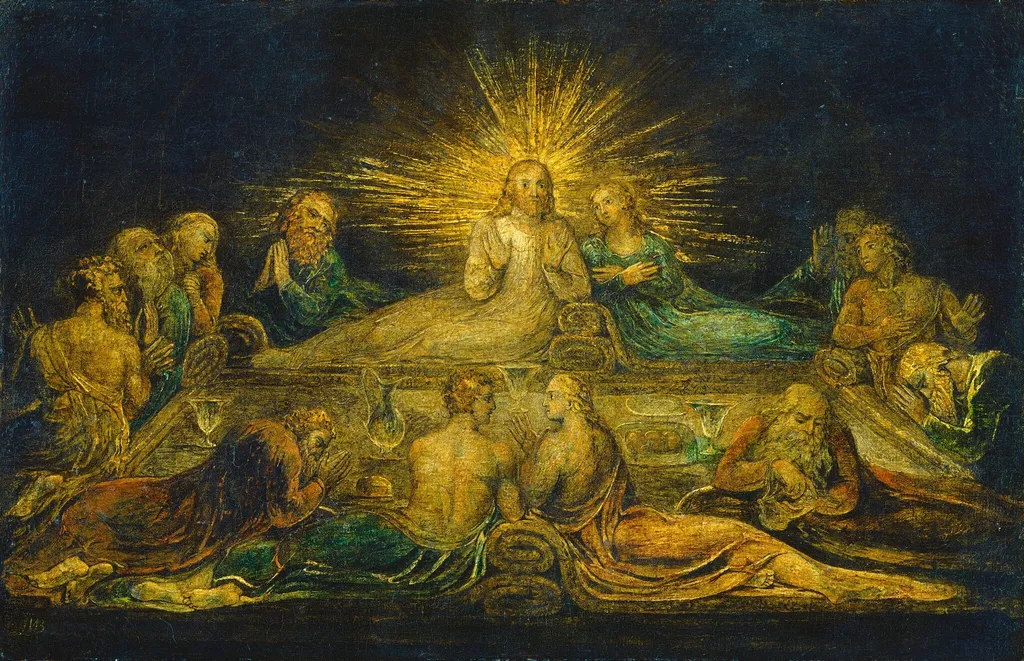
The Last Supper is a tempera painting by the Romanticist artist William Blake. It dates from 1799 and is held in the collection of the National Gallery of Art.
- Inscription
- Inscribed:lower left in monogram: WB inv.
About this work
Technique & Style
, through a series of sales and gifts beginning with its acquisition by the William Blake Trust in 1951 and concluding with a 1954 donation by Lessing J.
William Blake created The Last Supper as a tempera painting on canvas in 1799. The work depicts the biblical scene of Christ and the Apostles at the final meal, rendered in Blake's characteristic religious symbolic style. It measures 30.5 cm in height by 48.2 cm in width.
The painting entered the National Gallery of Art, Washington, D.C., through a series of sales and gifts beginning with its acquisition by the William Blake Trust in 1951 and concluding with a 1954 donation by Lessing J. Rosenwald.
The technique combines tempera pigment with canvas support, reflecting Blake's experimental approach to traditional religious subjects. Formal analysis highlights the dramatic composition and symbolic use of light to convey spiritual narrative, consistent with Blake's visionary aesthetic during his late period.
History & Provenance
William Blake executed The Last Supper in 1799 as a tempera on canvas work commissioned by his primary patron, Thomas Butts. It formed part of a series of over 135 biblical illustrations created specifically for Butts. Following the artist's death, the painting descended to Thomas Butts, Jr., who sold it at Messrs.
Foster in London on June 29, 1853. The work subsequently passed through the collections of J.C. Strange and Graham Robertson before being acquired by the William Blake Trust at a Christie's sale in July 1949. In 1951, the Trust sold the piece to Lessing J. Rosenwald of Philadelphia, who later gifted it to the National Gallery of Art in Washington, D.C., in 1954.
The Last Supper by William Blake is held in the collection of the National Gallery of Art in Washington, D.C. It was painted in 1799 for Thomas Butts and later passed through several owners including Thomas Butts Jr., J.C. Strange, and Graham Robertson before being acquired by the William Blake Trust. The Trust sold the work in 1951 to Lessing J. Rosenwald, who later gifted it to the National Gallery of Art in 1954. The painting measures 30.5 cm in height and 48.2 cm in width.
Overview
Created in 1799, William Blake’s tempera on canvas work portrays the biblical episode of the final communal meal shared by Jesus and his twelve followers. The composition places the central figure of Christ at the heart of a circular gathering, emphasizing his role as focal point of the scene.
Subject & Meaning
The painting captures the moment of the Last Supper, with the apostles turned toward Christ, some raising their hands in gesture. Blake’s inclusion of a luminous halo around Jesus and the subtle illumination behind him underscores the spiritual significance of the event.
Context
The piece reflects Romantic era concerns with individual vision, spiritual experience, and emotional intensity. Blake’s approach to a traditional religious subject diverges from academic conventions, favoring personal imagination over strict realism.
Own this work as a print
Artist & collection
Artist
William Blake (28 November 1757 – 12 August 1827) was an English poet, painter and printmaker.

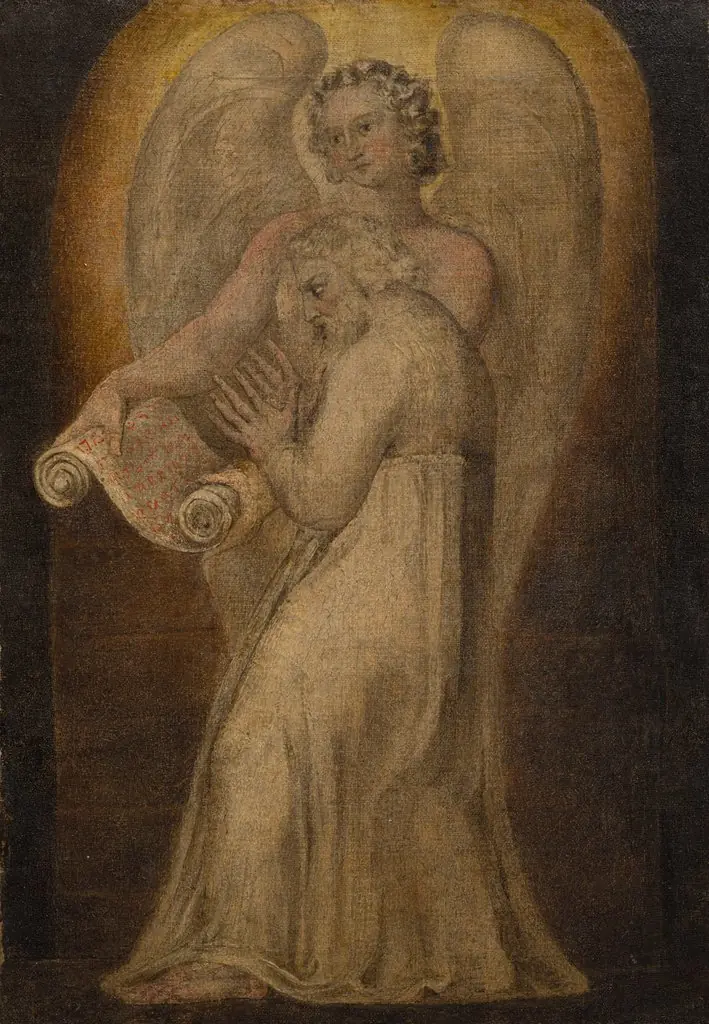
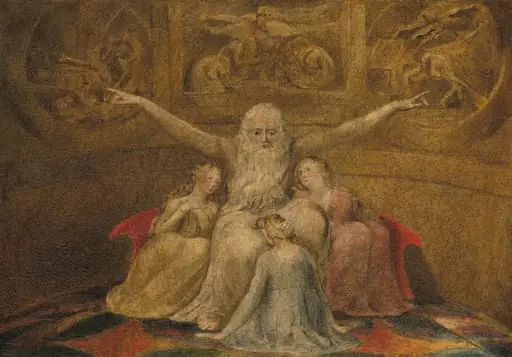
- An Allegory of the Spiritual Condition of Man
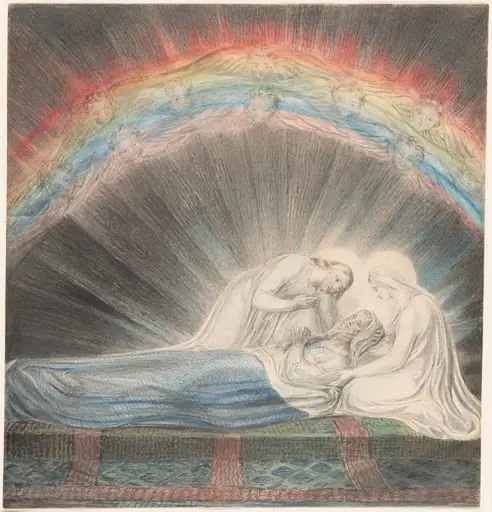 The Death of Saint Joseph
 Coronation of the Virgin
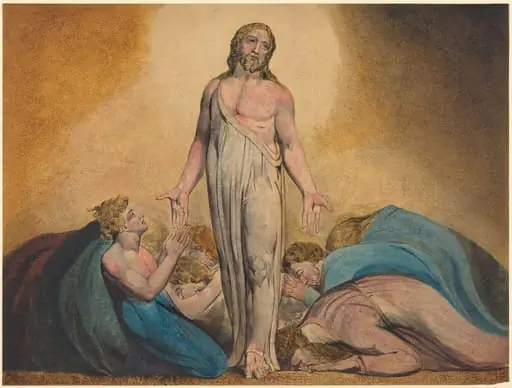 Christ Appearing to His Disciples After the Resurrection
 Himmelfahrt Christi
 Väinämöisen soitto, luonnos
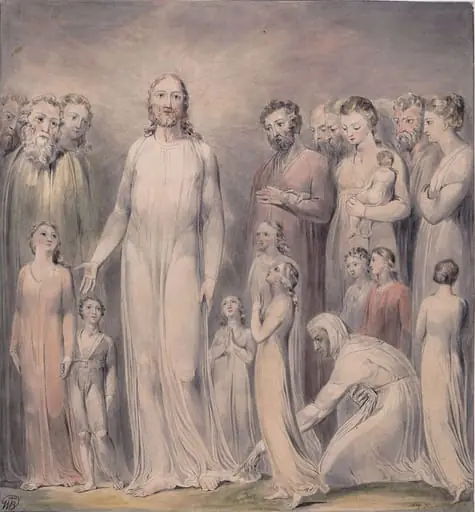 The healing of the woman with an issue of blood
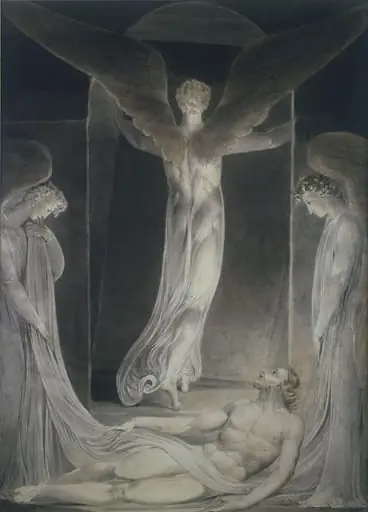 The Resurrection: The angel rolling away the stone from the sepulchre
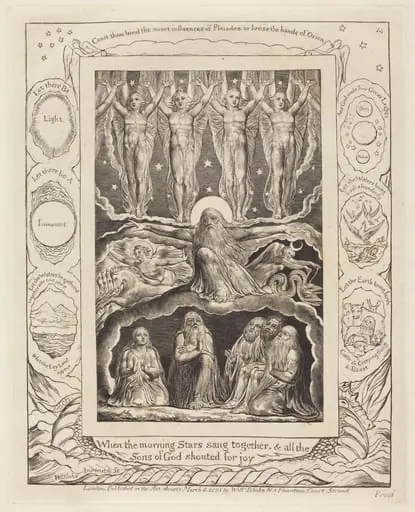 The Creation
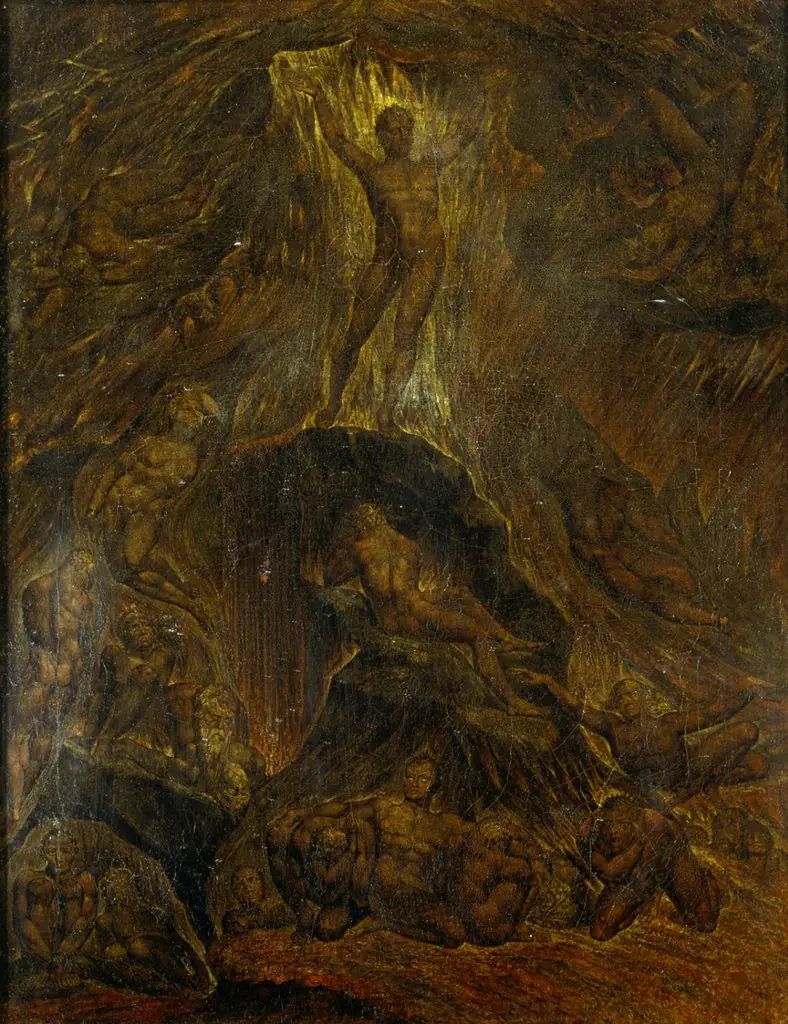 Satan calling up his legions
 Poem of the Soul - The golden stairs
 The Triumph of Christ