Artwork
Calvert Jones Seated in the Sacristy of Lacock Abbey
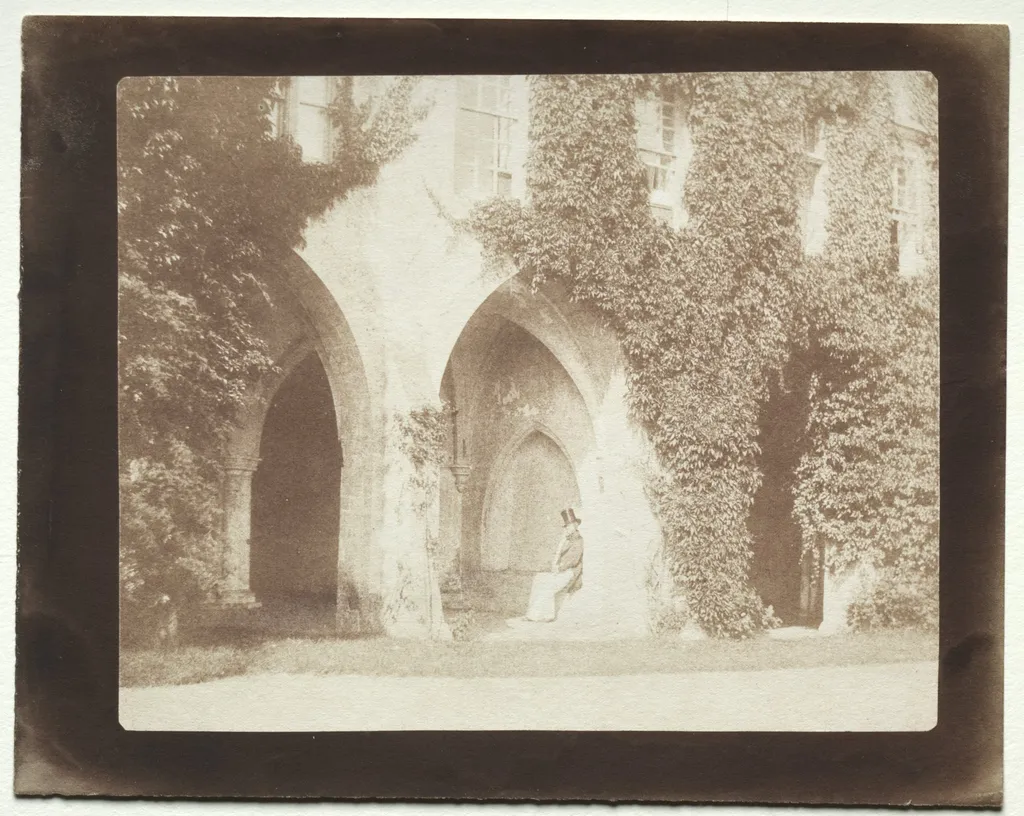
Calvert Jones Seated in the Sacristy of Lacock Abbey is a photography by the Romanticist artist William Henry Fox Talbot. It dates from 1845 and is held in the collection of the Cleveland Museum of Art.
- Accession no.
- 1987.177
- Credit line
- Gift of Mr. and Mrs. Thomas A. Mann
About this work
Overview
As a calotype, the image exhibits the characteristic soft focus and textured grain associated with the paper negative process Talbot invented.
Calvert Jones Seated in the Sacristy of Lacock Abbey is a salted paper print created by William Henry Fox Talbot in 1845. The photograph depicts the artist's friend and fellow photographer, Calvert Richard Jones, seated centrally on a wooden chair within the stone sacristy of Lacock Abbey, Talbot's family home in Wiltshire. Jones is dressed in a dark coat and hat, positioned against the backdrop of the room's distinctive Gothic architecture, which includes arched stonework and a large window that admits natural light.
The composition utilizes the architectural lines of the sacristy to frame the subject, demonstrating Talbot's interest in capturing the interplay of light and shadow within interior spaces. As a calotype, the image exhibits the characteristic soft focus and textured grain associated with the paper negative process Talbot invented. This work is significant within Talbot's oeuvre as it documents the domestic and intellectual circle surrounding his photographic experiments at Lacock Abbey during the mid-1840s.
It serves as an early example of portraiture integrated into an architectural setting, highlighting the medium's capacity to record both the sitter and their environment with a degree of permanence previously unattainable.
Subject & Meaning
The central figure, a man in a hat and long coat, appears relaxed, his posture suggesting quiet contemplation amid the surrounding architecture and foliage. The composition balances the human presence with the tranquil garden‑like setting, inviting a reflective mood.
Technique & Style
Captured using Talbot’s early photographic processes, the picture exhibits the characteristic sepia tonality of mid‑19th‑century paper negatives. The soft focus and tonal gradations reflect the Romantic aesthetic, emphasizing atmosphere over precise detail.
History & Provenance
Created during Talbot’s productive period at Lacock, the photograph later entered the Cleveland Museum of Art’s holdings, where it remains part of the institution’s early photography collection.
Context
The work aligns with Romanticism’s preoccupation with nature and emotion, employing a historic architectural backdrop to evoke a sense of the sublime within an everyday scene.
Artist & collection

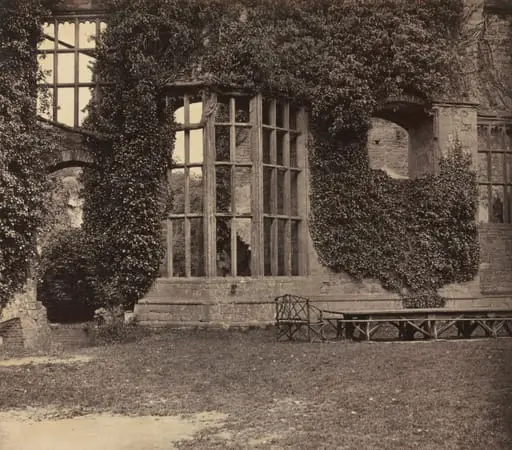 At Raglan Castle
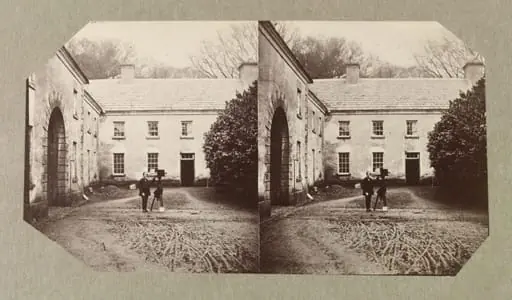 West Wing of Dundrum House with unidentified man with camera on tripod
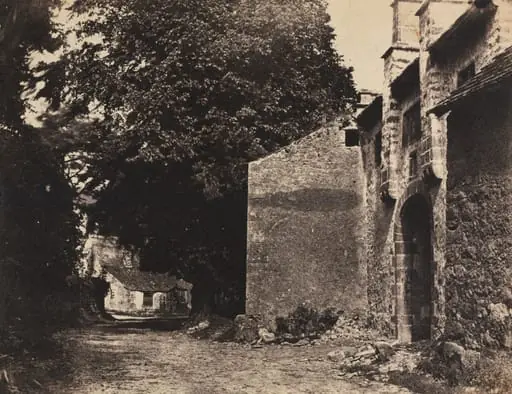 Gateway to Borwick Hall, Lancashire
 View of the grounds of the South Kensington Museum, 1891
 Orangery and Flower Garden at Singleton, Glamorganshire
 Rural Scene with Stone Building and Cross
 Canterbury
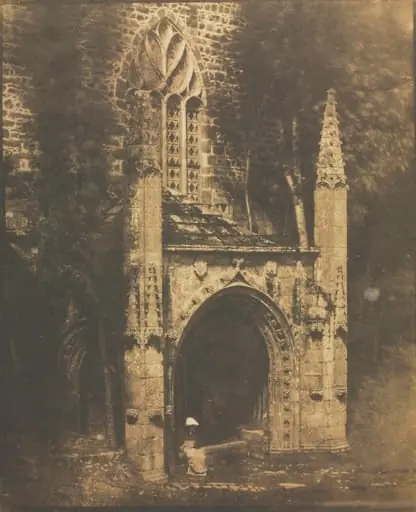 Fountain of Notre-Dame at Saint-Brieuc, Brittany
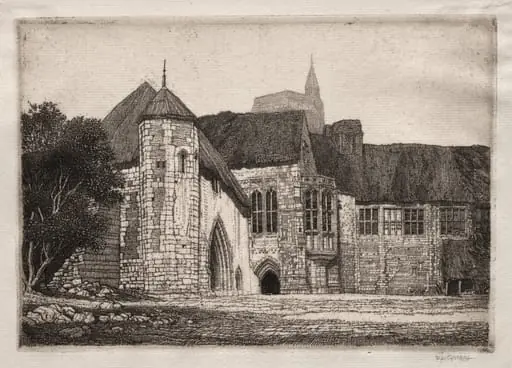 Palace Farm
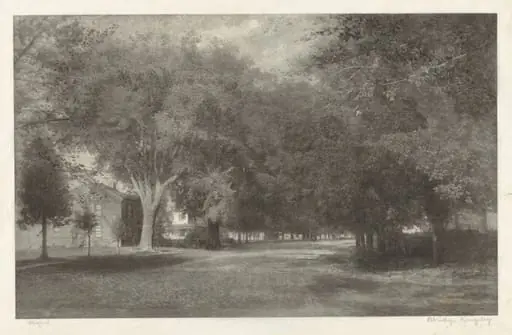 New England Elms
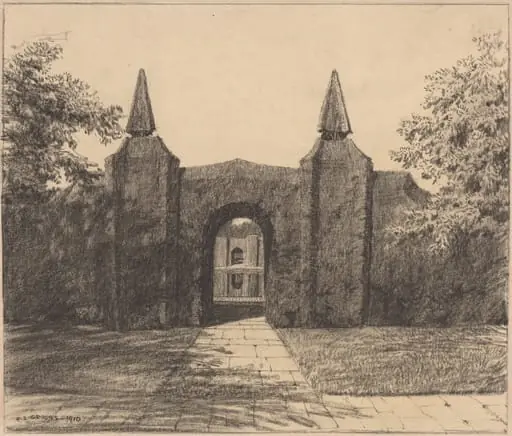 Topiary Archway