Artwork
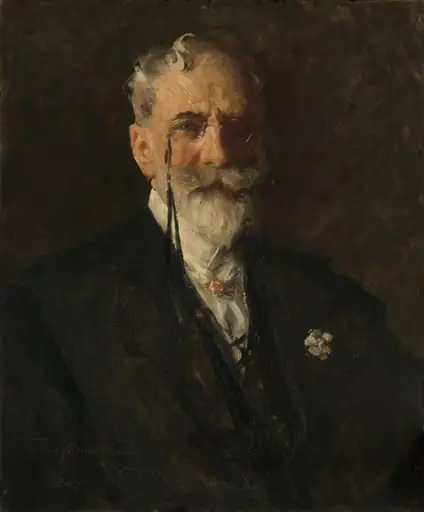
Edward Guthrie Kennedy
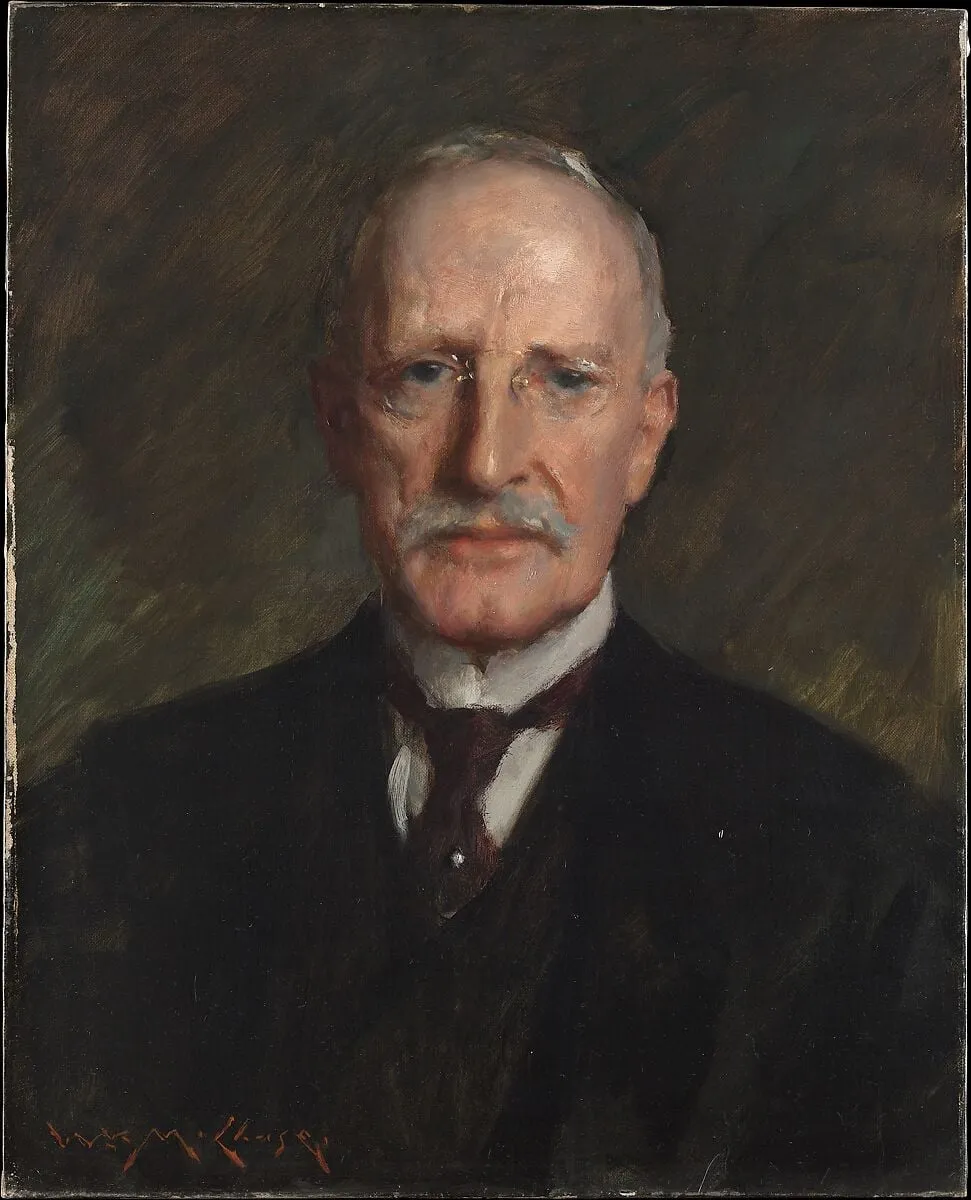
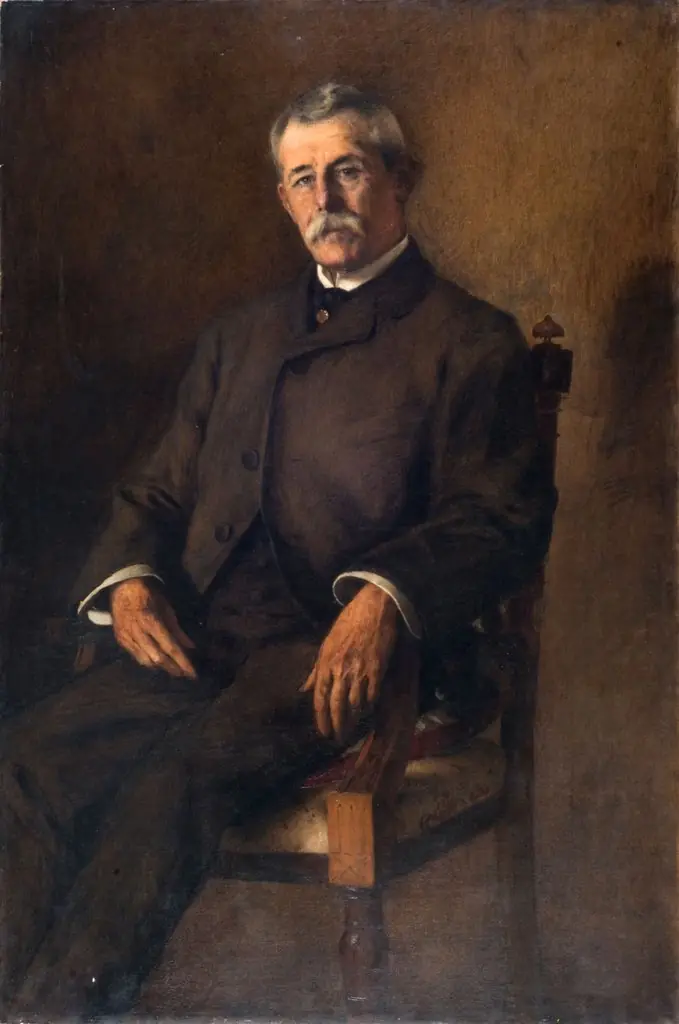
Edward Guthrie Kennedy is an oil painting by the Academic Art artist William Merritt Chase. It dates from 1895 and is held in the collection of the Metropolitan Museum of Art.
- Accession no.
- 1973.342
- Credit line
- Gift of Margaret and Raymond J. Horowitz, 1973
About this work
Technique & Style
Edward Guthrie Kennedy is rendered in oil paint on a canvas support, a medium consistently noted for the work.
Edward Guthrie Kennedy is rendered in oil paint on a canvas support, a medium consistently noted for the work. The painting exemplifies William Merritt Chase's synthesis of academic art training with American Impressionist sensibilities, evident in its controlled brushwork, balanced composition, and subtle modulation of light and form. The canvas provides a smooth ground that allows for both detailed modeling of the sitter's features and looser, atmospheric handling in the background, reflecting Chase's adept technique in portraiture during the mid-1890s.
History & Provenance
William Merritt Chase executed this oil-on-canvas portrait of Edward Guthrie Kennedy in 1895. The work, measuring 55.9 by 45.4 centimeters, depicts Kennedy as its primary subject within the academic art and American Impressionist movements. While the specific circumstances regarding the commission or the initial ownership chain are not detailed in the available records, the painting is currently held in the collection of the Metropolitan Museum of Art, where it is classified under The American Wing.
The piece serves as a formal representation of the man, solidifying his likeness through Chase's distinctive brushwork during the late nineteenth century.
Overview
William Merritt Chase's 1895 oil on canvas, Edward Guthrie Kennedy, is a formal portrait of the artist's friend and fellow painter. The subject is depicted seated in a dark, upholstered armchair, facing the viewer directly with a composed and serious expression. He wears a black suit with a white shirt and dark tie, adhering to late 19th-century formal dress codes.
Chase employs his characteristic loose, confident brushwork to render the textures of the fabric and the subtle modeling of the face, balancing academic precision with the spontaneity of American Impressionism. The background is a dark, neutral tone that isolates the figure, drawing attention to the sitter's posture and gaze. Created during Chase's mature period when he was a leading figure in the American art world, the work reflects his interest in capturing the character of his peers through intimate, studio-based portraiture.
The painting exemplifies Chase's ability to merge technical virtuosity with psychological depth, establishing the sitter not merely as a subject but as a distinguished individual within the artist's social and professional circle.
Subject & Meaning
Edward Guthrie Kennedy, the subject of this painting, was a personal acquaintance of the artist. This relationship may have contributed to the relaxed quality of his pose, allowing for a more informal portrayal than typically found in formal portraiture. Kennedy's direct eye contact with the viewer establishes an immediate connection, suggesting an attempt to convey his personality and presence through the canvas.
Artist & collection
Artist
William Merritt Chase (November 1, 1849 – October 25, 1916) was an American painter, known as an exponent of Impressionism and as a teacher.

- Edward R. Bacon (1846–1915)
 Thomas B. Clarke
 Portrait of Sir Hugh Lane (1865-1915), Director of the National Gallery of Ireland 1914-1915
 Vanha herra
 Sir Charles Walston
 Portrait of an old man
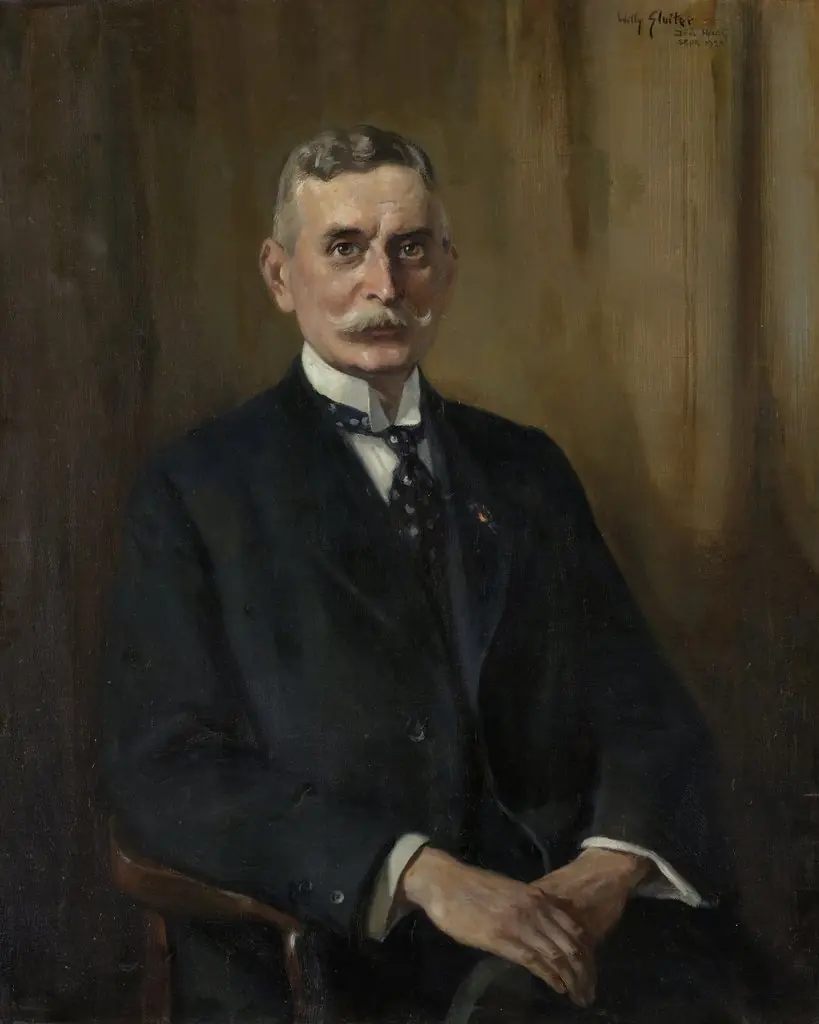 Jacob Christiaan Koningsberger (1867-1951). Chairman of the People's Council (1918-19)
 Jacob Christiaan Koningsberger (1867-1951). Chairman of the People's Council (1918-19)
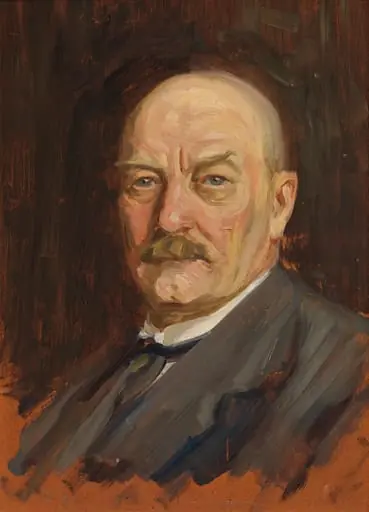 Omakuva
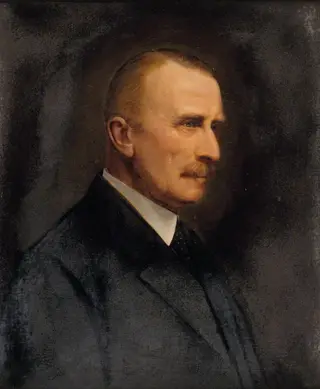 Sir George Bevan Bowen (1858–1938), of Llwyngwair
 Portrait of Mr. Sívori
 Parchedig David Edwardes (1836–1916), MA