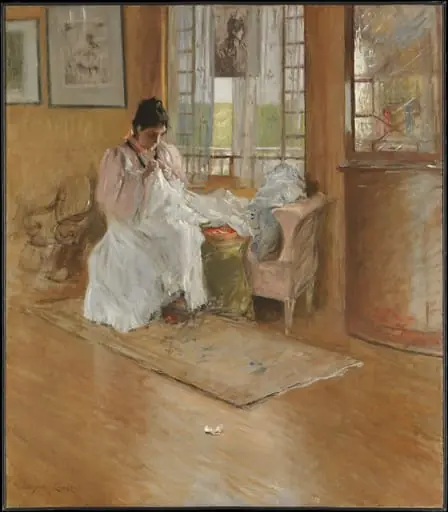
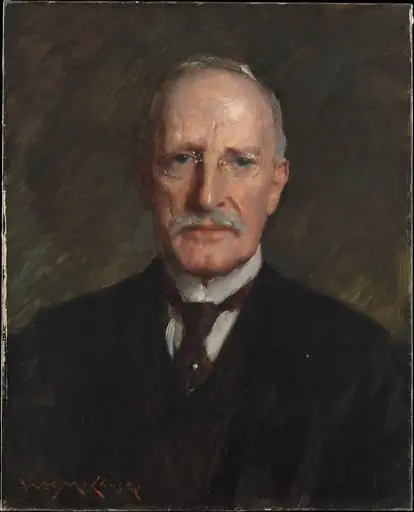
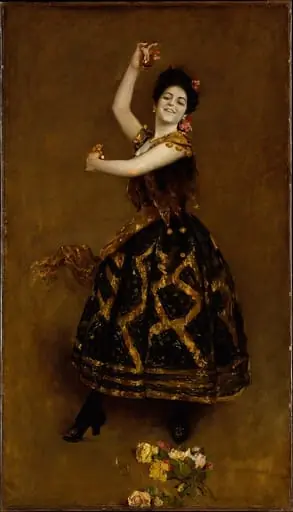
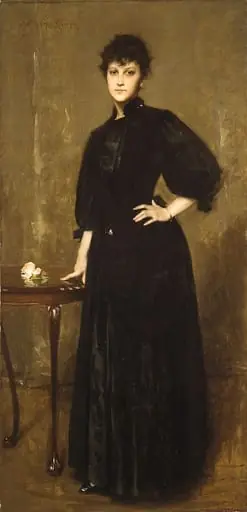
Artwork
At the Seaside
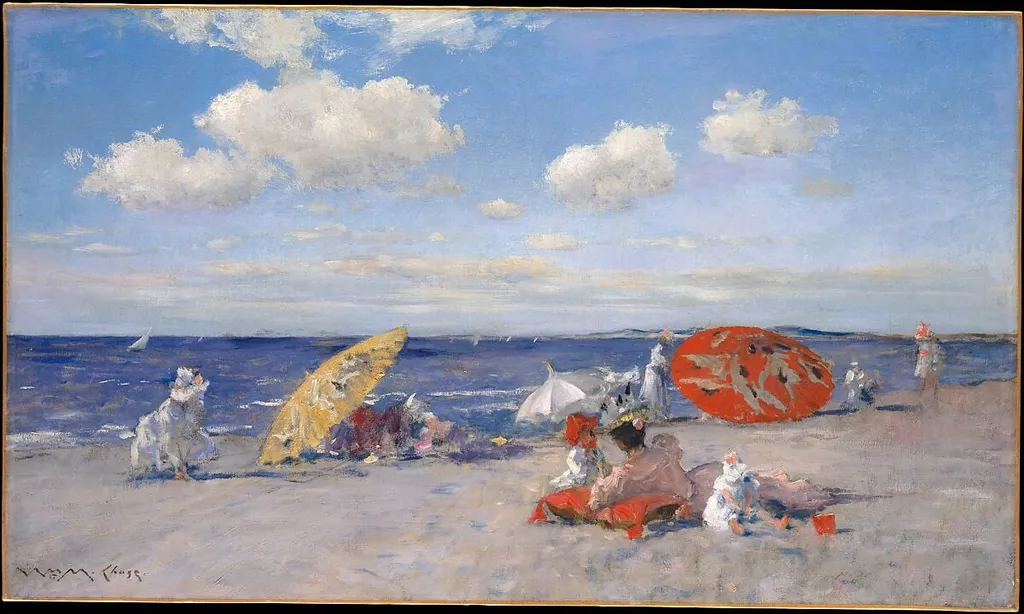
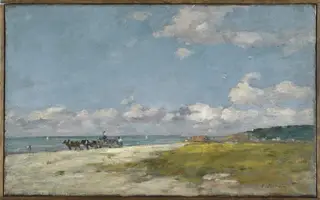
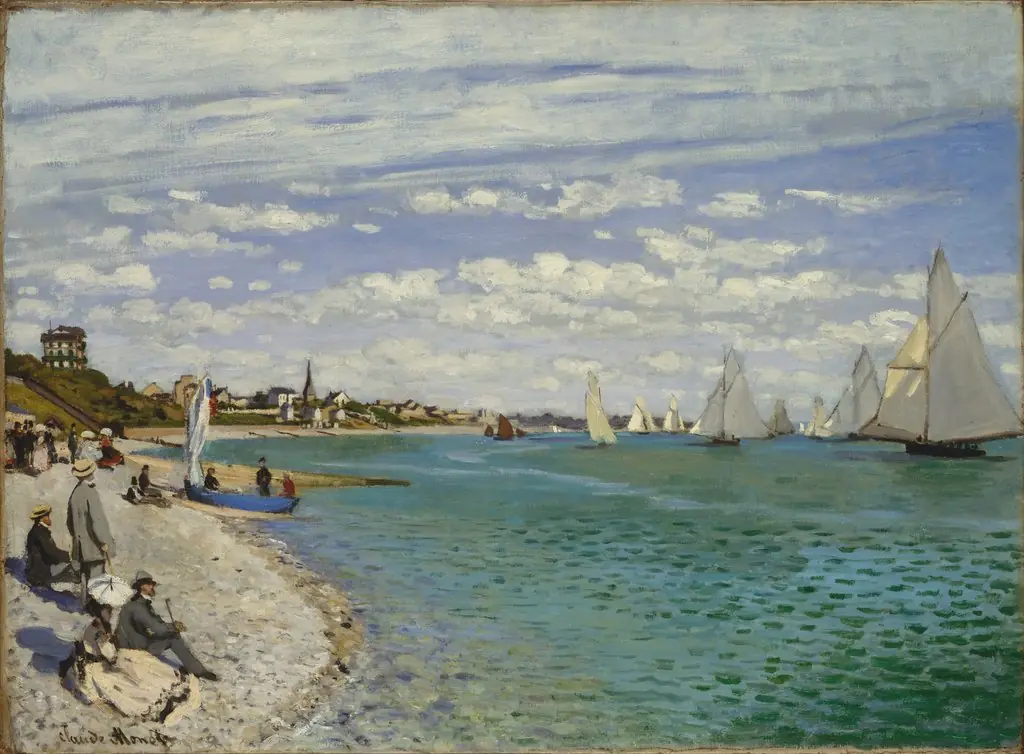
At the Seaside is an oil painting by the American Impressionist artist William Merritt Chase. It dates from 1892 and is held in the collection of the Metropolitan Museum of Art.
About this work
Subject & Meaning
The work is identified as an example of American Impressionism, capturing a specific coastal environment on Long Island, New York.
William Merritt Chase's At the Seaside presents a marine landscape featuring a human figure situated on a beach. The work is identified as an example of American Impressionism, capturing a specific coastal environment on Long Island, New York. While the painting visually documents a leisure scene typical of late nineteenth-century seaside recreation, the available records do not elaborate on specific symbolic attributes or deeper allegorical meanings beyond its classification as a genre landscape.
The composition focuses on the interplay between the natural marine setting and the solitary figure, emphasizing the atmosphere of the location rather than a complex narrative or iconographic program.
Technique & Style
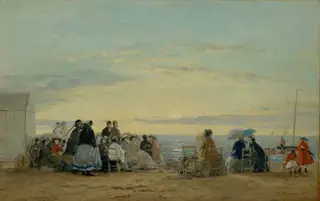
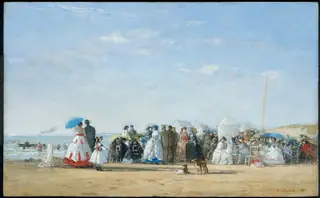
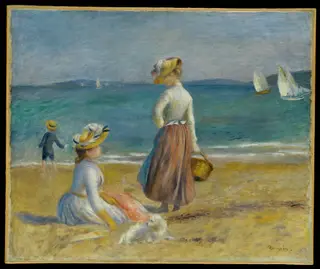
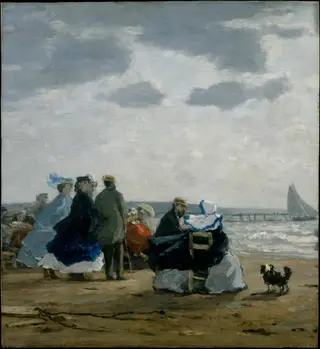
The painting is executed in oil on canvas, a support typical of Chase's late-19th-century practice. Its surface demonstrates the loose, atmospheric brushwork associated with American Impressionism, capturing the fleeting effects of sunlight on sand and sea. The composition balances a solitary figure with expansive shoreline, emphasizing spatial depth through layered tonal shifts.
Chromatic modulation and rapid handling convey a sense of immediacy, while the overall formal arrangement reflects the genre of landscape within the American Wing's collection. The work measures 50.8 × 86.4 cm and dates to 1890–1892.
History & Provenance
William Merritt Chase created At the Seaside as an oil on canvas around 1890–1892, a period when he was exploring marine subjects within the American Impressionist movement. The painting portrays a beach scene on Long Island, New York, featuring a human figure amidst marine motifs. It later entered the collection of the Metropolitan Museum of Art, where it is shown in The American Wing.
The work's provenance traces from the artist's studio to its acquisition by the museum, establishing a clear ownership chain from creator to present custodian.
Context
At the Seaside (c. 1890–1892) is an oil on canvas landscape by William Merritt Chase that exemplifies American Impressionism. The work, housed in the Metropolitan Museum of Art's American Wing, depicts a beach scene with a human figure on Long Island and reflects Chase's interest in contemporary leisure activities. Scholars view the painting as a key example of Chase's adaptation of European plein-air techniques to American subjects, situating it within the broader narrative of late-19th-century American art.
Its classification as a landscape and inclusion in the American Wing underscore its significance in the historiography of American Impressionist painting.
Overview
William Merritt Chase's At the Seaside, an oil on canvas from approximately 1892, captures a tranquil moment on a Long Island beach. This painting is held in the collection of the Metropolitan Museum of Art, where it represents a significant example of American art from the late 19th century. It depicts figures enjoying a sunlit coastal landscape.
Artist & collection
Artist
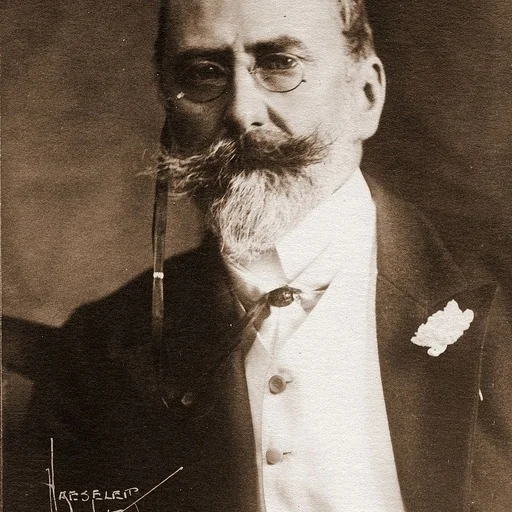
William Merritt Chase (November 1, 1849 – October 25, 1916) was an American painter, known as an exponent of Impressionism and as a teacher.