Artwork
James Abbott McNeill Whistler
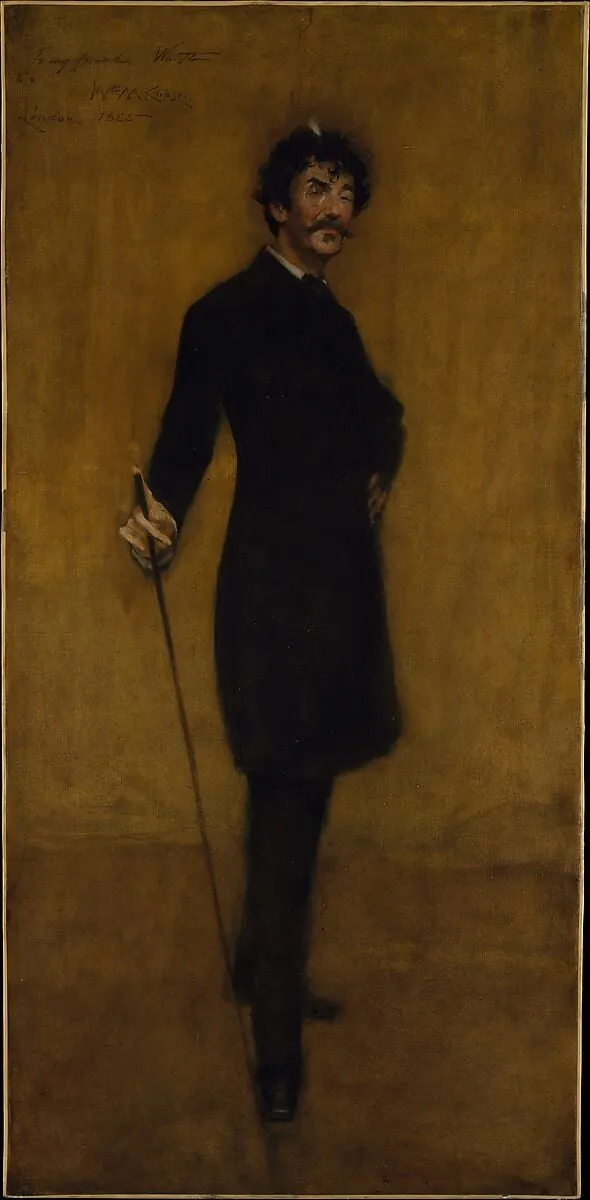
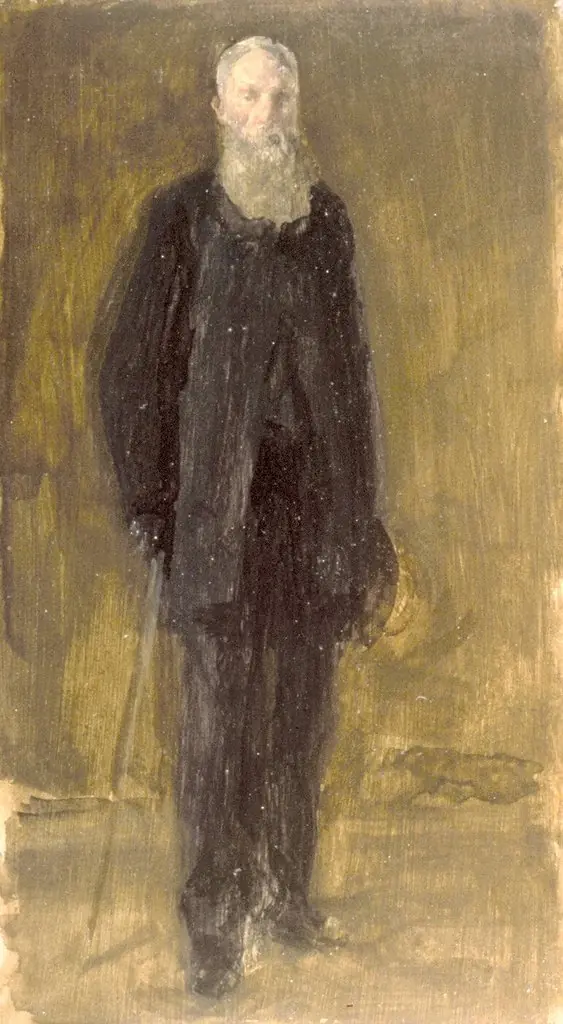
James Abbott McNeill Whistler is an oil painting by the American Impressionist artist William Merritt Chase. It dates from 1885 and is held in the collection of the Metropolitan Museum of Art.
About this work
Subject & Meaning
The work primarily serves as a likeness of Whistler, emphasizing his status as a prominent artist rather than embedding overt symbolic narratives.
William Merritt Chase's 1885 portrait depicts James Abbott McNeill Whistler as a composed, introspective figure, aligning with the conventions of late 19th-century portraiture. The work primarily serves as a likeness of Whistler, emphasizing his status as a prominent artist rather than embedding overt symbolic narratives. The restrained palette and direct gaze convey professional dignity, while the subdued background ensures focus on Whistler's visage.
As a portrait, the painting represents not only the physical appearance of the subject but also his cultural significance within the American and international art worlds.
History & Provenance
The portrait of James Abbott McNeill Whistler by William Merritt Chase was created in 1885. Executed in oil on canvas, the work measures 188.3 cm in height and 92.1 cm in width. Classified within the American Impressionism movement, the painting currently resides in the collection of the Metropolitan Museum of Art's American Wing.
No specific details regarding the original commission or the ownership chain prior to museum acquisition are provided in the available records.
Overview
Painted in 1885, William Merritt Chase's portrait of James Abbott McNeill Whistler captures the American Impressionist's contemporary and fellow artist in a moment of relaxed introspection. The composition features Whistler seated in a dark suit, leaning back with one hand casually tucked into his pocket. Chase employs a dramatic chiaroscuro effect, illuminating only half of Whistler's face while the other recedes into shadow, suggesting a single light source within a dim interior.
The brushwork is loose and fluid, characteristic of Chase's mature style and his admiration for the Spanish masters, particularly Velázquez, whose influence is evident in the economical yet expressive handling of the dark fabrics and the sitter's confident posture. This work stands as a significant dialogue between two leading figures of the American art scene, reflecting their mutual respect and shared aesthetic values regarding simplicity and tonal harmony. Created during a period when Chase was establishing his reputation as a premier portraitist in New York, the painting demonstrates his ability to convey psychological depth through atmospheric lighting and confident, visible strokes rather than meticulous detail.
Technique & Style
Chase employed a fluid and rapid brushwork, giving the portrait an immediate, almost unfinished quality reminiscent of a preliminary sketch. Despite this apparent spontaneity, the artist meticulously controlled the interplay of light and shadow across Whistler's face. This dramatic contrast, a technique known as chiaroscuro, emphasizes the contours of the subject's features while also contributing to the work's overall sense of atmosphere and psychological depth.
Context
This portrait offers insight into the artistic circles of the late 19th century, depicting one prominent American artist by another. William Merritt Chase, known for his own virtuosic painting style, chose to portray Whistler, a figure who had significantly influenced the transatlantic art world with his innovative approaches to composition and color. The work thus serves as a dialogue between two important artistic personalities of their era.
Artist & collection
Artist
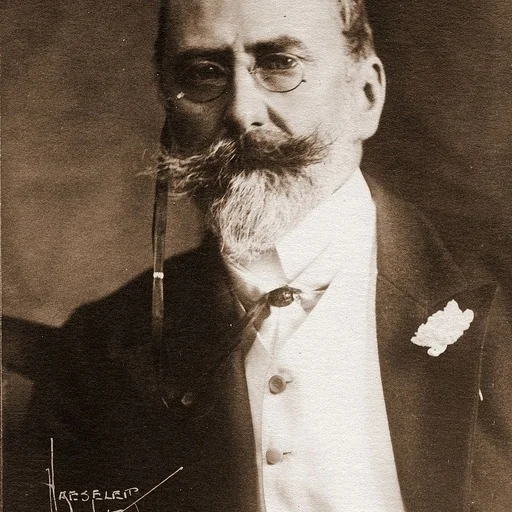
William Merritt Chase (November 1, 1849 – October 25, 1916) was an American painter, known as an exponent of Impressionism and as a teacher.

 James MacAlister (Sketch)
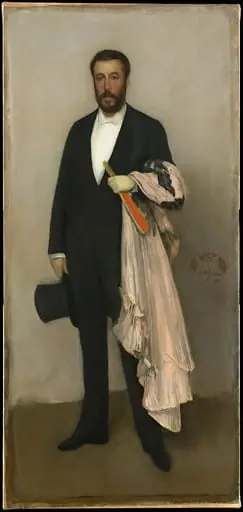 Arrangement in Flesh Colour and Black: Portrait of Theodore Duret
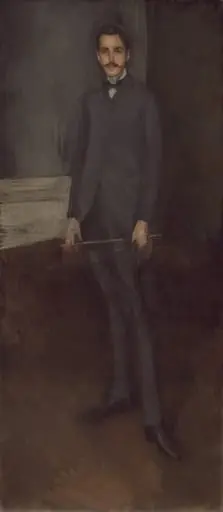 George W. Vanderbilt
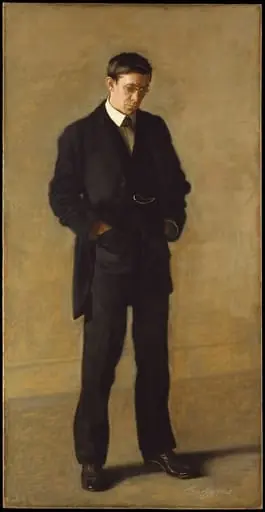 The Thinker: Portrait of Louis N. Kenton
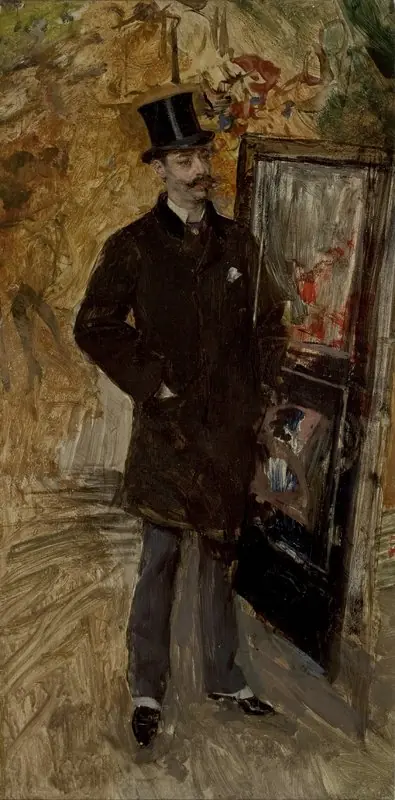 Retrato de homem com cartola: o poeta Hanvin, o homem do fígaro
 Young Woman in Black
 Edward Guthrie Kennedy
 Retrat de Joan Baptista Parés (1847-1926) (Museu Nacional d'Art de Catalunya, inv 010150-000)
 Edward VII as Prince of Wales
 Portrait of George A. Lucas