Artwork
Fish
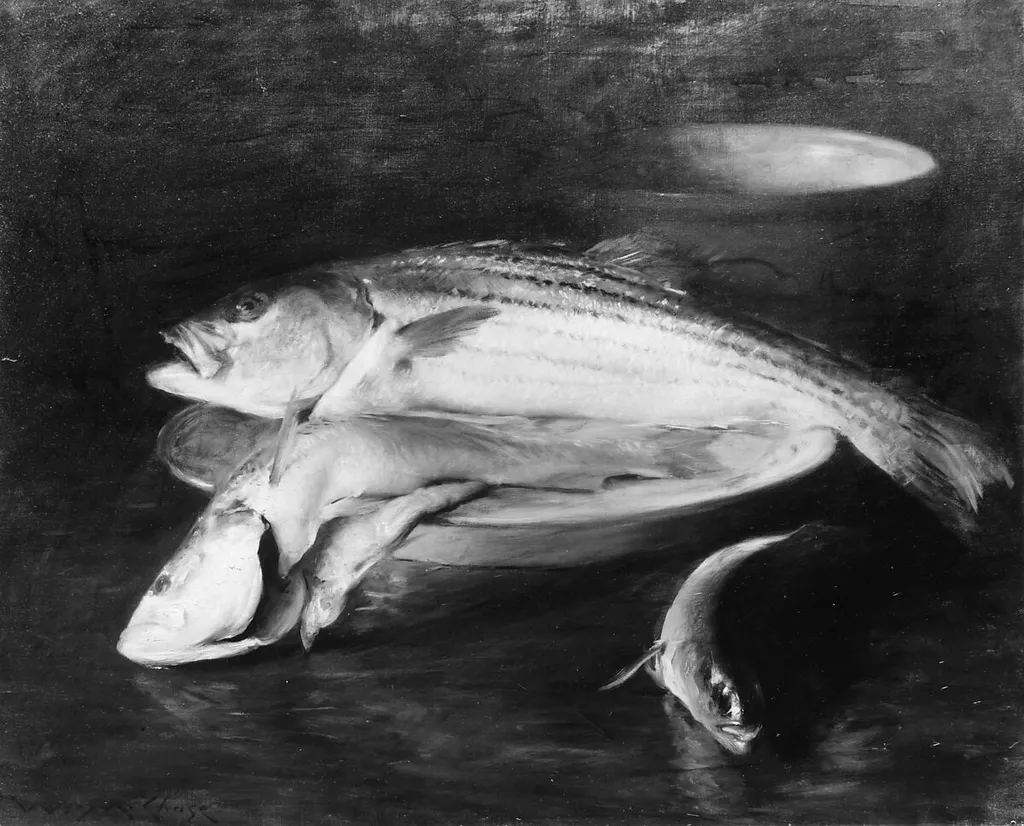
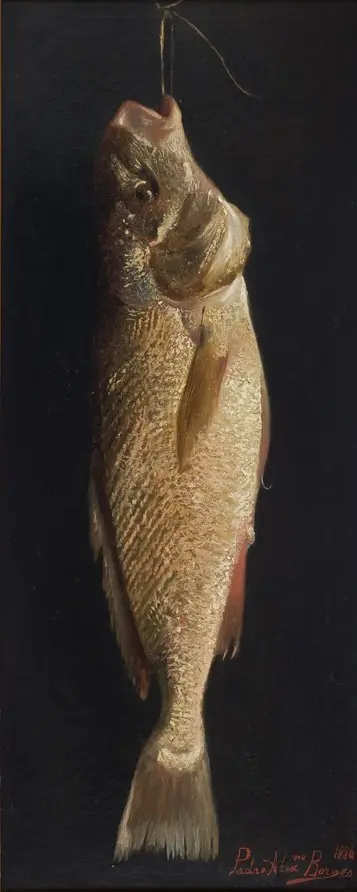
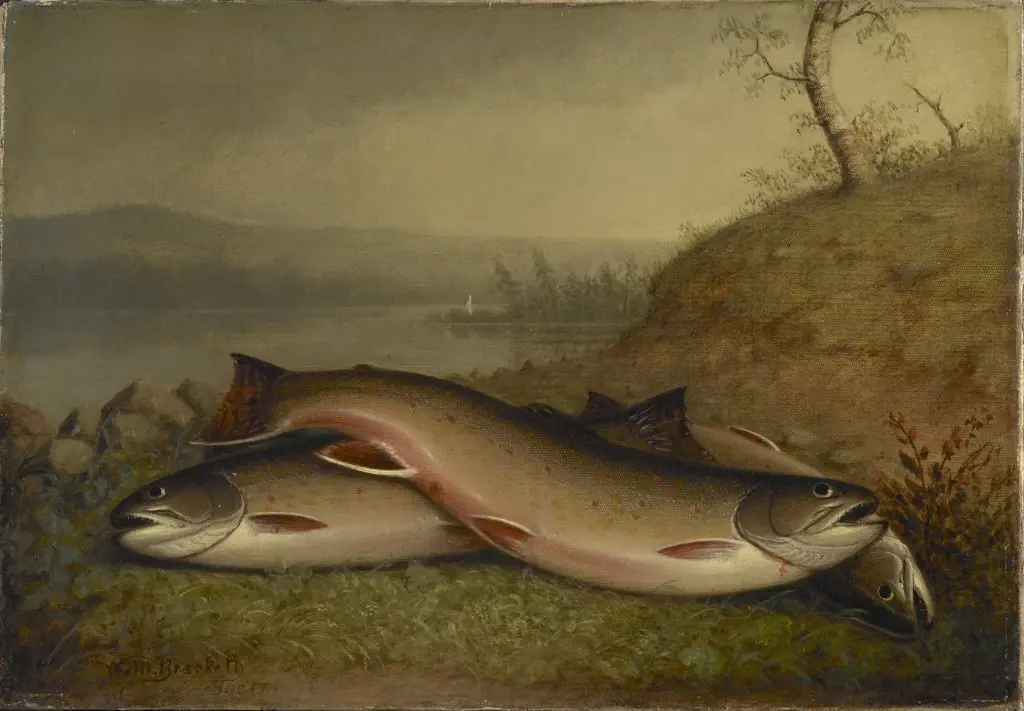
Fish is an oil painting by the American Impressionist artist William Merritt Chase. It dates from 1910 and is held in the collection of the Metropolitan Museum of Art.
About this work
Technique & Style
As a still life, the work employs the artist's characteristic handling of oil to render the textures and forms of fish within a domestic or market setting.
William Merritt Chase's Fish (1910) is executed in oil paint on a canvas support, measuring 73.7 cm in height and 91.4 cm in width. As a still life, the work employs the artist's characteristic handling of oil to render the textures and forms of fish within a domestic or market setting. The painting is classified within the American Wing collection, reflecting its status as a significant example of American Impressionist still life.
Chase's technique emphasizes the interplay of light and surface detail, a hallmark of his approach to the genre during this period. The canvas remains the primary structural medium, allowing for the fluid application of pigment that defines the composition's visual impact.
History & Provenance
William Merritt Chase executed the oil-on-canvas still life titled Fish in 1910. The work measures 73.7 by 91.4 centimeters. While specific details regarding the original commission or intermediate ownership transfers are not provided in the available records, the painting is currently held in the collection of the Metropolitan Museum of Art.
It is classified within the museum's American Wing, where it remains part of the institution's permanent holdings depicting marine subjects within the still-life genre.
Fish (1910) by William Merritt Chase is part of The American Wing collection at the Metropolitan Museum of Art in New York. The painting is catalogued as an oil on canvas still‑life (73.7 × 91.4 cm) and is recorded in the museum’s collection database, though no accession number is listed in the available documentation. The sources do not mention any exhibition history for this work, indicating that it has not been publicly exhibited or that such records have not been documented.
Context
William Merritt Chase completed Fish in 1910, an oil on canvas still‑life measuring 73.7 × 91.4 cm that portrays a solitary fish. The painting entered the collection of the Metropolitan Museum of Art, where it is displayed in the American Wing, situating it within the trajectory of American Impressionist still‑life production in the early twentieth century. Its formal qualities and subject matter reflect Chase’s interest in everyday objects and his role in elevating the still‑life genre to a vehicle for modernist experimentation.
Scholars have noted the work as an example of Chase’s synthesis of European influences with a distinctly American sensibility.
Overview
William Merritt Chase's Fish, an oil on canvas from 1910, presents a focused still life composition. This work exemplifies the artist's interest in domestic subjects, featuring a straightforward arrangement of fish within a bowl on a table. The painting showcases Chase's refined technique and his ability to imbue everyday objects with a sense of quiet observation, characteristic of his contributions to American art in the early 20th century.
Subject & Meaning
The artwork portrays a simple yet compelling still life: a collection of fish resting in a bowl. Chase frequently chose such unpretentious subjects, transforming them through his artistic lens. This particular arrangement evokes a feeling of calm and domesticity, a common thread in his oeuvre.
By concentrating on ordinary items, the artist encourages an appreciation for the subtle beauty found in daily life.
Artist & collection

Artist
William Merritt Chase (November 1, 1849 – October 25, 1916) was an American painter, known as an exponent of Impressionism and as a teacher.