Artwork
Woman Holding a Small Book
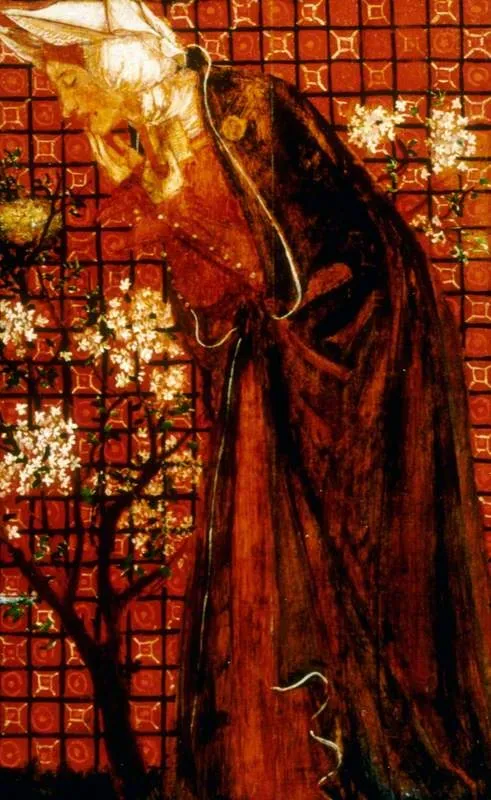
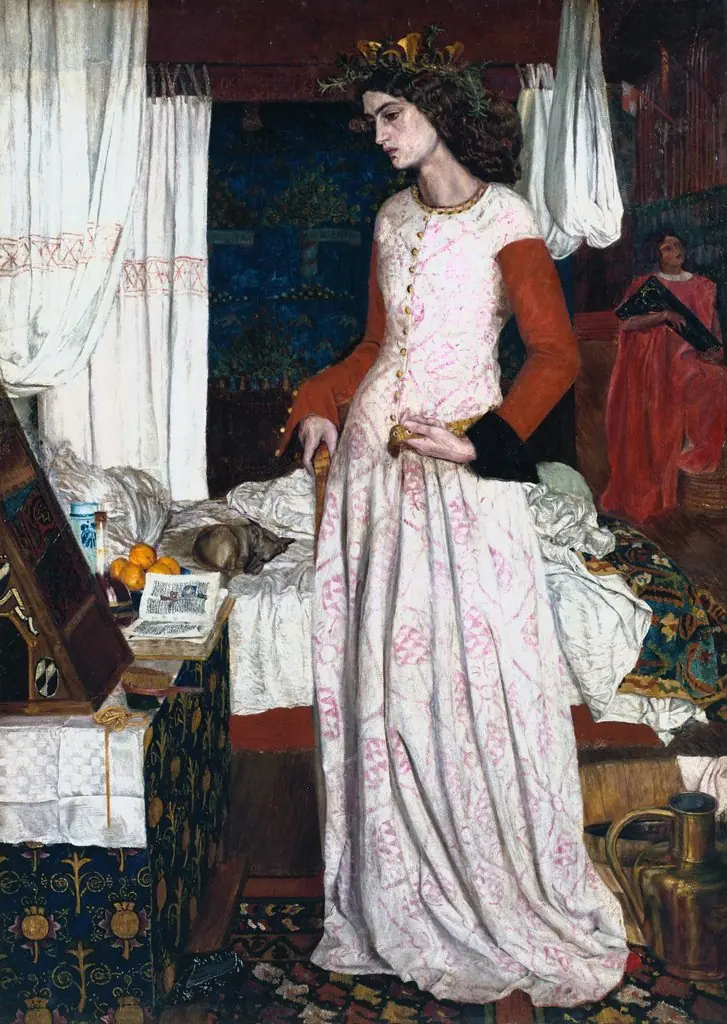
Woman Holding a Small Book is an oil painting by the Pre-Raphaelite artist William Morris. It dates from 1860 and is held in the collection of the Victoria and Albert Museum.
About this work
Overview
Painted in 1860, Woman Holding a Small Book is an oil on canvas work by William Morris, created during his early engagement with the Pre-Raphaelite circle.
Painted in 1860, Woman Holding a Small Book is an oil on canvas work by William Morris, created during his early engagement with the Pre-Raphaelite circle. Though better known for his design and political activism, Morris produced a small body of paintings that reflect his commitment to visual detail and emotional restraint. This piece exemplifies his interest in quiet, introspective subjects, rendered with deliberate simplicity and a muted palette despite the rich reds.
Subject & Meaning
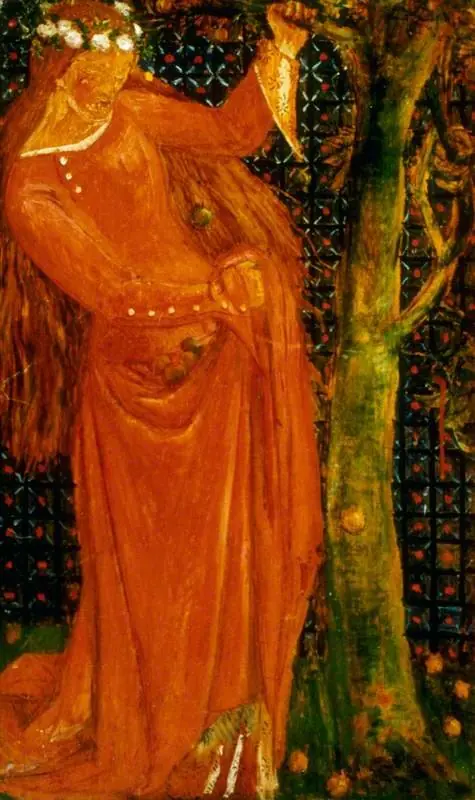
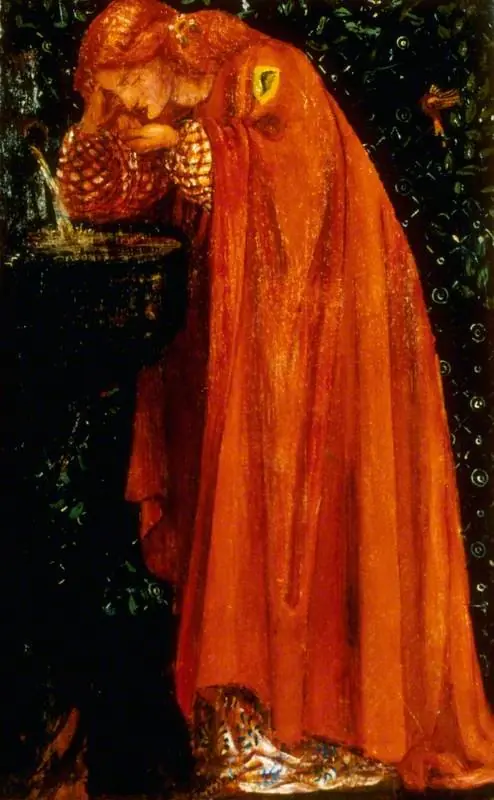
The figure is a solitary woman, cloaked in a deep red robe and hood, holding a small book with both hands. Her bowed head and still posture suggest private contemplation rather than public performance. The book, an ambiguous object, may symbolize spiritual reading, literary devotion, or personal reflection, themes favored by the Pre-Raphaelites for their moral and medieval associations. The absence of narrative context invites the viewer into a moment of inward focus.
Technique & Style
Morris employs flat, even planes of color and minimal modeling, avoiding the chiaroscuro common in academic painting. The background’s geometric pattern of red squares and yellow lines functions as a decorative frame, echoing textile designs he later developed. Brushwork is precise but unobtrusive, emphasizing surface texture over illusionistic depth. The woman’s features are softened, her expression neutral, reinforcing the painting’s meditative tone.
History & Provenance
Created in 1860, the painting remained in Morris’s possession until his death. It entered the collection of the Victoria and Albert Museum in 1896, following the dispersal of his personal effects. The museum’s acquisition aligns with its broader mission to document the Arts and Crafts movement, though this work predates Morris’s full transition into design. Its preservation reflects early institutional recognition of his artistic output beyond decorative arts.
Context
Morris painted this during a period when he was deeply involved with the Pre-Raphaelite Brotherhood’s ideals, though he never formally joined. His contemporaries, including Rossetti and Burne-Jones, similarly turned to literary and medieval subjects. The emphasis on quiet dignity, handcrafted aesthetics, and symbolic objects in this work anticipates the values he would later champion in the Arts and Crafts movement, linking visual art to ethical and social ideals.
Legacy
Though Morris’s legacy rests primarily on his textile designs and socialist writings, this painting offers insight into his early artistic sensibility. It reveals how his commitment to craftsmanship extended to painting, favoring sincerity over spectacle. The work remains a quiet testament to his belief in art as a vehicle for contemplation, influencing later generations who sought to integrate aesthetic integrity with everyday life.
Artist & collection

Artist
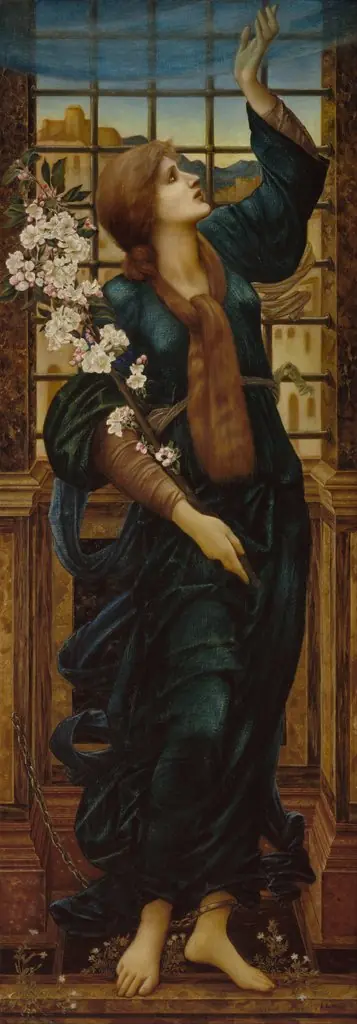
William Morris (24 March 1834 – 3 October 1896) was an English textile designer, poet, artist, writer, and socialist activist associated with the British Arts and Crafts movement.