Artwork
Hope
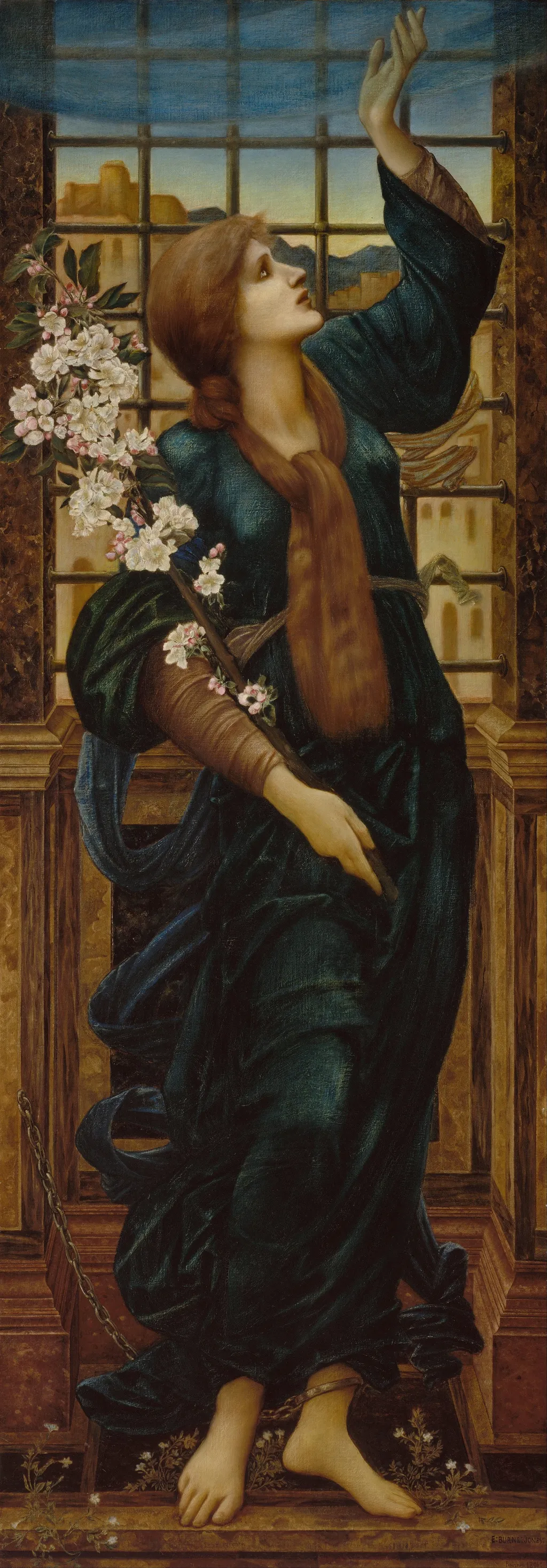
Hope is an oil painting by the Pre-Raphaelite artist Edward Burne-Jones. It dates from 1898 and is held in the collection of the Museum of Fine Arts Boston.
About this work
Overview
Originally commissioned as a dancing figure, the subject shifted to an allegorical representation of hope after Burne-Jones proposed a more somber theme.
Painted in 1896, Hope is an oil work by Edward Burne-Jones, created as a response to personal grief following the death of William Morris. Originally commissioned as a dancing figure, the subject shifted to an allegorical representation of hope after Burne-Jones proposed a more somber theme. The painting draws from an earlier watercolor, itself rooted in stained glass designs from the 1870s, reflecting a sustained engagement with the virtue as a visual motif.
Subject & Meaning
The figure of Hope is depicted as a bound woman, her ankle chained, yet reaching upward through a tall window toward an open sky. In one hand she cradles a sprig of apple blossom, a traditional symbol of renewal. Her posture and gaze convey quiet endurance rather than despair.
The barred window frames a distant cityscape, suggesting the tension between confinement and transcendence, grounded in Renaissance allegorical traditions.
Technique & Style
Burne-Jones employs soft, diffused lighting that emanates from the window, casting gentle shadows across the figure’s face and flowing blue drapery. The brushwork is delicate, emphasizing texture in fabric and hair without sharp definition. The luminous quality of the figure, set against the muted urban backdrop, creates an ethereal atmosphere.
This use of light and form reflects his affinity for medieval and early Renaissance aesthetics, prioritizing mood over narrative clarity.
History & Provenance
The painting was commissioned by Mrs. George Marston Whitin of Massachusetts, who accepted Burne-Jones’s revised concept. After her death, her daughters donated the work to the Museum of Fine Arts, Boston, in her memory. The image’s origins trace back to a 1871 watercolor, which itself derived from stained glass cartoons for Morris, Marshall, Faulknor and Company, linking the painting to a broader decorative project spanning multiple media and locations.
Context
Hope emerged from a series of stained glass designs for Christian virtues, originally intended for churches including Christ Church Cathedral, Oxford, and others in Norfolk and Cumbria. These designs were part of the Arts and Crafts movement’s revival of symbolic religious imagery. Burne-Jones’s shift from glass to oil reflects a personal re-engagement with the theme during a period of mourning, transforming a public commission into a private meditation on resilience.
Legacy
The painting endures as a quiet testament to Burne-Jones’s ability to translate spiritual themes into intimate, contemplative forms. While not widely exhibited during his lifetime, its presence in a major American collection has ensured its continued study. It stands as a bridge between his stained glass work and later easel paintings, illustrating how personal loss shaped his symbolic language without altering its enduring grace.
Artist & collection
Artist
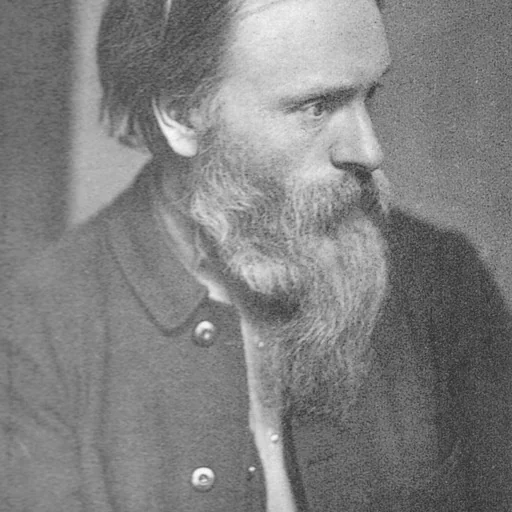
Sir Edward Coley Burne-Jones, 1st Baronet (; 28 August 1833 – 17 June 1898) was an English painter and designer associated with the Pre-Raphaelite Brotherhood's style and subject matter.


 Compared in the Pre-Raphaelites course