Artwork
Crickhowell
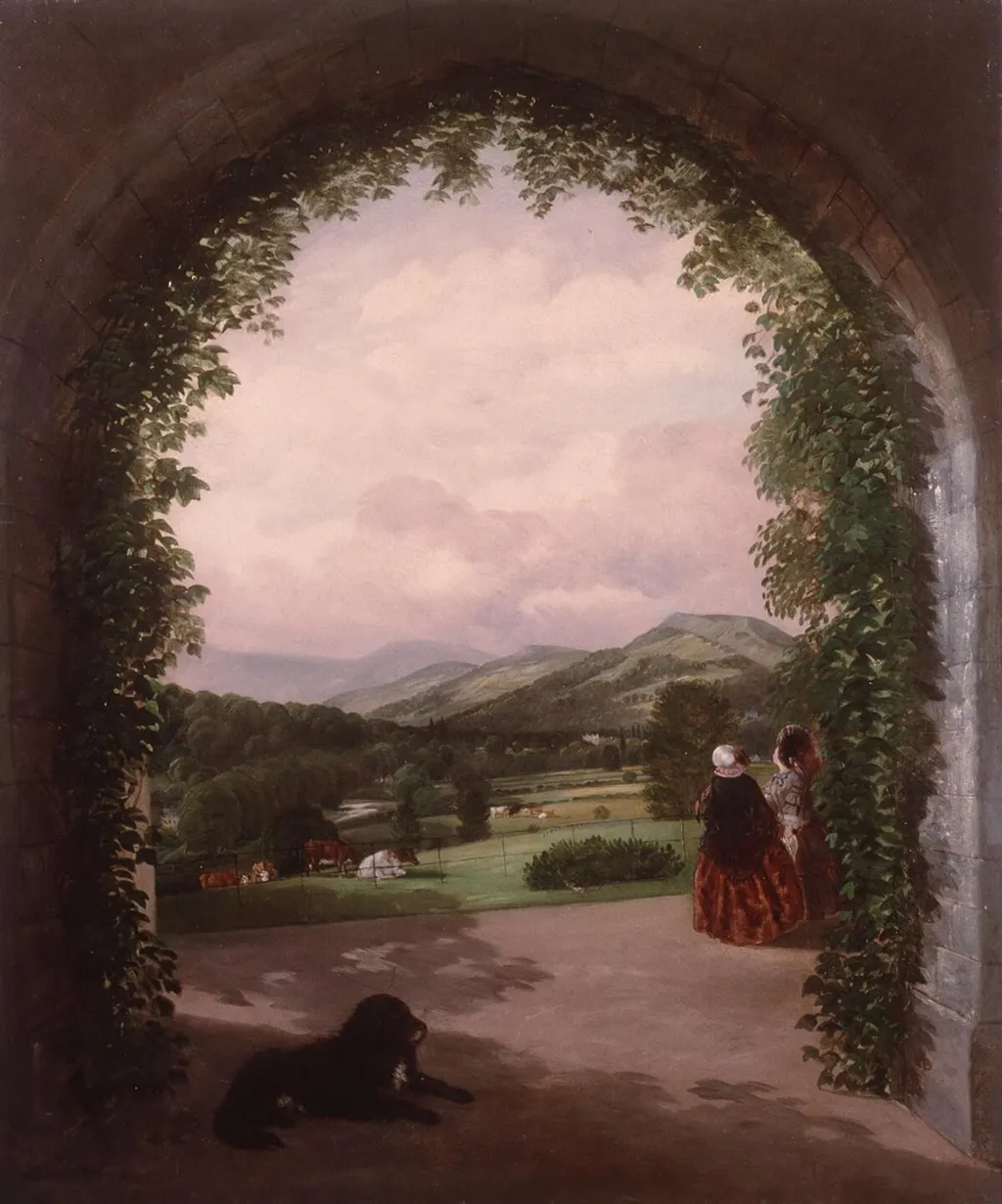
Crickhowell is an oil painting by the British Romanticist artist William Richard B. Shaw. It dates from 1858 and is held in the collection of the National Library of Wales. William Richard B.
About this work
Overview
The painting depicts the Welsh town of Crickhowell, framing its rural scenery through a ruined architectural structure.
Crickhowell is an oil on canvas landscape painting by William Richard B. Shaw, completed in 1858. Measuring 76 by 63 centimeters, the work is part of the National Library of Wales Framed Works of Art collection, where it is held under accession number PG01359. The painting depicts the Welsh town of Crickhowell, framing its rural scenery through a ruined architectural structure. It represents a nineteenth-century interpretation of the Welsh landscape, capturing the region's appeal during a period when such scenery drew visitors interested in its picturesque qualities.
Subject & Meaning
The composition uses a dark stone archway as a frame, looking outward onto a sunlit valley. Two women stand at the right edge of the arch, gazing at the landscape. One wears a white bonnet and dark shawl over a rust-colored skirt, while the other is dressed in a patterned dress with a shawl. A black dog with white markings lies in the shadowy foreground. Beyond the arch, a green valley unfolds with scattered trees, fenced fields with grazing cattle, and rolling hills that rise toward hazy mountains. The painting depicts Crickhowell as a serene, pastoral destination, emphasizing the picturesque nature of the Welsh countryside that attracted nineteenth-century visitors.
Technique & Style
Shaw employed oil paint on canvas to construct a scene defined by strong contrasts between interior shadow and exterior light. The palette relies on muted greens, browns, and soft blues, with the deep shadow of the ivy-covered arch setting off the bright, distant valley. Brushwork varies across the canvas, featuring careful, detailed handling in the foreground foliage and looser, broader strokes in the distant hills and sky. This technique directs the viewer's focus through the dark interior toward the illuminated landscape beyond.
History & Provenance
Created in 1858, the painting was purchased by the National Library of Wales at Sotheby's in 1989. The acquisition brought the work into a public collection dedicated to preserving Welsh cultural heritage. The painting is classified as a landscape and remains accessible through the National Library of Wales Framed Works of Art collection.
Context
William Richard B. Shaw, who lived from approximately 1813 to 1882 or 1883, produced this work during the height of the Romantic and Victorian fascination with the British landscape. The town of Crickhowell, situated near the River Usk, had long been recognized for its picturesque qualities, drawing visitors who sought out its historic bridge, ruined castle, and Tudor gatehouse. Shaw's painting aligns with this tourist and aesthetic interest, capturing the valley and its cattle rather than the town's post-medieval industrial economy based on flannel and weaving, which had waned in favor of the scenic appeal by the late 1700s.
Artist & collection
Artist
William Richard B. Shaw painted rolling Welsh landscapes just as photography was changing how artists worked. In 1858 he recorded Crickhowell’s stone bridge and hills in oil, and twenty years later he framed golden…

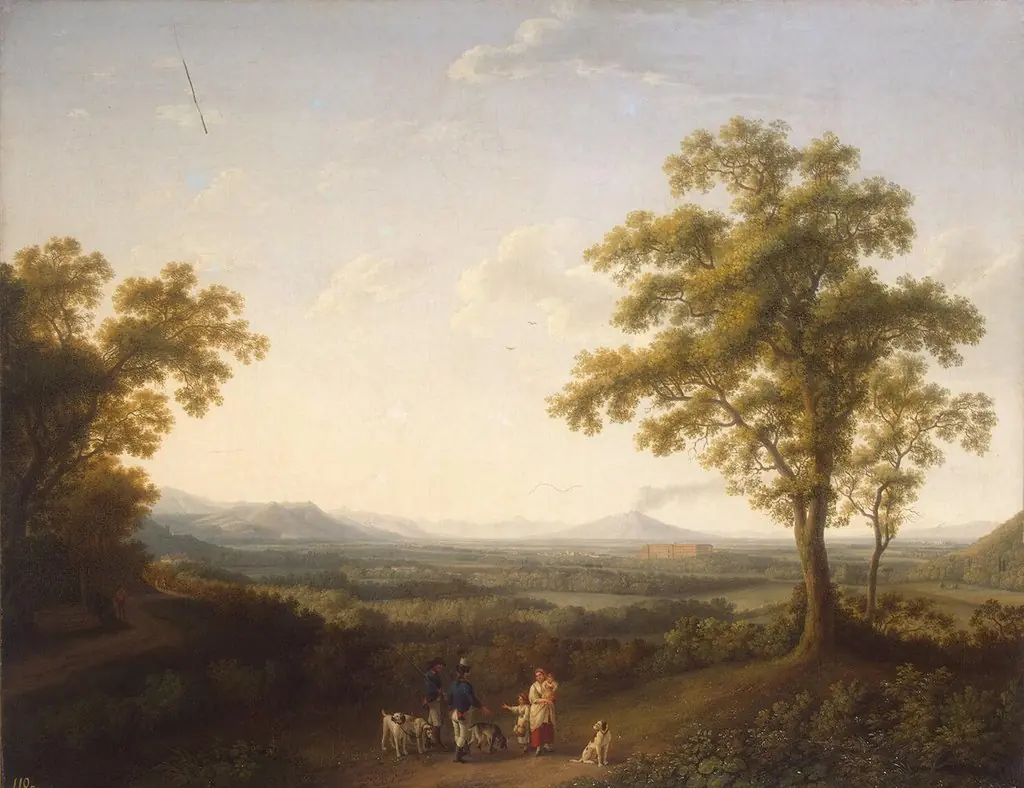
- View of Caserta
 The Cascade in Frederiksberg Garden near Copenhagen
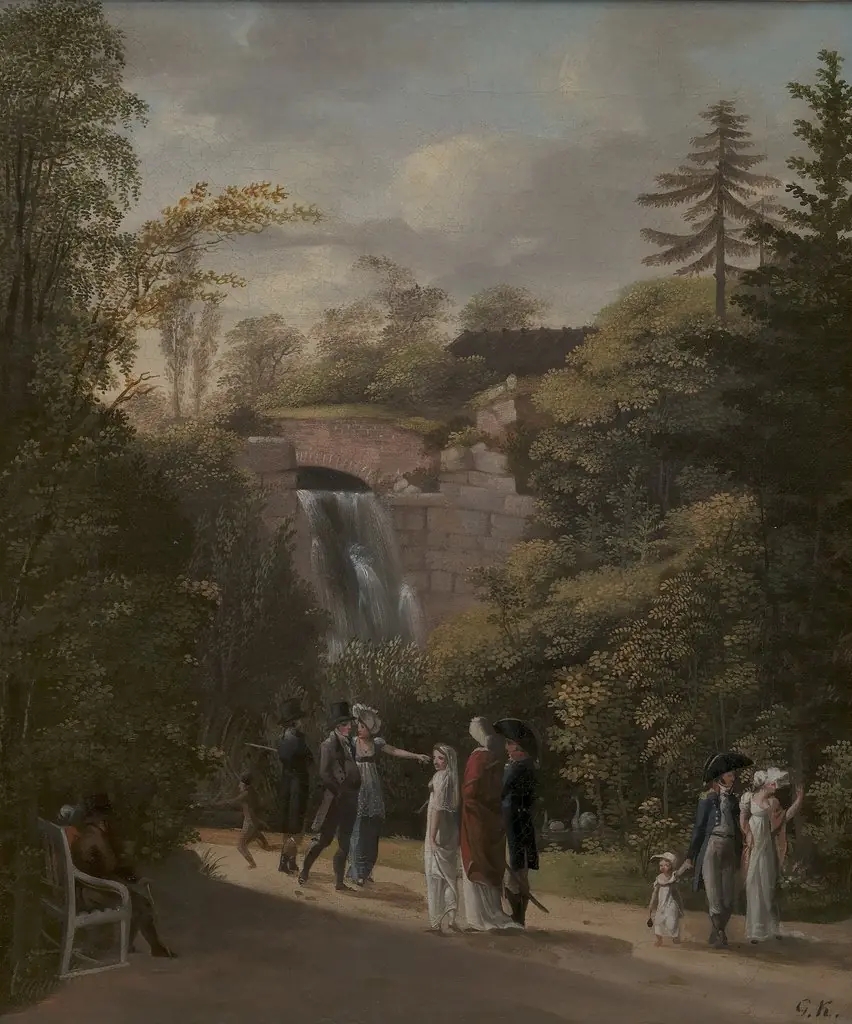 The Cascade in Frederiksberg Garden near Copenhagen
 Park Landscape
 View in Mount Merrion Park
 Charlton, Kent
 Greenwich Park
 The Castle, Cockermouth
 View of Montesarchio
 View in Mount Merrion Park
 Castle on the Liffey, Ireland
 Landscape with sandy road and trees