Artwork
Baths of Trajan (Sette Sale, Villa Brancaccio, Rome)
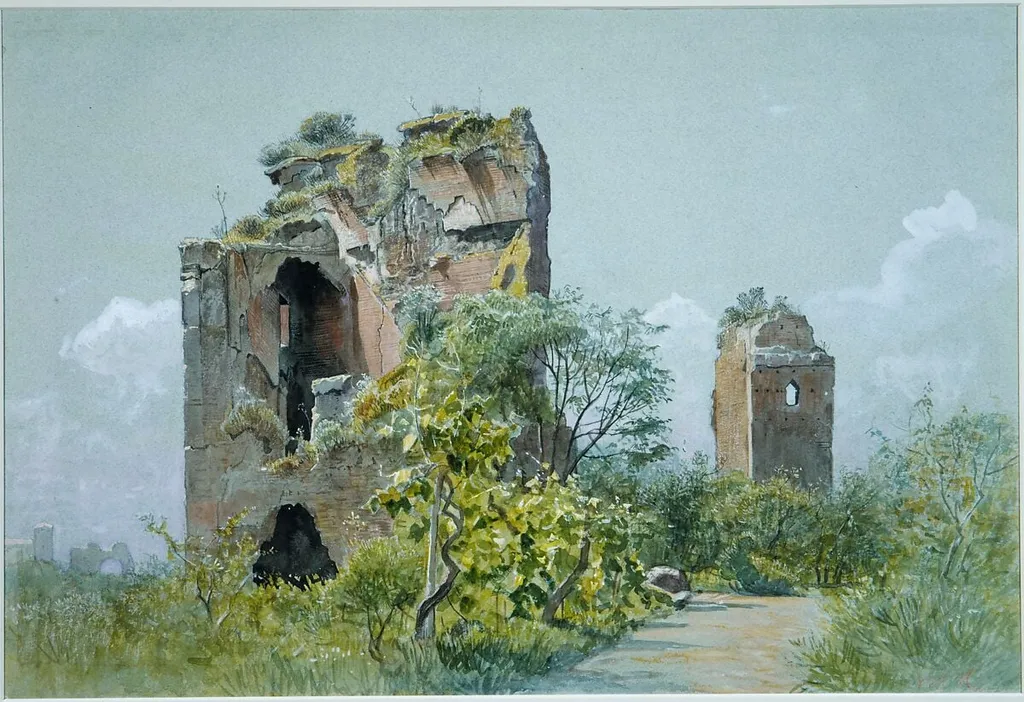
Baths of Trajan (Sette Sale, Villa Brancaccio, Rome) is a watercolor work on paper by the Hudson River School artist William Stanley Haseltine. It dates from 1882 and is held in the collection of the Metropolitan Museum of Art.
About this work
You see crumbling brick arches, a lone tree, and blue sky through empty windows, all sketched in soft watercolor.
Haseltine painted these Roman ruins in 1882, but he wasn’t just recording history. He used thin, see-through layers called glazing to make the stone glow in the light. The effect feels quiet, almost like a memory.
If you like how light plays on old walls, look up glazing.
Subject & Meaning
William Stanley Haseltine's 1882 work depicts the landscape and ruins of the Baths of Trajan, also known as the Sette Sale at the Villa Brancaccio in Rome.
William Stanley Haseltine's 1882 work depicts the landscape and ruins of the Baths of Trajan, also known as the Sette Sale at the Villa Brancaccio in Rome. As a landscape, the painting focuses on the natural and architectural elements of the site. The central iconographic feature of the composition is a tree, which serves as the primary depicted subject.
Through this focus, the artwork represents the intersection of nature and classical antiquity, capturing the enduring presence of the natural world amidst ancient Roman ruins.
Technique & Style
William Stanley Haseltine executed this 1882 landscape using watercolor, gouache, and charcoal on a blue wove paper support. The choice of a blue-tinted sheet provides a foundational tonal quality that influences the overall coloristic effect of the composition. Measuring 38.6 by 56 cm, the work combines both transparent and opaque water-based media alongside dry charcoal, allowing for a interplay of luminous washes and precise, structured drafting.
The integration of these mixed media on the colored ground demonstrates a deliberate handling technique, balancing fluidity with linear definition to render the depicted arboreal subject.
History & Provenance
William Stanley Haseltine created the watercolor painting titled Baths of Trajan (Sette Sale, Villa Brancaccio, Rome) in 1882. Executed on blue wove paper using watercolor, gouache, and charcoal, the work measures 38.6 cm in height and 56 cm in width. The painting is currently held in the collection of the Metropolitan Museum of Art in New York, where it is classified within the American Wing.
The artwork depicts the archaeological site of the Baths of Trajan, specifically focusing on the area known as Sette Sale near the Villa Brancaccio in Rome.
Overview
Baths of Trajan (Sette Sale, Villa Brancaccio, Rome) is a watercolor landscape by William Stanley Haseltine, dating to circa 1882. Executed in watercolor, gouache, and charcoal on blue wove paper, the work captures a serene scene of Roman ruins.
Context
Painted during Haseltine's travels, the work reflects 19th-century artistic fascination with European antiquity and the romanticization of ruins. It aligns with a broader trend of landscape artists seeking inspiration in historical sites.
Legacy
While not widely recognized as a seminal work in Haseltine's oeuvre, Baths of Trajan demonstrates his skill in capturing the poetic beauty of decay and the effects of light, influencing subsequent generations of landscape painters in their depiction of ancient landscapes.
Artist & collection
Artist
William Stanley Haseltine was born on June 11, 1835, in Philadelphia to John Haseltine, a successful businessman, and Elizabeth Shinn Haseltine, an amateur landscape painter.

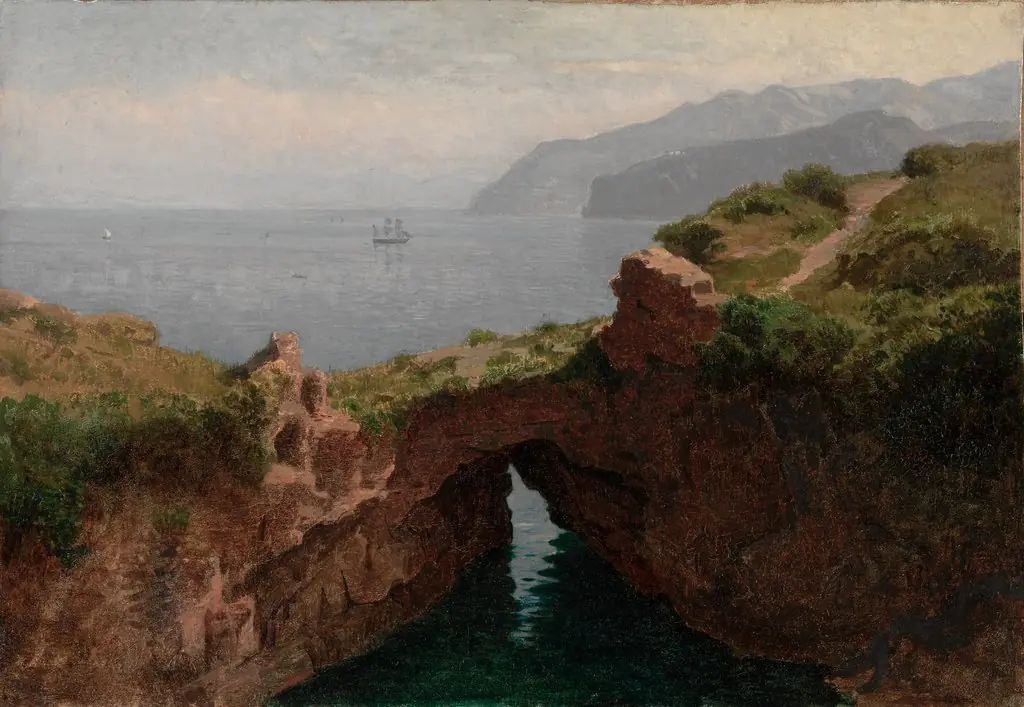
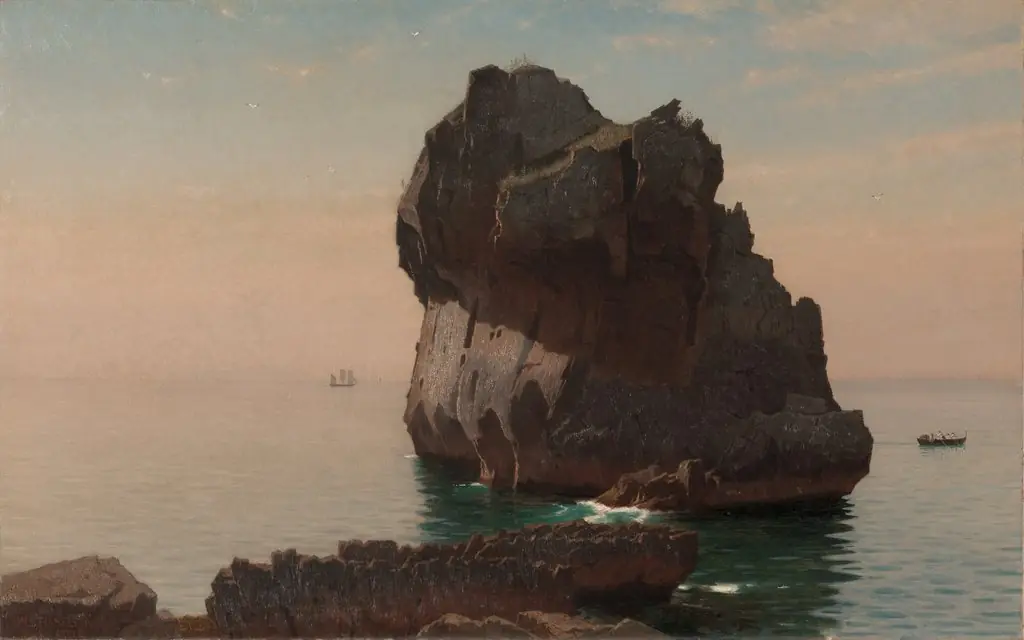
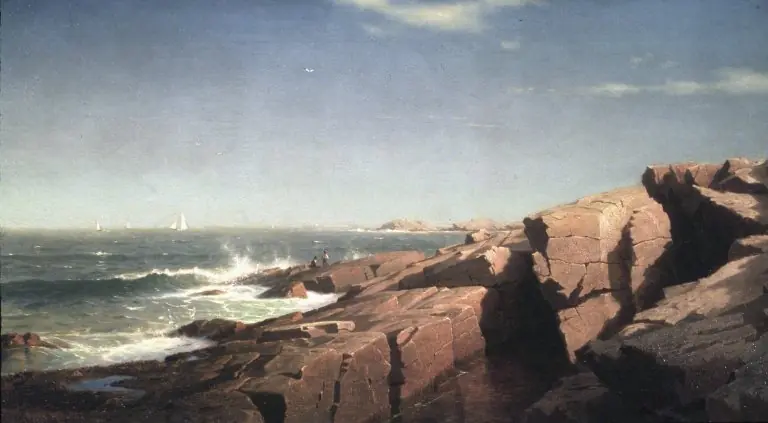
- The Temple of Minerva Medica
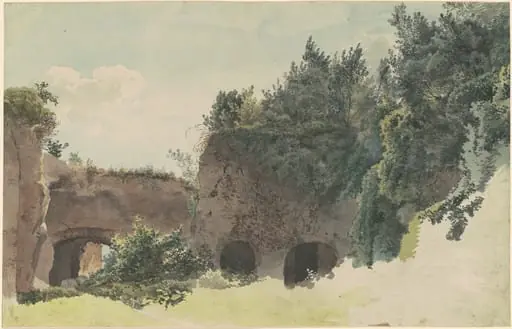 Ancient Roman Ruins Overgrown with Trees and Bushes
 Six Views of Heidelberg Castle: Tower
 Linnanrauniot, portaaliholvi
 Moorish Castle from the Penha
 Landscape with Ruin
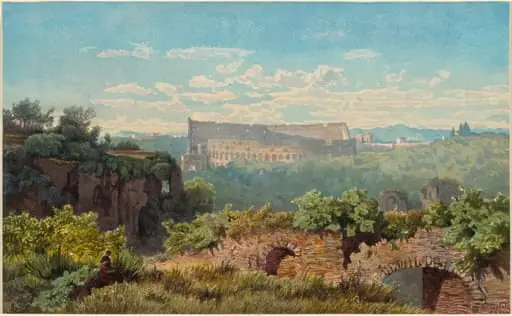 The Colosseum Seen from the Palatine Hill
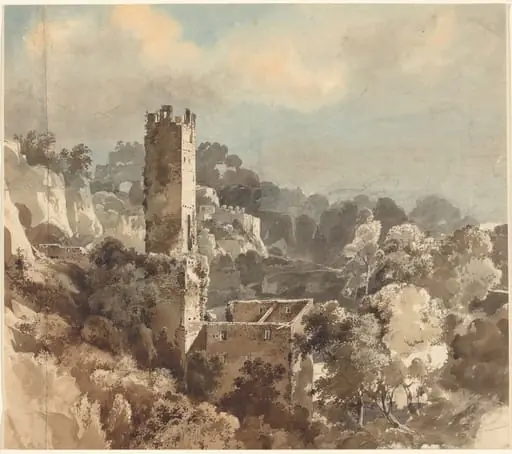 Ruins of a Fortified Tower among Wooded Hills
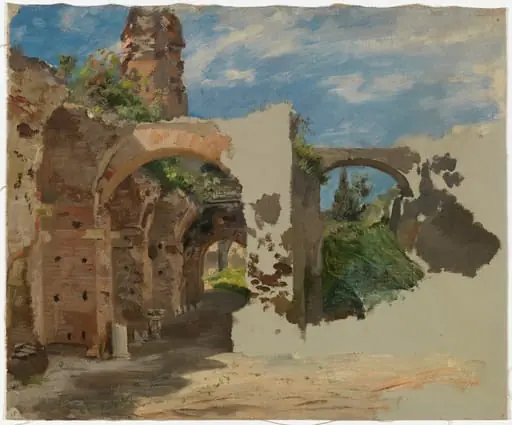 Roomalaisia raunioita, harjoitelma
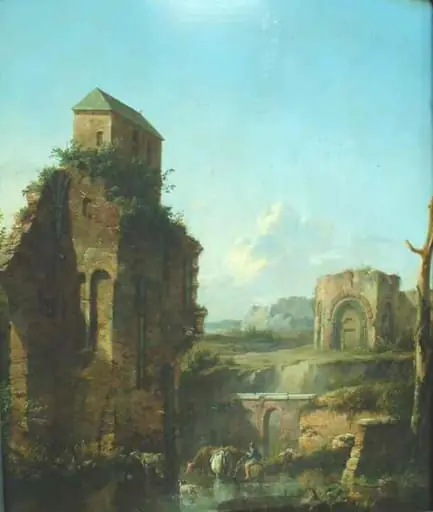 Peisaj cu ruine
 Neath Abbey
 Bethany, Palestine