Artwork
Castel Fusano—Near Rome
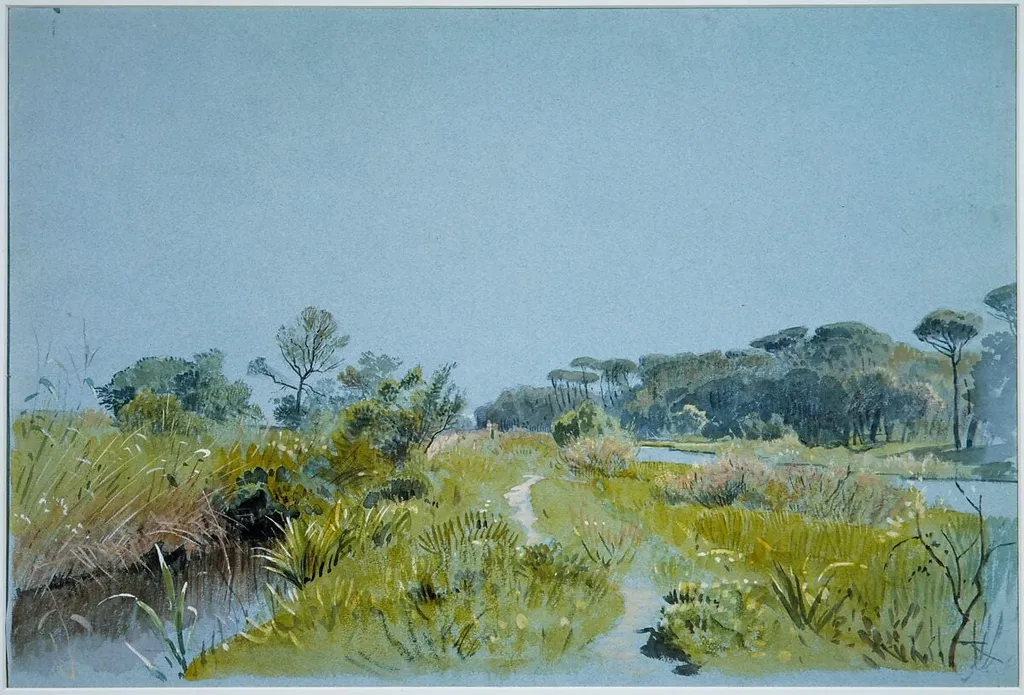
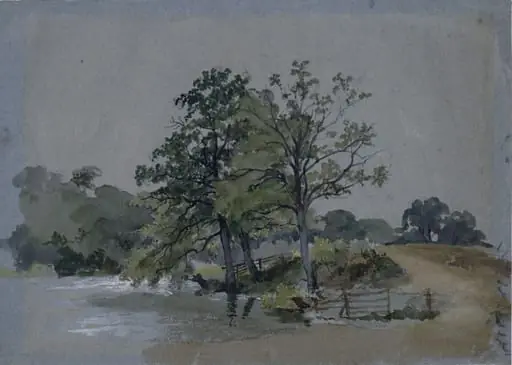
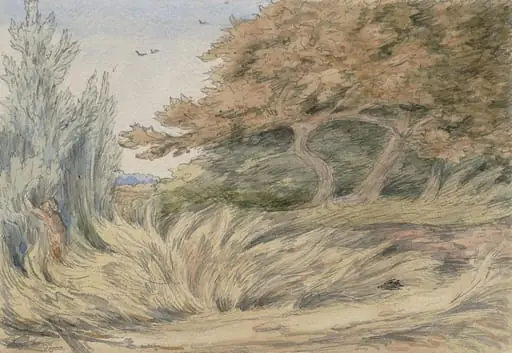
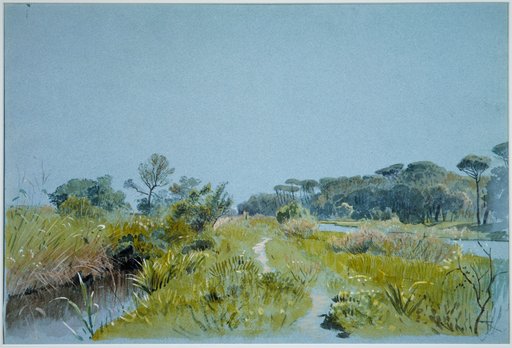
Castel Fusano—Near Rome is a watercolor work on paper by the Hudson River School artist William Stanley Haseltine. It dates from 1885 and is held in the collection of the Metropolitan Museum of Art.
About this work
Subject & Meaning
The work functions as a topographical record rather than an allegorical statement, emphasizing the physical characteristics of the Roman countryside.
Castel Fusano, Near Rome is a landscape work that visually documents a specific natural setting outside the Italian capital. The composition focuses primarily on arboreal forms, with trees serving as the central subject matter of the depiction. Executed in watercolor, gouache, and graphite on blue wove paper, the piece captures the vegetation of the Castel Fusano area through a combination of transparent washes and opaque highlights.
The work functions as a topographical record rather than an allegorical statement, emphasizing the physical characteristics of the Roman countryside. By isolating these natural elements, the artist presents a direct observation of the environment without incorporating complex symbolic narratives or religious iconography. The choice of blue paper as a ground unifies the scene, suggesting the atmospheric conditions of the location while anchoring the botanical details.
History & Provenance
The work titled Castel Fusano, Near Rome was created in 1885 by William Stanley Haseltine, employing watercolor, gouache and graphite on blue wove paper. It is classified within The American Wing as a landscape and portrays a tree. The piece entered the collection of the Metropolitan Museum of Art, where it remains on view.
Provenance records indicate that the drawing was produced during Haseltine’s Italian sojourn and was later acquired by the museum, establishing a clear chain of ownership from the artist to the institution.
Context
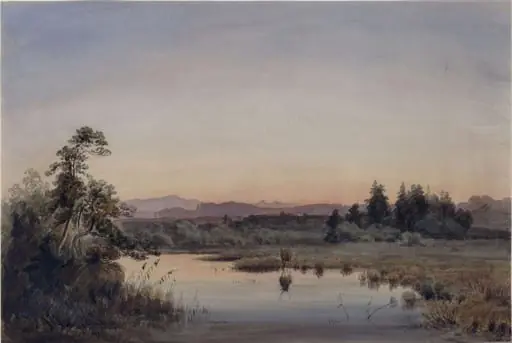
William Stanley Haseltine painted this view of the Castel Fusano marshes near Rome in 1885, employing watercolor, gouache, and graphite on blue‑wove paper to capture the luminous atmosphere of the coastal landscape. The work is classified within the American Wing’s landscape genre and was acquired by the Metropolitan Museum of Art, where it remains on view as a representative example of 19th‑century American artists’ engagement with European scenery. Scholarly attention highlights Haseltine’s precise topographical rendering and his role in bridging American landscape tradition with the plein‑air practices of European predecessors.
Overview
Castel Fusano, Near Rome is a landscape watercolor by William Stanley Haseltine, dating to circa 1885, executed on blue wove paper with gouache and graphite. The composition features a serene coastal scene near Rome.
Technique & Style
Haseltine employed thin watercolor washes to capture shimmering light, evoking a vibrant atmosphere. The blue paper substrate is visible in parts, contributing to an overall gentle luminosity.
Artist & collection
Artist
William Stanley Haseltine was born on June 11, 1835, in Philadelphia to John Haseltine, a successful businessman, and Elizabeth Shinn Haseltine, an amateur landscape painter.