Artwork
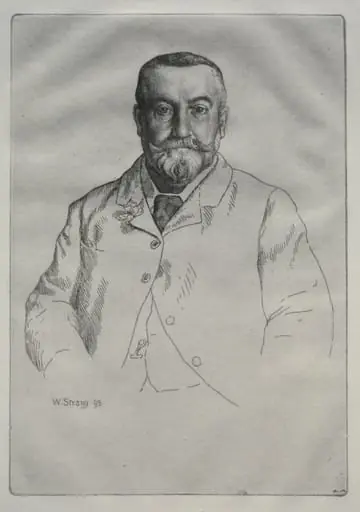
C. J. Knowles
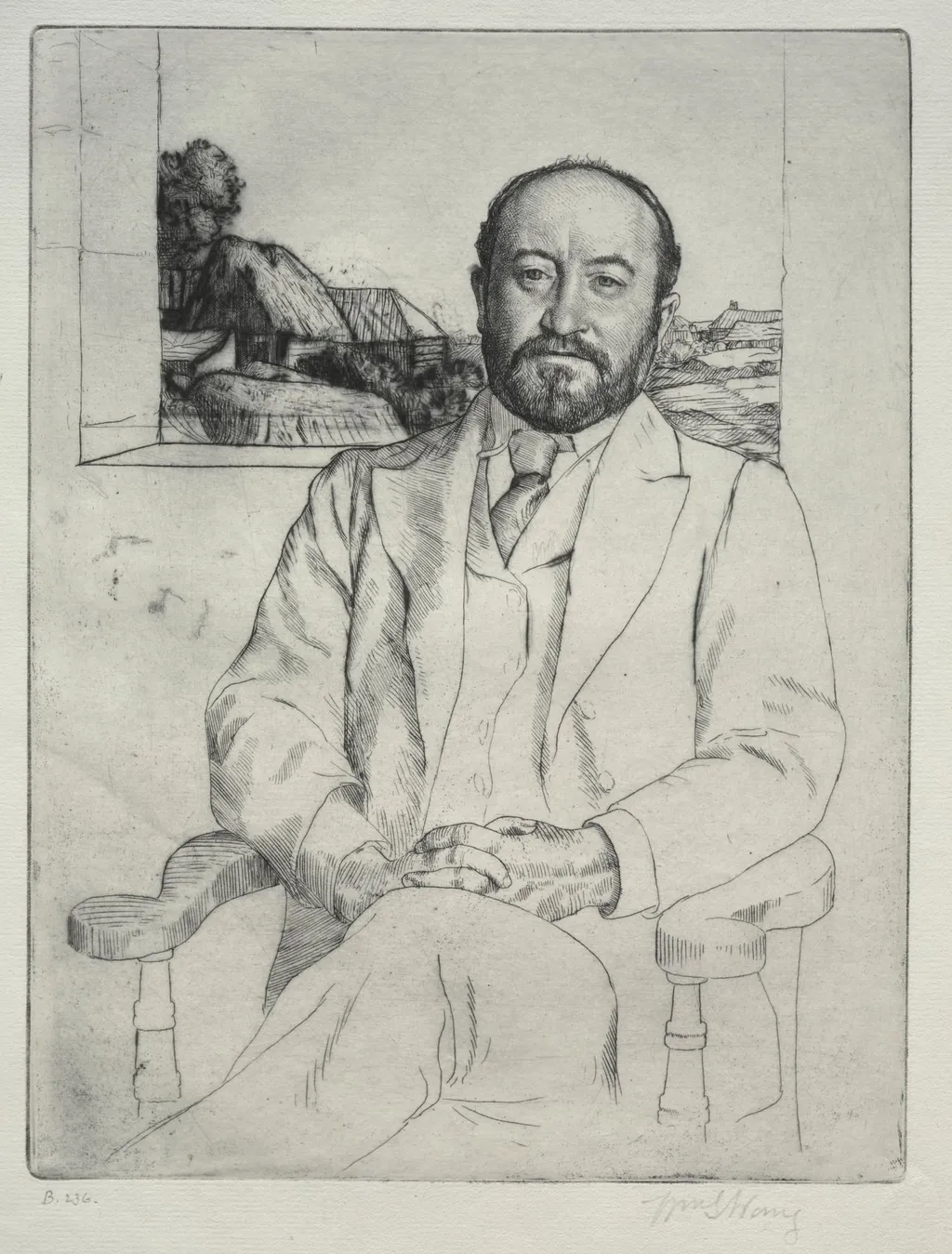
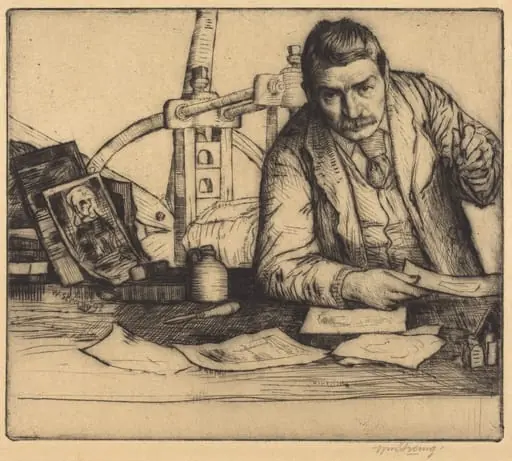
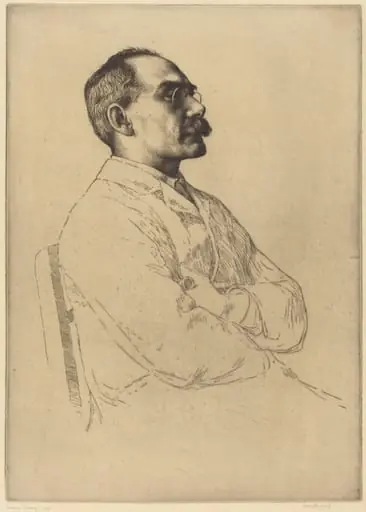
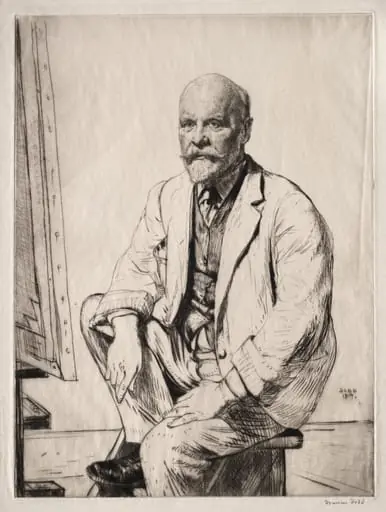
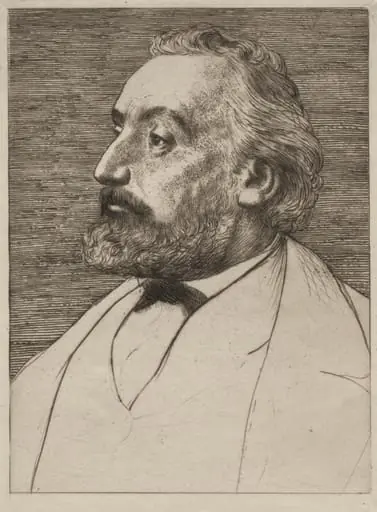
C. J. Knowles is a print by the Impressionist artist William Strang. It dates from 1894 and is held in the collection of the Cleveland Museum of Art. C.
- Accession no.
- 1946.373
- Credit line
- Mr. and Mrs. Lewis B. Williams Collection
About this work
Overview
C. J. Knowles is a portrait print created in 1894 by the British artist William Strang. It is part of the collection at The Cleveland Museum of Art. The work presents a seated male figure rendered in drypoint and etching, capturing a moment of stillness with careful attention to tone and texture. Strang’s technique emphasizes the quiet presence of the subject through controlled line and shadow.
Subject & Meaning
Strang avoids theatricality, instead conveying psychological depth through posture and facial subtlety, evoking a sense of private contemplation.
The subject, identified as C. J. Knowles, is depicted seated with hands clasped, wearing formal attire. His gaze is lowered, his expression subdued, suggesting inward thought rather than outward engagement. The absence of narrative context invites interpretation centered on introspection.
Strang avoids theatricality, instead conveying psychological depth through posture and facial subtlety, evoking a sense of private contemplation.
Technique & Style
Strang employed drypoint and etching to achieve rich tonal variation and fine detail. The background fades into a soft, gradated wash, enhancing the figure’s three-dimensionality without distraction. Chiaroscuro is used sparingly but effectively to model the face and hands, drawing attention to the quiet intensity of the subject’s demeanor.
The texture of fabric and beard is rendered with delicate, incised lines that suggest materiality without overt realism.
History & Provenance
The print was produced in 1894 and entered the collection of The Cleveland Museum of Art at an unspecified later date. Strang was known for his portraiture in print media during the late 19th century, often depicting intellectuals and cultural figures. While little is documented about C. J. Knowles himself, the work reflects Strang’s broader interest in capturing the inner life of his sitters through the intimate scale and tactile quality of printmaking.
Context
Created during a period when printmaking experienced a revival among British artists, this work aligns with the Aesthetic Movement’s emphasis on mood and formal harmony over narrative. Strang’s approach contrasts with the more dramatic portraiture of the time, favoring restraint and psychological nuance. The piece reflects broader trends in late-Victorian art that valued quiet dignity and technical mastery in graphic media.
Legacy
C. J. Knowles remains a representative example of Strang’s contribution to the revival of etching as a serious artistic medium. Its restrained composition and emotional subtlety influenced later generations of printmakers who sought to convey psychological depth through minimal means. The work continues to be studied for its technical precision and its quiet, enduring portrayal of human introspection.
Own this work as a print
Artist & collection
Artist
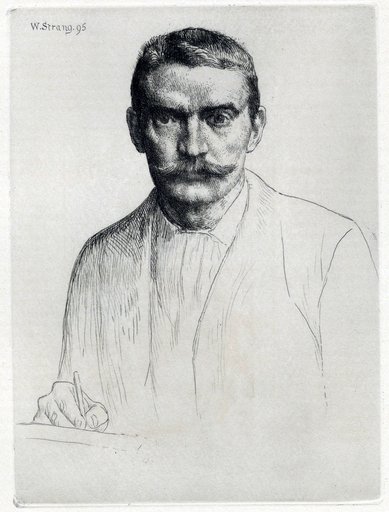
William Strang was a Scottish painter and printmaker, notable for illustrating the works of Bunyan, Cervantes, Coleridge, Kipling, and others.