Artwork
Stations of the Cross
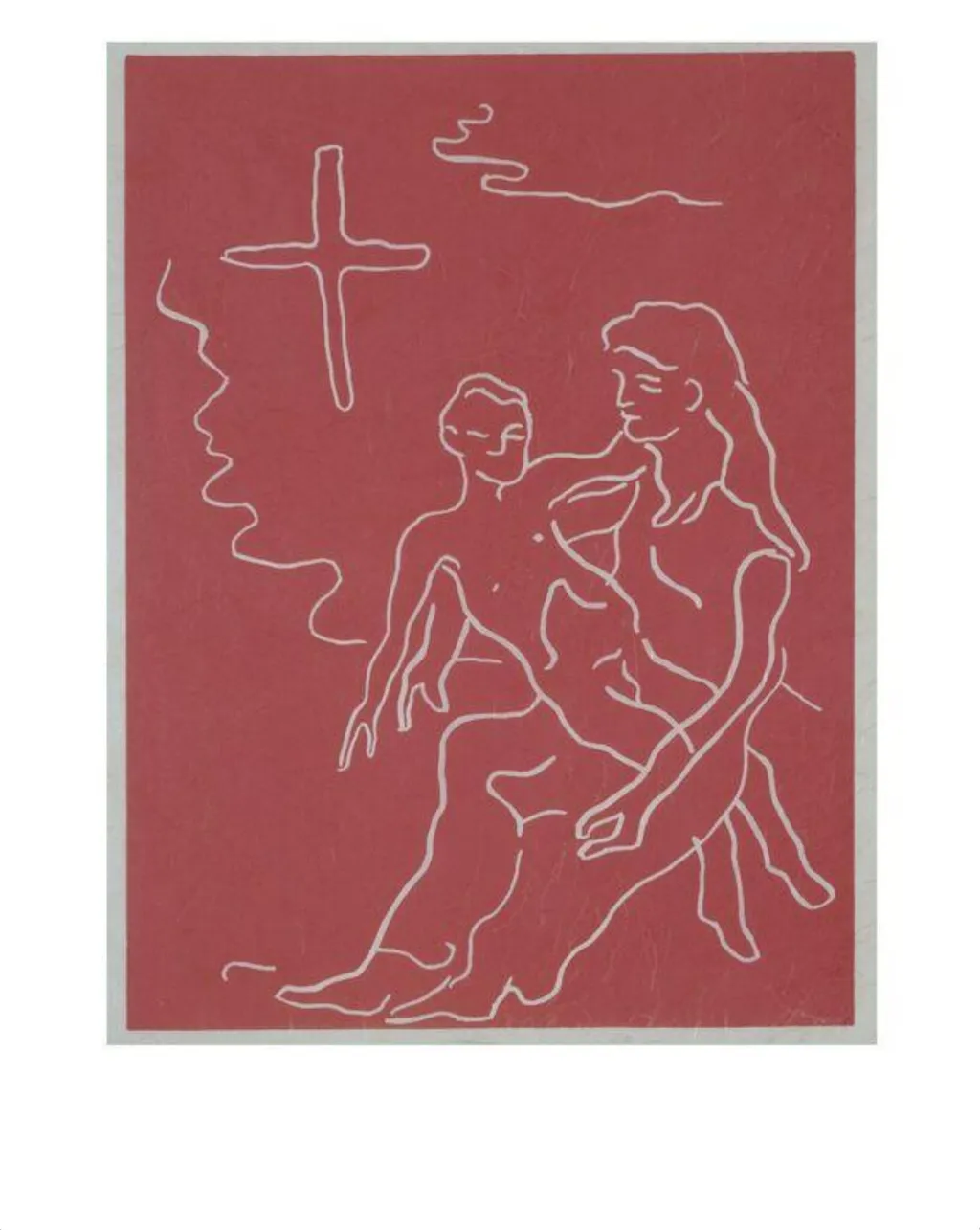
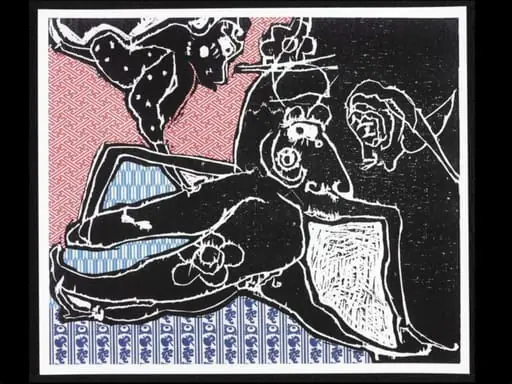
Stations of the Cross is a print by Adrian Wiszniewski. It dates from 1999 and is held in the collection of the Victoria and Albert Museum.
About this work
His simple linocut method uses strong colors and flowing lines to make the images stand out.
Adrian Wiszniewski made Stations of the Cross in 1999. It’s a set of fourteen linocut prints showing the last events in Christ’s life. This version keeps the old theme but dresses the figures in modern clothes.
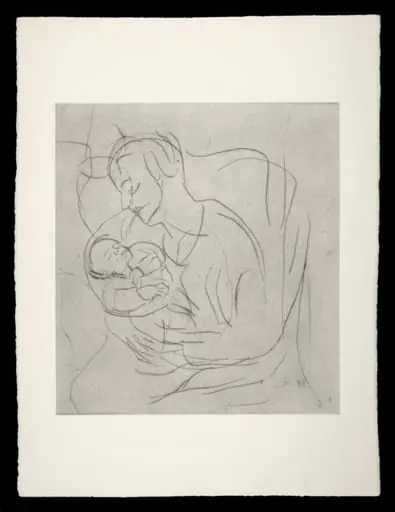
The series treats the Passion scenes as timeless types, not bound to one culture. His simple linocut method uses strong colors and flowing lines to make the images stand out. The print here shows the Pieta, Mary holding Christ’s body after the crucifixion.
Look up the full set at the Victoria and Albert Museum.
Overview
Adrian Wiszniewski created a series of fourteen linocut prints in 1999 titled Stations of the Cross, illustrating the final moments of Christ’s life. Each print presents a scene from the Passion with a contemporary aesthetic, yet avoids historical specificity. The series was later included in the V&A’s 2001 exhibition Sacred, where its modern reinterpretation of a traditional Christian theme drew attention for its formal clarity and emotional resonance.
Subject & Meaning
The series reimagines the traditional Stations of the Cross using figures dressed in modern clothing, removing them from any fixed time or place. This approach transforms the narrative into a universal meditation on suffering and grief. The Pieta, depicting Mary cradling the dead Christ, becomes less a religious moment and more a timeless symbol of loss, accessible across cultural and historical boundaries.
Technique & Style
Wiszniewski employed linocut printing to achieve bold, simplified forms with fluid contours and vivid, unmodulated color. The medium’s inherent flatness and graphic strength reinforce the symbolic nature of the scenes. By reducing detail and emphasizing line and hue, he heightens the emotional weight of each image, allowing the viewer to focus on gesture and presence rather than narrative realism.
History & Provenance
Completed in 1999, the complete set of fourteen prints was exhibited at the Victoria and Albert Museum in 2001 as part of the Sacred exhibition. The series was acquired by the museum and remains part of its permanent collection. Its inclusion in this major institutional show marked a significant moment in the recognition of contemporary printmaking as a vehicle for spiritual reflection.
Context
Wiszniewski’s work emerges from a long tradition of Christian iconography but responds to late 20th-century concerns about universality and cultural detachment. By stripping away historical costume and setting, he aligns the Passion with broader human experiences of grief and endurance, reflecting a postmodern interest in mythic narratives that transcend specific religious or temporal contexts.
Legacy
The series stands as a quiet but significant contribution to contemporary religious art, demonstrating how traditional themes can be revitalized through minimalist form and modern visual language. Its presence in the V&A’s collection ensures continued access for scholars and the public, reinforcing the relevance of sacred narratives in non-traditional artistic expressions.
Artist & collection
Artist
Adrian Wiszniewski is a Scottish artist and one of the members of the New Glasgow Boys a group of artists who emerged from Glasgow School of Art and led the resurgence of Scottish figurative painting in the late 20th century.