Artwork
Memorial card for Albert
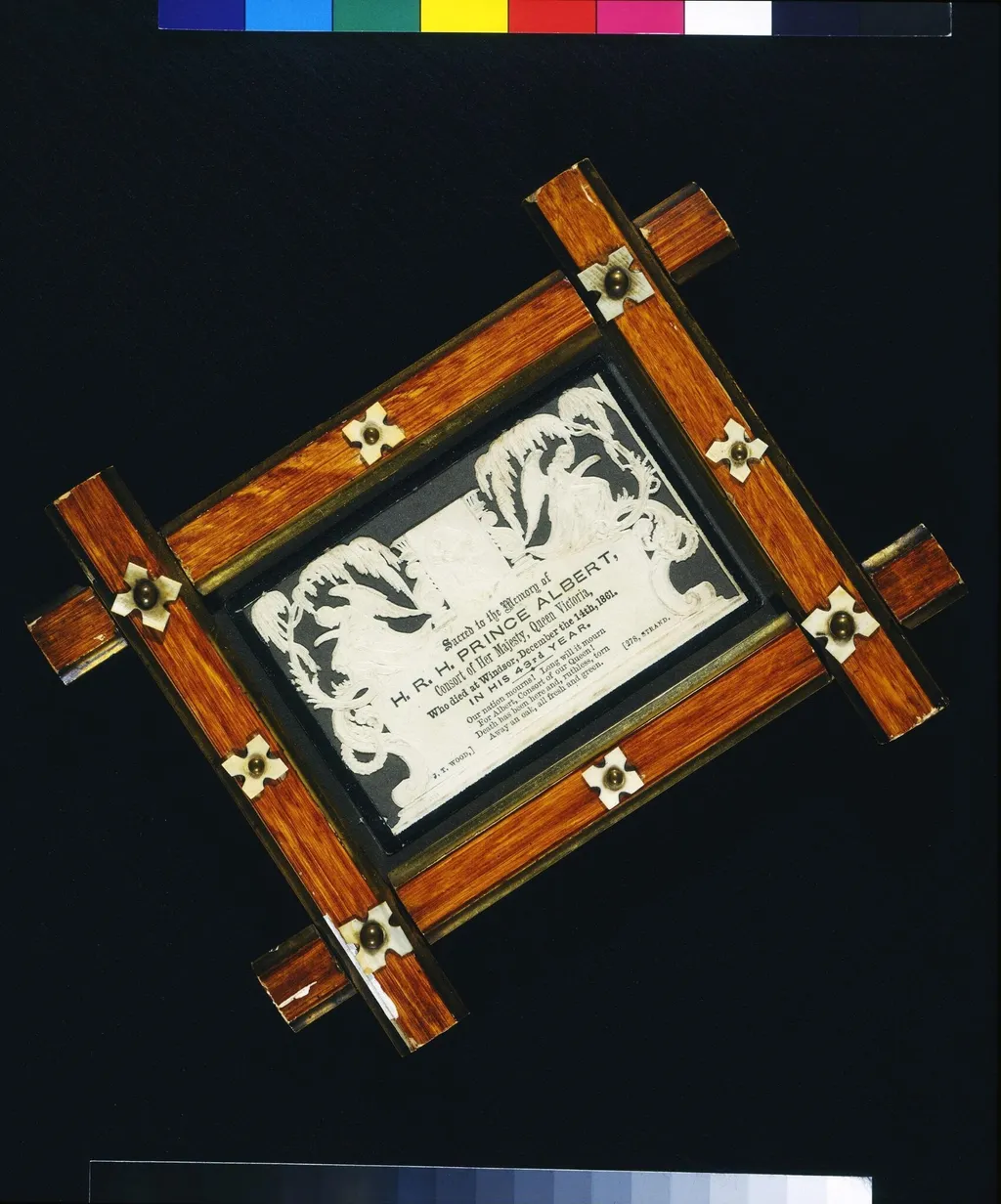
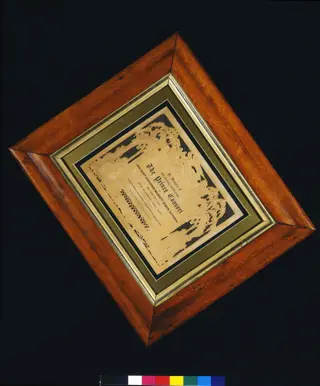
Memorial card for Albert is a print by the Impressionist artist J.T. Wood. It dates from 1861 and is held in the collection of the Victoria and Albert Museum. This printed memorial card was produced in 1861 to commemorate the death of Prince Albert, husband of Queen Victoria.
About this work
This is a printed memorial card for Prince Albert from 1861. It was part of a big Victorian trend where people openly shared grief through things like mourning cards and special clothes.
After Prince Albert died, the whole country went into long mourning. These cards were sent to many homes to help people remember him together.
Look up the Victoria and Albert Museum next.
Overview
Made for ordinary households, the card was often framed simply and displayed in domestic spaces, reflecting the integration of royal loss into everyday life.
This printed memorial card was produced in 1861 to commemorate the death of Prince Albert, husband of Queen Victoria. Distributed widely across Britain, it served as a tangible token of collective grief during a period when public mourning was deeply institutionalized. Made for ordinary households, the card was often framed simply and displayed in domestic spaces, reflecting the integration of royal loss into everyday life.
Subject & Meaning
The card honors Prince Albert as a symbol of duty and moral virtue, aligning his death with broader Victorian ideals of sacrifice and piety. Its design, featuring formal typography and restrained ornamentation, avoids personal emotion in favor of solemn dignity. It functioned not merely as a notice of death but as a communal artifact, reinforcing shared national mourning and the monarchy’s role as moral center.
Technique & Style
Produced by letterpress printing, the card employs embossed lettering and minimal decorative elements, typical of mid-Victorian memorial ephemera. The layout is formal and symmetrical, emphasizing clarity and reverence. Printed on thin paper and often mounted in inexpensive frames, its modest materials reflect mass production for a broad audience rather than elite craftsmanship.
History & Provenance
Created shortly after Prince Albert’s death in December 1861, the card was part of a surge in mourning-related goods that flooded the market. Printed by commercial publishers, copies were sold or distributed to the public through retailers and post offices. Many were preserved in family albums or displayed in homes, making them common yet personal relics of the era’s mourning culture.
Context
The Victorian era saw mourning transformed into a highly regulated social practice, with prescribed dress, rituals, and objects. Prince Albert’s death intensified this trend, turning private grief into a public spectacle. The proliferation of memorial cards like this one reflected both emotional need and commercial opportunity, embedding royal loss into the fabric of daily life across class lines.
Legacy
These cards remain among the most accessible artifacts of 19th-century mourning culture. They illustrate how grief was mediated through material objects and collective ritual. Today, surviving examples offer insight into the intersection of monarchy, media, and emotion in Victorian society, revealing how public sentiment was shaped and sustained through simple, widely circulated prints.
Own this work as a print
Artist & collection
Artist
This 1861 print by J.T. Wood memorializes Albert with a delicate border of forget-me-nots and ivy. His style belongs to the quiet shadow of Victorian mourning customs, where prints like this one were slipped into Bibles…

 Icoana Schimbarea la Față reprezintă pentru teologia ortodoxă punctul-cheie în privința privirii și vederii Chipului Lui Dumnezeu. Compoziția iconografică Îl înfățișează pe Hristos stând nemișcat, învăluit în Slava și Pacea, izvorâte din El Însuși. Iisus Hristos este străjuit de Sfântul Mare Proroc Ilie Tesviteanul în stânga și de Profetul Moise, în dreapta. Mântuitorul Iisus Hristos între cei doi Moise și Ilie formează un cerc perfect, ce se află sub vălul de lumină necreată, Lumina Sfântului Duh. În registrul inferior, în contrast cu nemișcarea registrului superior, se remarcă dinamismul celor trei martori ai Schimbării la Față a Mântuitorului Iisus Hristos: Petru, Iacob și Ioan. Veșmintele sunt realizate în combinație de gri cu roșu, gri cu albastru, gri cu galben-ocru. Mandorlele de nouri albi rotunzi, pufoși despart și unesc registrele. Mântuitorul Iisus Hristos este deasupra vârfului Muntelui Tabor al Galileii. Cromatica este picturală și armonioasă: alb, galben, auriu, ocru, albastru bleu-ciel, brun, cafeniu, negru. Icoana este semnată - semnătură indescifrabilă și datată 20 oct 1831. Inscripția din româno-chirilică se traduce: Schimbarea la Față.
 Suprescu
![Margarethe Vöhlin [reverse], by Bernhard Strigel](https://artifactworldgallery.com/img/bernhard-strigel--margarethe-vohlin-reverse--01f4c80425fbb8fe-w320.webp) Margarethe Vöhlin [reverse]
Margarethe Vöhlin [reverse] Peisaj cu flori galbene
 Mântuitorul Iisus Hristos, fiind răstignit pe Cruce, are în dreapta pe ucenicul cel iubit, care a stat lipit de pieptul Învățătorului, la Cina cea de Taină, mai precis, pe Sfântul Apostol și Evanghelist Ioan Teologul, Evanghelistul Iubirii și în stânga pe Maica Domnului Îndurerată, Jalnică și Plângătoare. Veșmintele Maicii Domnului sunt gri-sable și mantie roșie. Sfântul Ioan este îmbrăcat în roșu și galben-ocru. Mântuitorul Iisus Hristos are o țesătură roșie în jurul mijlocului și a coapselor. În planul superior sunt simboluri astrale: soarele, deasupra Maicii Domnului, luna, deasupra Sfântului Ioan și câte un înger în fiecare colț din registrul superior. În registrul inferior, paralel cu Crucea sunt și lujere foarte înalte cu flori mari, elemente fitomorfe, care înlocuiesc prezența ucenicilor și martorilor la suferință. Cromatica este armonioasă: roșu vermillon, albastru ceruleum, verde-spanac-avocado, galben-ocru, alb, negru. Inscripția din româno-chirilică se traduce Răstignirea Lui Iisus Hristos IC XC Sf Ioan MP Maica Domnului.
 Mitropolitul Veniamin
 Icoana de factură catolică îl reprezintă pe sfântul Teodor Tiron (306 d. Hr) sărbătorit pe 17 februarie.Sf. Teodor înveșmântat ca oștean: coif cu pene, armura și mantie roșie. În dreapta ține un coif cu stânga sulița. În planul doi o biserică catolică. Pe fondul alb, de o parte și alta a sfântului câte tulpină cu o floare roșie. Cromatica: predomină roșul(inclusiv ca desen) albastru, bleu, negru, maro, auriu, verde deschis, verde închis, fond alb.Ramă îngustă, patru stinghiii îmbinate oblic la colțuri.
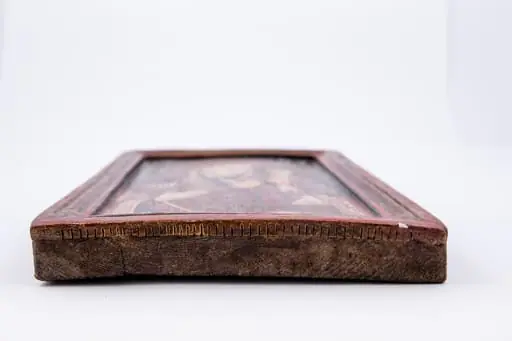 Maica Domnului ține în brațe Pruncul Iisus Hristos, care arată cu mâna dreaptă înspre Maica Domnului, prezentându-ne-o. Maica Domnului este înveșmântată în mantie cu maforion roșu-acajou, cu broderie dantelată pe marginile mânecilor, cu interiorul negru și ciupag brodat auriu-bronziu. Veșmântul este de o eleganță deosebită. Pruncul Iisus Hristos este înveșmântat cu sacos și omofor roșu-acajou, de asemenea, cu interiorul ocru-galben rozaliu, cu coroană și aureolă pe cap. Maica Domnului cu mâna dreaptă ni-L arată pe Mântuitorul Iisus Hristos ca fiind Calea. Adevărul și Viața, este tip Hodighitria. Culorile Maicii Domnului reprezintă noblețea împărătească, suferința monahică și nădejdea bucuriei Învierii. Culorile Mântuitorului reprezintă suferința monahică și patima dureroasă a Jertfei. Fondul icoanei este întunecat, în contrast cu lumina dăruită de chipurile sfinte și veșmintele senine, cu stele crem-gabene. Cromatică: roșu stacojiu, brun, acajou, galben-ocru, brun, bej, alb, negru. Icoana este încadrată și de un chenar decorativ-geometrizant liniar roșu. Inscripția din româno-chirilică se traduce MP IC XC Maica Domnului Iisus Hristos. Icoana este de iconostas. Desenul, cromatica, compoziția, fondul, încadrarea, trăsăturile chipurilor sunt deosebit de frumoase. Icoana este o bijuterie! Este atribuită lui Toader Popovici Zugrav.
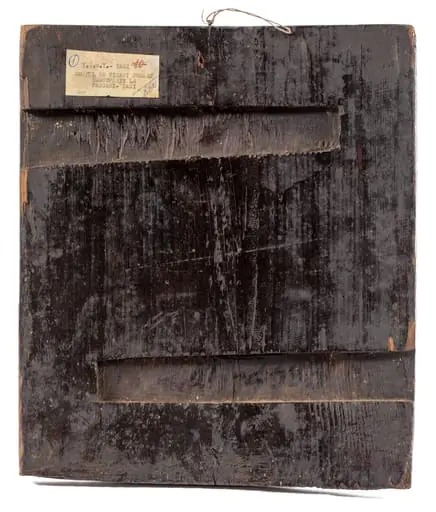 Sfântul Serghie
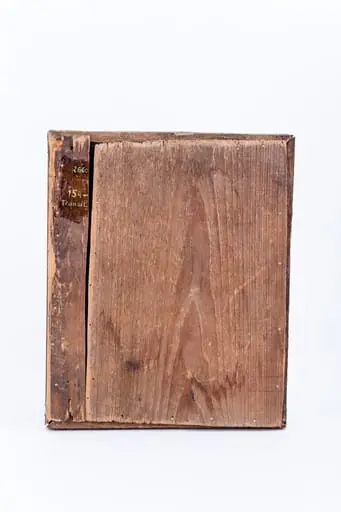 Sfântul Mare Ierarh Grigorie Cuvântătorul de Dumnezeu, sau Sfântul Grigorie Teologul sau de Nazianz. Este unul din cei Trei Sfinți Ierarhi, alături de Sfântul Vasile cel Mare și Sfântul Ioan Gură-de-Aur. Sfântul Grigorie are Sfânta Liturghie a Darurilor înainte Sfințite, care se săvârșește în timpul Postului Mare. Este îmbrăcat în veșminte liturgice arhierești, sacos roșu vermillon, epitrahil verde, nuanță de spanac-avocado, cu patru cruci. Poartă mithră și aureolă. Ține în mâna stângă Sfânta Evanghelie deschisă și binecuvintează cu mâna dreaptă. Fondul este albastru ceruleum cu stele albe. Icoana este de Țara Oltului. Cromatica este armonioasă: roșu vermillon, verde spanac-avocado, albastru ceruleum, nergu, alb. Inscripția din româno-chirilică se traduce Sf Grigorie.
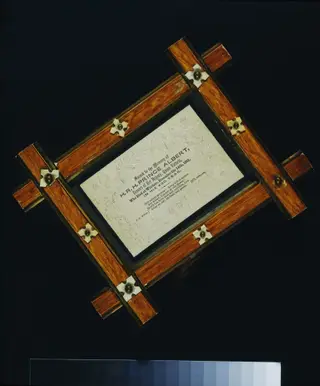 Memorial card for Albert
- Memorial card for Albert, The Prince Consort