
Subject
Wood
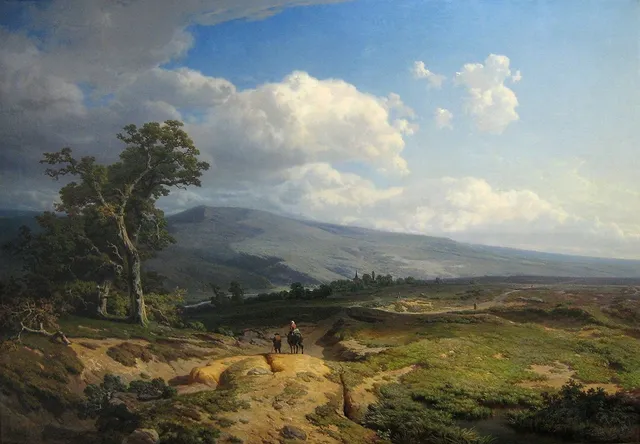
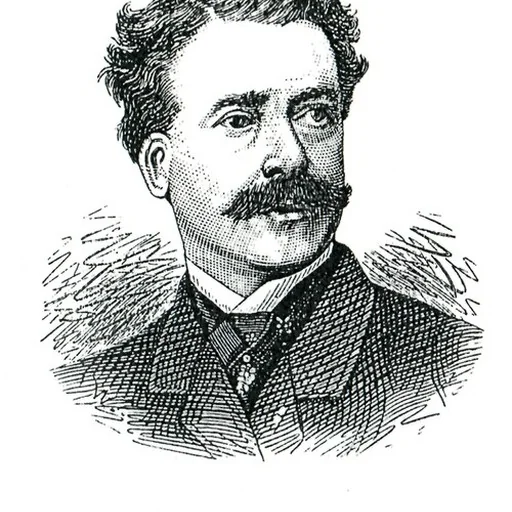
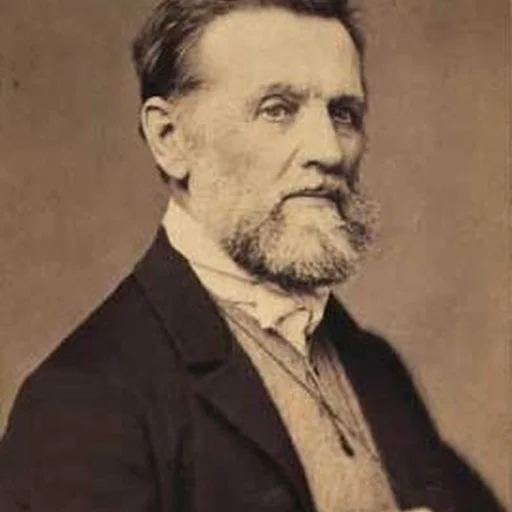
Wood is a subject in art. The gallery holds 54 works in this subject in art, including works by Evert Collier, Jean-Baptiste Kindermans and Jørgen Roed.
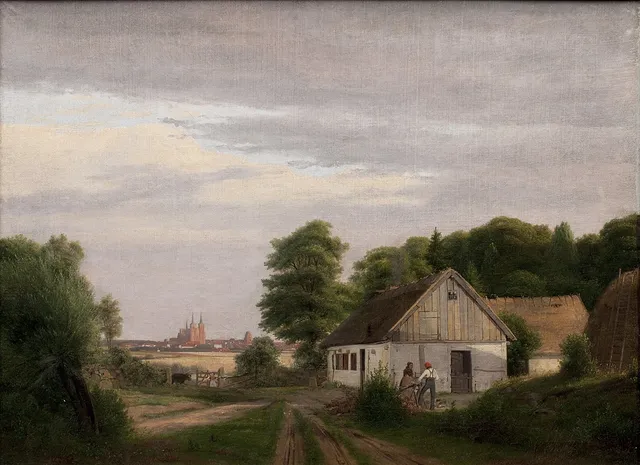
"Wood" is at once a common English surname and the most venerable of all artistic materials—a support and medium that predates the painted canvas by millennia. Before fabric supports spread in the sixteenth century, wooden panels were the standard surface for European painting. Italian masters favored poplar, while painters in the colder, damper north—among them Jan van Eyck—worked on oak; Albrecht Dürer adapted to local supply, painting on poplar in Venice and on oak in the Netherlands and southern Germany. Carefully sized, coated with gesso, and seasoned against warping, such panels carried much of medieval and early-Renaissance painting, and our own woodland landscapes—Jean-Baptiste Kindermans's Valley of Amblève and Jørgen Roed's view of a smallholding near Roskilde—extend wood from material into subject.
Wood was also the engine of the first reproducible images. In relief printmaking the artist cuts away the blank areas of a block so the raised design takes the ink. Dürer transformed this humble craft with his Apocalypse, a series of fifteen woodcuts published in Nuremberg in 1498 on his own initiative; its dense, virtuoso line-work gave the medium an authority it had never held and carried his vision across Europe.
A parallel tradition flourished in Japan. Ukiyo-e moku-hanga prints—Katsushika Hokusai's Great Wave off Kanagawa (c. 1831) foremost among them—were carved into fine-grained cherry wood and produced through a division of labor between designer, carver, and printer, each color demanding its own block.
In sculpture, wood permitted an intimacy and detail stone resisted. Tilman Riemenschneider (c. 1460–1531), the foremost carver of the German Late Gothic, was among the first to leave his favored limewood unpainted, trusting the grain itself. Two centuries later Grinling Gibbons (1648–1721) carved cascades of fruit, flowers, and lace in limewood for St Paul's Cathedral and Hampton Court, set against dark oak panelling to heighten their startling naturalism.
As a surname, "Wood" is borne by genuinely canonical artists, above all the American Regionalist Grant Wood, whose American Gothic (1930) is among the most recognizable images in American art. The catalogue gathers works under both senses—from Evert Collier's portrait of Charles I to anonymous war memorials—a reminder that a single word can name a material, a subject, and a family alike.
Key artists
Iconography & meaning
Wood carries multiple layers of iconographic and symbolic significance in art. As a material, it possesses strong associations with nature, growth, and the organic world, which artists have exploited to explore relationships between humanity and the natural environment. In religious contexts, wood gains particular resonance through its use as a support for painted icons, as seen in works such as the 1839 icon of the Archangels Michael and Gabriel and the icon of Saint Nicholas in episcopal vestments, both of which explicitly acknowledge their wooden substrates. The material's connection to life, death, and regeneration has made it a potent vehicle for sculptors exploring human existence. In memorial contexts, such as the Romanian monuments to fallen soldiers, wood may appear as part of architectural settings or symbolic landscapes that evoke sacrifice and remembrance. The inherent qualities of wood, its grain, warmth, and capacity for both roughness and refinement, allow artists to manipulate texture and surface to convey emotional and conceptual content, from the brutal and unrefined to the delicately polished.
Across movements & periods
The treatment of wood in art has evolved considerably across different movements, periods, and cultures, though certain continuities persist. Ancient Egyptian wood carving, exemplified by a wooden sculpture of a man dating to around 4000 BC in the Egyptian Museum in Cairo, represents some of the earliest sophisticated use of the material, often in funerary contexts. Greek and Roman wood sculptures, though largely lost, influenced later European traditions through textual reference and surviving fragments. Asian cultures, particularly China and Japan, developed extensive traditions of wood sculpture for religious and ceremonial purposes, with Buddhist wooden sculptures forming a major category. In Europe, the Middle Ages and Renaissance saw master wood carvers such as Veit Stoss and Tilman Riemenschneider create intricate altarpieces and devotional figures, often in limewood, achieving remarkable realism and emotional expression. Grinling Gibbons brought ornamental wood carving to new heights of naturalistic detail in the seventeenth and early eighteenth centuries. The twentieth century witnessed a decisive shift toward abstraction, with sculptors such as Constantin Brancusi, Barbara Hepworth, and Isamu Noguchi exploring simplified and biomorphic forms in wood. Contemporary practice continues to expand the possibilities, with artists employing traditional hand carving alongside CNC machines and laser cutters, and frequently incorporating reclaimed or sustainably sourced wood as an environmental statement. Throughout these developments, wood has retained its capacity to signify both tradition and innovation, naturalness and cultural transformation.
Notable depictions
Numerous artists have produced significant works that feature wood as medium, subject, or both. Among historical masters, Veit Stoss created The Angelic Salutation, a detailed wooden sculpture of the Annunciation, while Tilman Riemenschneider produced the Creglingen Altarpiece as a major example of limewood carving. Grinling Gibbons's The St. James's Palace Fountain demonstrated the potential for intricate ornamental carving. In the modern period, Constantin Brancusi, Barbara Hepworth, and Isamu Noguchi pioneered abstract approaches to wood sculpture. Contemporary artists have continued to push boundaries: Pablo Reinoso's Spaghetti Bench (2008), measuring 253 x 168 x 320 cm and exhibited at Carpenter's Workshop Gallery, transforms functional seating into organic, branching forms using wood and steel. Aron Demetz's Sud (2012), a 210 x 70 x 65 cm linden wood sculpture at Terreno Baldio, presents deliberately rough and unrefined human figures that emphasize the material's raw texture. Henrique Oliveira's Amoebic Sculptures (2012), created from plywood and PVC in Linz, Austria, produce immersive, large-scale biological environments. Other notable contemporary practitioners include Ben Butler, known for abstract installations; Hsu Tung Han, recognized for pixelated wood sculptures; and Maskull Lasserre, whose carved log held by a rope carved from the same wood exemplifies trompe l'oeil technique. Mario Dilitz, Bruno Walpoth, Wolfgang Stiller, and Willy Verginer have also gained recognition for figurative work in wood, while Yong Ju Lee contributes to the field's contemporary expansion.
Legacy
The legacy of wood in art extends across millennia of human creative activity and continues to evolve in contemporary practice. The material's persistence from ancient Egyptian carvings through medieval altarpieces, Renaissance masterpieces, modernist abstractions, and contemporary installations attests to its enduring viability and capacity for renewal. Current developments emphasize sustainability, with artists increasingly utilizing reclaimed wood and FSC-certified sources to address environmental concerns. Institutions such as the Hess Art Museum, founded by collector Donald Hess, preserve and display significant wood sculpture collections, while museums like the American Woodworking Museum maintain historical tools and exemplars. Educational programs at schools such as the North Bennet Street School and organizations including the Architectural Woodwork Institute sustain technical knowledge and standards. The work of influential woodworkers and sculptors, from Thomas Chippendale and Gustav Stickley through Sam Maloof and George Nakashima to contemporary figures, establishes lineages of practice that inform current makers. The integration of digital fabrication technologies with traditional hand skills suggests continued hybridization, while the fundamental appeal of wood, its warmth, grain, and organic character, ensures its ongoing relevance. As the collection's 126 works demonstrate, wood remains a vital and versatile presence across the full spectrum of artistic production.
Works
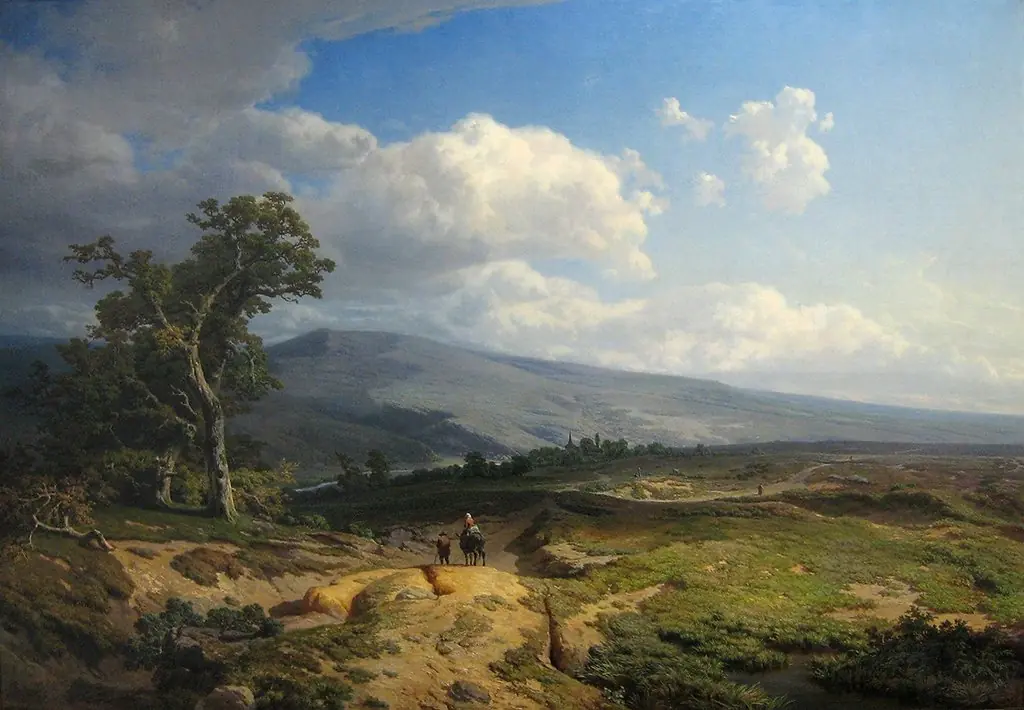 Valley of Amblève
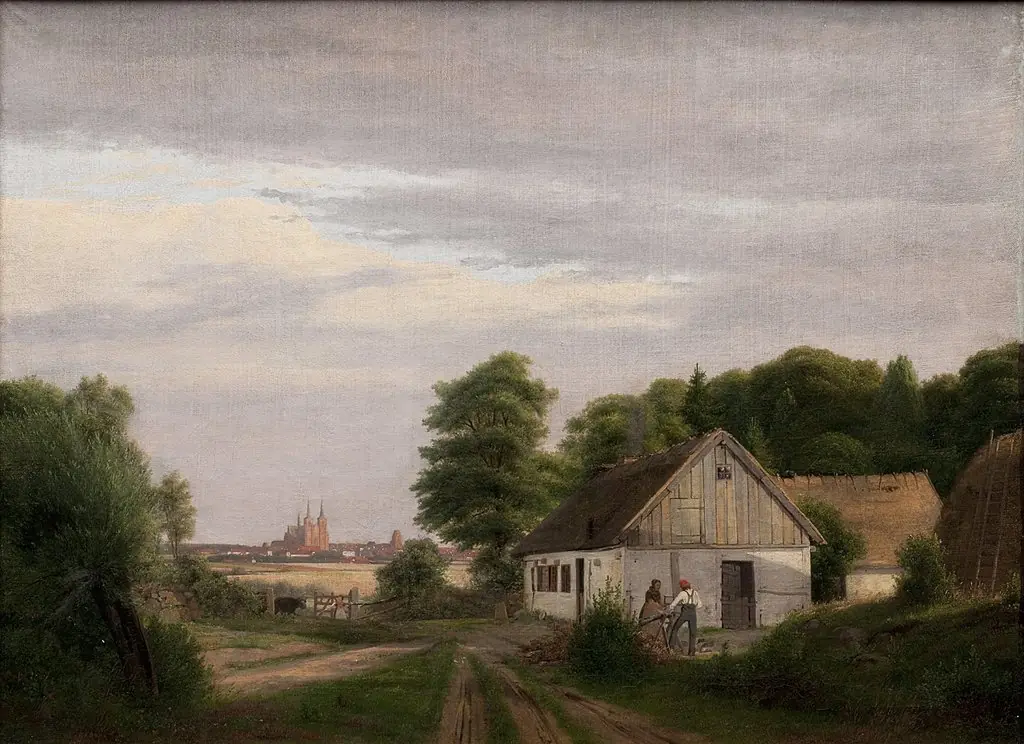 Udsigt mod Roskilde fra et husmandssted
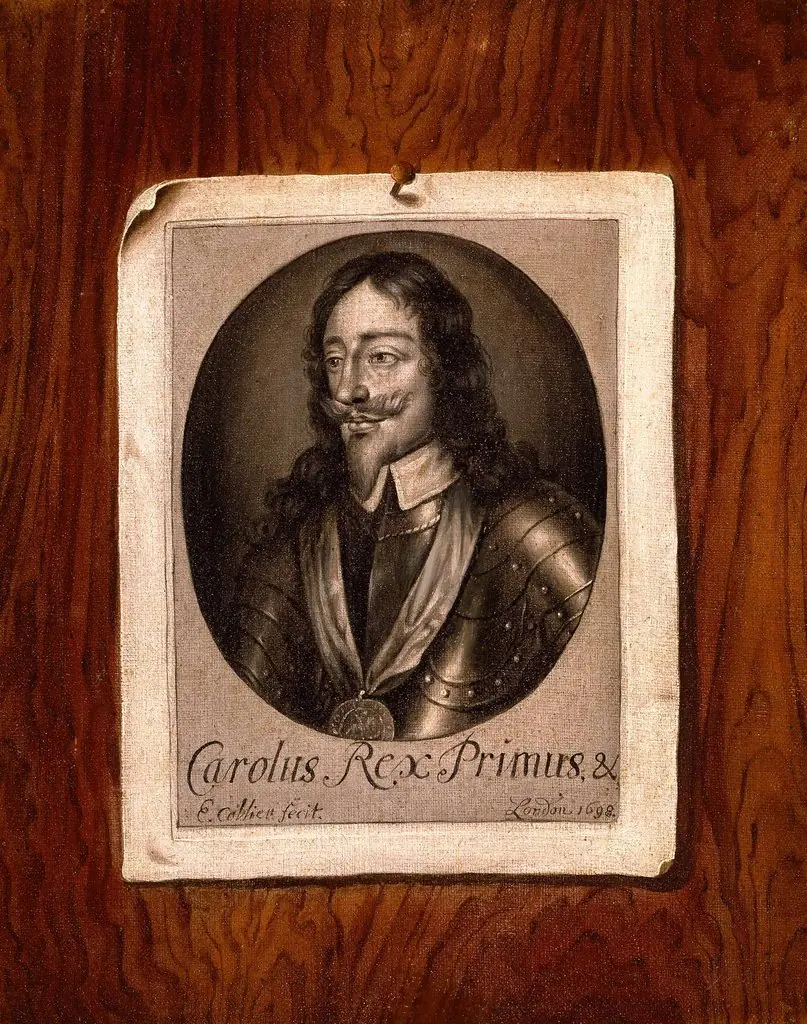 Charles I
 Monument al eroilor căzuți în Primul Război Mondial și în Al Doilea Război Mondial
 Monument al eroilor căzuți în Primul Război Mondial
 Monument al eroilor căzuți în Războiul de Independență, în Primul Război Mondial și în Al Doilea Război Mondial
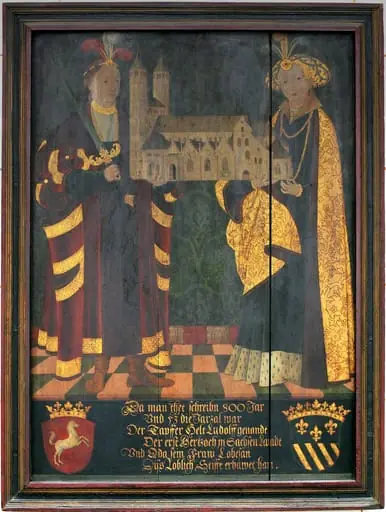 Stifterbild
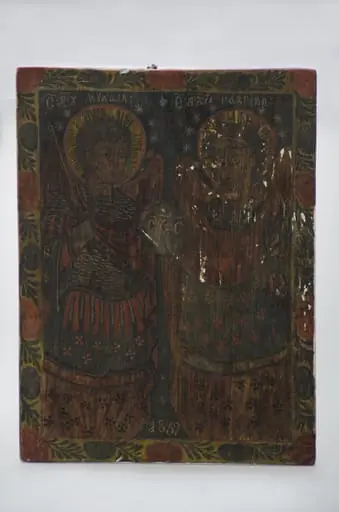 Icoană pe lemn, datată 1839, reprezentând pe Sfinții Arhangheli Mihail și Gavriil ținând în mână globul pământesc pe care sunt literele „S S S (Sfânt Sfânt Sfânt)” - cântarea îngerilor din ceruri. În registrul superior sunt scrise numele îngerilor în românește cu caractere chirilice: „Sf Arh Mihail – Sf Arh Gabriil”. Cu îmbrăcăminte ostășească, îngerii au aoreolă împrejurul capului, Mihail are sabie în mâna dreaptă iar Gavriil are crinul în mâna stângă. Icoana are un chenar realizat cu o linie subțire. Un al doilea chenar exterior cu motive florale și vegetale. Cromatică: roșu, alb, bleumarin; auriu; alb; negru.
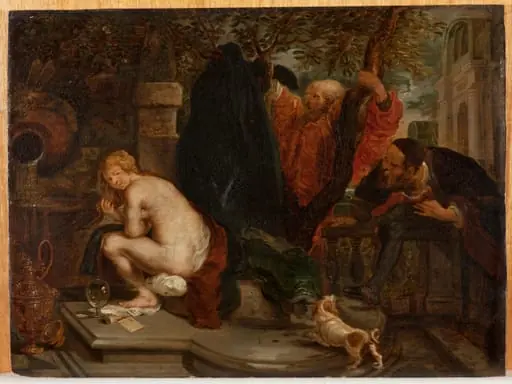 Susanna und die beiden Alten
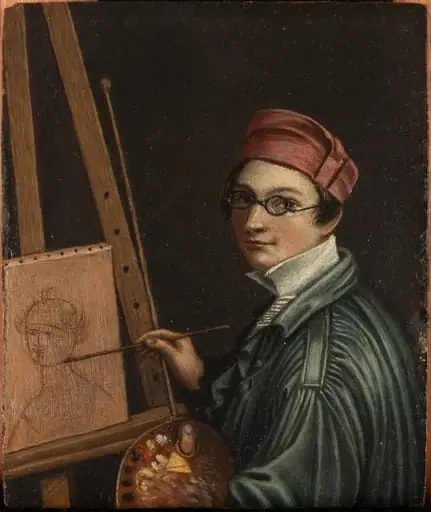 Selbstbildnis des Malers Anton Meier vor der Staffelei
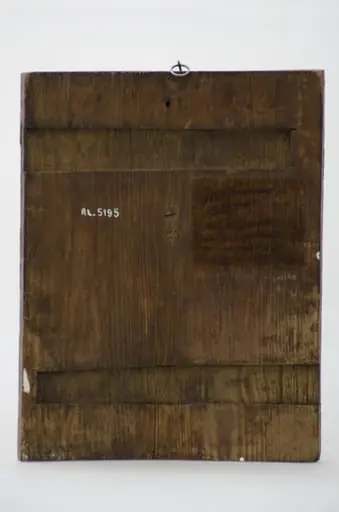 Icoana este impărțită de o cruce neagră pe care este pictat Isus răstignit, deasupra cu Dumnezeu Tatăl iar in părți cu Sf. Constantin și Elena; sunt patru registre: Maica Domnului indurerată; Sf. Nicolae și Sf. Gheorghe cu balaurul.
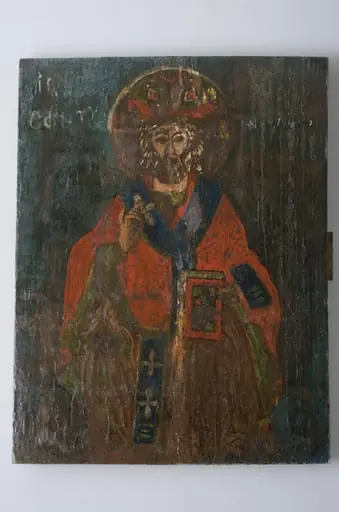 Icoana este pictată pe lemn, reprezentându-l pe Sfântul Nicolae cu veșminte arhierești (felon roșu, omofor albastru și mitră pe cap), ținând Evanghelia închisă cu mâna stângă și binecuvântând cu mâna dreaptă. Cromatică: roșu, albastru, verde, maro închis.
 Untitled
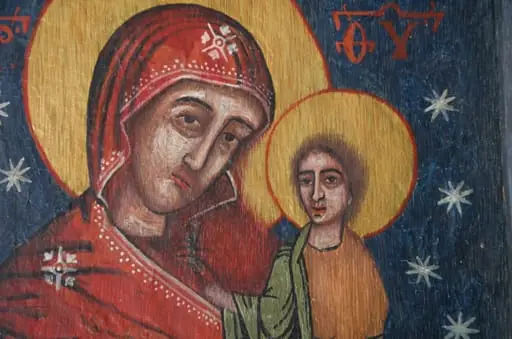 Icoana este pictată pe lemn și o reprezintă pe Maica Domnului „Îndrumătoarea” (Hodighitria), „Cea care arată calea”, cu Pruncul în brațe. Conform Tradiției Bisericii, tema a fost pictată pentru prima dată de Sfântul Apostol și Evanghelist Luca, în timpul vieții pământești a Fecioarei Maria. Maica Domnului poartă un maforion roșu și arată cu mâna dreaptă înspre Fiul său, acesta, la rândul Lui, arătând cu mâna stângă înspre Maica Sa. Pe fundal sunt pictate stele. Rama are trei chenare pictate în albastru, verde și roșu. Icoana prezintă în partea superioară câte o balama pe latura stângă și cea dreaptă, probabil deservind în trecut rolul de triptic. Cromatică: fond albastru închis; roșu; verde; portocaliu; galben; alb.
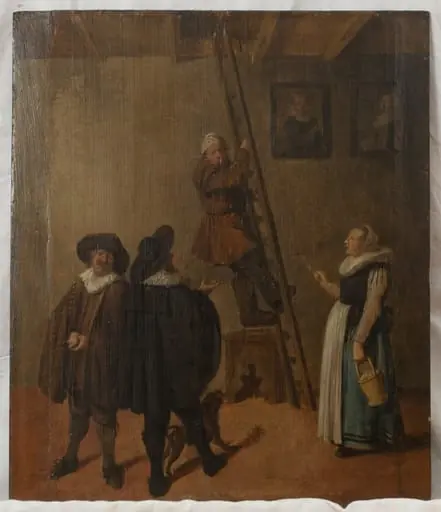 Gesellschaftsstück
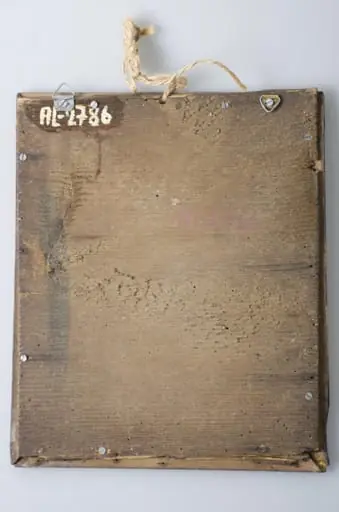 Icoana este pictată pe sticlă, având menționat cuvântul „Nicolae” în românește cu caractere latine. Aceasta este o pictură în ulei, datând din a doua jumătate a secolului al XX-lea. Icoana este înrămată cu o bordură din lemn de esență moale, vopsit în negru. În partea superioară la mijloc rama prezintă un orificiu pentru atârnare. Pe spate icoana este întărită cu o placă din lemn de esență moale, fixată cu holdșuruburi. În partea superioară, cu o tablă, este fixată o sârmă pentru atârnare de cui. Cromatică: negru, alb, maro, galben, roșu, cărămiziu, albastru.
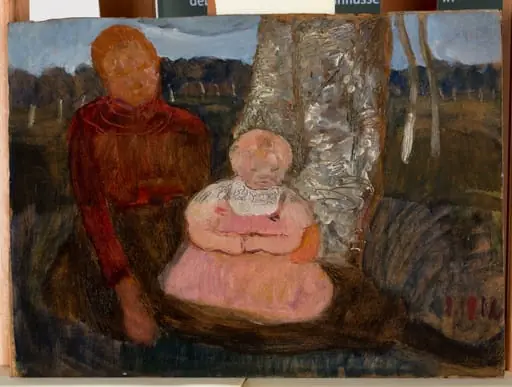 Mutter mit Kind am Birkenstamm
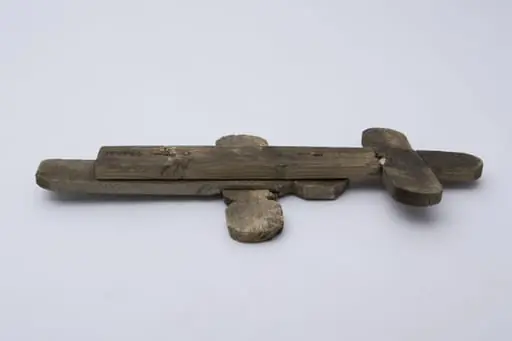 Obiect de cult confecționat din lemn de brad. Compusă din două cruci; o cruce pictată, prinsă printr-un cui metalic, cu o altă cruce nepictată, cu rol de suport. Pe fond verde se intuiește o pictură reprezentându-l pe Iisus răstignit. Text inscripționat în culoare albă. Linii diagonale dublate alcătuind un ”X” sunt trasate cu negru pe cele trei capete superioare ale crucii. Culorile sunt estompate. Capetele brațului scurt și capul brațului lung din partea superioară decupate în formă hexagonală. Cealaltă cruce prezintă extremitățile brațului scurt și extremitatea superioară a brațului lung rotunjite. Ambele cruci sunt formate din câte două bucăți de lemn, una mai lungă și cealaltă mai scurtă așezate perpendicular și asimetric una peste alta. Elementele din lemn îmbinate și prinse în cuie. Cromatică: maro; verde; cărămiziu; alb.
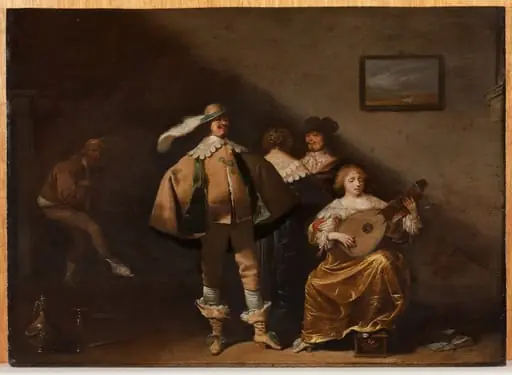 Heitere Gesellschaft
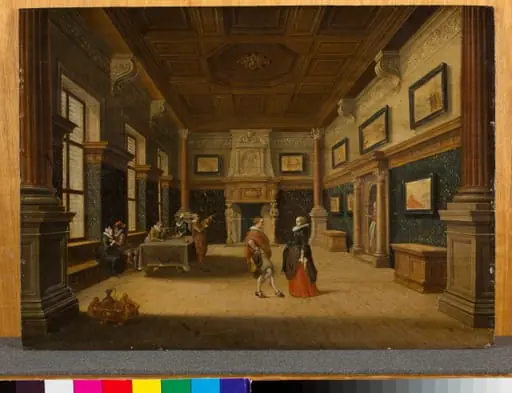 Tanzgesellschaft
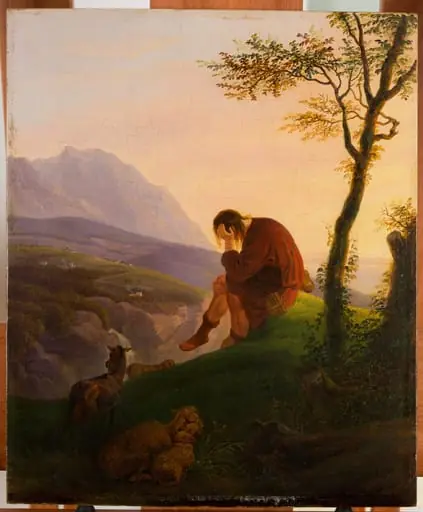 Der Hirte auf der Bergspitze bei Abendschein
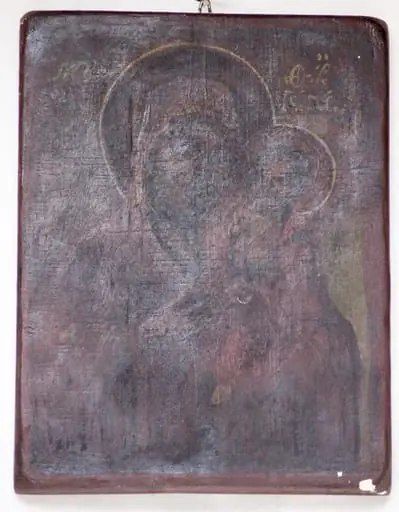 Piesa are o formă dreptunghiulară având în partea superioară o mică agățătoare metalică; pictura este realizată prin utilizarea pensulei iar tema icoanei este "Maica Domnului cu Pruncul"; culorile folosite sunt: roșu, brun, grena, negru, verde - toate sub o patină accentuată; în partea de sus a picturii sunt câteva caractere chirilice; spatele obiectului de cult prezintă culoarea lemnului natural patinat, o nuanță închisă;
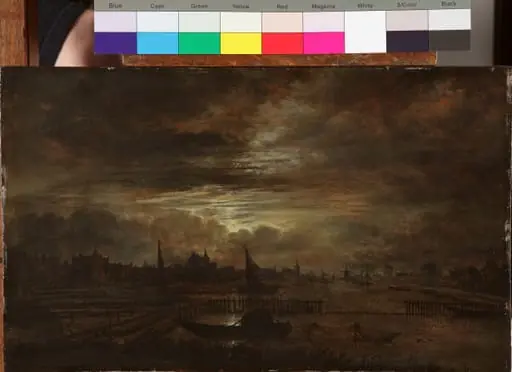 Mondscheinlandschaft
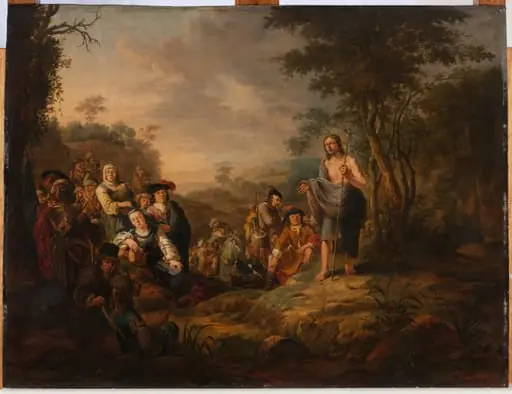 Die Predigt Johannes des Täufers
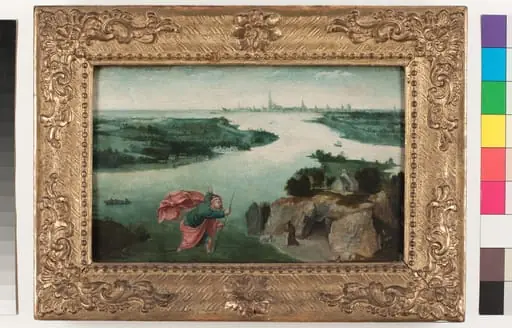 Der heilige Christophorus
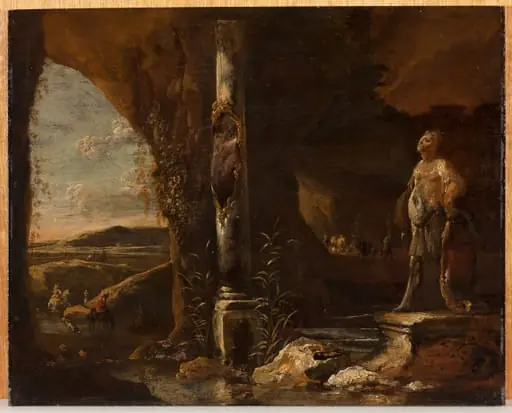 Grottenlandschaft
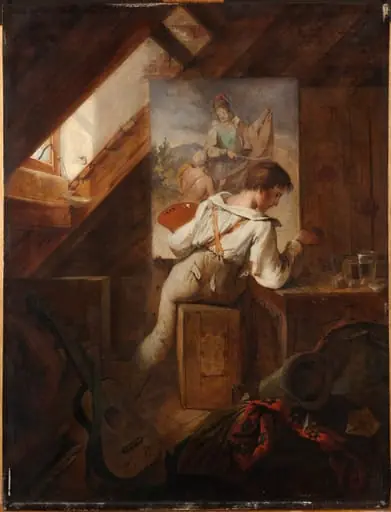 Der Maler im Dachstübchen
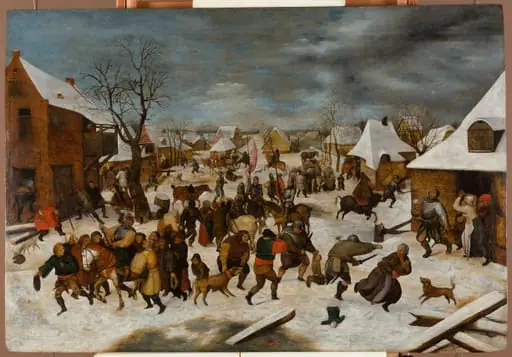 Der bethlehemitische Kindermord
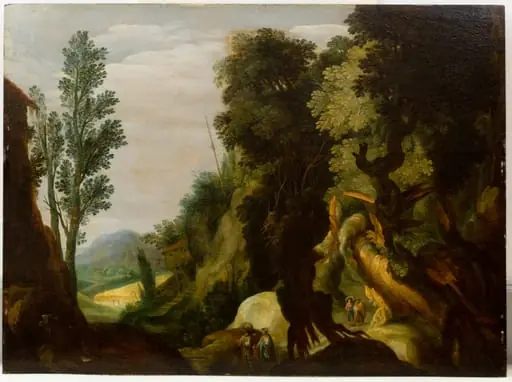 Felslandschaft
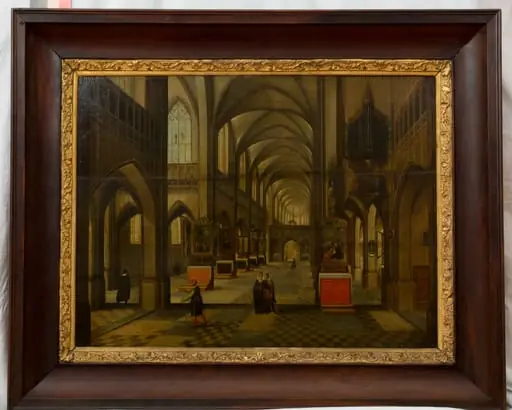 Kircheninneres
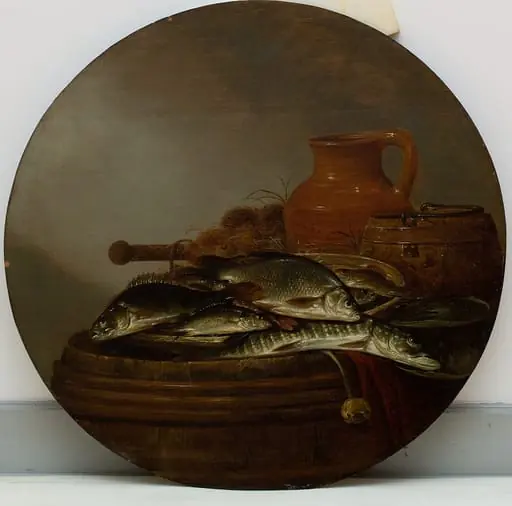 Fischstillleben
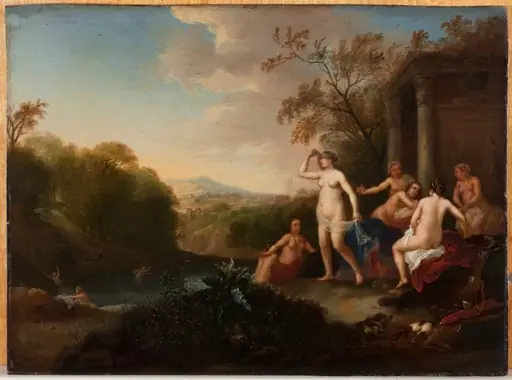 Diana und Aktäon
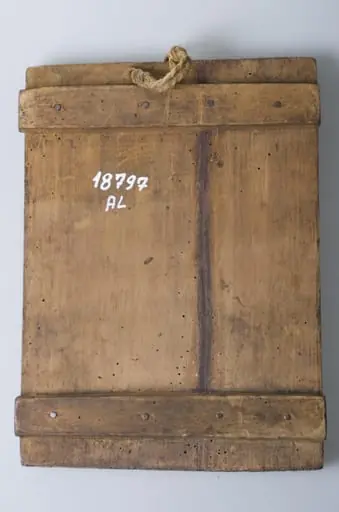 Icoană de formă rectangulară, pictată pe lemn în ulei, reprezentând tema „Izvorul tămăduirii”; Maica Domnului este redată în registrul superior, deasupra unei fântâni; în registrul inferior sunt redate două personaje care o venerează; imaginea este încadrată într-o ramă de culoare aurie înspre interior și albastră înspre exterior; pe verso-ul icoanei sunt prinși doi lați, bătuți în cuie; la partea superioară prezintă sistem de agățare cu funie.
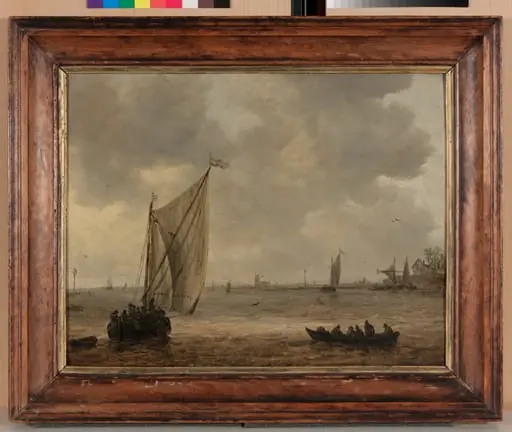 Blick von der alten Maas auf Dordrecht
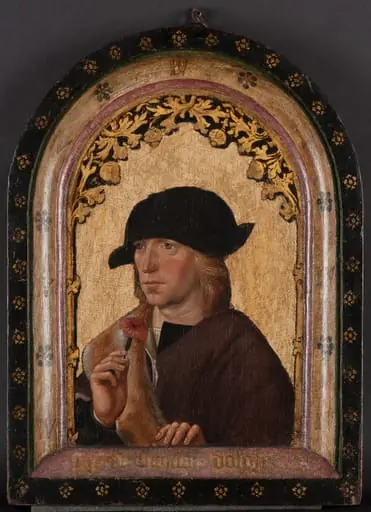 Porträt eines jungen Mannes mit Nelke
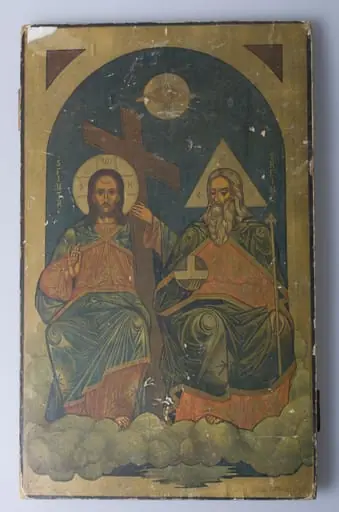 În icoană este reprezentată Sfânta Treime în variantă „noutestamentară”. Fiul ține crucea cu mâna stângă, cu mâna dreaptă binecuvântând, Tatăl (reprezentat ca bătrân, cu aureolă triunghiulară) ține în mâna stângă sceptrul, iar în dreapta globul spre care și privește, iar Duhul Sfânt apare în chip de porumbel în registrul superior. Cromatică: albastru, bej, roșu, maro, gri, purpuriu.
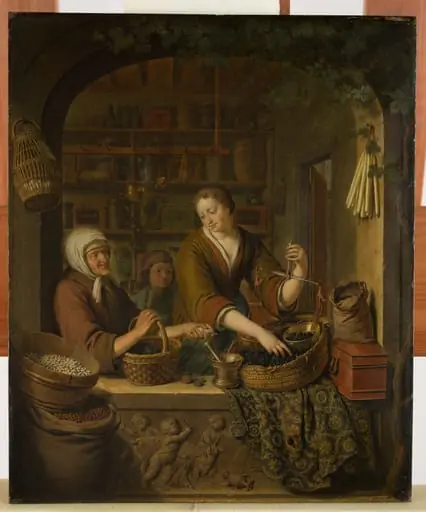 Blick in einen Laden
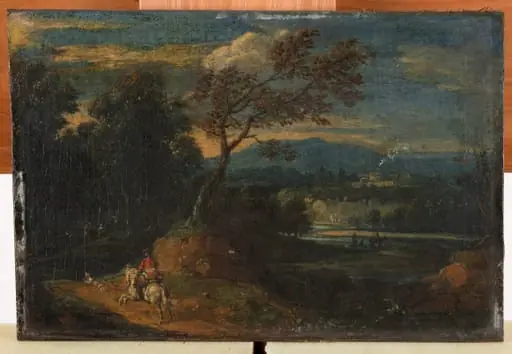 Landschaft mit Reiter
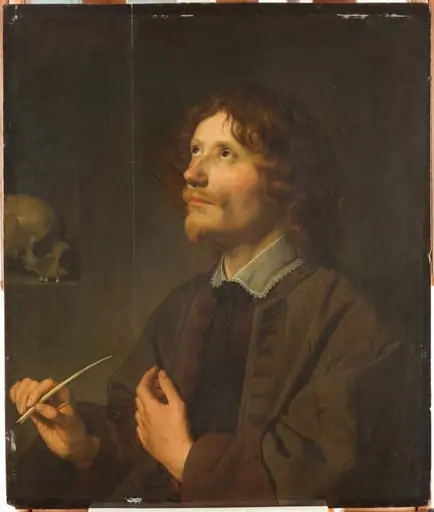 Bildnis eines Gelehrten
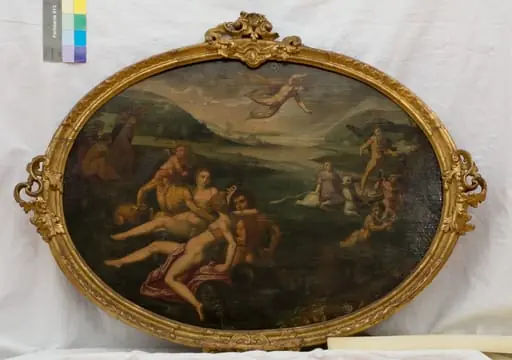 Raub der Europa
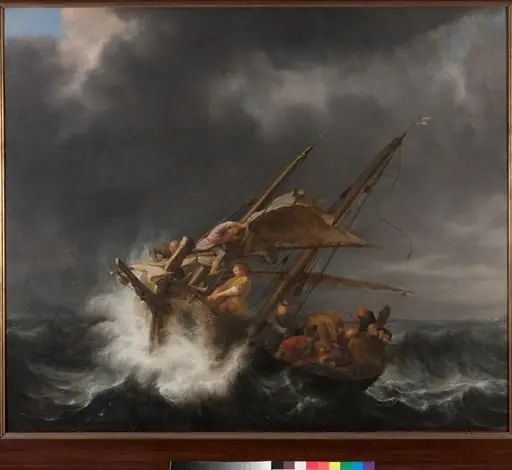 Christus und die Jünger im Seesturm
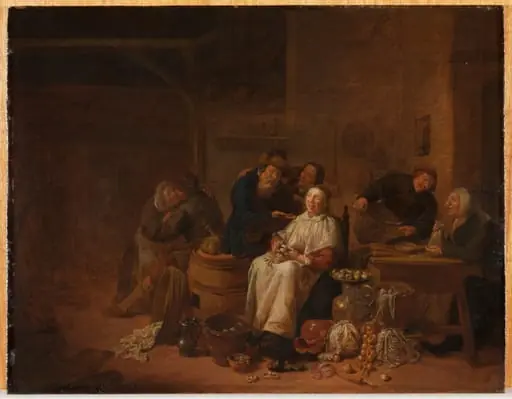 Ungleiche Liebe
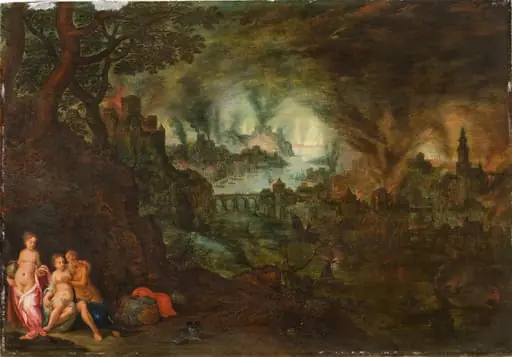 Lot und seine Töchter vor dem brennenden Sodom
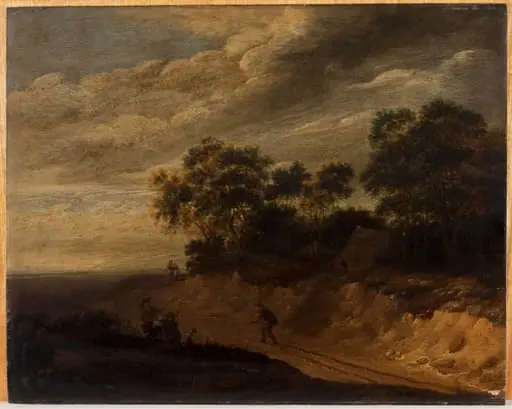 Dünenlandschaft mit Weg
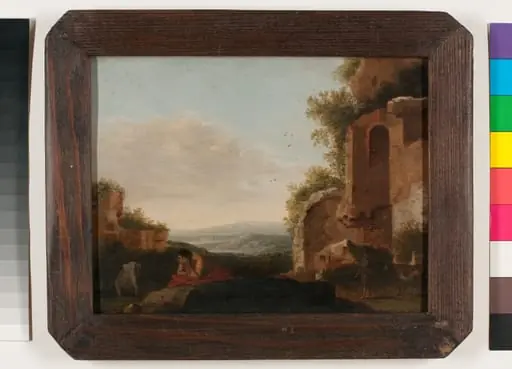 Ruinenlandschaft mit Hirten
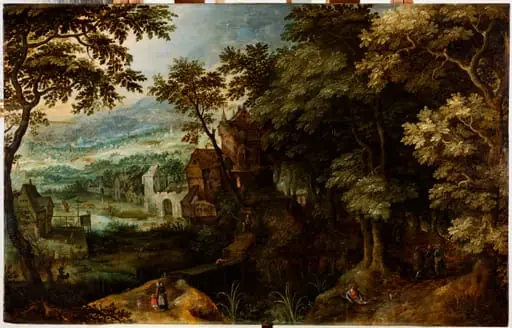 Waldlandschaft mit dem Gang nach Emmaus
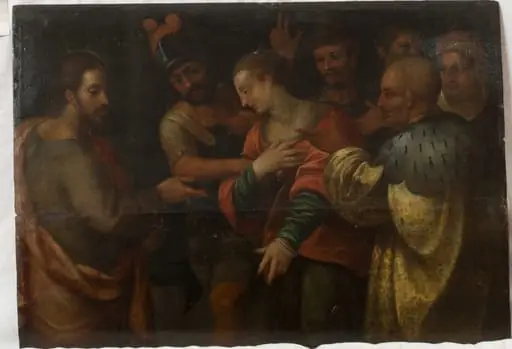 Die Ehebrecherin vor Jesus
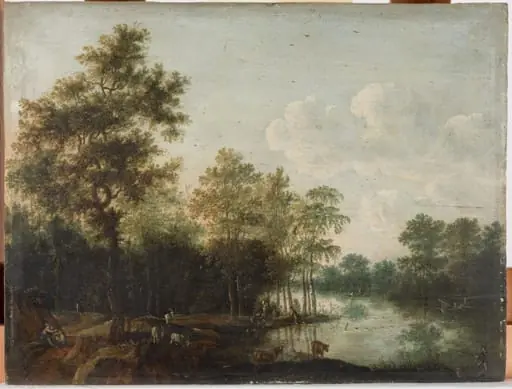 Waldlandschaft
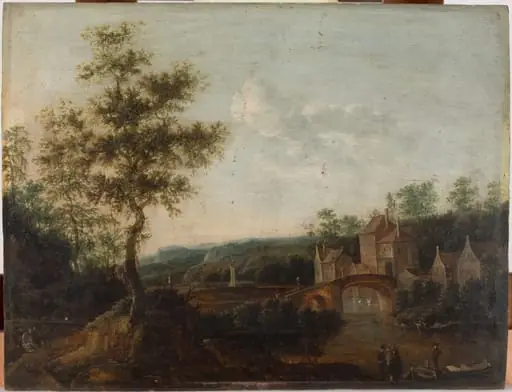 Flußlandschaft
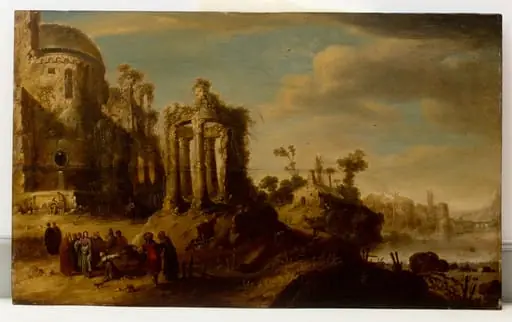 Ruinenlandschaft mit Christus und dem kanaanäischen Weib
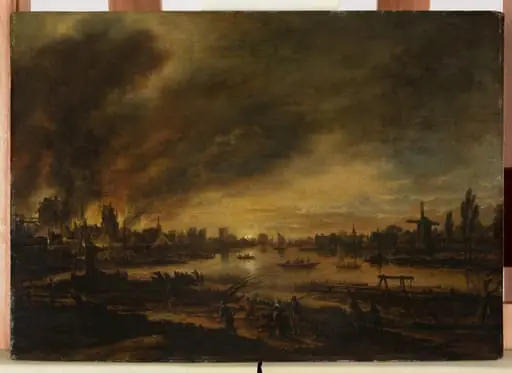 Nachtlandschaft mit Feuersbrunst
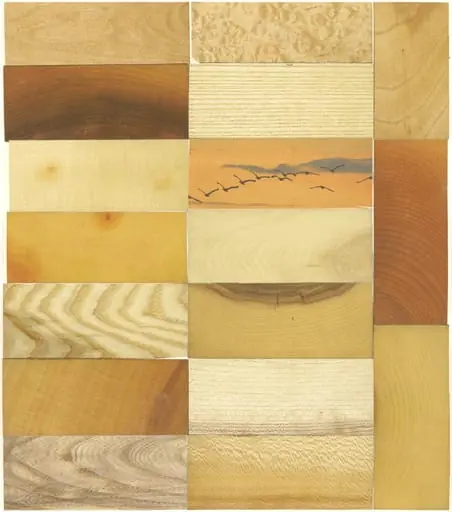 Untitled
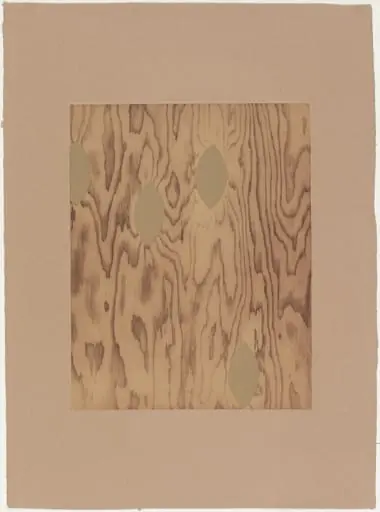 Untitled
 Untitled
Frequently asked questions
What is Wood?
Wood is a surname in the English language.
How many Wood works does Artifact World Gallery have?
Artifact World Gallery holds 54 public-domain Wood works, all free to view and download.
Who are the key Wood artists?
Key Wood artists in the collection include Evert Collier, Jean-Baptiste Kindermans and Jørgen Roed.
Where can I see Wood works?
Wood works in the collection are held by Art Collection of the University Göttingen, ASTRA National Museum Complex and Museum of Modern Art.