Artwork
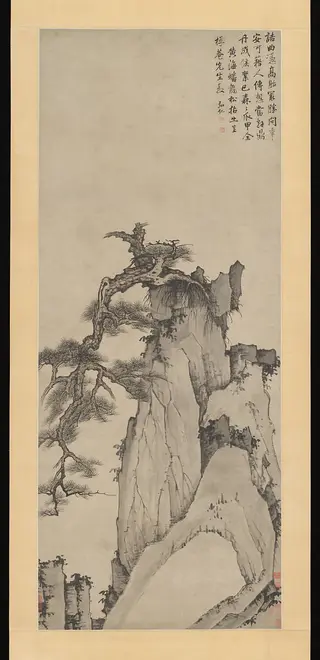
元/明 吳伯理 流水松風圖 軸|Dragon pine
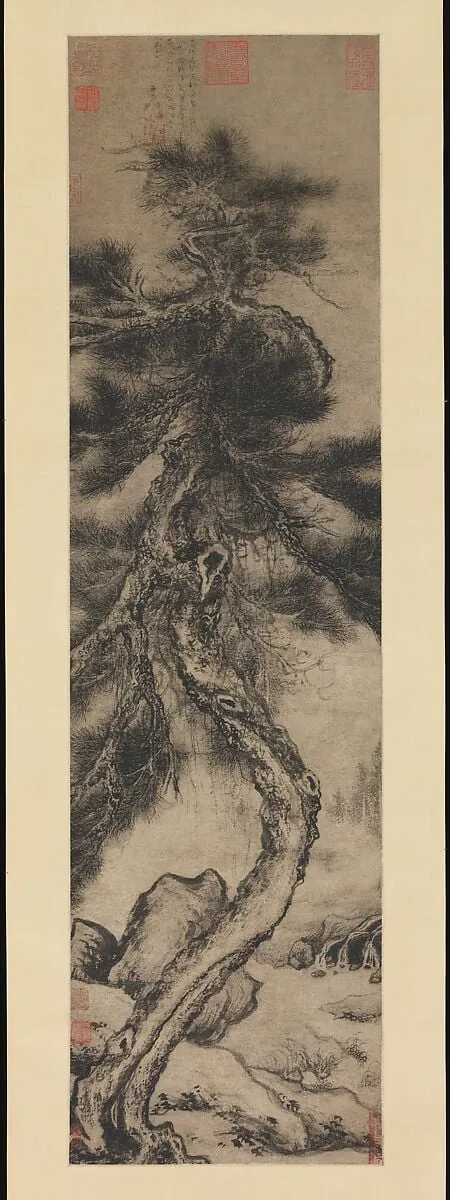
元/明 吳伯理 流水松風圖 軸|Dragon pine is an ink painting by the Ming dynasty painting artist Wu Boli. It dates from 1400 and is held in the collection of the Metropolitan Museum of Art.
About this work
Subject & Meaning
The title "Flowing Water and Wind in Pines" implies the dynamic interaction between wind moving through the pine branches and the sound of flowing water nearby.
The work depicts a single pine tree situated within a landscape setting. The title "Flowing Water and Wind in Pines" implies the dynamic interaction between wind moving through the pine branches and the sound of flowing water nearby. The imagery of the pine tree traditionally symbolises endurance and longevity in Chinese art, serving as the primary iconographic element of the piece. The painting is classified as a landscape and dates to around 1400.
Technique & Style
Wu Boli's hanging scroll is executed in monochrome ink on paper, a traditional format for Chinese landscape painting of the Yuan and Ming periods. The work centres on the depiction of a tree and belongs to the ink-on-paper scroll tradition that allowed artists to render atmospheric, brush-driven scenery with tonal variation rather than color. The scroll is held in the collection of the Metropolitan Museum of Art. No further details regarding brushwork, handling, or condition are documented in the available sources.
History & Provenance
Wu Boli painted this hanging scroll in ink on paper around 1400 in China, depicting a pine tree within a landscape. The work was produced during the early Ming period. It is currently held in the collection of the Metropolitan Museum of Art in New York, where it is classified as a painting. No specific accession number or earlier ownership history is documented in the available sources.
Overview
Created around the early fifteenth century, this hanging scroll by Wu Boli presents a solitary pine set beside a swiftly moving stream. Executed in monochrome ink on paper, the composition balances a vertical, twisting trunk against the horizontal sweep of water, inviting the viewer to contemplate a moment of natural vigor captured in a restrained medium.
Context
During the early Ming era, ink landscapes often served as meditative studies rather than decorative pieces. Wu’s approach reflects the period’s emphasis on personal expression, drawing on earlier Song and Yuan conventions while emphasizing spontaneity and the moral resonance of nature.
Legacy
The piece continues to be referenced in discussions of brush technique, particularly the use of cross‑hatching to suggest depth without pigment. Its balanced composition and expressive line work influence later literati artists who seek to capture the spirit of a scene rather than its literal details.
Artist & collection


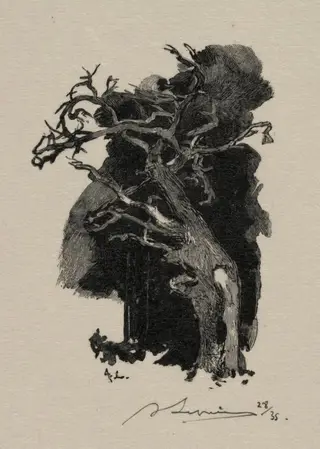
![Old Trees at Naushon Island [plate 2], by Robert Swain Gifford](https://artifactworldgallery.com/img/robert-swain-gifford--old-trees-at-naushon-island-plate-2--74282486ac5ae211-w320.webp)