Artwork
清 倣弘仁 黃山蟠龍松圖 軸|Dragon Pine on Mount Huang
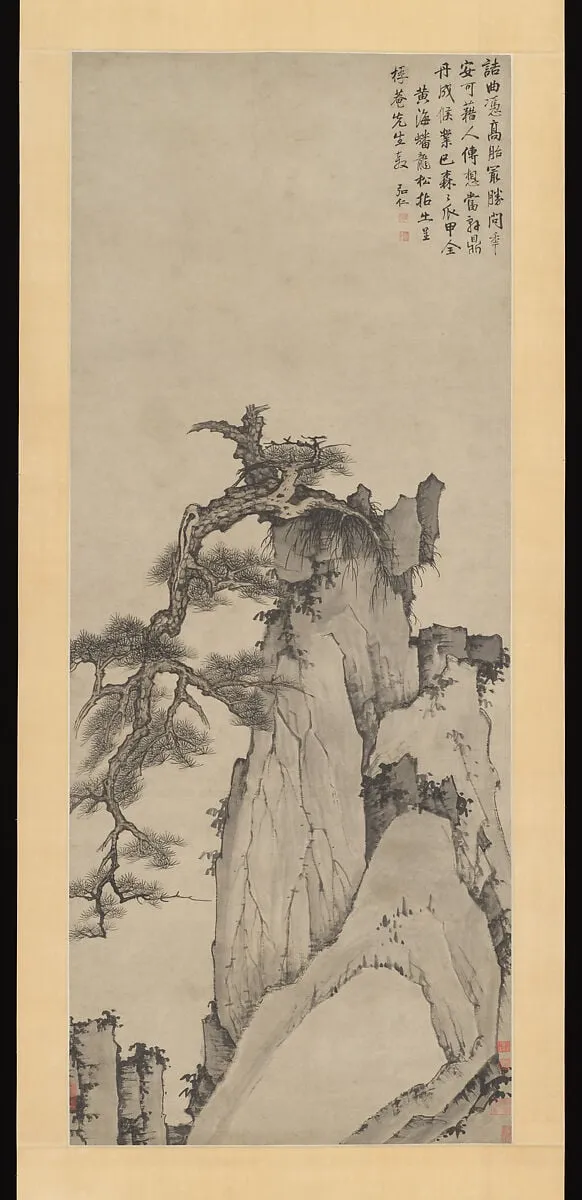
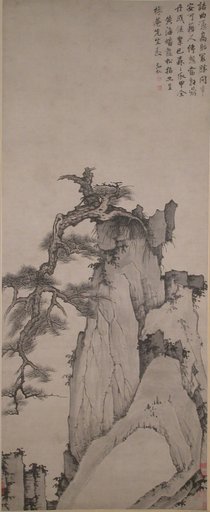
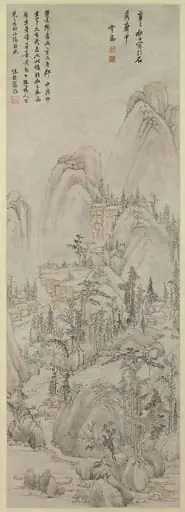
清 倣弘仁 黃山蟠龍松圖 軸|Dragon Pine on Mount Huang is an ink painting by the Baroque artist Hongren. It dates from 1660 and is held in the collection of the Metropolitan Museum of Art.
About this work
Technique & Style
The piece serves as a landscape painting that imitates the style of the artist Hongren, depicting the mountainous terrain of Mount Huang.
Created in 1660, this work is executed as a hanging scroll using ink and pale color applied to paper. The piece serves as a landscape painting that imitates the style of the artist Hongren, depicting the mountainous terrain of Mount Huang. The visual composition centers on a dragon pine, rendered through traditional brushwork characteristic of the period's landscape genre.
The support is paper, and the handling involves the application of both monochrome ink and subtle color washes to define the forms against the mountainous backdrop.
History & Provenance
Created in 1660 in China, this hanging scroll depicts a mountain landscape featuring a dragon pine. Although the work is titled as an imitation of the artist Hongren, the creator remains unidentified. The painting is executed in ink with pale color on paper. It is currently held in the collection of the Metropolitan Museum of Art.
The hanging scroll titled Dragon Pine on Mount Huang, painted in 1660, is part of the Metropolitan Museum of Art's collection in New York.
It is recorded as a landscape painting in the museum's catalogue, though the specific inventory number is not disclosed in the available records.
The work depicts a stylized mountain landscape and is classified as a hanging scroll made of ink and pale color on paper.
No exhibition history is documented in the sources provided.
Overview
Created around 1660, this hanging scroll by the Qing‑dynasty artist Hongren presents a solitary pine clinging to a rugged cliff on Mount Huang. Rendered in ink with subtle pale colour on paper, the composition balances a stark, vertical tree against a backdrop of mist‑shrouded peaks, conveying a sense of isolated grandeur.
Subject & Meaning
The central pine, its twisted branches likened to a dragon’s coil, serves as a symbol of resilience and vitality within the harsh mountain environment. The surrounding mist and jagged rocks emphasize the interplay between permanence and transience, inviting contemplation of nature’s enduring spirit amid fleeting atmospheric conditions.
Context
During the Qing dynasty, artists often revisited classic motifs such as the solitary pine on a mountain, using them to express personal moral ideals. Hongren’s work aligns with this tradition, reflecting the broader cultural emphasis on scholarly expression through natural scenery rather than literal depiction.
Artist & collection