Artwork
清 吳山濤 山水圖 扇|Riverscape with moored boats
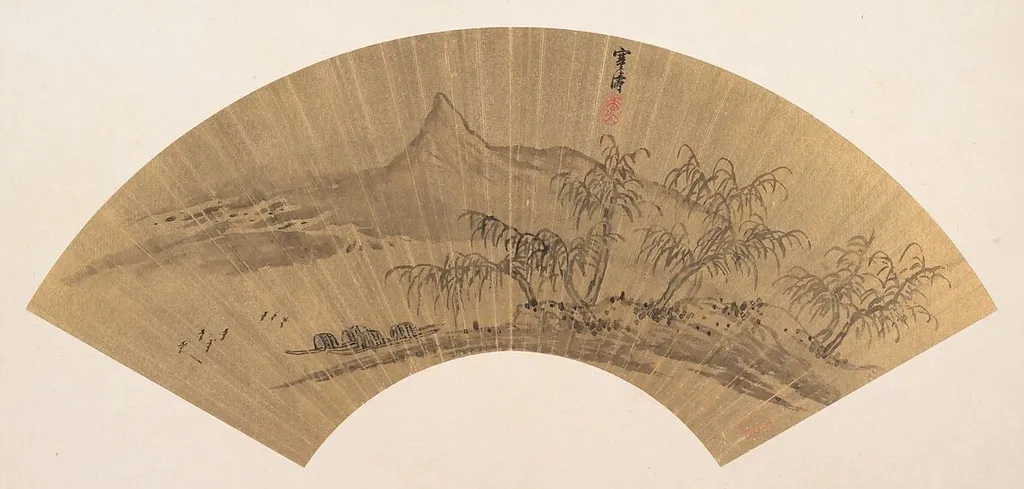
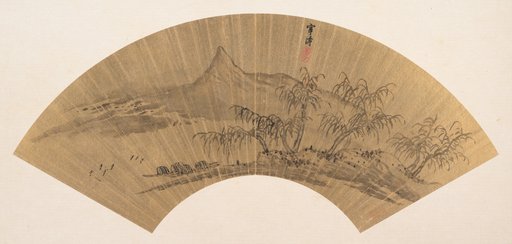
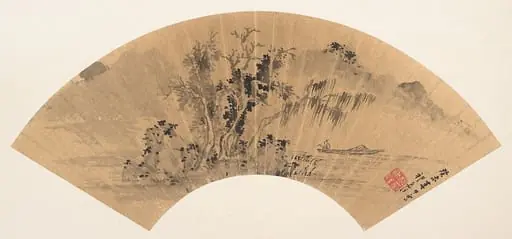
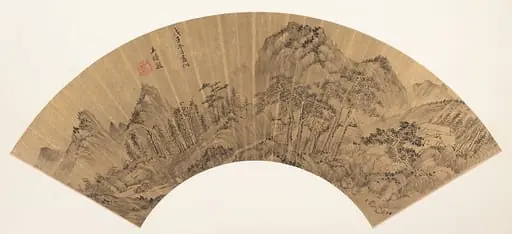
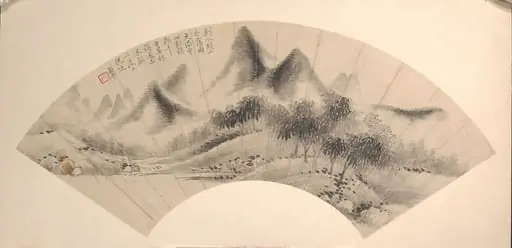
清 吳山濤 山水圖 扇|Riverscape with moored boats is an ink painting by the Baroque artist Wu Shantao. It dates from 1667 and is held in the collection of the Metropolitan Museum of Art.
About this work
Technique & Style
The fan’s narrow format limits the composition to a vertical scroll‑like plane, while the gold background amplifies the subtle gradations of ink tone.
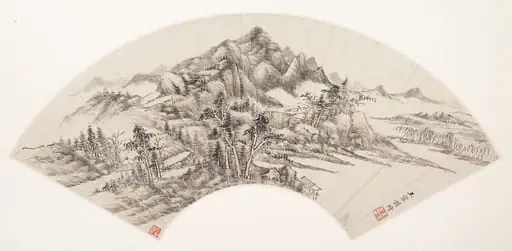
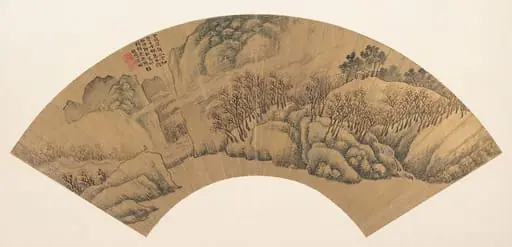
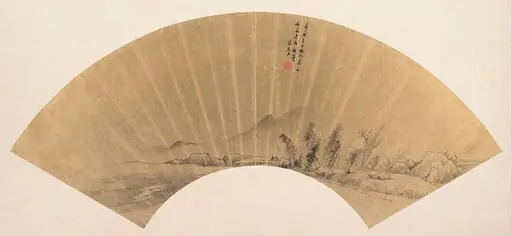
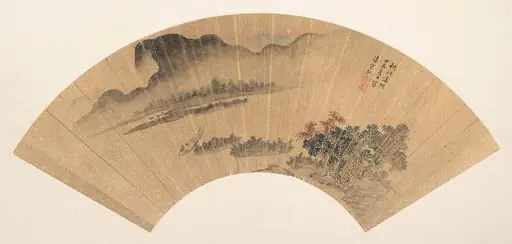
The work is a folding fan that functions as an album leaf, constructed from gold‑coated paper and executed in ink. Wu Shantao applied brushwork characteristic of Qing‑period literati landscape, using layered washes to suggest atmospheric depth and to render a distant mountain and a small boat moored on a river. The fan’s narrow format limits the composition to a vertical scroll‑like plane, while the gold background amplifies the subtle gradations of ink tone.
The piece is catalogued in the Metropolitan Museum of Art collection, dated 1667, and retains its original mounting without evident damage.
History & Provenance
The work titled Riverscape with moored boats (清 吳山濤 山水圖 扇) is a folding fan mounted as an album leaf, ink on gold paper, painted by Wu Shantao in 1667 in China. It belongs to the landscape genre and depicts a boat and mountain. According to the Metropolitan Museum of Art’s catalogue, the piece entered the museum’s collection and remains on view there.
The work was created as part of Wu Shantao’s oeuvre during the mid‑seventeenth century and is dated 1667, matching the recorded inception date of 1667‑01‑01.
Overview
Created in 1667 by the Chinese artist Wu Shantao, this landscape depicts a serene riverscape featuring two small boats moored along a bank, nestled between mist-shrouded hills. Executed in ink on gold paper, the work was originally part of a folding fan before being remounted as an album leaf. The use of gold ground is a distinctive technical choice; the metallic surface reflects light through the ink washes, creating a luminous quality that mimics the shimmer of water and the atmospheric haze of the distant mountains.
The composition balances the intimate scale of the handheld object with a sense of expansive depth, characteristic of literati landscape traditions. Wu Shantao, active during the early Qing dynasty, utilized this format to explore the interplay between material luxury and the restrained elegance of ink painting. The work stands as a refined example of mid-17th-century Chinese fan painting, where the artist navigates the constraints of the small, curved surface to evoke a vast, tranquil natural world.
Subject & Meaning
The composition depicts a tranquil river scene, where a winding waterway flows between softly rendered, misty hills. Two small boats are depicted moored near the bank, suggesting a moment of stillness and rest within the expansive landscape. The presence of a distant mountain further emphasizes the vastness of nature, while the overall impression conveys a sense of peace and solitude, typical of scholarly Chinese painting.
Context
This work belongs to a long-standing tradition of Chinese landscape painting, known as shanshui (mountain-water) painting. Artists within this genre often sought to express philosophical ideas about humanity's place in the natural world, emphasizing harmony and contemplation. Wu Shantao's "Riverscape with moored boats" exemplifies this tradition through its depiction of a serene natural environment, inviting viewers to engage in quiet reflection.
Artist & collection